
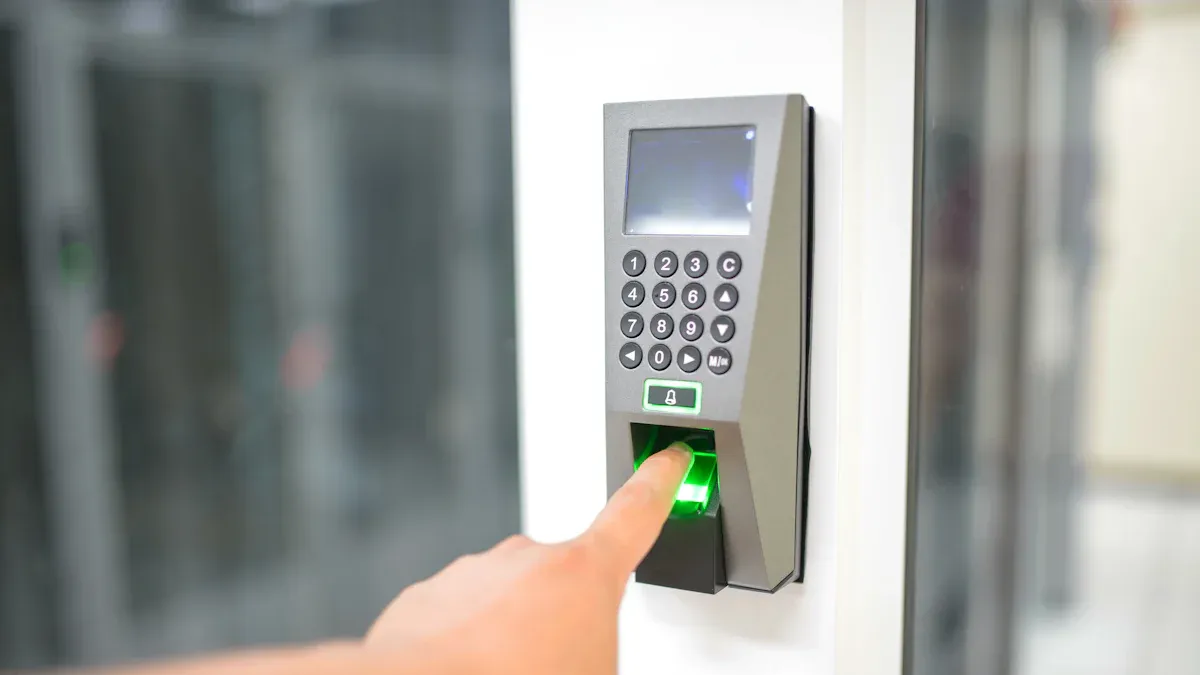
Automatic door safety sensors are essential for enhancing accessibility, especially for individuals with disabilities. These sensors facilitate hands-free operation, which is crucial for those with mobility impairments. They allow users of wheelchairs, walkers, and crutches to enter and exit buildings independently, without physical effort. Adhering to automatic door safety regulations 2026 guarantees features like a minimum 32-inch clear width and low activation force, making ADA compliant door openers vital for public facilities. Additionally, incorporating motion sensors for commercial doors can further enhance safety and convenience. By prioritizing these automatic door safety sensors and considering door operator buying tips, facility managers can significantly improve accessibility for everyone. The use of an infrared safety beam for automatic doors also adds an extra layer of protection, ensuring that doors do not close on individuals who are entering or exiting.
Key Takeaways
- Automatic door safety sensors enhance accessibility for individuals with disabilities, allowing for hands-free operation.
- Presence sensors prevent accidents by detecting objects in the door’s path, ensuring safe operation.
- Safety edges stop or reverse doors when they detect obstacles, reducing the risk of injuries.
- Motion sensors trigger doors to open automatically, promoting independence for users with mobility challenges.
- Regular maintenance of all safety sensors is crucial to ensure they function correctly and comply with ADA regulations.
Presence Sensors

Presence sensors play a crucial role in the operation of automatic doors. These sensors detect the presence of individuals or objects in the door’s path, ensuring safe and efficient operation. By using advanced technology, presence sensors can identify when someone approaches the door, allowing it to open automatically. This feature significantly enhances accessibility for individuals with disabilities.
The effectiveness of presence sensors in preventing accidents cannot be overstated. Automatic doors can pose risks of entrapment and injuries if sensors fail to detect objects or people, leading to premature closure. According to reports from the Consumer Product Safety Commission, there were 62 child deaths and 49 injuries related to automatic garage door openers due to entrapment from March 1982 to November 1996. Furthermore, estimates suggest over 2,000 annual injuries from garage door accidents, many linked to sensor malfunctions. Failures in photoelectric or presence sensors in commercial sliding doors have resulted in pedestrian strikes, particularly when dark clothing evaded detection.
To ensure safety, facility managers should prioritize the installation of reliable presence sensors. These sensors not only comply with ADA requirements but also provide peace of mind for users. They help create a safer environment by reducing the likelihood of accidents and injuries. Regular maintenance and testing of these sensors are essential to ensure they function correctly.
Safety Edges

Safety edges are vital components of automatic door systems. They enhance safety by detecting obstacles and preventing injuries. These edges utilize pressure-sensitive technology to identify any obstruction in the door’s path. When an object or person comes into contact with the safety edge, the system responds instantly. This response ensures that the doors either stop or reverse their motion, effectively preventing pinching and collisions.
The implementation of safety edges significantly reduces the risk of accidents. For instance, in busy public spaces, individuals may inadvertently walk into the path of closing doors. Safety edges act as a protective barrier, ensuring that no one gets caught or injured. This feature is especially crucial for individuals with disabilities, who may require additional assistance when navigating through automatic doors.
Facility managers should prioritize the installation of safety edges as part of their automatic door safety sensors. Regular maintenance and testing of these edges are essential to ensure they function correctly. Neglecting this aspect can lead to malfunctions, which may compromise user safety.
Motion Sensors
Motion sensors are essential for the safe operation of automatic doors. They detect movement and trigger the door to open, allowing users to enter or exit without physical contact. This feature is particularly beneficial for individuals with disabilities, as it promotes independence and ease of access.
Several types of motion sensors exist, each with unique advantages. The following table outlines the different sensor types and their detection methods:
| Sensor Type | Detection Method | Advantages |
|---|---|---|
| Passive Infrared | Detects thermal radiation differences | Energy-efficient, widely used, detects motion within 15 feet, but sensitive to heat sources. |
| Active Infrared | Emits modulated infrared beams | Precise ranging, allows for motion and static detection, adjustable for directionality. |
| Microwave Radar | Uses Doppler shift principles | Reliable in adverse weather, distinguishes approach from departure, adjustable sensitivity. |
| Ultrasonic | Emits high-frequency sound waves | Precise proximity detection, less affected by light interference, but can struggle with soft surfaces. |
| Laser Safety Sensors | Uses time-of-flight laser technology | 3D detection field, high precision, real-time response, adaptable to various environments. |
Motion sensors provide full 3D protection, covering the entire swing path of the door. They ensure high precision detection, which helps identify small objects and eliminates blind spots. The real-time response capability allows the system to stop or reverse the door instantly if an obstacle is detected. Additionally, these sensors adapt well to various environments, performing reliably even in challenging conditions.
Incorporating motion sensors into automatic door systems not only enhances safety but also ensures compliance with ADA regulations. Facility managers should prioritize the installation of these sensors to create a safer and more accessible environment for all users.
Photoelectric Sensors
Photoelectric sensors are critical components of automatic door systems. They utilize light beams to detect the presence of individuals or objects in the door’s path. When the light beam is interrupted, the sensor signals the door to open or stop, ensuring safe operation. This technology enhances accessibility for individuals with disabilities, allowing them to navigate through doors without physical assistance.
There are two main types of photoelectric sensors: reflective and through-beam. Reflective sensors emit a light beam that reflects off a nearby surface back to the sensor. This type is often used in environments where space is limited. Through-beam sensors consist of a transmitter and a receiver positioned opposite each other. When an object interrupts the beam, the system activates the door. This type offers greater detection range and reliability.
The advantages of photoelectric sensors include:
- Safety: They prevent accidents by ensuring doors do not close on individuals.
- Versatility: They work effectively in various lighting conditions, making them suitable for both indoor and outdoor use.
- Efficiency: They reduce energy consumption by ensuring doors only operate when necessary.
Regular maintenance of photoelectric sensors is essential. Facility managers should inspect these sensors frequently to ensure they function correctly. Dust, dirt, or obstructions can hinder their performance, leading to potential safety hazards.
Incorporating photoelectric sensors into automatic door systems not only enhances safety but also ensures compliance with ADA regulations. By prioritizing these automatic door safety sensors, facility managers can create a more accessible environment for all users.
Emergency Stop Sensors
Emergency stop sensors are critical for ensuring the safety of automatic doors. These sensors allow users to halt door operation during emergencies or malfunctions. Their presence enhances the overall safety features of automatic door systems, providing an essential layer of protection for all users.
Facility managers should prioritize the installation of emergency stop buttons in accessible locations. These buttons must be easily reachable, allowing individuals to stop the door quickly if necessary. This feature is particularly important in busy public spaces where quick action can prevent accidents.
The Americans with Disabilities Act (ADA) outlines specific guidelines for the placement and operation of emergency stop sensors. While the ADA Standards of 2010 do not mandate automatic doors at accessible entrances, they require compliance with industry standards like ANSI/BHMA A156.10. For powered models, the guidelines specify:
- A minimum clear opening width of 32 inches in both powered and manual modes.
- A dwell time of at least 5 seconds when the door is open.
- Maximum interior opening forces must not exceed 5 pounds.
- The 2021 International Building Code (IBC) mandates at least one power-operated or low-energy power-operated door at each accessible public entrance.
By adhering to these guidelines, facility managers can ensure that their automatic door safety sensors meet ADA compliance requirements. Regular maintenance and testing of emergency stop sensors are essential to guarantee their functionality. Neglecting this aspect can lead to malfunctions, compromising user safety.
Incorporating emergency stop sensors into automatic door systems not only enhances safety but also promotes accessibility for individuals with disabilities. These sensors empower users to navigate their environments confidently, knowing they can stop the door if needed.
In summary, the five essential safety sensors for automatic doors include presence sensors, safety edges, motion sensors, photoelectric sensors, and emergency stop sensors. Each sensor plays a vital role in enhancing safety and ensuring compliance with ADA regulations. These automatic door safety sensors help create accessible environments for individuals with disabilities. Facility managers should prioritize the installation and maintenance of these sensors to promote safety and accessibility in public spaces.
FAQ
What are the main benefits of using safety sensors on automatic doors?
Safety sensors enhance accessibility, prevent accidents, and ensure compliance with ADA regulations. They allow individuals with disabilities to navigate doors independently and safely.
How often should safety sensors be maintained?
Facility managers should inspect and maintain safety sensors at least once a month. Regular checks ensure proper functionality and reduce the risk of malfunctions.
Are there specific ADA guidelines for automatic doors?
Yes, the ADA outlines requirements for automatic doors, including a minimum clear opening width of 32 inches and maximum opening forces of 5 pounds. Compliance with these guidelines is essential for accessibility.
Can safety sensors be retrofitted to existing doors?
Yes, many safety sensors can be retrofitted to existing automatic doors. Facility managers should consult with professionals to determine compatibility and installation requirements.
What should I do if a safety sensor malfunctions?
If a safety sensor malfunctions, facility managers should immediately disable the door and schedule repairs. Prompt action prevents accidents and ensures user safety.