

Automatic doors operate smoothly and precisely. They achieve this through a sophisticated combination of advanced electric motors, precise control systems, and feedback mechanisms. This integration allows for exact speed regulation, gentle starts and stops, and accurate positioning. Modern automatic door operators rely on effective automatic door motor control. This motor control technology for doors ensures reliable performance. Understanding how electric motors regulate speed in automatic sliding doors reveals the engineering behind their seamless function. This includes advanced AC/DC motor speed control for doors, which provides excellent precision speed control.
Key Takeaways
- Automatic doors work smoothly because they use special electric motors and smart control systems.
- DC motors are often used in automatic doors because they are quiet and allow for very exact speed control.
- Sensors and feedback systems help automatic doors know their exact position and speed, making sure they move correctly.
- Soft start and stop features make doors open and close gently, which helps them last longer and saves energy.
- Safety sensors detect objects in the door’s path, stopping or reversing the door to prevent accidents.
Electric Motors for Precision Speed Control
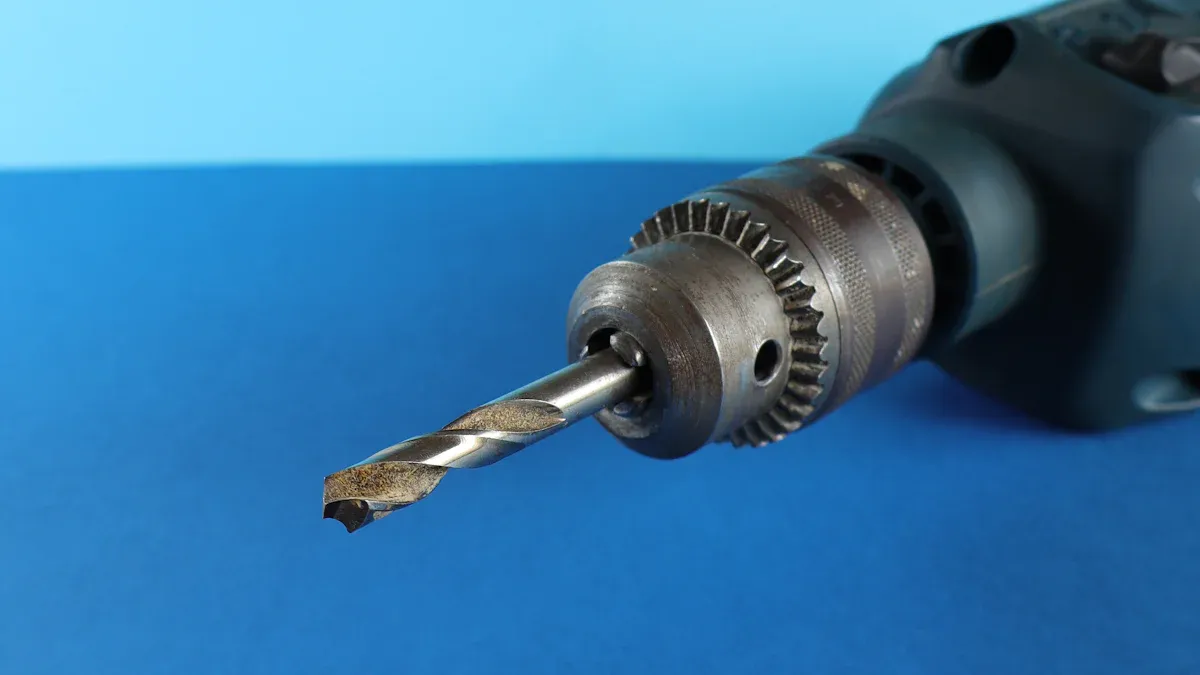
Automatic doors rely on specific electric motors for their smooth and precise movements. These motors convert electrical energy into mechanical motion, driving the door panels.
Types of Motors in Automatic Doors
Several motor types power automatic doors, each with distinct characteristics.
| Motor Type | Mechanism | Advantages | Disadvantages |
|---|---|---|---|
| DC Motors | Convert electrical energy into mechanical energy using direct current for continuous electricity flow. | Quieter, more efficient operation; precise control over opening/closing speeds; unidirectional power and non-fluctuating voltage. | N/A |
| AC Motors | Simplistic electric devices with an outside stator generating a rotating magnetic field and an inside rotor producing a second rotating magnetic field, whose interaction creates rotation. | Highly durable; capable of handling high starting currents. | Less efficient than DC motors; can emit more noise; difficult to manage door speed. |
Brushless DC automatic door motors are a core driving component for modern commercial, industrial, and public entrances. These 24V motors are known for their reliability, efficiency, and safety. They offer silent operation, stable performance, and strong driving force. This makes them ideal for heavy-duty applications, wide entrances, and high-traffic areas. Brushless DC motors provide consistent performance and a long service life. They are available in various models for sliding and swing doors, accommodating different load requirements and entrance sizes.
Other actuators also play a role in automatic door systems:
- Hydraulic Actuators: These actuators use fluid pressure to generate motion. They suit heavy-duty applications like artificial and security doors.
- Pneumatic Actuators: These actuators utilize compressed air to produce motion. They are frequently used in automation systems, such as sliding door and access control systems, and are recognized for their reliability and speed.
- Electric Actuators: These actuators convert electrical energy into mechanical motion. They are popular for their effectiveness and ease of integration with smart home systems.
Motor Design for Smooth Operation
Motor design significantly contributes to smooth and quiet automatic door operation. DC motors are favored in modern automatic doors due to their inherent efficiency and quieter operation compared to AC motors. They also offer precise speed and position control, which are crucial for smooth door movements.
Brushless DC motors are noted for their quiet operation. Specific components like a special double gearbox and helical gear transmission enhance this quietness. These features ensure smooth and silent movement, improving the user experience and reducing wear on the door system. Different gear configurations, such as helical gears, significantly influence factors like noise level, efficiency, and the smoothness of door operation. Many automatic sliding door motors incorporate variable speed control, which allows for smooth and adjustable door movements.
Motor winding configurations also impact torque ripple and smoothness. Distributed windings, where coils spread over multiple stator slots, create a smoother electromagnetic field. This leads to smoother torque output with reduced cogging and harmonic effects. This configuration is ideal for precision applications requiring stable torque and vibration-free operation. Well-distributed windings produce a more sinusoidal back EMF, which significantly reduces torque ripple and vibration. A higher proportion of stator slot space filled with copper wire, known as the copper fill factor, allows for greater current flow. This produces stronger electromagnetic fields and increased torque.
Control Systems for Precision Speed Control

Automatic doors achieve their smooth and precise movements through sophisticated control systems. These systems act as the "brain" of the door, interpreting commands and regulating motor behavior. They ensure the door opens and closes safely and efficiently.
Variable Speed Drives and Motor Controllers
Variable Speed Drives (VSDs), also known as Variable Frequency Drives (VFDs) or motor controllers, play a crucial role in automatic door operation. They precisely manage the electric motor’s speed and torque. These devices convert fixed-frequency and fixed-voltage electrical power into variable-frequency and variable-voltage power. This allows them to adjust the motor’s rotational speed.
Intelligent motor controllers are essential for automatic doors. They provide precise speed control. These controllers often integrate with building management systems (BMS) or IoT networks. This integration offers advanced control, diagnostics, and energy monitoring capabilities. For example, a building manager can remotely adjust door speeds or check for operational issues.
Motor controllers implement specific algorithms to achieve precise speed regulation. One common method is Pulse Width Modulation (PWM). PWM adjusts the average voltage supplied to the motor. This directly regulates its speed. Another critical technique is closed-loop feedback. This system uses sensors, such as tachometers or encoders, to measure the motor’s actual speed. The controller then compares this actual speed to the desired speed. It adjusts the input signals to the motor to maintain the target speed. This continuous adjustment ensures consistent and accurate movement.
Microcontrollers and Digital Signal Processors
Microcontrollers and Digital Signal Processors (DSPs) are the core computational units within automatic door control systems. Microcontrollers are small, integrated circuits. They contain a processor, memory, and input/output peripherals. They execute the control logic for the door. DSPs are specialized microprocessors. They are optimized for processing digital signals quickly.
These powerful chips receive data from various sensors. They process this information in real-time. For instance, they interpret signals from motion sensors, safety sensors, and the motor’s feedback encoders. Based on this data and programmed algorithms, they send commands to the variable speed drives. This ensures the motor operates at the correct speed and position.
Microcontrollers and DSPs enable advanced features. They manage soft start and stop algorithms. They also integrate obstacle detection and reversal mechanisms. Their processing power allows for complex calculations. These calculations ensure the door responds instantly and safely to its environment. This high level of computational ability contributes significantly to the door’s overall precision speed control and smooth operation.
Feedback Mechanisms Ensuring Precision Speed Control
Automatic doors rely heavily on feedback mechanisms. These systems provide continuous information to the control unit. This information allows the door to maintain its smooth and precise movements. Feedback ensures the door operates exactly as intended.
Encoders for Real-time Data
Encoders are essential components in automatic door systems. They provide real-time data about the door’s exact position and speed. These devices convert mechanical motion into electrical signals. The control system uses these signals. Optical encoders use light to detect movement. Magnetic encoders use magnetic fields. Both types offer high accuracy. Encoders tell the system precisely where the door is at any moment. They also report how fast it moves. This information is crucial for smooth and controlled door operation. Without encoders, the door would lack precise positioning and consistent speed.
Sensors for Motor Monitoring
Automatic door systems use various sensors to monitor the motor’s health and performance. Temperature sensors prevent overheating. They detect if the motor gets too hot. Voltage sensors ensure the motor receives the correct power supply. Current sensing switches are also important. These switches prevent damage from excessive current. They detect when current levels go above safe operating thresholds. This application is crucial for maintaining the integrity and longevity of motors. These sensors work together. They ensure the motor operates safely and efficiently. This continuous monitoring helps maintain the door’s smooth function.
Closed-Loop Control for Accuracy
Closed-loop control is a fundamental principle for achieving accuracy in automatic doors. This system uses feedback to adjust motor operation. Encoders and other sensors provide this feedback. The control system compares the door’s actual position and speed to its desired position and speed. If a difference exists, the system makes immediate corrections. For example, if the door moves too slowly, the controller increases motor power. If it moves too fast, the controller reduces power. This continuous adjustment ensures the door follows its programmed path precisely. It maintains consistent speed and smooth acceleration and deceleration. Closed-loop control is essential for the door’s overall precision speed control. It guarantees reliable and safe operation.
Advanced Features for Enhanced Smoothness and Safety
Automatic doors incorporate advanced features. These features enhance both their smooth operation and user safety. They go beyond basic opening and closing functions.
Soft Start and Stop Algorithms
Soft start and stop algorithms are crucial for automatic door performance. These algorithms gradually increase or decrease the motor’s speed. This prevents abrupt movements. The door starts moving slowly, then accelerates smoothly. It decelerates gently before coming to a complete stop.
Implementing these capabilities offers several benefits:
- Soft start and stop capabilities, along with custom acceleration and deceleration profiles, reduce wear on system components. This extends the door’s lifespan.
- These features provide extremely precise control and repeatable accuracy of position control, typically better than 0.020 inches. This contributes to the overall precision speed control of the door.
- Soft start/stop peak current limiting minimizes electric energy usage costs. This makes the door more energy-efficient.
Obstacle Detection and Reversal Integration
Safety is paramount in automatic door design. Obstacle detection and reversal systems prevent accidents. They ensure the door does not close on people or objects. Early automatic sliding door systems used control mats and electric eye holding beams. Later, overhead motion detection sensors replaced these. These sensors often combined with a single overhead threshold protecting sensor. Over time, industry standards required tighter threshold protection. This led to more diverse sensor types. Eventually, overhead door sensors integrated both motion and presence detection functions.
Modern automatic door systems use various sensors for obstacle detection:
- Infrared motion sensors: These sensors detect movement. They emit infrared beams and measure reflections or interruptions. They signal the door control system to open or keep the door open.
- Pressure sensors: These sensors detect physical contact or force on door panels. Pressure-sensitive pads or switches send a signal to the door control system upon pressure application.
- Optical sensors: These sensors use light-based technology. They measure changes in light intensity, analyze laser reflections, or capture visual information. They detect objects or individuals accurately.
- Radar movement sensors: These sensors use radar technology. They detect movement and determine the direction of approach. They provide long-range detection.
These sensors work together. They ensure the door stops or reverses immediately when an obstruction is detected. This integration significantly enhances user safety.
Modern automatic doors operate seamlessly and precisely. This results from sophisticated engineering behind their electric motors and control systems. They combine advanced motor types, intelligent controllers, and continuous feedback. These systems achieve unparalleled accuracy, smoothness, and safety. They transform everyday access into a refined experience for users. ✨
FAQ
Why do automatic doors often use DC motors?
Automatic doors frequently use DC motors because they offer quieter operation and higher efficiency. They also provide precise control over opening and closing speeds. This allows for smooth and accurate door movements.
How do automatic doors achieve smooth starts and stops?
Automatic doors use soft start and stop algorithms. These algorithms gradually increase or decrease the motor’s speed. This prevents sudden movements. The door starts slowly, accelerates smoothly, and then gently decelerates before stopping.
What role do sensors play in automatic door safety?
Sensors are crucial for safety. They detect obstacles in the door’s path. Infrared, pressure, and optical sensors identify people or objects. If a sensor detects an obstruction, the door stops or reverses immediately. This prevents accidents.
What is closed-loop control in automatic doors?
Closed-loop control ensures accuracy. It uses feedback from sensors like encoders. The system compares the door’s actual position and speed to the desired settings. It then makes immediate adjustments to the motor. This maintains precise movement and consistent operation.
How do automatic doors save energy?
Automatic doors save energy through features like soft start/stop algorithms. These algorithms minimize peak current usage. Intelligent motor controllers also integrate with building systems. This allows for optimized operation and energy monitoring.