
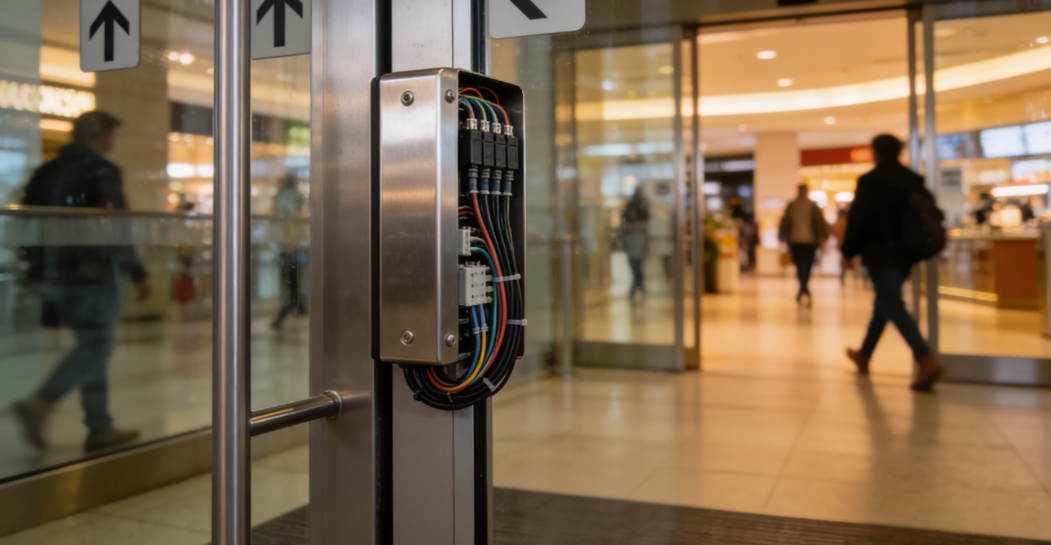
For 2025, ADA compliance for automatic swing door operators primarily focuses on ensuring accessibility through specific operational parameters, clear opening widths, and appropriate safety features, building upon existing guidelines with potential clarifications or emphasis on enforcement. This guide will detail these requirements to help you achieve and maintain compliance. Every automatic open and close door system must adhere to these regulations. A low energy swing door operator, for instance, has specific operational limits. Businesses should also consider the broader implications for accessibility, such as an automatic sliding door operator and its automatic sliding door motor. Even a sliding glass door opener requires careful review for full compliance.
Key Takeaways
- Automatic swing doors must have a clear opening of at least 32 inches. This allows people using wheelchairs to pass through easily.
- Doors need to open and close at safe speeds. They must stay open long enough for everyone to pass, usually 5 seconds.
- Activation buttons must be easy to use and placed at an accessible height. They should not be in the door’s swing path.
- Professional installation and regular checks are very important. This ensures doors work correctly and meet all safety rules.
- Not following ADA rules can lead to big fines. Businesses should fix any problems quickly to avoid these penalties.
Essential ADA Requirements for Automatic Swing Door Operators in 2025
Clear Opening Widths for Automatic Swing Door Operators
Automatic doors must provide sufficient clear space for individuals to pass through easily. ADAAG section 404.3.1 specifically addresses the clear width for automatic doors. It mandates that doorways offer a minimum clear opening of 32 inches (815 mm) in both power-on and power-off modes. For automatic door systems, this minimum clear width is determined by the clear opening created when all leaves are in the open position. This ensures that people using wheelchairs, scooters, or other mobility aids can navigate the doorway without difficulty.
Operating Force and Speed for Automatic Swing Door Operators
Automatic swing door operators must function with a controlled force and speed to ensure user safety. The door’s opening and closing cycles need to be smooth and predictable. Operators typically feature adjustable speeds for both opening and closing. These settings prevent the door from moving too quickly, which could pose a hazard, or too slowly, which could impede traffic flow. Low-energy operators, for example, move at a reduced speed and exert minimal force, making them inherently safer for all users, especially those with limited mobility. Manufacturers design these systems to stop or reverse if they encounter an obstruction, further enhancing safety.
Activation and Controls for Automatic Swing Door Operators
Accessible activation devices are crucial for automatic doors. Various types of controls meet ADA compliance standards. These include:
- Push plates
- Wave sensors
- Keypads
- Keyless entry fobs
- Touchless switches
- Card readers
- REX switches (Request to Exit)
These devices offer different levels of convenience and security. For instance, touchless switches provide hygienic, hands-free activation, which is particularly beneficial in public health-sensitive environments.
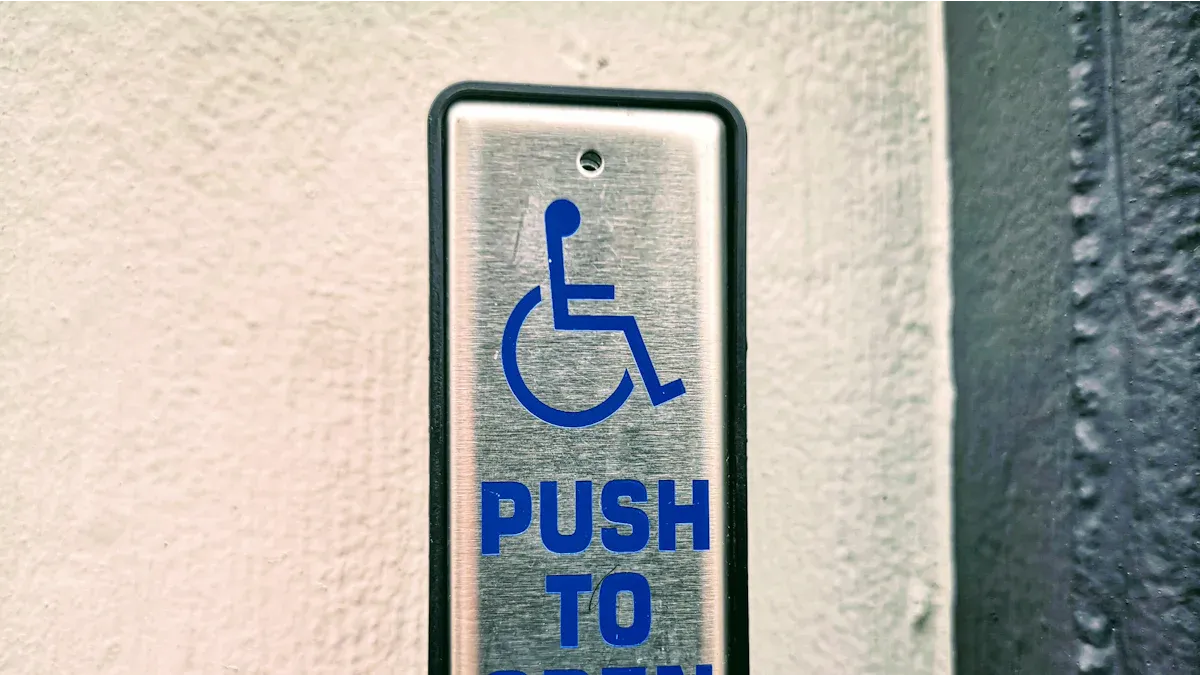
The placement and operation of these controls also follow strict ADA guidelines. Hardware and operating devices for automatic doors must have shapes easy to grasp with one hand. They do not require tight grasping, pinching, or twisting of the wrist. They also require no more than five pounds of force to operate. These controls must be mounted no higher than 48 inches above the finished floor. If a control activates an automatic swing door operator, it must be on an accessible route. It also needs a clear floor space of 48 inches long by 30 inches wide.
A critical safety consideration involves the placement of the handicap activation button. Installers must not place it in the path of the door’s swing. This prevents the door from hitting an individual when it opens. For general applications, handicap push buttons should be mounted on the wall between 34 and 48 inches off the floor. This range ensures accessibility for individuals, including those in wheelchairs or scooters. Heights outside this range make the button difficult to reach.
California building code presents specific requirements. It mandates two handicap push buttons per side of the door, totaling four per door. One button must be mounted 7-8 inches from the floor to its center. The other button must be at 44 inches from the floor. A vertical actuation bar offers an alternative. Its bottom must be 5 inches above the floor. Manufacturers like BEA offer vertical actuation bars that comply with these California requirements. The California Building Code also mandates that push plates be at least 4 inches, and vertical bars have a minimum operable portion of 2 inches wide. Both must display the International Symbol of Accessibility.
Closing Speed and Hold-Open Time for Automatic Swing Door Operators
Automatic swing door operators must manage both their closing speed and hold-open time to ensure safety and accessibility for all users. A controlled closing speed prevents doors from striking individuals, especially those moving slowly or using mobility aids. Accessibility standards require a minimum closing speed for doors equipped with a closer. A door must take at least 5 seconds to move from a 90-degree open position to 12 degrees from the latch. This minimum time requirement effectively sets the maximum speed at which the door can close, preventing it from shutting too quickly. This regulation ensures ample time for safe passage through the doorway.
The hold-open time for automatic doors is equally critical for accessibility. This refers to the duration a door remains fully open before it begins to close. The Americans with Disabilities Act (ADA) mandates specific guidelines for this duration to ensure safe passage for individuals with disabilities. For automatic swing door operators that are powered open, the door must remain fully open for a minimum of 5 seconds. If a user activates the door through a pushing or pulling motion, it must remain fully open for at least 3 seconds. These hold-open times provide sufficient opportunity for individuals to clear the doorway without feeling rushed or trapped. They also accommodate users who may require more time to navigate the opening, such as those with wheelchairs, walkers, or strollers.
Key Technical Specifications for Automatic Swing Door Operator Compliance
Accessible Hardware and Handles for Automatic Swing Door Operators
Automatic doors, including the automatic swing door operator, must incorporate accessible hardware and operating mechanisms. While the operator itself does not typically feature traditional handles, any manual components or override mechanisms must meet specific ADA guidelines. These guidelines ensure ease of use for all individuals. ADAAG Section 404.3 mandates that automatic doors comply with specific provisions. Full-powered automatic doors must adhere to ANSI/BHMA A156.10 standards. Low-energy and power-assisted doors must comply with ANSI/BHMA A156.19 (1997 or 2002 edition).
Operable parts on these doors must be usable with one hand. They should not require tight grasping, pinching, or twisting of the wrist. Acceptable designs include lever-operated mechanisms, push-type mechanisms, and U-shaped handles. The maximum force to activate these parts is 5 pounds (22.2 N). Hardware operable with a closed fist or loose grip is preferable. Designers should avoid hardware requiring simultaneous hand and finger movements. These specifications ensure that individuals with limited dexterity or strength can easily operate the door’s manual components.
Threshold Requirements for Automatic Swing Door Operators
Thresholds at doorways present potential barriers for individuals using mobility aids. ADA standards establish clear requirements for these elements. ADA compliant thresholds, if provided, shall be 1/2 inch high maximum. Newly installed thresholds cannot exceed ½ inch in height. Existing thresholds must not exceed ¾ inch in height.
Thresholds higher than ¼ inch (0.64 cm) must be beveled. This bevel ensures a smooth transition for wheelchairs and other mobility devices. Threshold edges above ¼ inch in height must be beveled at a slope no steeper than 1:2. For exterior sliding doors, thresholds can be up to ¾ inch (1.9 cm) and must be beveled with a slope no greater than 1:2. For other types of exterior doors, thresholds should not exceed ½ inch (1.27 cm) and must be beveled if they exceed ¼ inch (0.64 cm). These precise measurements prevent tripping hazards and facilitate smooth passage.
Maneuvering Clearances Around Automatic Swing Door Operators
Adequate maneuvering clearances around automatic doors are essential for accessibility. These clear spaces allow individuals using wheelchairs, scooters, or other mobility aids to approach, open, and pass through the doorway without obstruction. ADAAG Section 404.3.2 specifically addresses maneuvering clearance. It requires that clearances at power-assisted doors and gates, as well as automatic doors and gates without standby power serving an accessible means of egress, must comply with section 404.2.4. An exception exists if automatic doors and gates remain open when power is off. In this case, compliance with 404.2.4 is not required. This provision ensures that even in power outages, the door does not create an inaccessible barrier. These clearances provide the necessary space for turning and positioning, making the doorway usable for everyone.
Best Practices for Installing and Maintaining Compliant Automatic Swing Door Operators
Professional Installation and Certification for Automatic Swing Door Operators
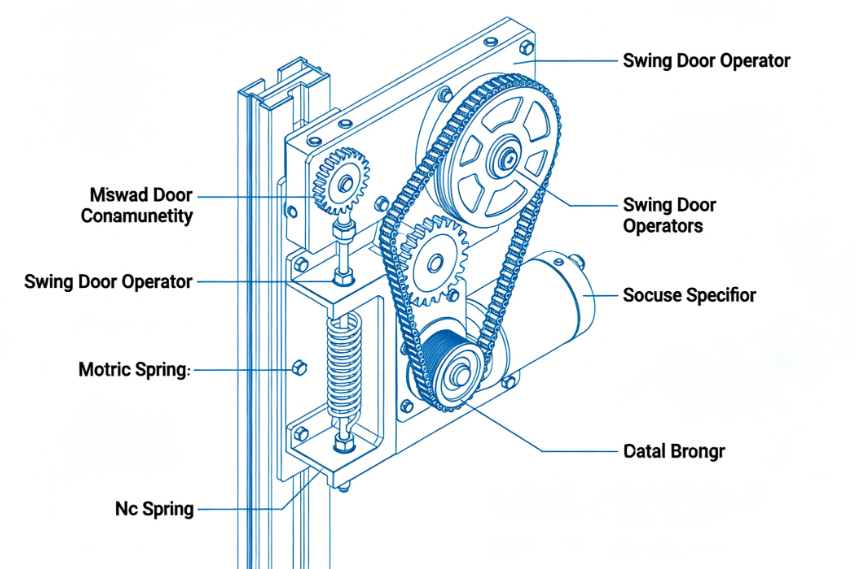
Proper installation forms the foundation of ADA compliance for any automatic door system. Professional installers ensure the correct setup of all components, meeting stringent accessibility standards. The American Association of Automatic Door Manufacturers (AAADM) certification is highly recommended for these professionals. This certification confirms technicians receive training in the installation, safety, and maintenance of automatic doors. They also understand ADA codes and regulations. AAADM-certified installers and technicians are crucial for installing commercial handicap door openers that comply with ADA codes. These certified professionals understand the importance of ADA codes and regulations, which aid people with physical disabilities in accessing public and commercial spaces. While not explicitly required by law, AAADM certification is essential for operating a successful and reputable automatic door company. Installers become AAADM-certified by completing and passing an AAADM training class, ensuring they correctly install every automatic swing door operator.
Regular Maintenance and Inspections for Automatic Swing Door Operators
Consistent maintenance and routine inspections are vital for maintaining ADA compliance and ensuring the longevity of automatic doors. The American Association of Automatic Door Manufacturers (AAADM) recommends professional inspections at least once a year. However, doors experiencing heavier use require inspections every 6 months or more frequently. Facilities staff should also perform daily safety checks. For commercial establishments with high foot traffic, servicing automatic doors every six months addresses wear and tear from heavy use, ensuring optimal functioning and safety. During these inspections, technicians examine numerous critical components:
- Motion sensors, pressure mats, and push-button actuators
- Touchless wave sensors and RFID sensors
- Low-force door closers and accessible hardware
- Properly placed actuators and presence-sensing devices
- Safety mats, guide rails, and emergency stop buttons
- Breakaway capabilities for swing doors
- The door’s hardware, sensors, and opening/closing mechanisms
- Activation devices, door speeds, and forces
- Motor/gearbox, electrical components, and control board
- Wear, lubrication, and program settings
- Door alignment and manual operation
Documentation and Record Keeping for Automatic Swing Door Operators
Maintaining thorough documentation and records is a critical best practice for demonstrating ongoing ADA compliance. These records provide evidence of due diligence and support future maintenance or audits.
| Documentation Aspect | Purpose | Use Case |
|---|---|---|
| ADA Compliance Records | To evidence due diligence in maintaining accessible features | Audit Review and Legal Defense |
| Maintenance History | To track the longevity and functionality of accessibility components | Future Repairs and Upgrades |
| Incident Reports | To document any accessibility failures and subsequent remedies | Continuous Improvement of Facilities |
| Documentation | Clear and comprehensive detailing of compliant elements | Assists in verifying and maintaining accessibility standards |
This comprehensive record-keeping system helps facilities manage their automatic door systems effectively and respond to any compliance inquiries.
Avoiding Non-Compliance: Implications and Proactive Steps for Automatic Swing Door Operators
Legal and Financial Implications of Non-Compliant Automatic Swing Door Operators
Non-compliance with ADA standards for an automatic swing door operator carries significant legal and financial risks for businesses. Organizations face substantial fines for failing to meet accessibility requirements. For instance, a prominent retail chain received a fine for excessive force required to open store entrances. Overlooking ADA door force requirements leads to real-world penalties and potential litigation. Federal law allows fines up to $75,000 for a first ADA violation. Subsequent violations can reach $150,000. State and local governments may impose additional fines or require higher accessibility standards. Employees can also file lawsuits seeking damages such as back pay, lost wages, compensatory damages, punitive damages, and attorney fees. The Department of Justice (DOJ) actively enforces the ADA, imposing fines and requiring corrective actions. Businesses must ensure adequate accessibility to avoid these lawsuits and penalties.
Proactive Steps for Ensuring Automatic Swing Door Operator Compliance
Businesses must take proactive steps to ensure ongoing ADA compliance for their automatic door systems. Implementing robust maintenance protocols is crucial. This includes managing regular upkeep of door components, monitoring usage frequency, and establishing timelines for periodic inspections. Identifying potential issues early helps prevent non-compliance. Establishing feedback systems for non-compliance and regularly assessing and updating processes to adhere to laws also ensures ongoing compliance. Organizations must monitor industry changes that could impact compliance.
💡 Tip: Regular servicing and inspection are vital. Automatic pedestrian doors require regular servicing and inspection to ensure compliance with ANSI/BHMA standards.
An inspector certified by the American Association of Automatic Door Manufacturers (AAADM) should inspect all automatic pedestrian doors at installation and at least annually. A qualified professional should maintain the doors regularly according to the manufacturer’s instructions. End-users should perform daily safety checks to ensure doors function correctly between scheduled maintenance. Resources like daily safety check labels, AAADM videos, and owner’s manuals assist with this. For proper installation decisions and to choose the best-powered door for specific applications, organizations should consult door manufacturers and automatic door installation/service companies.
Adhering to ADA standards for automatic swing door operators in 2025 is not just a legal obligation. It represents a commitment to universal accessibility. Prioritizing proper installation, regular maintenance, and staying informed on guidelines ensures safe and accessible environments for all. Businesses create inclusive spaces when they follow these regulations. This benefits everyone who uses their facilities.
FAQ
What is the minimum clear opening width for an automatic swing door operator?
Automatic swing door operators must provide a minimum clear opening of 32 inches (815 mm). This applies when the door is in both power-on and power-off modes. This ensures accessibility for individuals using mobility aids.
Why is AAADM certification important for automatic door installers?
AAADM certification ensures installers receive training in the proper installation, safety, and maintenance of automatic doors. Certified professionals understand ADA codes and regulations. This helps them install commercial handicap door openers that comply with ADA standards.
How often should businesses inspect automatic swing door operators for ADA compliance?
The American Association of Automatic Door Manufacturers (AAADM) recommends professional inspections at least once a year. Doors with heavier use may require inspections every six months or more frequently. Facilities staff should also perform daily safety checks.
What are the legal consequences of non-compliant automatic swing door operators?
Businesses face substantial fines for ADA violations. Federal law allows fines up to $75,000 for a first violation and $150,000 for subsequent violations. Employees can also file lawsuits seeking damages. The Department of Justice actively enforces the ADA.