
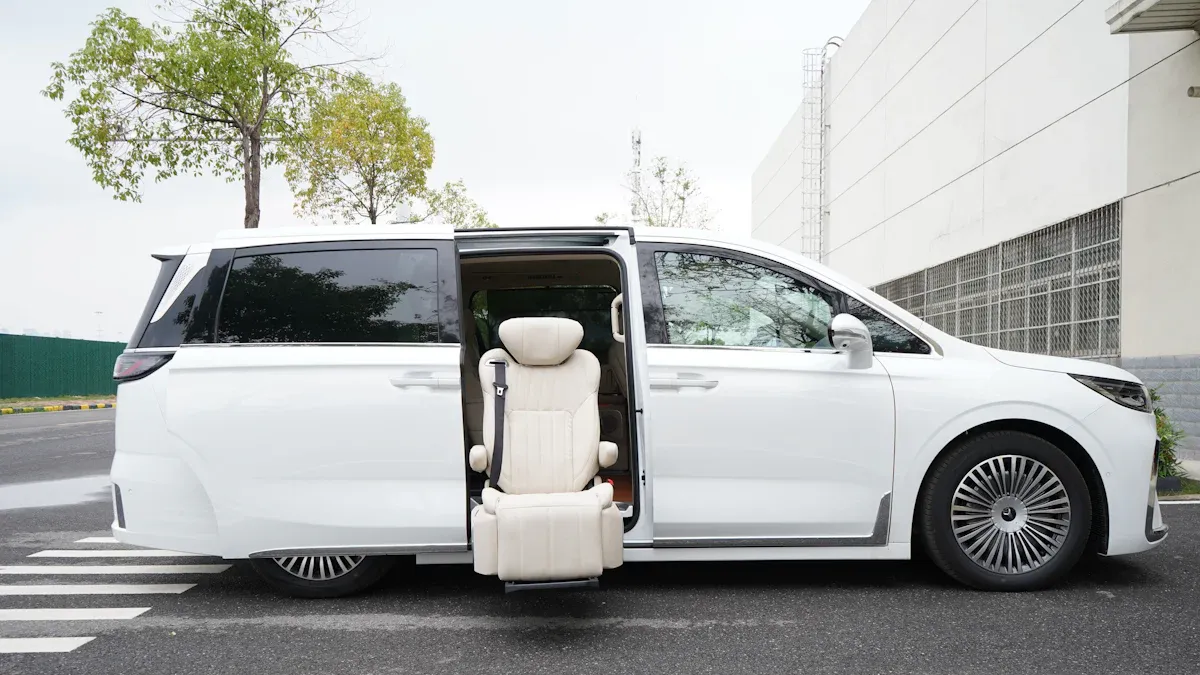
Automatic sliding doors offer seamless access. They detect a presence, activate a control unit, and use a motor to open and close. Sensors initiate this process, signaling door movement. The control unit processes these signals, commanding the motor system. This Automatic Door Operator technology is expanding. The global market for automatic sliding door operators, including the commercial automatic sliding door opener segment, projects to reach US$2.6 Billion with a 5.3% annual growth. This makes automatic sliding door opener selection for any automatic sliding door opener system, especially an automatic sliding door opener for commercial use, increasingly vital.
Key Takeaways
- Automatic doors use sensors to know when to open and close. These sensors act like the door’s eyes.
- A control unit acts as the door’s brain. It tells the motor system when and how to move the door.
- Automatic doors have safety features and need regular check-ups. This keeps them working well and safe for everyone.
The Core Mechanics of an Automatic Door Operator

An automatic door operator works like a well-oiled machine. It brings together sensing, control, and power to make doors open and close smoothly. Let’s break down how it all happens.
Sensing Presence and Initiating Action
The first step for any automatic door is knowing when someone needs to pass through. This is where sensors come in. They act as the door’s eyes and ears. Different types of sensors detect people or objects in various ways.
- Proximity Sensors use infrared technology. They sense objects or people nearby, allowing for hands-free operation.
- Pressure Sensors activate when someone applies force to the door. You often find these in older sliding doors.
- Photoelectric Sensors send out a light beam. When something breaks this beam, it tells the door to open. These work well for both swinging and sliding doors.
Modern systems often use more advanced sensors for better safety and efficiency:
- Motion Detector Sensors typically use microwave technology. They detect movement from people, objects, or even animals, triggering the door to open.
- Presence Sensors respond when someone stands still within their range. They operate the door at a safe speed to prevent collisions.
- Dual Technology Sensors combine both motion and presence sensing. Some even include a light row to show where someone is standing.
- Photoelectric Beam Sensors sit on each side of the door. They work with other sensors to detect anyone in the doorway, stopping the door from closing on them.
- Active Infrared Sensors send an infrared signal to the floor. The door opens when the signal bounces back because something is in the way.
- Passive Infrared Sensors detect heat patterns from warm objects, like people.
- Microwave Sensors send out a wide range of wavelengths. They detect the bounce-back signal to figure out how close an object is.
These sensors vary in how quickly they respond and how accurately they detect things.
| Sensor Type | Response Time | Detection Accuracy | Influencing Factors |
|---|---|---|---|
| Infrared Sensors | Varies with sensitivity and object distance | Detects changes in infrared light reflection | Sensitivity, distance, inconsistent/inadequate lighting |
| Ultrasonic Sensors | Typically fast | Uses sound waves to identify obstacles | Temperature, humidity |
| Microwave Sensors | Generally quick | Detects motion through microwave pulses, can penetrate obstacles | Interference from other electronic devices |
Infrared sensors are common. They emit infrared light and detect changes in reflection patterns for a quick and accurate response. Ultrasonic sensors use high-frequency sound waves. They measure the time it takes for waves to return after hitting objects, allowing for precise detection. Microwave sensors send out low-power microwave pulses. They watch for frequency changes caused by moving objects, giving consistent performance in different conditions.
The Control Unit’s Role in Door Operation
Once a sensor detects someone, it sends a signal to the control unit. Think of the control unit as the brain of the automatic door operator. It processes all the information and makes decisions.
The control unit manages many aspects of the door’s operation. It handles automatic opening, holding the door open, keeping it closed, or even opening it halfway to meet user needs. It also connects with other access control systems, like security beams or electric locks, for better security. This unit often has a self-learning function. This helps it optimize performance over time. It ensures the door mechanism works smoothly, safely, and reliably.
A high-quality microcomputer processor powers the control unit. This allows it to accurately control the door’s position, how far it slides, and its opening and closing speeds. It receives detection signals from sensors or other switches. Then, it tells the motor what to do. The control unit also offers flexible ways to adjust settings. It works efficiently in loop control with low reactive loss. An overload protection device is also included to prevent wear if the door gets stuck.
Modern control units have advanced capabilities. They allow you to adjust parameters like opening speed, closing delay, and how long the door stays open. This lets you adapt the door to different places. For example, a hospital might need slower operation, while a retail store might need faster cycling. These units also focus on energy efficiency. They use intelligent programming to open doors only when necessary. Some models even have timers, daylight sensors, or occupancy-based logic to save energy during quiet times. For security, they can integrate with PIN pads, fingerprint scanners, or smart card readers. They also have emergency response features. They can be programmed to open or close during emergencies like fire alarms or power outages. This helps with safe evacuation or lockdown. Communication protocols like RS-485, CAN bus, and Wi-Fi allow these units to connect with other building systems.
Motor System: Powering Door Movement
The motor system is the muscle of the automatic door operator. It receives commands from the control unit and physically moves the door panels. Without the motor, the door would not open or close.
Different types of motors power these systems. AC (alternating current) motors are common. People know them for their reliability and strong performance. DC (direct current) motors are also used. They are known for being energy-efficient and offering precise control.
Gear motors are very popular in automatic sliding door operators. You often find them in public buildings and elevators. They operate quietly and efficiently. The motor works with a drive system, often a belt or chain, to transfer its power to the door panels. This allows the door to slide open and closed along its track. The control unit constantly monitors the motor’s speed and position. This ensures the door moves exactly as needed, providing safe and convenient access.
Key Components of an Automatic Sliding Door Operator
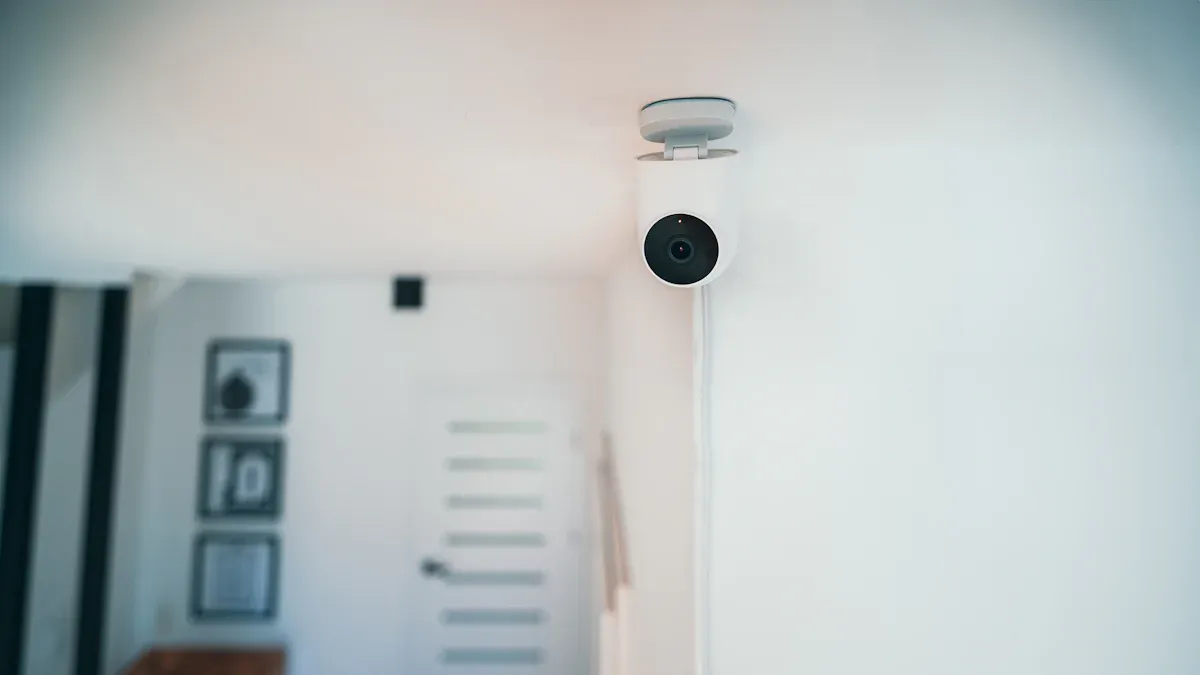
An automatic door operator relies on several key components working together. Each part plays a crucial role in making the door function smoothly and safely. Let’s explore these essential elements.
Types of Sensors for Detection
Sensors are the eyes and ears of an automatic door system. They detect when someone approaches or stands in the doorway. Different types of sensors offer unique benefits and have specific applications.
Infrared sensors are a popular choice. They significantly enhance safety by detecting obstructions and preventing doors from closing on people or objects. These sensors also contribute to energy efficiency. They minimize unnecessary door openings, which helps maintain indoor temperatures. This leads to reduced energy consumption and cost savings. Infrared sensors continuously monitor surrounding conditions. They adjust their sensitivity to ensure optimal performance in various situations. They also integrate smoothly with intelligent building automation systems. This offers greater control and efficiency in modern buildings. For example, infrared sensors identify obstructions and stop doors from closing to prevent injuries. They also cause a door to reopen automatically if it detects resistance during closure.
💡 Did you know? Infrared sensors can integrate with building management systems. They adjust lighting and HVAC based on occupancy, leading to substantial energy savings over time!
Microwave sensors are another common type. They offer high sensitivity and can detect even slight movements. These sensors provide a wide coverage range, sometimes up to 120 meters. A notable advantage is their ability to detect motion through walls or behind doors. They also show high resistance to interference, ensuring precision and reliability. However, microwave sensors do have some drawbacks. They are prone to false triggers from blowing objects or fluorescent light emissions. Their high sensitivity can also lead to the detection of animals or fast-moving objects, causing unnecessary door openings. They cannot detect motion behind metal obstructions. Microwave radiation can also be a concern, so low-power sensors are often favored.
Motor Technologies for Automatic Door Operators
The motor system provides the power that moves the door panels. The type of motor significantly impacts the door’s performance, efficiency, and lifespan.
Brushless DC (BLDC) motors are a top choice for modern automatic door operators. They offer exceptional reliability and longevity because they do not have brushes that wear out. This means they can operate for 50,000 to 100,000 hours or more, requiring less maintenance. These motors provide superior control and smooth operation. An integrated controller allows for precise torque and speed commands. This enables gentle acceleration, consistent travel, soft stops, and sensitive obstruction detection. BLDC motors are also highly efficient, converting electrical energy to mechanical motion with over 80-90% efficiency. This reduces operational costs and heat generation. Their compact power density allows for smaller motor sizes, which enables slimmer door designs. They also operate silently, contributing to occupant comfort.
Automatic door operators also use different motor configurations:
| Motor Type | Torque Characteristics | Speed Characteristics |
|---|---|---|
| Direct-Drive Motor | High torque at low speeds, eliminating the need for gearboxes | Low speeds, suitable for applications requiring precise control and high torque at the output shaft |
| Geared Motors | High torque (achieved through gears that multiply the motor’s output torque) | Low speed (gears reduce the motor’s inherent high speed to a usable lower speed) |
Geared motors are very common. They use a gearbox to increase torque and reduce speed, making them suitable for moving heavy door panels. Direct-drive motors, on the other hand, connect directly to the drive system. They offer high torque at low speeds without needing a gearbox.
The Door Mechanism and Drive System
The door mechanism and drive system are the physical parts that translate the motor’s power into the door’s movement. These components ensure the door slides open and closed along its track.
Common components of an automatic sliding door operator‘s mechanism include:
- A high-torque motor (as discussed above)
- An LED controller (often part of the control unit)
- A pulley and belt system
- Hangers that support the door panels
- Stoppers to define the door’s open and closed limits
- A power switch for manual control
The drive system is crucial for transferring power from the motor to the door panels. It often uses either a belt-driven or chain-driven system.
| Feature | Belt-Driven Systems | Chain-Driven Systems |
|---|---|---|
| Cost | Slightly higher price | Generally more affordable |
| Noise Level | Quieter due to reinforced rubber belt | Louder due to metal chain and vibrations |
| Maintenance | Less upkeep; they do not stretch or loosen over time | Requires periodic lubrication and tightening |
| Durability | Reliable, favored for quiet operation | Known for strength, better suited for heavier doors |
| Operation | Smooth, quieter experience | Loud, mechanical sound during operation |
Belt-driven systems are generally quieter than chain-driven models. They can be up to 30% quieter, which is a major benefit in many environments. High-strength drive belts can handle the weight loads of most doors. Chain-driven systems, however, typically have higher tensile strength and greater lifting capacity. They are often specified for heavier doors and can bring more muscle to the job for less money. A heavy-duty transmission system, featuring a reinforced belt and a high-load pulley, supports significant door weights. This makes it suitable for high-traffic environments like shopping malls or airports.
Ensuring Safety and Reliability in Automatic Door Operators
Automatic doors offer convenience, but safety and consistent performance are equally important. Manufacturers design these systems with many features to protect users. Regular maintenance also keeps them working correctly.
Integrated Safety Features
Automatic doors include sophisticated safety features. These features prevent accidents and protect people. Modern doors use advanced sensor systems. These sensors detect individuals or objects in the doorway. They stop the door from closing too soon. They also ensure the door opens for approaching users. For example, pressure-sensitive edges or contact strips on the door’s edges detect physical contact. The door then reverses or stops immediately. Proximity sensors slow the door’s motion when they detect an object. This gives the door time to stop or reverse before contact.
Safety standards like UL 325 guide the design of these operators. This standard sets rules for automatic opening and closing appliances. It helps prevent fire and electrical hazards. The 7th Edition of UL 325, effective since August 2018, aims to prevent accidents. It prohibits tampering with key monitoring features. It also adds manufacturer responsibilities for compliance. ASTM F2200 standards also govern gate construction. They ensure safety features like covers for exposed rollers and fall-over protection. These standards work together to ensure the highest level of public safety. Automatic doors also have emergency features. Battery backups allow continued operation during power failures. They also integrate with fire alarm systems. This includes emergency breakaway features for manual opening during fires. A slow-speed mode allows doors to open and close more gradually. This reduces accident risks for vulnerable individuals.
Maintenance for Optimal Performance
Regular maintenance is crucial for an Automatic Door Operator. It ensures the door works safely and efficiently. A recommended schedule includes monthly, quarterly, and yearly tasks.
- Monthly: Visually inspect sensors for damage or debris. Clean sensor lenses. Test basic functionality by triggering sensors and watching the door’s response.
- Quarterly: Check sensor alignment and adjust sensitivity. Inspect wiring and connections for security and corrosion.
- Yearly: Schedule a comprehensive inspection by a qualified technician. This includes cleaning, calibration, and testing. They also perform any necessary repairs. Install software updates for the sensor or door control system. Replace batteries in battery-powered sensors.
During routine maintenance, technicians inspect several key points. They test sensors and safety devices. They verify door operation for correct opening and closing speeds. They check all control systems and mechanical parts for wear. They also ensure power supply and backup systems work correctly. Technicians visually inspect door panels, tracks, and hardware for damage. They test emergency stop functions. They also check friction points like hinges and locks for proper greasing. This regular care ensures the door remains reliable and safe for everyone.
Automatic sliding door operators seamlessly combine sensing, control, and motor power. This provides effortless access for everyone. Each component plays a vital role in the door’s smooth functionality. Understanding their operation truly enhances your appreciation for modern door technology.
FAQ
How do automatic doors know when to open?
Automatic doors use various sensors like infrared, microwave, or motion detectors. These sensors detect people or objects approaching or standing in the doorway, signaling the door to open. 🚶♀️
What makes automatic doors safe?
Integrated safety features like pressure-sensitive edges and advanced sensors prevent accidents. They stop or reverse the door if they detect an obstruction, ensuring user protection. 🛡️
Why is maintenance important for automatic doors?
Regular maintenance ensures automatic doors operate safely and efficiently. It involves checking sensors, testing functions, and inspecting mechanical parts to prevent breakdowns and extend the door’s lifespan. 🛠️