
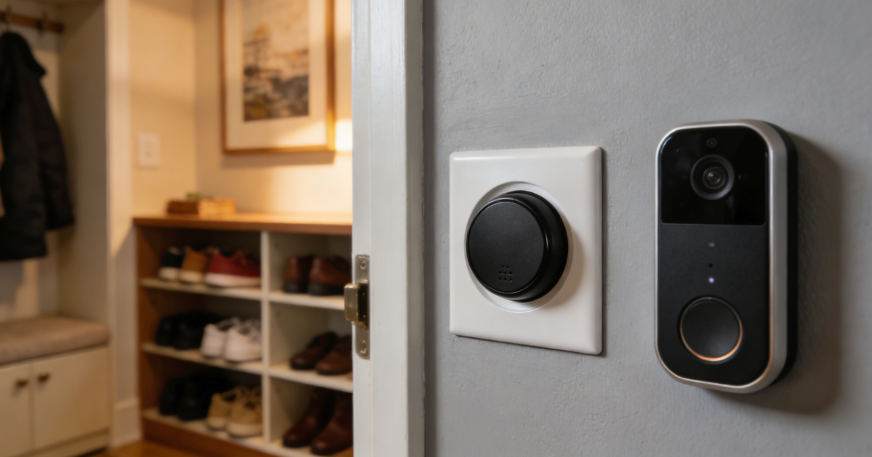
Automatic door accessories are essential for improving both performance and safety. These components, including door activation sensors and automatic door safety sensors, help to alleviate common problems such as sensor malfunctions and power interruptions. By tackling these issues, facilities can guarantee smooth operation and minimize the risk of accidents. Investing in quality automatic door parts replacement not only boosts efficiency but also enhances safety for users. Furthermore, incorporating Automatic Swing Door Openers and a reliable automatic door motor can significantly elevate the functionality of the entryway. Ultimately, the right accessories can transform an ordinary automatic door into a dependable and secure access point.
Key Takeaways
- Investing in quality automatic door accessories boosts performance and safety, ensuring smooth operation and reducing accident risks.
- Motion sensors enhance energy efficiency by opening doors only when necessary, minimizing unnecessary energy loss.
- Safety sensors are crucial for preventing accidents by detecting obstacles and stopping or reversing door movement instantly.
- Regular maintenance of automatic doors is essential for optimal performance, extending their lifespan and preventing costly breakdowns.
- Incorporating weather stripping improves energy efficiency by sealing doors, reducing drafts, and lowering energy bills.
Motion Sensors

Motion sensors play a crucial role in the operation of automatic doors. They enhance convenience and safety by ensuring doors open only when necessary. This functionality minimizes the time doors remain open, which helps maintain the internal temperature of buildings and leads to energy savings. In commercial and public spaces, motion sensors limit unnecessary door openings, improving overall energy efficiency.
Several types of motion sensors are commonly used in automatic doors:
- Motion Detector Sensors: Detect motion from people, objects, and animals.
- Presence Sensors: Respond to motionless individuals within range.
- Dual Technology Sensors: Combine motion and presence sensing capabilities.
- Photoelectric Beam Sensors: Ensure detection within the threshold area.
- Active Infrared Sensors: Activate the door based on infrared signals.
- Passive Infrared Sensors: Detect heat sources to activate the door.
- Microwave Sensors: Determine proximity through returning signal patterns.
These sensors not only improve accessibility but also enhance the safety of users. For instance, the BEA Eagle is designed for automatic pedestrian doors and is compatible with both swing and sliding doors. It effectively detects approaching traffic, ensuring that doors open at the right moment. Similarly, the Optex i-oneX T combines motion and safety sensing for sliding doors, covering a wide detection area.
Incorporating motion sensors into automatic door systems significantly boosts their efficiency. By activating doors only when needed, these sensors contribute to a more streamlined and energy-efficient operation.
Safety Sensors

Safety sensors are vital components of automatic doors, enhancing user protection and preventing accidents. These sensors detect obstacles in the door’s path, allowing for immediate responses that can stop or reverse the door’s movement. This feature significantly reduces the risk of injury, especially in high-traffic areas such as hospitals and shopping centers.
Several types of safety sensors are available for automatic doors:
-
Motion Sensors: Ideal for high-traffic areas, these sensors detect movement and ensure doors open only when necessary.
- Infrared (IR) Sensors: Respond to warm objects and work effectively at close range.
- Microwave Sensors: Detect movement from greater distances, making them suitable for large entryways.
-
Proximity Sensors: These sensors detect presence without requiring movement, which is useful for accessibility.
- Capacitive Proximity Sensors: Measure changes in electric fields to identify objects.
- Ultrasonic Sensors: Utilize sound waves to detect presence, remaining less affected by lighting conditions.
-
Pressure Sensors: These sensors detect weight on mats, commonly used in older automatic door models.
- Pressure Mats: Embedded in mats signal the door to open when stepped on.
-
Optical (Laser) Sensors: Use light beams to create detection fields.
- Laser Sensors: Highly accurate and beneficial in secure areas.
- Photoelectric Sensors: Trigger door opening when the light beam is interrupted.
-
Combination Sensors: These utilize multiple sensor types for enhanced reliability.
By integrating safety sensors into automatic door systems, facilities can ensure compliance with safety standards. For example, laser sensors help meet regulations designed to protect the public from door-related accidents. Additionally, these sensors support compliance with the Americans with Disabilities Act (ADA), ensuring safe access for individuals with disabilities.
Soft Door Closers
Soft door closers are essential components in automatic door systems. They utilize adjustable hydraulic valves to control the closing speed of doors. This feature ensures a smooth and safe closure, which is particularly important in environments where safety is a priority, such as homes with young children or elderly individuals.
The benefits of soft door closers include:
- Controlled Closing Speed: They regulate how quickly doors close, preventing slamming.
- Enhanced Safety: By slowing down the closing process, they reduce the risk of injury.
- Noise Reduction: These devices minimize disruptive sounds during door closure, creating a quieter environment.
- Durability: They help extend the lifespan of doors by reducing wear and tear from slamming.
Soft door closers work by retarding the movement of the door as it approaches the frame. This gradual closure allows for a gentle stop, which is crucial in busy settings like hospitals and hotels. Loud, slamming doors can disrupt rest and create stress, impacting recovery in healthcare facilities. By implementing soft-close door hardware, facilities can ensure a tranquil atmosphere.
In commercial buildings, soft door closers contribute significantly to noise reduction. They prevent doors from slamming, which minimizes disruptive noise and enhances tranquility. Controlled closing mechanisms ensure that doors operate smoothly and quietly, effectively reducing noise pollution. This is especially beneficial in environments where noise can affect well-being, such as healthcare and hospitality settings.
Access Control Systems
Access control systems significantly enhance the security of automatic doors in commercial environments. These systems ensure that only authorized personnel can enter restricted areas, protecting sensitive information and assets. By implementing access control, organizations can create a safer environment for employees and customers alike.
Key components of access control systems include:
- Access cards
- Card readers
- Access control keypads
- Electronic lock hardware
- Access control panels
These components work together to manage entry effectively. For instance, the lock secures the door and releases it upon successful credential verification. The reader scans credentials and communicates with the access controller, while the Door Position Indicator (DPI) shows whether the door is open or closed. Additionally, the Request to Exit (REX) feature allows individuals to exit controlled areas easily. Wireless locks are also available, making them ideal for hard-to-wire doors.
The benefits of access control systems extend beyond security. They provide:
- Boosted Security: An extra layer of protection that restricts access to authorized personnel.
- Greater Efficiency: Automated access management speeds up entry for authorized users, reducing the need for manual monitoring.
- Real-Time Monitoring: These systems help identify suspicious behavior, minimizing potential breaches.
- Enhanced Safety: Access control deters theft and vandalism, contributing to overall building safety.
- Flexibility: Organizations can easily manage access for changing personnel needs.
- Remote Access: Cloud-connected features allow for access management from various locations.
Incorporating access control systems as part of automatic door accessories not only improves security but also enhances operational efficiency. Organizations can streamline their access management processes while ensuring a safe environment for everyone.
Emergency Stop Buttons
Emergency stop buttons are critical safety features in automatic door systems. They provide a quick and effective way to halt door operation during emergencies. This functionality is essential in preventing accidents and ensuring user safety in various environments, including commercial buildings and healthcare facilities.
The placement of emergency stop buttons should prioritize accessibility. Users must easily locate and activate these buttons in urgent situations. Typically, these buttons are mounted at a height that is convenient for both adults and children.
The following table outlines the requirements for emergency stop buttons in automatic door safety protocols:
| Requirement | Description |
|---|---|
| Emergency Stop Button | Doors should be equipped with an emergency stop button that can be easily accessed in case of an emergency. |
Incorporating emergency stop buttons into automatic door systems enhances overall safety. These buttons allow users to stop door movement instantly, reducing the risk of injury. For instance, if a person or object becomes trapped in the door’s path, activating the emergency stop button can prevent serious harm.
Furthermore, regular maintenance of these buttons is crucial. Facilities should routinely check the functionality of emergency stop buttons to ensure they operate correctly. This proactive approach minimizes the risk of malfunction during emergencies.
Weather Stripping
Weather stripping serves as a crucial accessory for automatic doors, enhancing both performance and energy efficiency. This material creates a seal around doors, preventing drafts and air leaks. By doing so, it maintains a comfortable indoor environment and reduces energy consumption.
Common materials used for weather stripping include:
- EPDM
- Silicone
- Vinyl
- Neoprene
- Brush
- Foam
For instance, the Leading Door Rail Stile Black Weatherstripping Pile is designed specifically for various models of automatic sliding doors. This product exemplifies how effective weather stripping can be in improving door functionality.
Properly installed weather stripping offers several benefits:
- It stops drafts, enhancing comfort for occupants.
- It creates a tighter seal that prevents air leakage, essential for maintaining temperature control.
- It reduces energy consumption, as heating and cooling systems do not have to work as hard.
In fact, effective weather stripping can lower energy bills by up to 20%. This significant reduction showcases its impact on operational costs. By preventing the leakage of conditioned air, facilities can save money while ensuring a comfortable environment for users.
Incorporating weather stripping into automatic door systems not only improves energy efficiency but also contributes to the overall effectiveness of automatic door accessories. Facilities that prioritize these enhancements can enjoy long-term benefits, including reduced energy costs and improved user satisfaction.
Regular Maintenance Accessories
Regular maintenance accessories are essential for ensuring the optimal performance of automatic doors. These components help maintain smooth operation and extend the lifespan of the door systems. Facilities can prevent costly breakdowns and enhance safety by investing in the right maintenance accessories.
Key regular maintenance accessories include:
- Remote keys with receiver
- Controller for CAYMAN system
- Door handle control module (various models)
- Extra key remote control
- Cable for TROC system
- Contacts for the door (with and without spacer)
- Gear for CROCO system
These accessories play a vital role in the upkeep of automatic doors. For instance, remote keys allow for easy access control, while controllers ensure that the door systems operate efficiently.
To maintain automatic doors effectively, facilities should adhere to a regular maintenance schedule. The following table outlines the recommended maintenance frequency for various components:
| Component | Maintenance Frequency | Purpose |
|---|---|---|
| Track and Guide Cleaning | Quarterly (more in dusty/corrosive environments) | Prevents friction and jamming. |
| Lubrication | Quarterly | Reduces friction/noise. (Avoid grease!) |
| Safety Sensors | Monthly | Critical for safety compliance. |
| Fasteners and Hardware | Quarterly | Prevents misalignment, vibrations, and premature failure. |
| Remote/Operator Check | Monthly | Guarantees reliable access and prevents being locked out or in. |
| Professional Inspection/Service | Bi-Annually (Quarterly for high-use/older doors) | Required for warranty & safety. |
Regular maintenance significantly impacts the longevity of automatic door systems. It ensures that these doors function smoothly and reduces the likelihood of breakdowns, which can lead to extended operational life. Furthermore, well-maintained doors are more energy-efficient and present fewer safety hazards, reinforcing the importance of consistent upkeep.
By prioritizing regular maintenance accessories, facilities can enhance the reliability and safety of their automatic doors, ultimately benefiting both users and operators.
Automatic door accessories play a vital role in enhancing both performance and safety. Key components such as motion sensors, safety sensors, and access control systems contribute significantly to operational reliability. Choosing the right accessories ensures that automatic doors function optimally, providing convenience and security for users.
Facilities should regularly assess their automatic doors for necessary upgrades. Factors like life-cycle cost analysis and facility needs can guide this evaluation. By investing in quality accessories, organizations can improve user satisfaction and maintain a safe environment.
FAQ
What are the benefits of using motion sensors in automatic doors?
Motion sensors enhance convenience and safety by ensuring doors open only when necessary. They minimize energy consumption and reduce the risk of accidents in high-traffic areas.
How do safety sensors improve automatic door safety?
Safety sensors detect obstacles in the door’s path, allowing immediate responses to stop or reverse door movement. This feature significantly reduces the risk of injury to users.
Why is regular maintenance important for automatic doors?
Regular maintenance ensures optimal performance and extends the lifespan of automatic doors. It prevents costly breakdowns and enhances safety by keeping all components functioning correctly.
What types of access control systems are available for automatic doors?
Access control systems include card readers, keypads, and electronic locks. These systems restrict entry to authorized personnel, enhancing security and operational efficiency.
How can weather stripping improve energy efficiency?
Weather stripping creates a seal around doors, preventing drafts and air leaks. This helps maintain indoor temperatures and reduces energy consumption, leading to lower utility bills.