
Selecting the right automatic door operator is crucial for ensuring functionality and convenience in various environments. To assist in this process, refer to the automatic door operator guide, which outlines essential considerations. These operators significantly enhance accessibility, especially for individuals with disabilities. Understanding specific needs helps in choosing the appropriate system, including how to choose door operators that best fit your requirements.
When comparing sliding vs swing door operator options, consider the following benefits of automatic door operators for accessibility:
| Feature | Benefit for Accessibility |
|---|---|
| Eliminates physical effort | Reduces the need for manual operation, aiding those with mobility challenges. |
| Hands-free use | Allows individuals to enter without needing to touch the door, beneficial for those with limited hand function. |
| User-friendly design | Designed to accommodate all demographics, including the elderly and disabled. |
| Adjustable opening speeds | Can be tailored to individual needs, enhancing usability. |
| Manual backup mode | Ensures functionality during emergencies, providing peace of mind. |
| Sensitive motion sensors | Enhances safety by detecting users approaching the door. |
For a thorough automatic door features comparison, these features not only improve user experience but also promote independence and dignity. Additionally, keep in mind these door operator buying tips to make an informed decision when exploring commercial door operator options.
Key Takeaways
- Automatic door operators enhance accessibility, making it easier for individuals with mobility challenges to enter buildings.
- Consider the type of door operator—sliding, swing, or folding—based on your specific needs and the environment.
- Evaluate safety features like obstruction detection and emergency manual release to ensure safe operation.
- Regular maintenance, including inspections and lubrication, is essential for prolonging the lifespan of automatic door operators.
- Budget for both initial costs and long-term maintenance to ensure reliable performance and avoid unexpected expenses.
Types of Automatic Door Operators

Automatic door operators come in various types, each designed for specific applications and environments. Understanding these types helps users select the most suitable option for their needs. Here are the main types of automatic door operators:
| Type | Description | Best Applications |
|---|---|---|
| Sliding | Moves doors horizontally along a track, ideal for high-traffic entrances. | Supermarkets, transit hubs |
| Swing | Automates hinged doors, common in healthcare and office settings. | Exam rooms, pharmacies, offices |
| Folding | Drives multi-panel accordion-style doors, prioritizing wide clearances. | Warehouses, loading docks, large retail |
Advantages and Disadvantages
Each type of automatic door operator has its own set of advantages and disadvantages. Here’s a closer look:
| Door Type | Advantages | Disadvantages |
|---|---|---|
| Automatic Swing | – Space-efficient at the hinge side | – Requires a clear area in front and behind the door. |
| – Versatile in design, customizable with various materials | – Less aesthetic continuity compared to sliding doors. | |
| – Improved accessibility for all users | – Higher maintenance in high-traffic areas due to more moving parts. | |
| Automatic Sliding | – Saves space as it operates sideways | – More complex to install and cannot be automated onto existing doors. |
| – Sleek design that enhances building appearance | – Higher initial cost when new doors are required. | |
| Automatic Folding | – Ideal for narrow spaces and windy areas | – May not be suitable for high traffic areas. |
Experts in the field emphasize the importance of selecting the right type based on user needs. For instance, Jon Oliver, a Business Development Manager, notes that swing doors are effective for fire exits and can be fitted onto existing doors. Kristian Manny, a Technical Manager, highlights that sliding doors are more efficient as they are not affected by wind and are easier to maintain. Ultimately, the choice depends on specific requirements, as Lynn Weeks, a Sales Manager, points out that sliding doors are user-friendly, while swing doors can be automated for touchless access.
Choosing the right type of automatic door operator is essential for ensuring functionality and accessibility. The automatic door operator guide provides valuable insights into making an informed decision.
Key Factors to Consider in an Automatic Door Operator Guide
Selecting the right automatic door operator involves evaluating several key factors. These factors ensure that the chosen system meets operational requirements and safety standards.
Power Source Options
When considering power sources for automatic door operators, two primary options exist: battery backup systems and hardwired systems. Each option has distinct advantages and disadvantages.
-
Battery Backup Systems:
- Ensure operation during power outages, which is crucial for safety and access.
- Provide flexibility in installation, especially in locations without easy access to electrical outlets.
-
Hardwired Systems:
- Offer a continuous power supply, making them generally more reliable.
- Comply with electrical codes, ensuring safety and efficiency in operation.
Automatic doors are essential for safety and access, especially during emergencies. A brief power outage can hinder entry, security, or evacuation, highlighting the need for reliable systems. Therefore, evaluating the power source is critical in the automatic door operator guide.
Safety Features
Safety features play a vital role in the functionality of automatic door operators. Compliance with international standards ensures that these systems operate safely in various environments. Here are some essential safety features:
| Safety Feature | Description |
|---|---|
| Obstruction Detection | Presence sensors or pneumatic edges detect obstacles and trigger reversal mechanisms. |
| Force Limitations | Maximum opening forces (e.g., 15 lbf for swinging doors) minimize hazards. |
| Cycle Testing | Endurance testing (e.g., 100,000 cycles) ensures reliability for low-frequency use doors. |
| Entrapment Protection Devices | Photo-electric sensors and edge sensors detect obstructions as small as 1 inch. |
| Emergency Manual Release | Mechanisms allow manual operation during emergencies. |
| Integration with Fire Alarms | Ensures fail-safe opening in case of fire. |
| Signage Requirements | Mandatory signage warns of automatic operation. |
| Backup Power Supply | Battery backups ensure functionality during power outages. |
| Audible and Visual Alerts | Alarms or warning lights enhance user awareness of door operation. |
| Risk Assessments | Required for crushing, shearing, and impact zones. |
| Low-Energy Operators | Force under 30 N for high-traffic areas ensures safety. |
| Full-Force Reversal | Required on detection of an obstruction to prevent injury. |
| Performance Evaluations | Cover environmental factors and usage frequency classifications. |
These features enhance safety and ensure compliance with regulations. Automatic doors must adhere to rigorous safety standards set by organizations like the American Association of Automatic Door Manufacturers (AAADM).
Control Systems
Control systems determine how users interact with automatic door operators. Various options exist, each offering unique functionalities:
- Push Button Controls: Simple and effective, allowing users to open doors with a single press.
- Motion Sensors: Enhance safety by detecting users approaching the door. They minimize false triggers and ensure safe operation, adhering to strict safety regulations.
- Remote Controls: Provide convenience for users, especially in commercial settings where hands-free operation is beneficial.
- Smart Controls: Integrate with building management systems, allowing for remote monitoring and control.
The effectiveness of motion sensors and obstruction detection systems significantly improves safety. Passive infrared (PIR) sensors detect thermal radiation from warm bodies, activating upon motion within a range of up to 15 feet. Active infrared sensors provide precise detection by emitting beams and measuring reflections. Microwave radar sensors optimize energy use and reduce unnecessary openings by distinguishing approach from departure directions. Dual-technology combinations mitigate individual limitations, improving overall safety.
Durability and Maintenance
Durability and maintenance are critical factors when selecting an automatic door operator. A reliable operator not only enhances accessibility but also minimizes long-term costs associated with repairs and replacements. Understanding the average lifespan of different types of operators can help users make informed decisions.
| Type of Opener | Average Lifespan |
|---|---|
| Belt Drive | 12–18 years |
| Chain Drive | 10–15 years |
| Screw Drive | 8–12 years |
The lifespan of an automatic door operator varies based on several factors, including the type of opener, frequency of use, and maintenance practices. On average, a garage door opener can last anywhere from 10 to 15 years. However, this lifespan can fluctuate depending on the quality of the components and the environment in which the operator functions.
To ensure longevity, regular maintenance is essential. Here are some key maintenance practices:
- Routine Inspections: Conduct regular checks for wear and tear. Look for signs of damage or misalignment in the door and operator components.
- Lubrication: Apply lubricant to moving parts to reduce friction and prevent wear. This practice can extend the lifespan of the operator significantly.
- Cleaning: Keep the tracks and sensors free from debris. Dirt and grime can hinder performance and lead to malfunctions.
- Adjustments: Periodically adjust the settings to ensure optimal performance. This includes checking the opening and closing speeds and force settings.
- Professional Servicing: Schedule annual inspections with a qualified technician. They can identify potential issues before they become significant problems.
By following these maintenance practices, users can enhance the durability of their automatic door operators. Investing time in upkeep not only prolongs the life of the equipment but also ensures safety and reliability in operation.
Installation Requirements

Installing an automatic door operator involves several critical considerations. These factors ensure the system functions correctly and complies with safety regulations.
Professional vs. DIY Installation
Choosing between professional installation and a DIY approach can significantly impact costs and effectiveness. Here are some key points to consider:
-
Professional Installation:
- Average installation costs for low energy door operators range from $2,000 to $5,000 per door.
- Costs typically include:
- Basic operator unit: $1,200 to $2,500
- Activation switches or sensors: $200 to $800
- Installation labor: $600 to $1,500
- Optional accessories: $200 to $500
- For standard single-door installations, expect costs around $2,500 to $3,000. More complex setups may exceed $5,000.
-
DIY Installation:
- While DIY can save money, it requires technical skills and knowledge of local building codes.
- Mistakes during installation can lead to safety hazards and additional costs for repairs.
Space and Structural Considerations
Before installation, assess the available space and structural integrity of the door frame. Automatic door operators require sufficient clearance for smooth operation. Consider the following:
- Door Type: Ensure the selected operator matches the door type (e.g., sliding, swing).
- Clearance: Verify that there is enough space for the door to open fully without obstruction.
- Structural Support: Check that the door frame can support the weight and movement of the automatic operator.
Compliance with Building Codes
Adhering to building codes is essential when installing automatic door operators, especially in public facilities. The following table outlines key requirements:
| Requirement Description | Applicable Occupancies | Notes |
|---|---|---|
| At least one automatic door at accessible public entrances | Assembly occupancies with 300+ occupants | Excludes Group A-5 facilities |
| Automatic doors required for business, mercantile, and Group R-1 with 500+ occupants | Business, mercantile, Group R-1 | Must have at least one automatic door |
| Series of doors must include automatic operators | Series entrances (e.g., vestibules) | At least one set must have automatic operators |
| Mixed-use facilities evaluation | Mixed-use with multiple occupancies | Requirements apply based on total occupant load ratios |
Understanding these installation requirements ensures that the automatic door operator functions effectively and safely, enhancing accessibility for all users.
Checklist for Selection
Selecting the right automatic door operator requires careful consideration of various factors. This checklist will guide individuals through the essential steps to ensure they make an informed decision.
Assessing Your Needs
Understanding specific needs is crucial when choosing an automatic door operator. Different environments have unique requirements. For instance, in healthcare settings, automatic doors serve multiple purposes:
- Hands-Free Access: Automatic doors allow medical staff, patients, and equipment to move without physical contact, enhancing convenience.
- Hygiene Maintenance: These doors reduce contact points, helping to maintain cleanliness and prevent cross-contamination.
- Emergency Response: A malfunctioning door can hinder quick access during emergencies, making reliable operation essential for hospital staff.
In commercial settings, consider the volume of foot traffic and the types of users. High-traffic areas may benefit from sliding doors, while swing doors might be more suitable for less frequented entrances. Assessing these needs ensures that the selected operator aligns with the intended use.
Budget Considerations
Budget plays a significant role in the selection process. The average price range for automatic door operators in North America varies based on quantity and features. Here’s a breakdown of costs:
| Quantity Range | Price (USD) |
|---|---|
| 1-49 Pieces | 148.00 |
| 50-99 Pieces | 145.00 |
| 100-499 Pieces | 140.00 |
| 500+ Pieces | 138.00 |
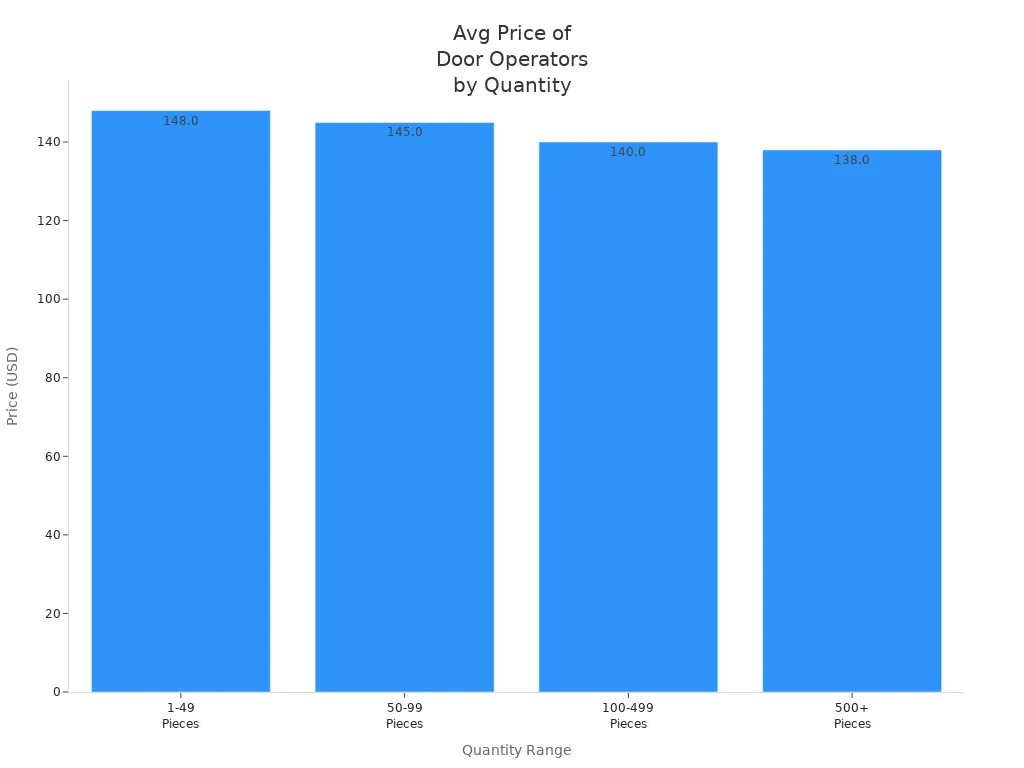
When budgeting, consider not only the initial purchase price but also long-term maintenance costs. Regular maintenance is essential for ensuring functionality and longevity, which can lead to additional expenses over time. Repairs for complex systems can be costly, impacting the total cost of ownership. Warranties and support options may help mitigate some long-term expenses, although they might increase initial costs.
Brand Reputation and Reviews
Brand reputation significantly influences the decision-making process. Researching brands and reading customer reviews can provide valuable insights into product reliability and performance. Common complaints found in online reviews include:
| Complaint Type | Description |
|---|---|
| Unresponsive to the Remote | The remote fails to trigger the door operator, often due to dead batteries or interference. |
| Suddenly Closing & Reversing | The door unexpectedly closes and reverses, typically due to alignment issues or sensor sensitivity. |
| Faulty Sensors | Misaligned or dirty sensors can cause the door to malfunction, preventing proper operation. |
| Broken Springs | A broken torsion spring can halt door movement, indicating a need for professional repair. |
| Motor Failure | A humming motor without function may signal internal issues or power problems. |
Evaluating brand reputation and customer feedback helps ensure that the selected automatic door operator meets expectations and provides reliable service.
By following this checklist, individuals can make informed decisions when selecting an automatic door operator that best suits their needs.
Common Concerns
Noise Levels
Noise levels can significantly impact user experience with automatic door operators. Different types of systems produce varying noise levels. For instance, belt-driven systems operate quietly, making them suitable for environments where noise reduction is essential. In contrast, chain-driven systems tend to generate increased noise levels, which may be disruptive in quiet settings.
| Type of System | Noise Level |
|---|---|
| Belt-driven | Quiet operation |
| Chain-driven | Increased noise level |
Energy Efficiency
Energy efficiency is a growing concern for many users. Automatic door operators can consume varying amounts of energy based on their design and usage. Selecting energy-efficient models can lead to significant savings on utility bills. Regular maintenance plays a crucial role in ensuring optimal performance. Routine checks should include cleaning sensors, inspecting wiring, and testing door function. Neglecting these tasks can lead to slow operation or complete failure due to dirt, weather, or worn parts.
Warranty and Support
Warranty terms and customer support are vital considerations when selecting an automatic door operator. Leading manufacturers typically offer warranties that cover specific aspects of their products.
| Warranty Aspect | Details |
|---|---|
| Coverage Period | 12 months after the date of shipment from NABCO. |
| Exclusions | Does not cover field service labor, misuse, neglect, accidents, acts of God, or terrorism. |
| Conditions | Warranty applies only to normal use and service; does not cover tampering or alterations. |
Customer support responsiveness also varies among brands. Users often report quick response times from local service representatives. Strong support networks exist in regions with certified installers, ensuring efficient service requests.
| Evidence Description | Response Time Insight |
|---|---|
| After-sales support is reliable, with local service reps responding quickly. | Quick response times noted by users. |
| Customer support is strong in regions with partners, ensuring quick service requests. | Quick service through certified installers. |
| Service requests are handled through a trained dealer network for peace of mind. | Reliable service for building owners. |
| Staff are responsive and open to solving issues during project deliveries. | Responsiveness during project phases. |
By addressing these common concerns, users can make informed decisions when selecting automatic door operators that best meet their needs.
Choosing the right automatic door operator requires careful consideration of various factors. Users should evaluate the different types of operators, including sliding, swing, and folding doors. Each type serves unique applications and environments.
Key factors in the selection process include safety, uptime, and integration readiness. Users should also prioritize service workflows for preventive maintenance. Following a structured approach can enhance reliability and safety.
Informed decision-making leads to better outcomes. By understanding their specific needs and the available options, users can select the most suitable automatic door operator for their environment.
- Conduct stakeholder interviews across the value chain.
- Perform technical and regulatory reviews.
- Validate insights through triangulation of data.
Embrace these strategies to ensure optimal performance and safety in automatic door operations.
FAQ
What is an automatic door operator?
An automatic door operator is a device that opens and closes doors automatically. It enhances accessibility and convenience, especially in high-traffic areas or for individuals with mobility challenges.
How do I choose the right type of automatic door operator?
Consider the environment and user needs. Evaluate factors such as traffic volume, door type, and accessibility requirements. Consult with professionals for tailored recommendations.
Are automatic door operators energy-efficient?
Yes, many modern automatic door operators are designed for energy efficiency. They minimize energy consumption while maintaining functionality, which can lead to lower utility costs.
What maintenance is required for automatic door operators?
Regular maintenance includes inspecting components, lubricating moving parts, and cleaning sensors. Schedule annual professional inspections to ensure optimal performance and safety.
How long do automatic door operators typically last?
The lifespan of automatic door operators varies by type. On average, they last between 8 to 18 years, depending on usage and maintenance practices.