
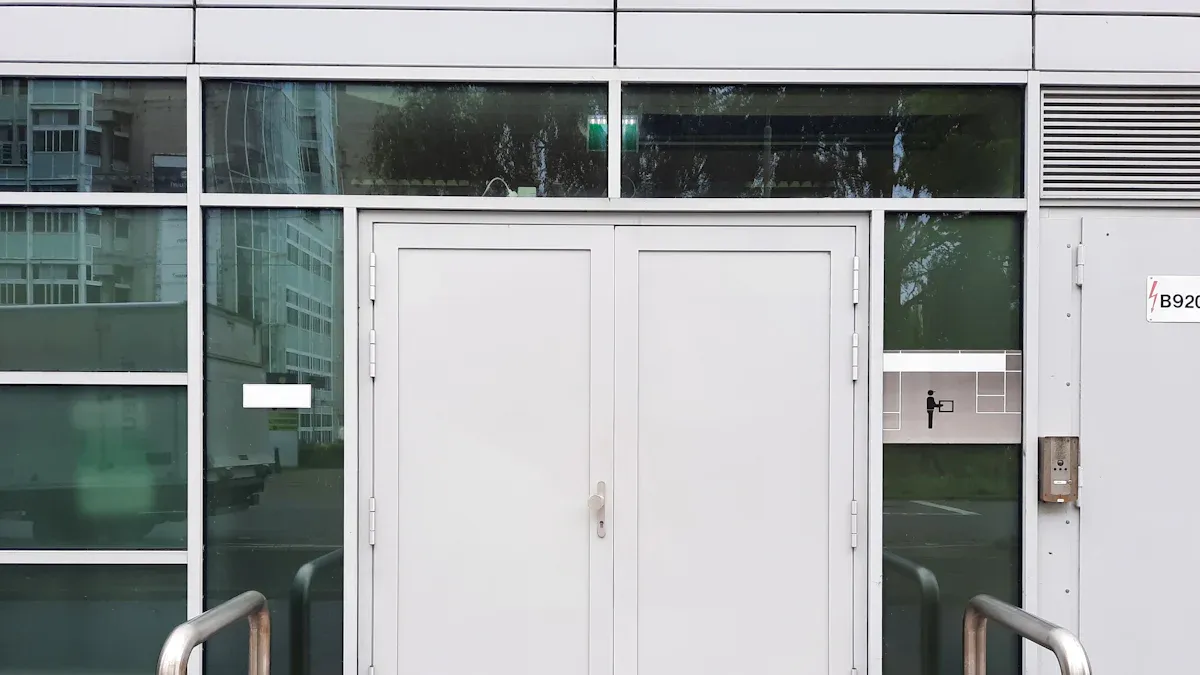
Selecting the right automatic door motor is crucial for any business, and our automatic door motor selection guide can help you make the best choice. A well-chosen motor, such as a waterproof automatic door motor for commercial use, enhances operational efficiency and ensures the safety of both employees and customers. For instance, accessibility features improve satisfaction for individuals with disabilities, while energy-efficient models help maintain a comfortable environment. Additionally, it’s important to consider compatible automatic door motors for sliding doors to ensure seamless operation. Customizable security options increase safety and convenience, allowing hands-free entry and exit. In settings like healthcare, automatic sliding door operators minimize contact, thereby reducing the risk of contamination. To ensure quality, understanding why ISO9001 & CE certifications matter for automatic door products is essential. These factors collectively contribute to an improved customer experience, making the right motor selection even more critical.
Key Takeaways
- Assess your business needs before selecting an automatic door motor. Consider factors like accessibility, safety, and compliance with regulations.
- Choose the right type of motor for your doors. Brushless DC motors are energy-efficient and require less maintenance, making them ideal for high-traffic areas.
- Evaluate installation requirements carefully. Ensure that the installation team is certified and that the space meets the motor’s size and electrical needs.
- Consider both initial costs and long-term expenses. Investing in high-efficiency motors can lead to significant savings on maintenance and energy bills.
- Ensure compliance with safety standards. Familiarize yourself with local codes and regulations to create a safe environment for customers and employees.
Assessing Business Needs
When selecting an automatic door motor, business owners must first assess their specific needs. Understanding these requirements helps in making informed decisions that align with operational goals. Key factors to consider include accessibility, safety, and compliance with regulations.
Many businesses require accessible door operators, especially those exceeding 3,000 square feet, ground-level restaurants, and multi-residential buildings. Additionally, accessible washrooms must be available for users of automatic doors. Elevator access is also essential for multi-residential buildings with more than one story. The following table summarizes common business requirements that influence the selection of automatic door motors:
| Requirement | Description |
|---|---|
| Accessible Door Operator | Required for businesses over 3000 sq ft, ground-level restaurants, and multi-residential buildings. |
| Accessible Washroom | Must be provided for accessible door users. |
| Elevator Access | Required for multi-residential buildings over one story. |
Moreover, automatic sliding doors must facilitate quick and safe exits during emergencies. Many models feature break-out capabilities, allowing manual operation when necessary. Investing in ADA-compliant door operators not only enhances accessibility but also improves customer experience. This investment encourages more visitors and fosters a welcoming environment.
Compliance with disability access legislation is crucial. Automatic doors must meet BS EN 16005 standards and carry CE marking to ensure safety and reliability. By carefully evaluating these factors, business owners can select the most suitable automatic door motor, ultimately enhancing operational efficiency and customer satisfaction.
Understanding Different Types of Motors

Selecting the right type of automatic door motor is essential for ensuring optimal performance and efficiency. Business owners should familiarize themselves with the main types of motors available on the market:
- Brushless DC Motors: These motors are commonly used for both sliding and swing doors. They offer energy-efficient performance and require less maintenance compared to traditional motors.
- Automatic Sliding Door Motors: Specifically designed for sliding door applications, these motors accommodate various entrance sizes. They are ideal for high-traffic areas due to their fast opening and closing cycles.
- Automatic Swing Door Motors: Tailored for swing doors, these motors can handle different load requirements. They provide smooth operation and are suitable for both commercial and residential settings.
Each type of motor has its advantages and disadvantages. For instance, automatic sliding door motors are known for their energy efficiency, consuming up to 30% less energy than standard operators. They also feature fast opening and closing cycles, making them suitable for environments with high foot traffic. On the other hand, automatic swing door motors offer quiet operation and smart locking features, enhancing convenience in residential use.
Recent technological advancements have further improved automatic door motors. The incorporation of smart sensors allows for better responsiveness and energy efficiency. AI integration enables the analysis of traffic patterns, optimizing door operation timings. Additionally, IoT connectivity facilitates remote monitoring and control, enhancing security and enabling predictive maintenance.
| Advancement Type | Description |
|---|---|
| Smart Sensors | Incorporation of motion detectors and infrared sensors for improved responsiveness and energy efficiency. |
| AI Integration | Use of AI and machine learning to analyze traffic patterns and optimize door operation timings. |
| IoT Connectivity | Remote monitoring and control of door systems, enhancing security and enabling predictive maintenance. |
| Sustainable Materials | Development of lightweight and eco-friendly materials to reduce carbon footprint in production. |
Understanding these different types of motors and their features will help business owners make informed decisions when consulting the automatic door motor selection guide.
Evaluating Installation Requirements
Evaluating installation requirements is essential when selecting an automatic door motor. Proper installation ensures optimal performance and compliance with safety regulations. Business owners should consider several factors during this process.
First, the qualifications of the installation team play a crucial role. Technicians must possess the necessary certifications to guarantee safe and effective installation. For instance, technicians should be AAADM Certified (American Automatic Association of Door Manufacturers). This certification ensures compliance with safety standards. Additionally, Vortex service teams are trained to troubleshoot performance issues and adhere to state and local safety regulations.
Business owners should also verify that installers comply with relevant standards, such as BS EN 16005 in the UK and EU. Membership in professional bodies like the Automatic Door Suppliers Association (ADSA) indicates credibility and expertise. This membership often reflects a commitment to quality and safety in automatic door installations.
Next, consider the physical space where the automatic door motor will be installed. The installation area must accommodate the motor’s size and weight. Adequate clearance is necessary for smooth operation. Furthermore, the installation should not obstruct pedestrian traffic or emergency exits.
Lastly, assess the electrical requirements for the motor. Ensure that the existing electrical system can support the motor’s power needs. If upgrades are necessary, plan for these adjustments during the installation phase.
By carefully evaluating these installation requirements, business owners can ensure a successful setup. This diligence contributes to the overall effectiveness of the automatic door motor, enhancing operational efficiency and customer satisfaction.
Considering Budget and Long-Term Costs
Budget considerations play a vital role in selecting the right automatic door motor. Business owners must evaluate both initial costs and long-term expenses to make informed decisions. The average cost for purchasing and installing automatic door motors in commercial buildings typically ranges from $2,000 to $5,000 per door. This estimate includes various components, as outlined in the table below:
| Component | Cost Range |
|---|---|
| Basic operator unit | $1,200 to $2,500 |
| Activation switches or sensors | $200 to $800 |
| Installation labor | $600 to $1,500 |
| Optional accessories | $200 to $500 |
| Total per door | $2,000 to $5,000 |
When considering long-term costs, maintenance and energy consumption become significant factors. Automatic door motors, particularly high-efficiency DC motors, can reduce overall power consumption. This leads to lower operational costs over time. The following table illustrates the maintenance frequency and lifespan of different motor types:
| Motor Type | Maintenance Frequency | Lifespan (Years) |
|---|---|---|
| Traditional Motor | High | 5-7 |
| Automatic Door DC Motor | Low | 10+ |
Investing in a high-efficiency motor not only minimizes maintenance needs but also enhances energy efficiency. Technologies such as intelligent power management systems and regenerative braking contribute to significant savings. These systems adjust power consumption based on real-time conditions, further optimizing operational costs.
Additionally, seasonal weather conditions can impact the operation and maintenance of automatic door motors. For instance, extreme temperatures may affect door efficiency, while rain and moisture can lead to rust or corrosion. Understanding these factors helps business owners anticipate potential costs associated with repairs and maintenance.
Ensuring Compliance and Safety Standards
Ensuring compliance with safety standards is vital when selecting automatic door motors. Business owners must navigate a complex landscape of local and international regulations. These regulations dictate how automatic doors should operate, ensuring safety and accessibility for all users.
- Consult Local Codes: Business owners should consult state building departments for local code requirements. Each region may have specific regulations that govern the installation and operation of automatic doors.
- Review Compliance Guidance: The American Automatic Door Manufacturers Association (AAADM) provides valuable compliance guidance for automatic door systems. This resource helps businesses understand the necessary standards for safe operation.
- Consider Retrofitting: Existing facilities may require retrofitting to meet new accessibility standards. This process ensures that older buildings comply with current regulations, enhancing safety and accessibility.
| Region | Compliance Requirement |
|---|---|
| Global | Compliance with safety and operational standards is essential for automatic door motors. |
| Europe | CE marking required for compliance with EU safety standards; EN 16005 ensures safety in public spaces. |
| Asia-Pacific and Middle East | A mix of American, European, and local standards; local experts are crucial for compliance. |
| United States | ADA regulations require accessible door hardware; automatic doors are necessary for buildings with high occupancy. |
| Fire Safety | NFPA 80 mandates regular inspections and maintenance for fire doors to ensure compliance. |
Automatic doors must also comply with the 2021 International Building Code (IBC) for buildings with an occupancy load greater than 300. These doors should allow ample time for entry and exit, with specific timing requirements for automatic closers. Accessibility specifications include minimum height and width for doorways, ensuring they accommodate mobility devices.
Integrating automatic door motors with existing security systems enhances overall building safety. For example, controlled access based on verified identification improves security. Automatic doors can be programmed to remain locked outside business hours, reducing the need for manual monitoring. This integration not only boosts security but also provides convenience for users and administrators.
By prioritizing compliance and safety standards, business owners can create a secure and accessible environment for all customers. This commitment to safety fosters trust and enhances the overall customer experience.
Automatic Door Motor Selection Guide
Selecting the right automatic door motor involves several key steps. Business owners should follow this structured approach to ensure they make informed decisions:
- Determine the Type of Opening System: Identify whether the business requires motorized swing doors or sliding doors. Each type has unique benefits and applications.
- Consider Safety Mechanisms: Evaluate safety features such as sensors and emergency stop functions. These mechanisms enhance user safety and comply with regulations.
- Ensure Compliance with Local Codes: Verify that the chosen motor meets local fire safety and handicap accessibility codes. Compliance is crucial for legal and operational reasons.
- Evaluate Maintenance Costs and Warranty Options: Assess the long-term maintenance requirements and available warranties. This evaluation helps predict future expenses.
- Choose a Reliable Power Source: Decide between hardwired or battery-operated options. The choice impacts installation and operational reliability.
- Assess Additional Features: Consider factors like noise levels and installation costs. These features can affect the overall user experience and budget.
When comparing different automatic door motor models, business owners should prioritize energy efficiency. DC motors stand out for their ability to adapt to varying loads and lower maintenance needs. These characteristics directly influence performance and operational costs.
Common mistakes can hinder the selection process. For instance, choosing an opener that is too weak may lead to frequent breakdowns. Skipping essential safety features can pose risks to users. Additionally, using a home opener for a business door is inappropriate, as these models are not designed for heavy use.
For high-traffic commercial areas, specific motor types excel. The table below outlines expert recommendations:
| Motor Type | Key Features | Applications |
|---|---|---|
| 24V Brushless DC Motors | Reliability, efficiency, silent operation, strong driving force | High-traffic areas, heavy-duty applications |
| Helical Gear Transmission | Smooth, vibration-free operation, enhanced reliability | Long-term use in high-traffic areas |
| Slim Design | Maximizes entrance width, ideal for modern interiors | Airports, hotels |
| High-Torque Motors | Handles heavy doors, silent operation | Hospitals, large entrances |
By following this automatic door motor selection guide, business owners can make choices that enhance safety, efficiency, and customer satisfaction.
Choosing the right automatic door motor significantly impacts a business’s operational efficiency. Business owners should consider the following factors:
- Automatic doors enhance traffic flow, reducing congestion in busy areas.
- They improve energy efficiency by closing quickly, leading to cost savings on heating and cooling.
- Integrated safety features help prevent accidents, creating a safer environment for employees and customers.
By carefully evaluating certifications, technical capabilities, production capacity, and quality control processes, business owners can make informed decisions. This diligence not only enhances operational efficiency but also fosters a positive customer experience.
FAQ
What factors influence the choice of an automatic door motor?
Several factors influence the choice, including the type of door (swing or sliding), safety features, compliance with local codes, installation requirements, and budget considerations.
How often should automatic door motors be maintained?
Maintenance frequency varies by motor type. Generally, traditional motors require more frequent maintenance, while high-efficiency DC motors need less, often extending their lifespan beyond ten years.
Are automatic door motors energy-efficient?
Yes, many modern automatic door motors, especially brushless DC motors, are designed for energy efficiency. They can reduce power consumption by up to 30%, leading to significant cost savings.
What safety standards must automatic door motors meet?
Automatic door motors must comply with local building codes and safety standards, such as the ADA in the U.S. and EN 16005 in Europe, ensuring accessibility and safety for all users.
Can I install an automatic door motor myself?
While some business owners may attempt DIY installation, hiring certified professionals is recommended. Proper installation ensures compliance with safety regulations and optimal performance.