

Automatic Door Operators are essential in 2025. They enhance accessibility, safety, efficiency, and hygiene across retail, hospitality, and healthcare sectors. These systems provide seamless, touchless entry and exit solutions. They effectively meet evolving operational demands and user expectations. Understanding the various Types of Automatic Sliding Door Operators helps businesses choose wisely. Each automatic sliding door operator relies on a robust automatic door motor for reliable function. Businesses often inquire, "What factors affect the cost of automatic sliding door operators?" when planning their installations.
Key Takeaways
- Automatic doors make places safer and easier to use for everyone. They help people move around better.
- These doors stop germs from spreading, especially in hospitals. You do not need to touch them.
- Automatic doors help hospitals follow safety rules. They make it easier for patients and staff to move quickly.
- In stores, automatic doors help customers. They also save energy and make the store more secure.
- Hotels use automatic doors to welcome guests. These doors make it easy for guests with luggage to enter.
What is the Evolving Role of Automatic Door Operators in 2025?
How are Technological Advancements Driving the Adoption of Automatic Door Operators?
Technological advancements significantly drive the increased adoption of automatic door operators. Smart LED-controlled functionality is a key innovation. These integrated LED controllers display real-time status, such as ‘Running’ or ‘Fault.’ They also send alerts for issues like belt wear or motor overload. This feature allows for proactive maintenance, which reduces downtime and repair costs for businesses. Automatic door operators now work with standard access control devices. Their LED controllers have built-in ports. These ports connect motion sensors, card readers, or push buttons. This setup makes smart access management easier.
The landscape of automatic door openers is changing due to IoT integration. Enhanced sensor technologies improve efficiency and safety features. New intelligent automatic door operator families feature AI-based sensing and energy harvesting. AI and machine learning make automatic doors smarter and more responsive. They adapt to environments in real-time. This includes anticipating movement for better traffic flow and energy efficiency. They also learn usage patterns to identify potential maintenance or security issues. Advanced sensor integration includes building management systems, foot traffic detection, and facial recognition. These enhance user convenience and security. They also ensure controlled access and maintain hygiene standards. Touchless control panel switches, like Optex Co., Ltd.’s ‘Clean Wave,’ allow activation by hand wave. This improves hygiene in sensitive environments.
What are the Key Benefits of Automatic Door Operators Across Sectors?
Automatic door operators offer many benefits across different sectors. They enhance customer flow in high-traffic businesses like retail, healthcare, and hospitality. They streamline entry and exit, preventing bottlenecks and reducing wait times. This improves customer satisfaction. It also encourages longer visits and increases sales. These doors reduce energy loss and utility costs. They open only when necessary and close securely. This minimizes drafts and stabilizes indoor temperatures. It reduces the strain on HVAC systems. This leads to significant savings on heating and cooling bills. Implementing a Building Automation System (BAS) can lead to energy savings of 5–15%. Properly tuned controls can reduce energy consumption in commercial buildings by about 29%. Automatic sliding doors can save building owners thousands of dollars in energy bills.
Automatic doors also increase staff productivity. In places like restaurants, warehouses, and hospitals, they remove the need for manual operation. Staff can focus on core responsibilities. They move quickly and safely. This maintains uninterrupted workflows. It also reduces germ transmission, potentially decreasing employee sickness and time off. AI optimizes energy use by dynamically adjusting motor power. This leads to up to 15% consumption reduction. Features like standby modes with AI monitoring minimize idle draw. AI analyzes usage patterns to suggest efficiencies. It integrates with solar panels. It also predicts eco-friendly part replacements to minimize waste.
How do Automatic Door Operators Prioritize Safety and Flow in Healthcare Applications?
How do Automatic Door Operators Enhance Patient and Staff Safety?
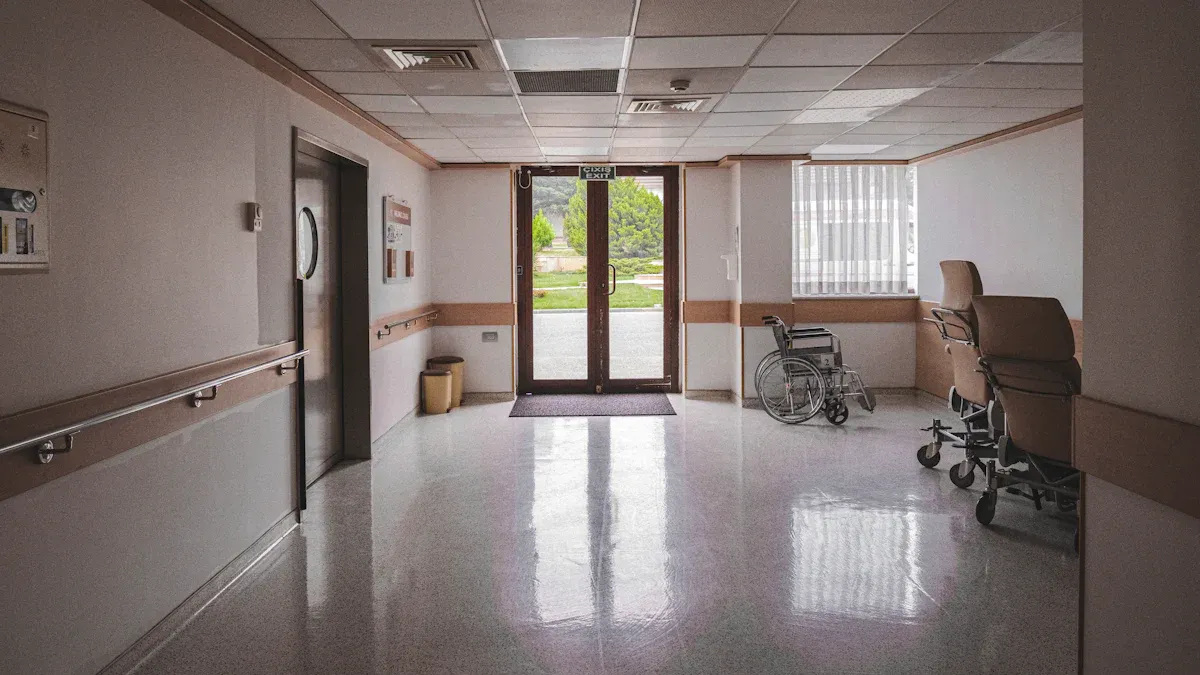
Automatic door operators play a crucial role in maintaining high safety standards within healthcare facilities. They significantly reduce the risk of contamination and infection spread. These doors eliminate the need to touch handles, push bars, or buttons. This removes common points of contamination in high-traffic areas like hospitals. By minimizing touchpoints, automatic doors help control the rapid spread of bacteria and viruses. This is especially important in busy environments. Many doors are touched by numerous individuals daily, which increases the risk of germ transmission. Touchless activation methods, such as wave plates, offer a clean application for automatic doors. This reduces physical contact and enhances hygiene, particularly for swing doors and ICU slide doors.
Automatic doors are often made from non-porous, durable materials like stainless steel or tempered glass. These materials are easy to clean and resist bacterial growth, which is crucial for sterile environments. In healthcare settings, automatic doors allow staff, patients, and visitors to move between areas without physical contact. This maintains cleanliness standards in critical zones like operating rooms. These doors close promptly and often feature advanced sealing. This minimizes air exchange and prevents external pollutants and pathogens from entering controlled indoor environments. They create a barrier between clean and potentially contaminated areas, which is vital for maintaining sterile environments. In critical areas like isolation rooms, automatic doors with airtight seals help minimize airborne transmission of pathogens, supporting infection control.
Healthcare facilities also meet important safety standards with these doors. Automatic door operators assist in meeting ADA compliance. Doors remain open for at least 5 seconds to accommodate varying mobility levels. Door hardware, such as handles and push plates, is easy to operate. It requires minimal effort and no tight grasping or twisting. Push plates are installed no higher than 48 inches from the floor and are easily reachable. Key safety features include motion sensors, slow opening speeds, presence-sensing devices, safety mats, guide rails, emergency stop buttons, and breakaway capabilities. Proper signage with clear wording, tactile characters, and appropriate placement informs users about operation, warnings, and instructions. Regular maintenance ensures proper functioning of hardware, sensors, and opening/closing mechanisms. This prevents common ADA violations like insufficient clear width or improper sensor placement.
Different types of operators serve specific safety needs:
| Operator Type | Purpose | Standard | Activation |
|---|---|---|---|
| Low-Energy Operators | Ideal for mixed-use doors, allowing manual or automatic activation. | ANSI 156.19 (limits speed and force for safety) | Requires a ‘Knowing Act’ (e.g., push buttons, touchless switches, card readers) |
| Full-Energy Operators | Designed for high-traffic areas requiring rapid door movement. | ANSI 156.10 (includes stricter safety measures like sensors and guard rails) | Triggered by motion sensors |
How do Automatic Door Operators Optimize Operational Flow and Accessibility?
Automatic door operators significantly improve the flow of people and equipment within healthcare settings. They also enhance accessibility for everyone. Motion-activated doors enable medical teams to maintain sterile conditions in areas like operating rooms. They do not need to break their workflow to open doors. Touchless doors facilitate seamless, hands-free entry and exit. This is particularly beneficial for hospital staff transporting patients or equipment. These doors are built to withstand constant use. They can be easily disinfected with hospital-grade cleaners without corroding. Clearly marked sensors make it easy for all individuals, including the elderly and those with disabilities, to operate the doors effortlessly. Adjustable sensitivity ensures doors open only when necessary, optimizing efficiency and hygiene.
Automatic door openers are necessary for ADA compliance in clinics. They provide ease of access for patients. They enhance overall usability by ensuring adequate maneuvering space for wheelchairs. Doors to enter buildings and offices should be equipped with automatic door openers. Door width should be adequate, approximately 37.5 inches, to accommodate wheelchairs or scooters. Hospitals utilize automatic doors to facilitate easy movement for both patients and staff. This ensures a smoother, more efficient environment for everyone.
Where are Automatic Door Operators Applied in Specific Healthcare Environments?
Automatic door operators find critical applications across various healthcare environments. Operating rooms are a prime example. Automatic sliding doors, specifically Dura-Glide™ full-energy automated sliding doors, are ideal for these sterile environments. They are rated for Class 1 and 10 clean rooms. They are crucial for infection control as they do not require physical touch to open.
Beyond operating rooms, these doors are essential in:
- Emergency Rooms: They allow rapid, hands-free entry for patients on gurneys and medical staff.
- Intensive Care Units (ICUs): They provide controlled access and maintain sterile conditions, often with specialized seals.
- Patient Entrances and Exits: They offer easy access for patients with mobility issues and visitors.
- Laboratories: They help maintain controlled environments and prevent contamination.
- Pharmacies: They ensure secure and hygienic access for staff.
- Corridors and Connecting Passageways: They facilitate smooth traffic flow throughout the facility.
How do Automatic Door Operators Enhance Customer Experience and Efficiency in Retail Applications?

How do Automatic Door Operators Improve Customer Accessibility and Convenience?
Automatic door operators significantly improve the shopping experience for all customers. They create a welcoming environment for everyone. This includes customers who use wheelchairs and parents pushing strollers. Automatic sliding door operators provide smooth entry for individuals with disabilities. They promote independence and convenience by removing physical barriers. These doors greatly simplify entry and exit for parents with strollers. They allow seamless access without the struggle of pushing heavy doors. Hands-free operation is especially helpful for managing a stroller. It removes the need for manual door handling. All automatic doors are ADA compliant. This ensures every customer, including those using wheelchairs, can easily enter and leave the store.
How do Automatic Door Operators Contribute to Store Security and Energy Management?
Automatic door operators also play a key role in store security. Integrated door security systems prevent unauthorized exits and theft. For example, Delayed Egress EasyKits initiate a 15-second delay and a 100dB alarm when someone presses the pushpad. These systems are ideal for retail environments. Automatic door operators integrate with retail security systems by controlling access based on credentials. They restrict entry during specific times. They also close immediately after passage to prevent unauthorized access. These doors can trigger alerts if forced open or held, effectively preventing tailgating. For enhanced security, stores integrate these doors with surveillance cameras to record entry and exit. They also use access control systems that only allow authorized individuals to open the doors. This helps manage energy by limiting air exchange, which stabilizes indoor temperatures and reduces HVAC strain.
Where are Automatic Door Operators Applied in Specific Retail Environments?
Retail environments widely use automatic door operators to manage customer flow and enhance convenience. Supermarkets often use various types of automatic doors. Automatic Revolving Doors are ideal for heavy traffic and energy savings. Heavy-duty sliding doors, like the S2001 Super Duty, handle constant use. These doors provide fast, easy, and reliable access for visitors. They accommodate seniors, individuals with disabilities, and those pushing shopping carts or carrying items. High-traffic areas such as shopping malls benefit significantly from sliding or revolving automatic doors. These doors manage a continuous flow of people. They enhance the customer experience and decrease the need for manual labor. Large retail chains install sensor-based doors to improve accessibility for all visitors.
How do Automatic Door Operators Elevate Guest Experience and Operational Smoothness in Hospitality Applications?
How do Automatic Door Operators Create a Welcoming and Luxurious First Impression?
Automatic Door Operators significantly enhance the guest experience from the moment visitors arrive. Guests expect seamless access and superior comfort. Automated doors open and close effortlessly. This helps guests relax immediately upon arrival. This contributes to a positive first impression and overall guest satisfaction. These doors create a welcoming atmosphere. Guests appreciate the ease of access, especially when carrying luggage or traveling with children. This often leads to positive reviews and repeat visits. Guests experience effortless access. They enter and exit without pushing or pulling doors. This is particularly helpful for those with luggage or mobility aids. Guests enjoy a stress-free arrival. They walk through doors without manual effort. Automatic doors also manage traffic efficiently. They ensure smooth movement during busy periods. Hands-free operation reduces physical strain for parents with young children or strollers. Advanced safety features prevent accidents. This creates a welcoming environment for families.
How do Automatic Door Operators Enhance Guest Safety and Comfort?
Automatic door operators prioritize guest comfort and safety in hospitality venues. Automatic swing door openers enhance guest comfort. They provide an adjustable 120-degree opening angle. This offers ample space for individuals with trolleys, shopping bags, or significant luggage. Guests do not need to manually open and close doors while handling their belongings. This offers a convenient and hassle-free experience. These doors also contribute to a secure environment. They can integrate with access control systems. This ensures only authorized personnel or guests enter certain areas. This adds an extra layer of security for guests and their valuables.
Where are Automatic Door Operators Applied in Specific Hospitality Environments?
Hospitality environments widely use automatic door operators. They improve the flow of pedestrian traffic. They increase a building’s aesthetic appeal. They provide ease of use for guests with bulky luggage. Hotel main entrances frequently feature these systems. Specific door types are popular choices. The Dura-Glide 2000/3000 is a standard for automatic sliding doors. It is known for durability, reliability, beauty, and security. The Dura-Glide 2000/3000 All Glass combines the aesthetics of an all-glass door with the durability of the Dura-Glide series. It minimizes sightlines. A Designer Package utilizes the STANLEY Dura-Glide operator. This allows architects to automate uniquely designed door panels. DuraFit is a long-lasting telescoping automatic door. It is designed for tight entryways and passages. These applications ensure smooth operations and a premium guest experience.
Automatic door operators are critical infrastructure, not just a convenience, for modern environments in 2025. They ensure safety, efficiency, and a superior user experience across retail, hospitality, and especially healthcare sectors. Their continued evolution solidifies their indispensable role. Future trends show sustained global growth, driven by innovation and digitization. This includes:
- Integration of IoT technology
- Development of energy-efficient models
- Introduction of touchless and sensor-based door openers
These systems will also integrate into smart city infrastructure. They will feature advanced capabilities like predictive maintenance and remote monitoring. This ensures smarter, more efficient, and user-centric automatic door solutions.