
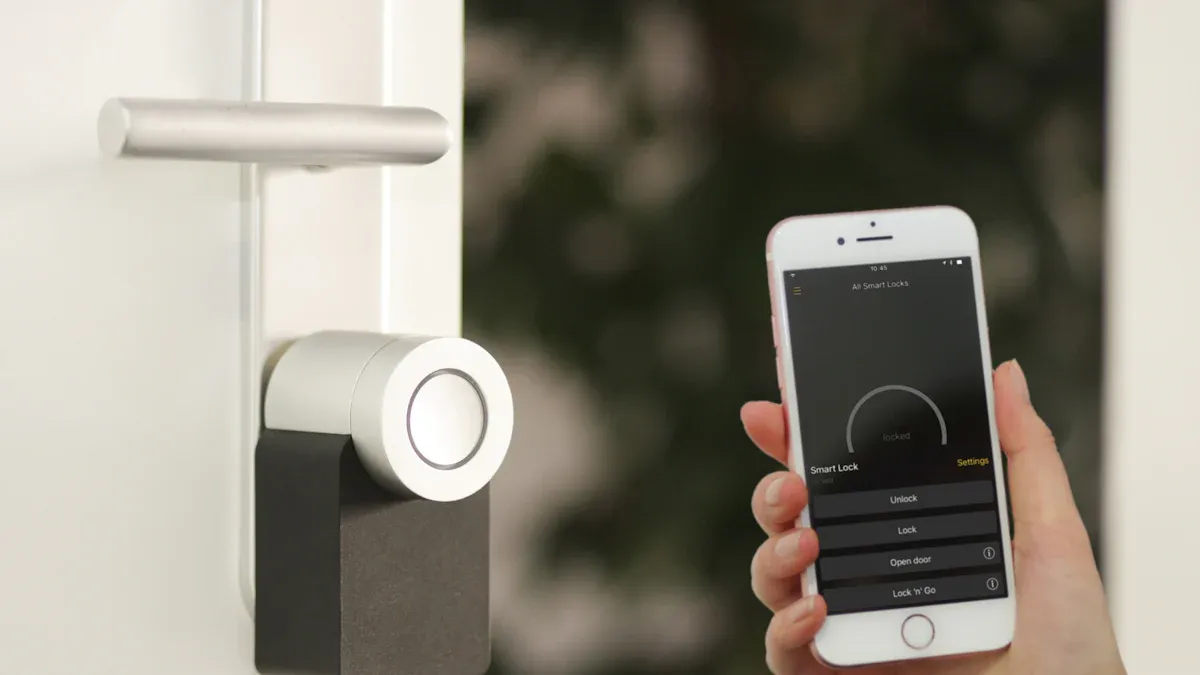
Modern homes increasingly consider an automatic electric door opener an essential feature. Data shows 67% of new homes in developed countries now include automatic openers by default, highlighting their rising necessity. This technology significantly enhances daily living, providing unparalleled comfort and efficiency. An automatic open and close door system offers crucial hands-free access, beneficial when carrying items. For individuals with mobility challenges, these systems are life-changing, granting independent movement and safe passage. They also bolster home security with automatic locking. Pet owners appreciate the freedom a motorized sliding door opener provides their companions. A motion sensor for automatic sliding door ensures seamless entry. A power sliding door opener delivers consistent performance, and a swing door opener motor facilitates smooth operation for hinged doors.
Key Takeaways
- Automatic electric door openers make daily life easier. They offer hands-free access, better security, and help people with mobility issues.
- When choosing an opener, think about your door’s type and weight. Also, consider how you want to open it, like with a button or your phone.
- Look for openers with good safety features. These include sensors that stop the door if something is in the way. Also, check for a battery backup for power outages.
- Smart door openers can connect to your home’s smart system. This lets you control them with your voice or a phone app. They also help save energy.
- Always check the warranty and customer support. You can install some openers yourself, but professional help ensures it works correctly and safely.
Understanding Automatic Electric Door Openers
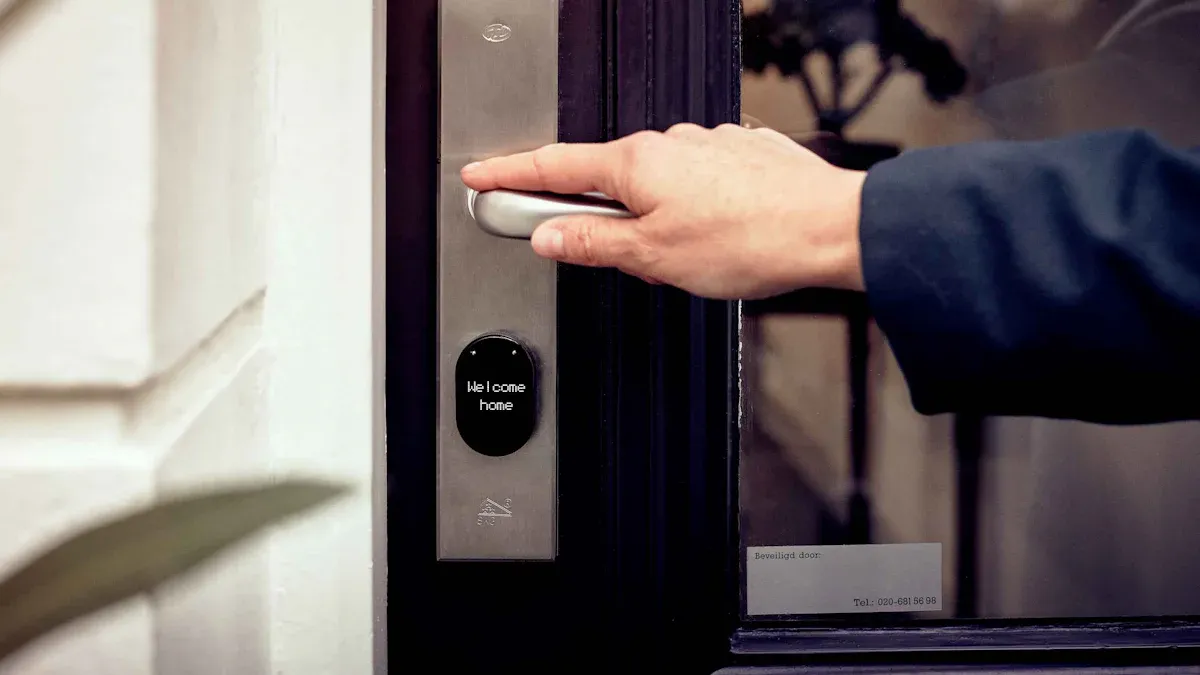
What an automatic electric door opener is
An automatic electric door opener provides automated access for various entryways. This system integrates mechanical and electrical components to facilitate hands-free door operation. Key electrical components include touchless automatic door actuators, commercial pedestrian automatic door sensors, and handicap push button circuit boards. These elements work together to detect presence or receive commands. Mechanical components are crucial for movement. Automatic door motors, often 24V brushless DC models, serve as the core driving components. They feature high-quality gearbox materials and handle diverse load requirements. Some models incorporate helical gear transmission for smooth, vibration-free operation. A dual gearbox design in certain swing door motors boosts power for heavy doors.
How an automatic electric door opener functions
An automatic electric door opener operates through a coordinated sequence. When a sensor detects movement or a button activates, it sends a signal to the control unit. The control unit then powers the motor. This motor, whether electrohydraulic or electromechanical, drives the door’s movement. For instance, an automatic swing door mechanism uses a motor to push or pull the door open on its hinges. An automatic sliding door system engages rollers along a track. The system ensures the door opens smoothly and closes securely. Advanced models often include safety features that prevent closing if an obstruction is detected.
Types of automatic electric door openers
Manufacturers offer various automatic electric door openers, each suited for specific applications. Sliding doors move along a track, ideal for spaces where swing doors are impractical. They come as single or bi-parting units. Swing doors open on hinges, commonly found in offices and healthcare facilities requiring wide openings. Revolving doors, with three or four rotating panels, manage high traffic in places like airports, also offering energy efficiency. Folding doors, which collapse like an accordion, save space in healthcare or retail settings. Telescopic doors, a variation of sliding doors, use multiple overlapping panels to achieve wider openings in confined areas. Each type addresses distinct architectural and functional needs.
Identifying Your Needs for an Automatic Electric Door Opener
Selecting the right automatic electric door opener begins with a clear understanding of specific household requirements. Different needs dictate different features and functionalities. Identifying these needs ensures the chosen system provides maximum benefit and convenience.
Accessibility for mobility challenges
Automatic door openers significantly enhance independence for individuals with mobility challenges. These systems provide push-button ease, facilitating smooth and hassle-free transitions for both interior and exterior doors. They effortlessly unlock, unlatch, and hold doors open, eliminating the need for physical effort. This hands-free operation is crucial. Once activated, the opener unlatches, opens, holds, and then closes the door without requiring physical contact. Users can also control how long the door remains open before automatically closing, allowing sufficient time for passage.
Accessibility compliance is a key consideration. Systems like the AutoSlide ADA model meet specific accessibility guidelines for door operation, improving quality of life for those with disabilities. These systems offer flexible control options, catering to diverse needs:
- Wireless Remotes: Individuals can carry these on a belt or attach them to a wheelchair for easy access.
- Hardwired Wall Switches: Manufacturers place large, easy-to-press plates at a convenient height.
- Sip-and-Puff Activated Remotes: These provide an option for individuals unable to use their hands.
- Voice-Controlled Systems: This offers another method for hands-free operation.
Enhancing home security
An automatic electric door opener significantly contributes to enhanced home security. These systems integrate with existing security infrastructure, providing robust protection. Remote access control allows homeowners to manage their gate from anywhere using a smartphone. This feature enables granting access to visitors or deliveries even when away from home. Integration with security cameras adds another layer of surveillance. Cameras can automatically record when someone approaches the gate, providing visual evidence. Voice control offers hands-free operation, allowing users to open or close gates with devices like Amazon Alexa or Google Assistant. Furthermore, integration with smart locks creates a seamless entry system. Opening the gate can automatically unlock smart door locks, eliminating the need for keys.
Artificial intelligence (AI) further impacts electric gate integration. AI analyzes sensor data to identify patterns and make intelligent decisions. For instance, AI learns daily routines to automatically open gates upon arrival or alerts users to suspicious activity, thereby enhancing both security and convenience. AI also enables predictive maintenance by detecting potential issues before they escalate, ensuring timely repairs and minimizing downtime.
The operational sequence for secure access typically involves several steps:
- An individual presents an access credential (e.g., proximity card, smartphone) to a door reader connected to an Access Control Unit (ACU). The ACU validates this credential against a database.
- Upon successful validation, the ACU signals the automatic door opener to unlock the door’s locking mechanism, such as an electric strike or electromagnetic lock.
- After the lock is disengaged, the automatic door opener proceeds to open the door and then closes it automatically after a set duration (typically 5-10 seconds).
These systems also include a built-in safety feature that detects obstructions in the door’s path. If an obstruction is sensed during opening or closing, the opener stops operation to prevent injury.
Convenient pet access
Automatic electric door openers offer convenient pet access, providing freedom for pets and reducing the need for manual door operation. Design considerations for pet access focus on safety and customization. Pet mode settings allow for adjustable door width, specifically tailored for pets. The system integrates with various control mechanisms, including sensors, remote controls, push buttons, pet switches, photocells, card readers, and locks. These systems often feature a compact size, appealing appearance, and modern design. They support switching between window and door modes and incorporate a 433.92 Hz module for smart-home compatibility. Installation is straightforward, requiring no alterations to existing door structures. Adjustable speeds for opening (10-45cm/s) and closing (10-25cm/s) are also available.
RFID technology is crucial for pet doors. It allows them to recognize and grant access to pets via unique collar tags. The effective range of RFID tags is important; a too-short range can cause pets to wait, while a too-long range might open the door unnecessarily. Some systems, like the Autoslide Smart Tag Pet Door Kit, offer customizable range settings to suit pet habits and home layouts, preventing unintended openings. Many smart dog doors include battery backup systems to ensure continued operation during power outages, maintaining pet access and home security. Certain models provide selective entry and exit features, allowing them to distinguish between multiple pets (e.g., a dog and a cat) using collar-activated mechanisms or app control.
Automatic sliding door openers for pets can include components such as an auto slider, adapter, installation bracket, remote, tooth cap nut, wireless push buttons, pet presence detectors, and a gear rack. These systems are designed for various pets, including dogs and cats, and help prevent unwanted animals or intruders from entering the home.
General hands-free living and smart home integration
Automatic electric door openers significantly enhance general hands-free living, simplifying daily routines for many households. These systems offer crucial assistance to individuals with mobility issues, allowing them to open and close doors freely, often without physical contact or external help. Busy families also benefit greatly from this convenience. They can easily enter and exit their homes, even when carrying armfuls of groceries or school bags. This hands-free operation eliminates the struggle of juggling items while trying to open a door. Furthermore, these systems ensure doors close fully, even after manual use, removing any worries about leaving doors ajar.
Smart home integration elevates the convenience of automatic electric door openers. Users can control their garage door from any location, whether at work, running errands, or on vacation. This remote access provides peace of mind and practical control. Real-time monitoring allows homeowners to instantly check the door’s status and receive alerts if it remains open too long. This feature prevents security vulnerabilities and potential energy loss. Users can also program automatic opening and closing times to fit daily routines or regular deliveries. This scheduled operation streamlines household management. Additionally, temporary access codes provide short-term entry to family members, visitors, or service providers without distributing permanent keys or codes.
Smart garage door openers connect easily with popular platforms such as Amazon Alexa, Google Assistant, and Apple HomeKit. This integration enables hands-free convenience through voice control and the creation of time-saving automations. For instance, users can set their garage door to close automatically when the home’s security system arms. They can also sync it with their thermostat to conserve energy when leaving the house. This seamless connectivity makes daily life smoother and more personalized.
A primary advantage of smart systems is convenience, offering control over home appliances with a simple touch or voice command. This includes connecting to platforms like Alexa, Google Home, or Siri for hands-free functionality. Users can manage their home from a smartphone, regardless of their physical location. Smart door openers integrate seamlessly with other smart devices. This allows control via voice commands through platforms like Alexa, Google Assistant, or Siri. Users can create routines, such as automatically shutting the garage door at night or opening it upon arrival. This simplifies daily life significantly. Remote access proves particularly useful for large households or for managing deliveries, enabling quick opening and closing of the garage for package placement.
Key Selection Criteria for Your Automatic Electric Door Opener
Choosing the right automatic electric door opener requires careful consideration of several factors. Homeowners must evaluate their specific needs and the characteristics of their doors to ensure optimal performance and satisfaction. This section explores the key criteria guiding this important decision.
Door type and weight compatibility
The type and weight of a door significantly influence the choice of an automatic electric door opener. Different door mechanisms handle varying loads and dimensions. Manufacturers design openers to accommodate specific door types, such as swing, sliding, or telescopic. Exceeding an opener’s weight or size capacity can lead to premature wear, malfunction, and safety hazards. Therefore, homeowners must accurately measure their door’s dimensions and weight before selecting a system.
Consider the following compatibility ranges for various door types:
| Door Type | Door Height | Door Width | Door Weight |
|---|---|---|---|
| Automatic Swing Doors | Max. 2500 mm | 1100 mm – 1600 mm | 160 kg – 400 kg |
For specific models, the weight capacity can vary:
| Model | Max Door Weight | Door Leaf Width |
|---|---|---|
| YFSW200 | 200 kgs / leaf | Max. 1300mm |
Another example for swing applications shows:
| Model | Swing Application | Door Width | Door Weight |
|---|---|---|---|
| SD3108 | One-way open, single and double leaf standard doors | 1200mm | 120kgs |
For sliding doors, the specifications also differ based on single or double leaf configurations:
| Model | Door Range | Door Leaf Weight | Door Width |
|---|---|---|---|
| SD280 | Single leaf | Max 180kg | 600-3000mm |
| SD280 | Double leaf | Max 180kg*2 | 600-1500mm |
These tables illustrate the importance of matching the opener’s specifications to the door’s physical attributes. Selecting an opener within these specified ranges ensures reliable and safe operation.
Preferred activation methods
Homeowners have various options for activating their automatic electric door opener, each offering unique benefits. The choice often depends on convenience, security preferences, and integration with existing smart home systems. Modern openers provide a range of activation methods, catering to diverse user needs.
Common activation methods include:
- Push-Button Openers: Users activate these with a simple remote or a wall-mounted button.
- Proximity Sensors: These sensors activate the door hands-free when they detect a smart tag nearby.
- Smart Lock Door Openers: Users control these using smartphone apps or voice commands.
- Keypad & FOB-Based Openers: These offer secure access with personal codes or wireless key fobs.
- Remote Control Functionality: This includes key fobs, wall-mounted buttons, and smartphone apps, allowing activation from various points within the home.
Advanced systems offer even more sophisticated control. For instance, the system can activate through various controllers, sensors, or wireless accessories. Voice control is also available, compatible with Amazon Alexa and Apple Siri through an Autoplus Gateway. The Autoslide app allows remote monitoring and control of the door from a smartphone. Additionally, the system pairs with Autoslide controllers, sensors, remote control buttons, wireless keypads, and RFID proximity tags & readers.
Further enhancing convenience, some openers connect with smart speakers like Alexa and Google for door operation. A smartphone app allows remote control of the door from anywhere. Wireless remote controls operate on a 433.92MHz frequency and support up to 15 wireless devices per opener. These diverse options allow homeowners to select the most suitable and convenient activation method for their lifestyle.
Power source options
The power source for an automatic electric door opener is a critical consideration, impacting reliability and functionality, especially during power outages. Homeowners must evaluate the available options to ensure continuous operation and peace of mind.
Common power options for automatic electric door openers include AC power operation. Many systems also integrate a battery backup feature. This allows the door to continue functioning reliably during power outages. The backup battery automatically engages and recharges from the electrical connection when power is restored. Such systems can provide protection for up to a week without external power, offering peace of mind in areas prone to unreliable electricity.
Automatic electric door openers commonly utilize the following power sources:
- Electrical (plug-in)
- Battery (frequently cited as the most common)
- Solar power (typically includes a solar panel)
Choosing a system with a robust power solution, such as battery backup or solar integration, ensures the door remains operational under various circumstances, enhancing both security and convenience.
Installation requirements for an automatic electric door opener
Proper installation ensures the safe and efficient operation of any automatic electric door opener. Homeowners must consider several factors before beginning the installation process. First, they need to assess the structural integrity of the door frame and surrounding wall. The frame must be strong enough to support the weight of the door and the opener mechanism. Weak or damaged frames may require reinforcement before installation. Second, homeowners must ensure easy access to a reliable power source. Most automatic door openers require a standard electrical outlet nearby. If an outlet is not present, an electrician may need to install one. Third, adequate space around the door is crucial. Swing doors need clear space for their arc of movement, while sliding doors require sufficient wall space for the door panel to retract fully. Finally, the type of door material affects installation. Heavy solid wood doors or glass doors may require specialized mounting hardware and techniques compared to lighter hollow-core doors.
Essential safety features
Safety remains paramount for any automated system in a home. Automatic electric door openers incorporate several essential safety features to protect users and prevent accidents. One critical feature is obstruction detection. This technology uses various methods to sense objects in the door’s path. Safety sensors, often located at the bottom of the door’s opening, detect objects like a person’s foot or a pet. If the sensors detect an obstruction, the door immediately stops or reverses its motion. Force-sensing technology provides another layer of protection. This system allows the door to detect resistance. If the door encounters an obstruction exceeding a safe threshold, it stops or reverses. This prevents crushing injuries or damage to property.
Another vital safety component is the emergency release. This feature allows users to manually operate the door during a power outage or system malfunction. Emergency stop buttons can halt the door’s motion instantly. Manual override mechanisms enable users to push or pull the door open or closed by hand. These features ensure occupants can always exit or enter the home, even if the automated system fails.
Aesthetic preferences and design
The design of an automatic door opener should complement a home’s existing decor and architectural style. Manufacturers offer a wide range of aesthetic options, allowing homeowners to choose systems that blend seamlessly with their interior and exterior.
Homeowners can select from various material options. These include durable aluminum alloy, sleek stainless steel, and robust solid metal panels. For a warmer look, wood-grain laminated panels offer diverse wood tone options. Moisture-resistant composite boards provide a practical choice, often reflecting traditional craftsmanship.
Surface treatment options further enhance the visual appeal. Sandblasting creates a textured, matte finish, while painting allows for custom color matching. Wood-grain finishes mimic natural wood, adding elegance.
Specific panel types and finishes offer distinct looks:
- Solid Metal Panels: These come sandblasted or painted for a modern, industrial feel.
- Wood-Grain Laminated Panels: These provide various wood tone options, suitable for classic or contemporary homes.
- Stainless Steel: This material offers a rustproof, polished appearance, ideal for minimalist designs.
- Aluminum Alloy: This versatile material supports custom laser-cut patterns, allowing for unique decorative elements.
- Aluminum Frame + Glass Panels: Options include frosted or tempered glass, providing light and an open feel while maintaining privacy.
- Moisture-Resistant Composite Panels: These panels often feature traditional craftsmanship, suitable for specific architectural styles.
Automatic sliding doors, in particular, offer a sleek, modern appearance. Their design often incorporates glass panels and customizable finishes, significantly enhancing visual appeal. Homeowners can choose unique finishes, glass treatments, and designs to match various architectural styles, ensuring the automatic door system enhances the home’s overall aesthetic.
Budget considerations for an automatic electric door opener
Understanding the financial investment for an automatic electric door opener is crucial for homeowners. Costs vary significantly based on the type of opener, its features, and installation requirements. Homeowners must consider both the initial purchase price and potential installation expenses to make an informed decision.
For those considering handicap door openers, the cost range varies widely. The opener itself typically costs between $800 and $3,500. When including professional installation, the total investment can range from $1,200 to $7,000.
| Type of Handicap Door Opener | Opener Cost Range | Total Cost Range (Opener + Installation) |
|---|---|---|
| Overall Average | $800 – $3,500 | $1,200 – $7,000 |
| Low-Energy Operators (Device only) | Starting around $1,000 | N/A |
| Full-Power Operators (Units only) | $2,500 – $5,000 | N/A |
| Residential Basic Model | N/A | $800 – $1,500 |
| Commercial Grade (Per door, high-traffic/double-door) | N/A | $2,000 – $6,500 |
Low-energy operators, which move doors at a slower speed, start around $1,000 for the device alone. Full-power operators, designed for heavier use and faster operation, typically cost between $2,500 and $5,000 for the unit. A basic residential model, including installation, usually falls within the $800 to $1,500 range. Commercial-grade systems, especially for high-traffic or double-door applications, can cost between $2,000 and $6,500 per door, including installation.
Automatic sliding door openers also present a range of costs, depending on whether they are for residential or commercial use and the level of sophistication.
| Type of Automatic Sliding Door Opener | Opener Cost Range | Installation Cost Range | Total Cost Range (Opener + Installation) |
|---|---|---|---|
| Residential Basic | $2,000 – $4,000 | $600 – $1,000 | $2,600 – $5,000 |
| Residential Advanced (Smart home integration, motion sensors, touchless buttons) | $4,000 – $10,000 | $600 – $1,000 | $4,600 – $11,000 |
| Commercial Basic | $1,300 – $2,500 | Included in total | $1,800 – $3,500 |
| Commercial Complex (High-traffic, advanced safety, better materials) | $4,000 – $10,000+ | Included in total | $4,000 – $10,000+ |
A basic residential automatic sliding door opener typically costs between $2,000 and $4,000 for the opener unit. Installation for these systems usually adds $600 to $1,000, bringing the total to $2,600 to $5,000. For advanced residential systems, which include smart home integration, motion sensors, and touchless buttons, the opener cost can range from $4,000 to $10,000. With installation, these advanced systems can total $4,600 to $11,000. Commercial basic sliding door openers generally cost $1,300 to $2,500, with total costs, including installation, ranging from $1,800 to $3,500. Complex commercial systems, designed for high-traffic areas with advanced safety features and premium materials, start at $4,000 and can exceed $10,000, with installation costs often integrated into the total project price.
Several factors influence the overall cost. The brand reputation often correlates with price; premium brands typically command higher prices due to advanced technology and superior materials. The specific features included, such as smart home compatibility, advanced safety sensors, or unique activation methods, also impact the final cost. Furthermore, the complexity of the installation plays a significant role. Doors requiring structural modifications, specialized wiring, or integration with existing smart home systems will incur higher installation fees. Homeowners should obtain detailed quotes from multiple providers to compare costs and ensure they receive the best value for their investment.
Advanced Features and Smart Home Integration for Your Automatic Electric Door Opener
Smart home compatibility and control
Modern door openers seamlessly integrate with various smart home ecosystems. This integration allows users to control their doors through existing smart home hubs and voice assistants. For example, Aladdin Connect works with:
- Amazon Alexa
- Google Assistant
- Samsung SmartThings
- Alarm.com
- Clare Controls
- Brilliant Smart Home Systems
- Control4
- Yonomi
Remootio 3 also offers broad compatibility. It connects with:
- Apple Home (Apple HomeKit)
- Google Home
- Amazon Alexa
- SmartThings
- Siri
This extensive compatibility provides users with flexible control options. They can manage their door systems using voice commands or through a centralized smart home app.
Security enhancements and monitoring
Advanced door openers significantly boost home security through integrated monitoring and control features. These systems offer remote control and monitoring capabilities via smartphone integration. Users manage access from any location. Real-time monitoring is a key feature. It often includes high-definition cameras. These cameras allow users to visually verify visitors before granting entry. Systems maintain detailed activity logs. These logs record all entries and exits. They provide a comprehensive history of property access. Users receive real-time notifications for gate status changes. They can also generate temporary access codes or activate the gate remotely through a compatible app. This ensures property security while offering flexibility for guests.
Accessibility innovations
Accessibility continues to advance in automatic door opener technology. Innovations focus on making door operation more intuitive and inclusive.
| Advancement | Description |
|---|---|
| Enhanced interconnectivity | Seamless integration with emerging technologies for comprehensive control over a wider range of smart home devices. |
| Advanced artificial intelligence | AI-driven automation learns and adapts to users’ preferences for a personalized smart home experience. |
| Predictive automation | Systems automate tasks based on contextual cues, time of day, and patterns of behavior, anticipating user needs. |
| Energy optimization | Focus on optimizing energy usage through intelligent algorithms and sensors, promoting energy efficiency. |
| Security and privacy | Prioritizing enhanced security measures to protect against vulnerabilities and ensure user privacy and safety. |
| Voice and gesture control integration | Evolving systems integrate voice and gesture control for more intuitive and natural interactions. |
Voice control offers a hands-free approach, simplifying tasks. It provides an inclusive means for individuals with mobility impairments. Smart locks integrate voice control with popular assistants like Amazon Alexa, Google Assistant, and Apple’s Siri. Users lock and unlock doors using voice commands. Future innovations include integration with wearable technology. This enables users to unlock doors with a simple tap or gesture from devices like smartwatches.
Energy efficiency of an automatic electric door opener
Energy efficiency is a crucial factor when selecting an automatic electric door opener. Modern openers often incorporate features designed to reduce electricity consumption during operation. These systems frequently include energy-efficient motors. Many models also come with built-in LED lights. These lights use significantly less energy than traditional incandescent bulbs. Additionally, some openers feature a standby mode. This mode automatically powers down the motor after a period of inactivity. This contributes to reduced energy usage and lower utility bills.
Garage door openers, typically ranging from 1/3 to 1 horsepower (250 to 750 watts), consume electricity for short durations. Operation usually lasts 15-30 seconds. For example, a 500-watt opener used six times daily consumes about 24.9 watt-hours. However, the more significant energy draw often comes from standby mode. Many models consume 3 to 5 watts continuously in this mode. This ‘phantom load’ can amount to 2.88 kWh per month for a 4-watt standby draw. This often costs more than the active motor use. Older openers, especially those manufactured before 2010, are less efficient in both operation and standby. Modern openers, particularly those certified by ENERGY STAR or similar standards, feature smarter circuitry. They can have standby draws of less than 1 watt. They also incorporate LED lighting, which is more energy-efficient than traditional bulbs.
These door openers typically consume between 200 and 400 watts when actively operating. Standby power consumption can vary significantly. Newer, more energy-efficient models draw as little as 1 watt. Several factors influence power consumption. Motor size is one factor; larger motors require more power. The size and material of the door also matter. Heavier materials like wood and steel demand more energy. Opener type (chain, belt, or screw drive) also affects efficiency. Modern advancements aim to reduce energy use. They include features like standby power reduction systems, high-efficiency DC motors, and LED lighting.
Installation, Maintenance, and Warranty for Your Automatic Electric Door Opener
Homeowners must consider installation, ongoing maintenance, and warranty coverage when selecting an automatic electric door opener. These factors significantly impact the system’s long-term performance and user satisfaction.
DIY vs. professional installation
Deciding between do-it-yourself (DIY) and professional installation involves weighing various factors. Each approach offers distinct advantages and disadvantages regarding cost, time, and expertise. The following table outlines key considerations for homeowners.
| Aspect | DIY Installation | Professional Installation |
|---|---|---|
| Cost | Lower initial cost, as you save on labor fees. | Higher initial cost due to labor fees. |
| Time | Requires significant time investment for research, planning, and execution. | Saves time, as professionals handle all aspects of the installation. |
| Expertise | Requires basic electrical and mechanical knowledge, and comfort with tools. | Benefits from specialized knowledge and experience of trained technicians. |
| Safety | Potential safety risks if not familiar with electrical wiring and heavy gate components. | Reduced safety risks, as professionals are trained in safe installation practices. |
| Quality of Work | Quality depends on your skills and attention to detail. Potential for errors if inexperienced. | High quality of work, ensuring proper function and longevity of the system. |
| Warranty/Support | Manufacturer’s warranty typically covers parts, but not installation errors. Limited immediate support. | Often includes a warranty on labor and installation, with readily available support for issues. |
Routine maintenance tips
Regular maintenance ensures the longevity and optimal performance of an automatic electric door opener. Homeowners should follow a structured schedule for checks and upkeep.
- Daily Checks: Visually inspect the door and surrounding area for debris or damage. Observe the door’s movement for unusual noises and verify correct speed. Test sensor functionality.
- Weekly Checks: Test emergency exit functions and manual operation switches. Lubricate hinges, pivots, and other moving parts.
- Monthly Checks: Inspect wiring and connections for wear. Check the control panel and power supply. Test the battery backup system. Inspect and replace weather stripping as needed.
- Quarterly Checks: Calibrate sensors and control systems. Inspect and maintain the drive mechanism, including belts, gears, and motors. Inspect glass for damage.
- Bi-Annual Checks: Schedule a professional inspection to ensure compliance with safety codes. Evaluate the door’s performance under various conditions.
- Annual Checks: Conduct a detailed inspection of all components. Review and update maintenance records.
Warranty and customer support
Homeowners should thoroughly review the warranty offered with any automatic electric door opener. Warranties typically cover parts for a specific period, protecting against manufacturing defects. Professional installation often includes a separate labor warranty, providing peace of mind regarding the installation quality. Evaluate the manufacturer’s customer support options. Reliable support ensures assistance with troubleshooting or technical issues.
Top Automatic Electric Door Opener Trends for 2025
The landscape of home automation continues to evolve rapidly. Automatic door openers are at the forefront of this innovation. In 2025, several key trends will redefine convenience, security, and accessibility for homeowners.
Emerging smart technologies
Smart technologies are transforming how people interact with their home entry points. Smartphone apps, like myQ®, offer remote monitoring and control, allowing users to manage their doors from anywhere. These systems often integrate with popular voice assistants such as Alexa, Google Assistant, and Apple HomeKit, enabling hands-free operation. Modern openers also support custom schedules and automations. For instance, a door can automatically close at night or open upon arrival via geofencing. Many smart openers include built-in HD cameras and motion detection, providing live feeds and activity alerts directly to a smartphone. Rolling code protection further enhances security, generating new access codes for each use. Beyond apps and voice, optical and sensor-based systems are becoming more sophisticated. Some smart controllers incorporate artificial intelligence and machine learning. These capabilities learn user habits and automate operations based on usage patterns. Services like Amazon Key also integrate with compatible systems, allowing secure package delivery inside garages.
New security features
Security remains a top priority, and automatic door openers are adopting advanced measures. Contactless biometrics, including facial recognition and palm/fingerprint scans, offer hygienic and non-invasive security. Multi-modal biometrics, combining several methods like facial and fingerprint scans, will become more common, enhancing both security and user experience. AI and machine learning are crucial for biometric solutions, continuously refining accuracy and defending against threats like deepfakes. Advanced Presentation Attack Detection (PAD) uses sophisticated AI algorithms to distinguish between live subjects and spoofs. This mitigates risks at the point of capture. Biometrics at the Edge processes data on devices, reducing latency and improving privacy. Furthermore, advanced encryption, such as AES 256-bit, protects communication, stored biometric data, access codes, and video footage. Palm vein recognition stands out as a highly secure biometric option due to its near-impossible replication. Multi-factor authentication also enhances security against hacking risks.
Advancements in accessibility
Accessibility innovations focus on making door operation more intuitive and inclusive for everyone. Voice control modules will become standard, enabling hands-free operation through voice assistants for individuals with mobility limitations. Door and lock solutions will integrate seamlessly with smart home ecosystems. This allows for automatic unlocking and adjustments tailored to user preferences and routines. AI-based access control systems will leverage artificial intelligence for object recognition, adapting settings for users in wheelchairs, for example. IoT-enabled remote operation further enhances this capability. Personalized automation will offer devices tailored to individual user preferences and routines, including customizable voice profiles for multiple users. Keyless entry options, such as mobile apps, biometric authentication, or voice commands, provide secure and customizable access, further simplifying daily life.
Sustainable and energy-efficient models
The focus on sustainability significantly influences the development of automatic door openers. Manufacturers prioritize energy-efficient designs and environmentally friendly materials. These advancements aim to reduce the carbon footprint of home automation systems. Modern openers often feature high-efficiency DC motors. These motors consume less power during operation and in standby mode. Many models also incorporate smart power management systems. These systems minimize energy draw when the door is inactive.
Homeowners can further enhance energy efficiency through renewable energy sources.
- Harness the Power of the Sun: If your garage roof receives ample sunlight, consider installing solar panels. They can generate clean energy to power your garage door opener, lights, or even tools. This will save you a bundle off your electricity bill and make you much less dependent on fossil fuels.
This integration provides a clean, self-sufficient power solution. It reduces reliance on the grid.
By 2025, automatic doors will become smarter and more sustainable. Integration with IoT and AI will enable predictive maintenance and adaptive operation. Energy-efficient models will dominate, driven by green building standards. Innovations in materials and sensors will further enhance durability and user experience.
This future vision highlights the industry’s commitment to sustainability. New models will use durable, recyclable materials. They will also feature advanced sensors. These sensors optimize operation. They prevent unnecessary energy use. Predictive maintenance, powered by AI, ensures systems run efficiently. It identifies potential issues before they lead to energy waste. These combined efforts create a more sustainable and cost-effective solution for modern homes.
Making the best choice for a home’s automatic electric door opener involves careful consideration. Homeowners should assess the venue type, prioritizing safety features and convenience. Durability and cost-effectiveness are crucial. Obtain multiple quotes and seek professional advice for optimal selection. These systems significantly enhance home security and convenience. They can increase property value by 5-20% and save homeowners 30 hours annually. They also offer insurance savings and improved energy efficiency.
FAQ
Can homeowners install an automatic electric door opener themselves?
DIY installation is possible for homeowners with basic electrical and mechanical skills. However, professional installation ensures proper function and safety. It also often includes a labor warranty.
How much energy does an automatic electric door opener consume?
Modern openers consume minimal energy during active use. Standby power consumption is the main factor. Energy-efficient models draw less than 1 watt in standby, reducing electricity bills.
What happens during a power outage with an automatic door opener?
Many automatic door openers include a battery backup system. This system allows continued operation during power outages. Users can also manually operate the door using an emergency release mechanism.
Are automatic electric door openers compatible with all door types?
Manufacturers design openers for specific door types and weights. Homeowners must match the opener’s specifications to their door’s dimensions and weight. This ensures reliable and safe operation.
How often do automatic electric door openers require maintenance?
Regular maintenance ensures optimal performance. Homeowners should perform daily visual checks and weekly lubrication. Quarterly and annual professional inspections are also recommended for comprehensive upkeep.