
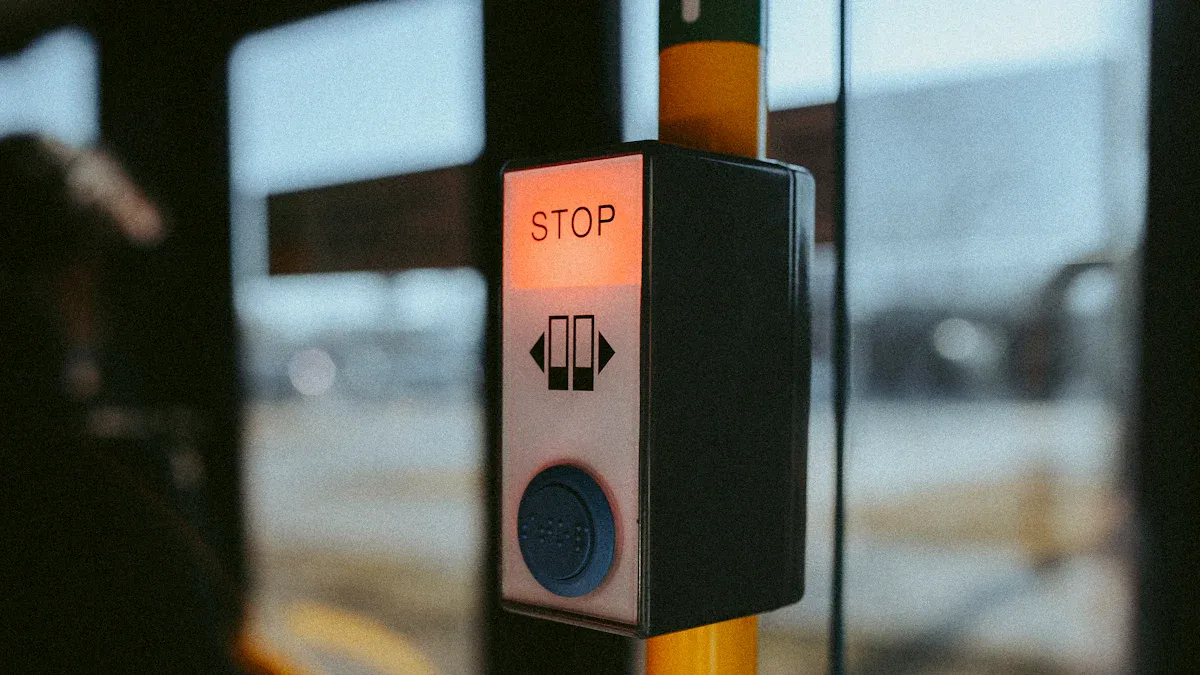
Essential automatic door accessories are crucial for optimizing user safety and operational efficiency. Their strategic integration significantly enhances the functionality and reliability of automatic door systems. Common malfunctions, such as sensor failure or blocked door tracks, highlight their necessity. Whether you’re dealing with an automatic sliding door operator or an automatic swing door opener, understanding why safety sensors are important for automatic doors is key. This knowledge will guide you in selecting the right automatic door accessories and help you determine what accessories do I need for an automatic sliding door.
Key Takeaways
- Automatic door accessories like sensors and safety beams keep people safe by stopping doors from closing on them.
- Emergency breakout hardware helps people get out quickly during emergencies, even if the power goes out.
- Battery backup systems make sure automatic doors still work when the power is off, helping everyone, especially those with disabilities.
Presence Sensors for Superior Safety and Smooth Operation
Preventing Collisions and Ensuring Pedestrian Protection
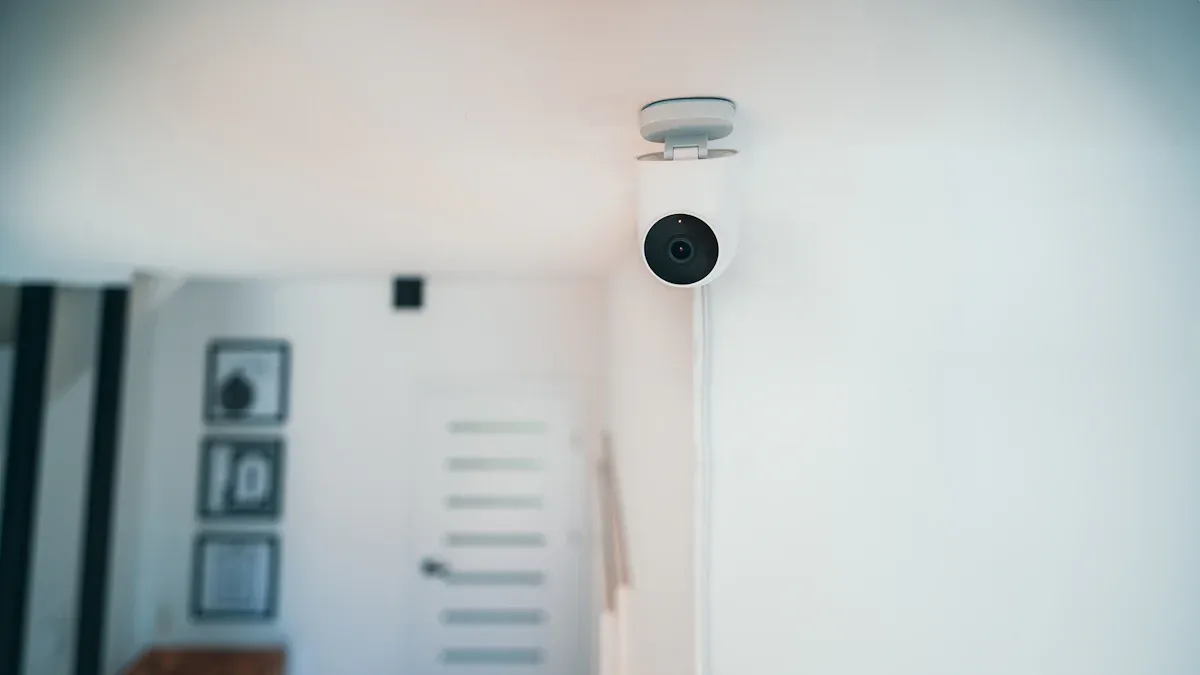
Presence sensors are vital components in automatic door systems. They ensure the door does not close on people or objects. Early automatic door systems used basic motion detection sensors and horizontal presence sensors. Over time, technology advanced significantly. Now, diverse sensor types exist, including active infrared, passive infrared, and microwave sensors. Many modern sensors, like the BEA IXIO, combine microwave activation with infrared presence technologies. These dual-technology sensors accurately detect both moving and stationary objects. This prevents automatic doors from colliding with any human body or object. For example, the LV805 Motion & Safety Sensor ensures the door opens promptly and remains open when someone is in the detection zone. This prevents accidental closures and potential injuries. Specialized sensors, such as the 227L Laser Safety Sensor for automatic swing doors, move with the door leaf. They use laser light spots to detect pedestrians in the door’s movement path, specifically avoiding pinching or collision incidents.
Optimizing Traffic Flow and User Experience
Presence sensors also significantly improve the flow of traffic through entrances. In high-traffic environments like airports or shopping malls, these systems ensure quick entry and exit. This prevents bottlenecks and congestion. Traditional hinged doors often create traffic problems. People hold doors for others, or individuals struggle to open doors with hands full. Automatic sliding entrance doors provide a seamless experience. They eliminate the need to hold doors or struggle when hands are occupied. Sensors like the BEA LZR-Widescan offer advanced detection capabilities. They can detect objects based on direction, speed, object size, and height. This allows doors to respond intuitively to movement. Such precise detection ensures reliable and constant operation. It enhances the overall experience for customers and employees. For an automatic sliding door operator, these sensors ensure continuous accessibility and smooth transitions for all users.
Safety Beams: A Critical Layer for Accident Prevention
Detecting Obstructions for Immediate Door Reversal
Safety beams provide a crucial layer of protection for automatic doors. These systems use infrared beams to detect obstacles in the door’s path. A transmitter sends an infrared light beam to a receiver, typically mounted on opposite door frames. If an object or person breaks this beam, the sensor detects the change. This immediately signals the door to stop or reverse its movement. This action prevents the door from closing on individuals or objects. Different configurations exist, such as single-set beams, dual-set beams, and triple-set beams. A single-beam system ensures the door does not close if the beam remains blocked for a preset time. Dual-beam systems require both parallel beams to be blocked simultaneously. This reduces false triggers. Installers mount emitter/receiver units precisely. For single beams, the recommended height is 60cm from the ground. Dual-beam setups place the first beam at 30cm and the second at 90cm. These beams connect directly to the door controller.
Enhancing Reliability of Automatic Sliding Door Operator Systems
Safety beams significantly enhance the reliability of an automatic sliding door operator. They create an invisible light beam across the doorway. If this beam is interrupted, the door operator receives a signal to stop or reverse. This prevents accidents and adds a vital safety layer. Industry standards, such as BHMA A156.10, mandate the use of presence sensors or safety control mats. These standards require monitoring to prevent injury or entrapment. Sections 7.6.1 and 8.1.4 of A156.10 specify that power-operated pedestrian door systems must verify the functionality of presence sensors. They also verify communication with the automatic door control system. If a fault occurs, the automatic sliding door operator must not function until corrected. Advanced safety beam sensors, like the M-218D, use anti-interference technology. This includes shielded wires and filters. This ensures reliable operation even in strong sunlight, dust, or electrical noise. Such precision detection minimizes false alarms. It ensures consistent safety for any automatic sliding door operator in busy areas.
Emergency Breakout Hardware for Unrestricted Egress
Facilitating Rapid Evacuation During Emergencies
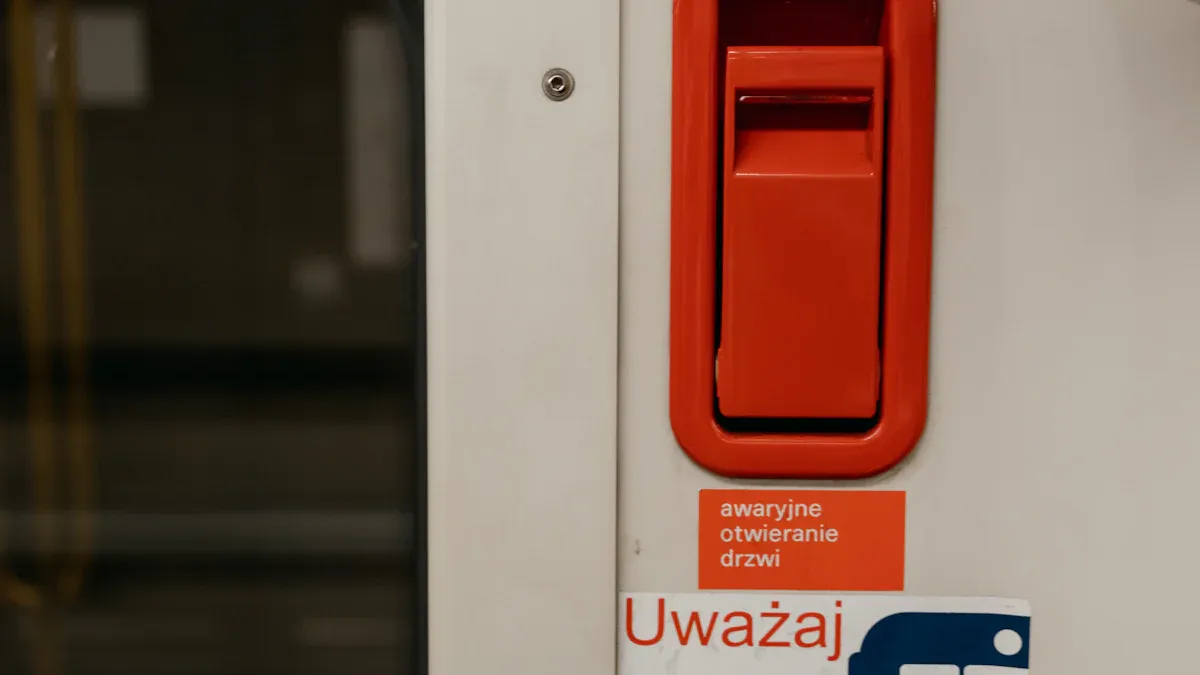
Emergency breakout hardware provides a critical safety mechanism for automatic doors. This feature allows individuals to manually push automatic doors open, even when the power fails or the system malfunctions. Automatic sliding doors often require a ‘break away / break out feature’ to comply with building codes for egress. This ensures occupants can exit quickly during emergencies like fires or security threats. Two primary types of breakout hardware exist: Full Breakout (FBO) and Partial Breakout. Full Breakout systems allow the entire door panel to swing out, creating a wide, unobstructed path. Partial Breakout systems permit only a portion of the door to swing open. Both options facilitate rapid evacuation, preventing people from becoming trapped inside a building. This hardware ensures a clear and immediate escape route, enhancing overall building safety.
Meeting Regulatory Compliance for Safety Standards
Integrating emergency breakout hardware is not just a safety measure; it is a regulatory requirement. Automatic doors must include features for safe and efficient emergency egress. An easily accessible emergency stop button is required. Clear signage, including operating instructions and safety warnings, must be present. Manual release mechanisms and battery backups are necessary to allow exit during power outages. If an automatic door is part of an accessible means of egress, maneuvering clearance is needed if power is lost. Alternatives like battery backup, automatic unlocking, or a breakaway feature negate this need.
Building codes and standards mandate these features. The 2024 NFPA 101 – Life Safety Code requires a ‘swing-out feature’ where the door assembly must swing from any position to provide full use of the opening width. The 2024 International Building Code (IBC) mandates power-operated doors to swing in the direction of egress during an emergency. ANSI/BHMA A156.10 includes requirements for automatic doors, defining ‘Break Away Device’ and ‘Break Out’ features. This standard limits the opening force for the breakout feature to 50 pounds-force (lbf). It also specifies that manually-operated interior non-fire-rated doors require no more than 5 lbf to open. These codes ensure that egress door hardware is operable without a key, special knowledge, or significant effort from the egress side.
Access Control Systems for Enhanced Security and Efficiency
Regulating Entry and Exit for Controlled Access
Access control systems are electronic physical security tools. They control entry and exit points. These systems combine hardware and software to identify authorized individuals and manage access points. Technologies like keypads, remote controls, RFID cards, biometrics, and mobile apps are common. Credential readers, such as key fob readers, card readers, or biometric scanners, authenticate individuals. Electronic locks, magnetic locks, or exit buttons secure entry points. Control panels process access requests and manage permissions. The system first verifies identity using methods like keycards or biometric scans. Then, it confirms the validity of credentials. Finally, it grants or denies access based on predefined permissions. This process ensures only authorized personnel can enter specific areas. For an automatic sliding door operator, this means precise control over who uses the door.
Streamlining Operational Management and Data Collection
Access control systems do more than just secure entry points; they also streamline operational management. These systems collect valuable data regarding door usage. They provide real-time logs of all access events, creating a comprehensive audit trail. This data includes who entered, when entry occurred, and where entry occurred. Facility managers use this information to identify security trends, monitor door activity, and understand occupancy levels. This detailed record helps in making informed decisions about security protocols and resource allocation. For example, analyzing traffic patterns through an automatic sliding door operator can optimize staffing or maintenance schedules. The collected data enhances overall efficiency and provides insights into building usage.
Battery Backup Systems for Continuous Safety and Performance
Maintaining Functionality During Power Interruptions
Battery backup systems provide essential power for automatic doors during outages. These systems ensure doors remain operational when main power fails. They typically supply power for several hours, depending on battery capacity and door usage. Most battery backups can operate an automatic door for multiple open/close cycles, often lasting between 24 to 72 hours without main power. This duration varies by system and usage. Battery backup systems primarily serve short-term power outages. For extended power loss, users may need to limit door usage or consider supplemental power solutions. Automatic door opener batteries usually have a lifespan of 1 to 2 years. This duration can vary based on usage frequency, environmental conditions, and battery quality. High temperatures, frequent use, and harsh elements can shorten battery life. The battery recharges itself once power is restored.
Ensuring Uninterrupted Accessibility and Security
Battery backup systems are crucial for maintaining accessibility and security, especially for individuals with disabilities. Without standby power, automatic doors that are part of an egress path must provide a minimum 32-inch clear break-out opening in emergency mode. The absence of backup power can trap individuals with disabilities during a power failure if insufficient maneuvering room exists to manually open the door. For example, California Building Code Section 1133B.2.5 mandates that powered doors in buildings with an occupancy of 150 or more must have a backup battery or generator. This backup must cycle the door at least 100 times. Backup batteries are also vital for stairlifts. They ensure stairlifts remain operational during power outages. This allows users to move between floors without being stranded. A fully charged battery can provide approximately 8–10 trips, ensuring mobility in emergencies.
Investing in these five essential accessories is paramount for maximizing automatic door safety and performance. These enhancements contribute to a secure, efficient, and user-friendly environment. Prioritizing these accessories ensures long-term operational excellence and user satisfaction. They offer significant benefits, including cost efficiencies, enhanced security, and improved hygiene. Such investments also minimize downtime, enhance safety, and improve energy efficiency, leading to substantial long-term cost savings and increased property value.
FAQ
What is the most crucial accessory for automatic door safety?
Presence sensors are paramount. They prevent collisions and protect pedestrians by detecting objects in the door’s path.
How long do automatic door battery backup systems typically last?
Battery backup systems usually operate for several hours during outages. Their lifespan is generally 1 to 2 years, depending on usage and conditions.
Are these automatic door accessories legally required?
Many accessories, like emergency breakout hardware and certain safety sensors, are mandated by building codes and safety standards for egress and user protection.