
An automatic swing door significantly improves patient confidentiality and quietness. These doors minimize manual operation noise and ensure consistent closure, which is crucial for privacy. An automatic door operator powers this seamless function. They also facilitate controlled access, enhancing security. Considering an Automatic Swing Door vs Sliding Door, swing doors offer distinct advantages for certain layouts. A Handicap Door Opener ensures accessibility for all. The question, How does an automatic swing door operator work?, reveals their sophisticated design and efficiency. For optimal performance, Automatic Swing Door Maintenance Tips are essential.
Key Takeaways
- Automatic swing doors make places quieter by reducing noise from people opening and closing doors. They close softly and completely every time.
- These doors help keep private talks secret by closing fully and blocking sounds. They also let only certain people enter, which protects important information.
- Automatic swing doors make it easier for everyone to get around, especially people who use wheelchairs. They open without needing to be touched.
- For the doors to work their best and last a long time, they need to be installed correctly and checked regularly.
- Choosing the right type of automatic swing door and adding security features helps make any space safer and more private.
How Automatic Swing Doors Enhance Quietness
Reducing Manual Operation Noise with Automatic Swing Doors
Manual doors often create noise. People push them open, and they can slam shut. This creates unwanted sounds in quiet environments. Automatic swing doors eliminate this problem. They operate smoothly and quietly. A direct drive motor powers these doors. This motor works without internal gears. This design ensures very smooth and quiet performance. It significantly reduces noise during operation. This quiet function helps maintain a peaceful atmosphere.
Ensuring Consistent and Controlled Closure with Automatic Swing Doors
Consistent door closure is important for quietness. Automatic swing doors ensure a complete and quiet seal every time. They prevent doors from being left ajar. This consistent closure helps block out sound. Special mechanisms contribute to this quiet seal. For example, some drop seals use a series of spring mechanisms. These mechanisms deploy the entire seal width straight down. This prevents dirt from dragging. It also avoids damage to the floor and the seal. These seals deploy without horizontal shifting. This ensures the entire opening is completely sealed. No gaps remain at the ends. Some mechanisms even compensate for uneven floors. They maintain equal pressure along the door’s width. A robust silicone gasket material provides a reliable seal. The GEZE TS 5000 SoftClose door closer also provides a secure and quiet closing. Automatic door sweeps also ensure a consistent and quiet seal. They form a tight fit against the door’s threshold. As the door closes, the seal pushes snugly into place. A spring action continuously pushes the seal against the threshold. This maintains a tight fit over time. It re-establishes a like-new fit even as materials age. This mechanism reduces noise transfer.
Integrating Automatic Swing Doors with Soundproofing Materials
Automatic swing doors can work with soundproofing materials. This combination further enhances quietness. Facilities can choose acoustic or soundproof doors. These doors have special construction to block sound. Adjustable door seals also improve sound insulation. They create a tighter barrier against noise. Door sweeps, like the 320 Automatic Door Sweep, also help. They seal the gap at the bottom of the door. These seals prevent sound from escaping or entering. Integrating these materials with an Automatic Swing Door creates a highly effective sound barrier. This combination ensures maximum quietness in any setting.
How Automatic Swing Doors Improve Patient Confidentiality
Guaranteeing Full Closure for Privacy with Automatic Swing Doors
Automatic doors close completely every time. This consistent action prevents gaps. Gaps can allow sound and visual information to pass through. Patient confidentiality relies on this complete closure. It ensures privacy for sensitive conversations and visual information. Sound Transmission Class (STC) ratings measure how well a barrier blocks airborne sound. A higher STC rating means better sound insulation.
Consider these STC ratings and what people can hear:
| STC | What can be heard |
|---|---|
| 25 | Normal speech can be understood quite easily and distinctly through the wall |
| 30 | Loud speech can be understood fairly well, normal speech heard but not understood |
| 35 | Loud speech audible but not intelligible |
| 40 | The onset of “privacy” |
| 42 | Loud speech audible as a murmur |
| 45 | Loud speech not audible; 90% of the statistical population is not annoyed |
| 50 | Very loud sounds such as musical instruments or a stereo can be faintly heard; 99% of the population is not annoyed. |
| 60+ | Superior soundproofing; most sounds inaudible |
This chart shows the relationship between STC ratings and sound audibility: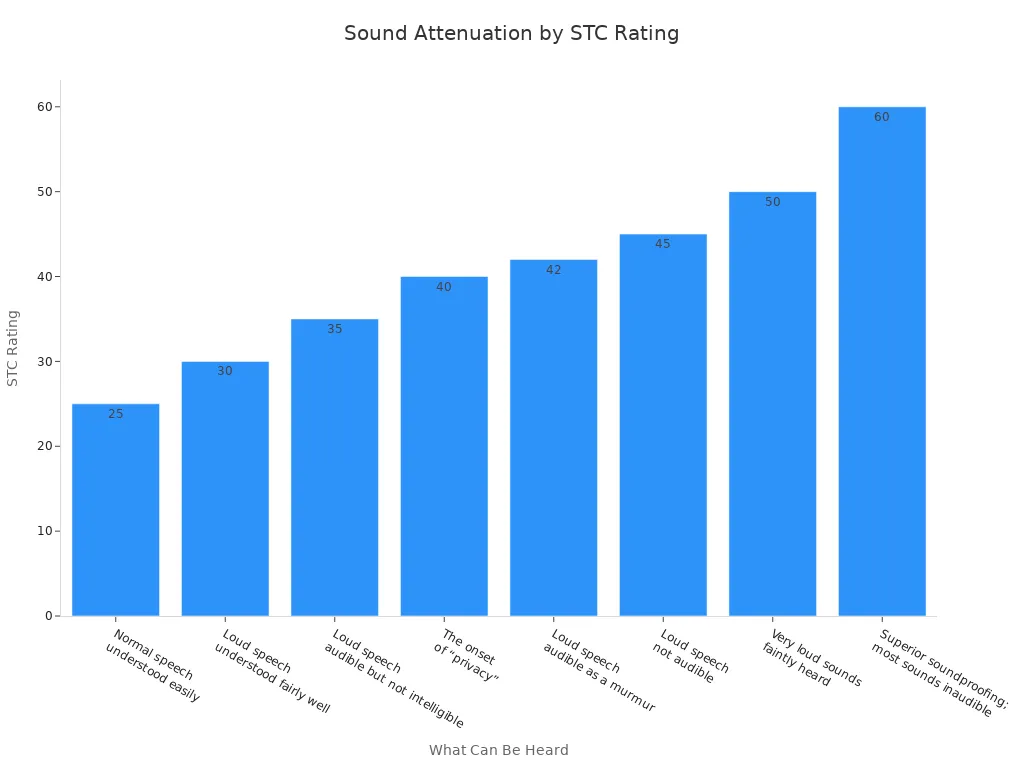
Fully closed doors with good STC ratings significantly reduce sound transmission. eNoise Control offers high STC Rated Doors. Their STC ratings range from 26 to 70. QuietSwing® Architectural Doors also provide STC ratings from 45 to 64. Examples include QS-45-SL (STC 45, Single Leaf Door) and QS-56 (STC 56, 3.5" Thick). These doors ensure privacy.
Implementing Controlled Access and Security Features with Automatic Swing Doors
Automatic doors offer strong security features. They control who enters specific areas. This protects sensitive patient information. Facilities integrate various access control technologies with an Automatic Swing Door:
- Credential Readers: Doors require a valid credential for access. These include physical cards or fobs with electronic encoding. Users can also enter Personal Identification Numbers (PINs) via a keypad.
- Biometric Signatures: Advanced security uses biometric signatures. These include finger or palm prints, vascular mapping of a hand, or retina scans. These can work alone or with other credentials.
- Tailgating Detection Technology: This technology prevents unauthorized entry. It stops people from following an authorized person. This involves photo-optic beams, video analytics, or LIDAR.
- Video Surveillance Systems with Facial Recognition: Video surveillance provides an image of a person. It compares this image to a database of authorized individuals. A security officer or automated facial recognition performs this comparison.
- Multi-factor Credential Authorization: Higher security uses multi-factor authorization. It combines different credential types. For example, an RFID card and PIN, followed by biometrics. This verifies identity thoroughly.
- Mantrap Portal Solutions: These solutions use a two-stage approach. They have two doors. The first door opens after credential verification. The second door opens after identity verification. This ensures only one authorized person enters at a time.
These features enhance security. They protect confidential areas.
Minimizing Eavesdropping Opportunities with Automatic Swing Doors
Automatic doors help prevent eavesdropping. Their consistent, full closure creates a sound barrier. This makes it harder for people outside to hear conversations inside. When combined with soundproofing materials, these doors become even more effective. Acoustic doors and adjustable door seals block noise. Door sweeps seal gaps at the bottom. High STC rated doors significantly reduce the audibility of speech. For instance, a door with an STC of 45 makes loud speech inaudible. This level of soundproofing is crucial for patient confidentiality. It ensures private discussions remain private.
Automatic Swing Doors in Healthcare Facilities
Prioritizing Patient Recovery and Well-being with Automatic Swing Doors
Healthcare environments greatly benefit from quiet spaces. Patients need rest for recovery. Automatic swing doors contribute to a peaceful atmosphere. They open and close smoothly. This eliminates loud noises from manual door operation. Reduced noise levels help patients sleep better. A calm environment also lowers patient stress. This supports faster healing and overall well-being. Furthermore, these doors offer hands-free access. This is crucial for staff moving equipment or assisting patients. It also reduces germ transmission, promoting a healthier setting.
Securing Consultations and Sensitive Records with Automatic Swing Doors
Patient confidentiality is paramount in healthcare. Automatic swing doors play a vital role in securing private areas. They ensure complete closure after each entry or exit. This prevents accidental breaches of privacy. Doctors conduct sensitive consultations behind these doors. The doors’ sound-blocking capabilities keep discussions private. Access control features also protect areas with sensitive patient records. Only authorized personnel can enter these restricted zones. This safeguards confidential information from unauthorized access.
Enhancing Privacy in Examination Rooms with Automatic Swing Doors
Examination rooms require high levels of privacy. Patients often feel vulnerable during medical examinations. An Automatic Swing Door ensures the room remains private. It closes fully and consistently. This prevents accidental viewing into the room. The doors also help contain sounds from within the examination space. This protects patient dignity and comfort. Staff can focus on patient care without worrying about privacy breaches. These doors create a secure and respectful environment for both patients and medical professionals.
Automatic Swing Doors in Office Environments
Fostering Focus in Workspaces with Automatic Swing Doors
Workplace noise significantly impacts employee focus. Studies show nearly 70% of employees perceive noise as negatively affecting their productivity. Poor acoustics can decrease productivity by an estimated 25%. More than 60% of workers experience stress in noisy environments. This stress reduces productivity and causes mental fatigue. Research indicates poor workplace acoustics can reduce employee productivity by up to 66%. Sound expert Julian Treasure estimates open office workers are 66% less productive due to speech distractions. An Environment and Behavior study found subjects in quiet groups performed best on cognitive tasks. They also felt less disturbed and stressed. An Automatic Swing Door helps create quieter spaces. It minimizes noise from manual operation. This allows employees to concentrate better.
Protecting Confidential Discussions in Meeting Rooms with Automatic Swing Doors
Meeting rooms often host confidential discussions. These conversations require a high level of privacy. Automatic swing doors ensure complete closure every time. This consistent sealing prevents sound from escaping the room. It makes eavesdropping difficult. When combined with soundproofing materials, these doors create an effective barrier against noise. This protects sensitive information shared during meetings. It also ensures participants feel secure in their discussions.
Securing Data Centers and Private Offices with Automatic Swing Doors
Data centers and private offices hold critical information. They require robust security measures. Automatic swing doors integrate seamlessly with access control systems. These systems restrict entry to authorized personnel only. Features like credential readers, biometric scanners, and multi-factor authentication enhance security. This prevents unauthorized individuals from accessing sensitive data or private work areas. The doors’ consistent closure also adds a physical layer of security. This protects valuable assets and confidential documents.
Automatic Swing Doors in Retail Settings
Creating Quieter Changing Rooms for Privacy with Automatic Swing Doors
Retail stores often feature changing rooms. Customers need privacy in these spaces. Automatic doors ensure complete closure every time. This consistent action prevents gaps. It reduces noise from outside the changing room. Customers can try on clothes without feeling exposed. This quiet environment enhances their comfort and privacy. It makes the shopping experience more pleasant.
Securing Back-Office Operations and Inventory with Automatic Swing Doors
Retail businesses manage valuable inventory and sensitive operations in back-office areas. These spaces require restricted access. Automatic doors integrate with security systems. They allow only authorized staff to enter. This protects merchandise from theft. It also safeguards confidential business information. Access control features, like key cards or biometric scanners, enhance security. This ensures the safety of assets and private data.
Enhancing Customer Experience with Automatic Swing Doors
Automatic doors significantly improve the customer experience in retail. They offer higher convenience than manual doors. Customers can enter and exit without physical effort. This is especially helpful for individuals with disabilities or those carrying shopping bags.
- Automatic door opening systems allow entry/exit without physical effort.
- They are especially beneficial for individuals with disabilities or limited mobility.
- These doors ensure a smoother flow of traffic in busy areas.
- They enhance the overall experience for customers by saving time and improving efficiency.
Automatic doors create an immediate positive impact. They provide a seamless and welcoming experience. Reduced congestion and smoother foot traffic flow are common in busy shopping environments. This increased convenience leads to higher customer satisfaction. It encourages repeat visits and positive word-of-mouth recommendations. Customers feel welcomed, especially when carrying items or using mobility aids. A positive first impression boosts satisfaction and encourages return visits.
Key Considerations for Maximizing Benefits of Automatic Swing Doors
Importance of Proper Installation and Maintenance for Automatic Swing Doors
Proper installation and regular maintenance are crucial for automatic swing doors. They ensure optimal performance and extend the door’s lifespan. Installation requires careful steps. First, avoid direct sunlight for the installation location. This prevents equipment degradation. Also, consider the door’s opening direction for surface or concealed installation. Second, prepare by confirming the door size and weight. This helps select the correct model. Determine the opening direction and angle for the installation method. Verify power supply and control system specifications. Gather necessary tools. Third, follow installation steps. Mark the installation position and height. Securely fix the automatic door opener bracket. Attach the opener to the bracket. Connect power and control lines. Install sensors, like light or human sensors, for intelligent control. Debug the system for optimal performance.
Regular maintenance also enhances performance and extends lifespan. Well-maintained doors experience fewer breakdowns. This ensures smooth operation for their expected lifetime or longer. They also conserve energy by operating more efficiently. This reduces safety risks. This proactive approach is cost-effective. It minimizes unexpected repairs. It ensures equipment longevity and user safety.
| Frequency | Task |
|---|---|
| Daily | Conduct a quick visual inspection and clean sensors. |
| Monthly | Check for loose hardware and lubricate moving parts. |
| Quarterly | Perform a thorough inspection of all components, focusing on signs of wear, and test safety features. |
| Yearly | Hire a professional technician for an exhaustive system check and specialized adjustments/repairs. |
Choosing the Right Automatic Swing Door Type and Features
Selecting the correct automatic swing door type and features is important. Different environments have different needs. Automatic swing doors require a defined swing radius. They work best in locations with ample interior or exterior space. They are not ideal in narrow corridors. They typically support one-way passage at a time. This may cause minor delays during peak usage. They are generally more cost-effective for initial purchase and installation. They are easier to retrofit onto existing manual doors. Their simpler mechanical operation often leads to lower maintenance needs and costs.
For high-traffic areas, prioritize specific features. A dual gearbox design provides enhanced power. This suits large, heavy doors in high-load environments. Silent operation is essential for places like hospitals. Wide-entrance capability allows full door opening. This accommodates large crowds and items. Proven reliability ensures stable performance and a long service life. Safety and accessibility compliance are also critical. Doors should have sensors to prevent accidents. Energy efficiency helps maintain internal temperatures. Durability ensures the door withstands constant operation. Touchless operation improves hygiene. Customization allows doors to integrate with building aesthetics.
Integrating Automatic Swing Doors with Existing Security Systems
Integrating automatic swing doors with existing security systems enhances control. Many commercial properties combine automatic door operators with access control systems. This restricts entry. This setup allows the door to open only after verification. Verification can happen via keycards, fobs, or PINs. This ensures controlled access. Automatic door openers can integrate with access control systems. This ensures only authorized personnel can enter. This is crucial for businesses handling sensitive information or valuable goods. Ensure the door system integrates seamlessly with existing building automation and security systems. This compatibility is key for a unified security approach.
Accessibility and Safety Standards for Automatic Swing Doors
Enhancing Accessibility for All Users with Automatic Swing Doors
Automatic doors significantly improve accessibility for everyone. They help facilities meet important standards like the ADA Standards for Accessible Design and ICC A117.1. These doors ensure ease of use for individuals with mobility challenges, including wheelchair users. They operate smoothly and reliably, allowing passage without resistance. Hands-free activation, such as RFID tags or motion sensors, eliminates the need for manual effort. This is especially helpful for people who struggle with traditional door handles. Voice commands through systems like Siri and Alexa also offer convenient, hands-free control. Automatic doors provide a clear opening width of at least 32 inches, even when power is off. This differs from manual door requirements. They also remove physical barriers, offering a smoother experience for individuals with visual or physical impairments.
Meeting Safety and Certification Standards for Automatic Swing Doors
Automatic doors must meet strict safety and certification standards to prevent injuries. They comply with ANSI/BHMA A156.19 for low-energy doors and ANSI/BHMA A156.10 for full-powered automatic doors. These standards cover aspects like safety sensors, opening force, and speed. Key safety features include slow-closing mechanisms, which prevent doors from slamming. Hinge guards reduce the risk of hand injuries around door jambs. Vision panels allow people to see oncoming traffic, preventing collisions. Clear signage, such as ‘Caution’ signs, indicates automatic operation. Properly functioning safety sensors are crucial. They prevent the door from closing on obstructions. Certifications like UL 10C or NFPA 252 are required for automatic operators on fire door assemblies. NFPA 80 mandates a releasing device for power-operated fire doors. This device disconnects the operator during a fire, allowing the door to close and latch automatically.
Automatic swing doors significantly improve patient confidentiality and overall quietness. They ensure consistent, quiet closure and integrate with access control systems, directly addressing these critical needs. These doors also enhance accessibility for all users, promote safety, and boost hygiene with touchless operation. Investing in them creates more secure, serene, and efficient environments across various professional settings.
FAQ
How do automatic swing doors reduce noise?
Automatic swing doors reduce noise by eliminating manual operation sounds. They close smoothly and consistently. This prevents slamming and ensures a tight seal. Integrating them with soundproofing materials further blocks external noise. This creates a quieter environment.
How do automatic swing doors improve patient confidentiality?
Automatic swing doors improve confidentiality by guaranteeing full closure. This prevents visual and auditory breaches. They integrate with access control systems. This restricts entry to authorized personnel. This minimizes eavesdropping opportunities for sensitive discussions.
Are automatic swing doors accessible for everyone?
Yes, automatic swing doors significantly enhance accessibility. They provide hands-free operation. This benefits individuals with mobility challenges, including wheelchair users. They meet ADA standards. This ensures easy passage for all users.
What are the key benefits of automatic swing doors in healthcare?
Automatic swing doors in healthcare prioritize patient recovery and well-being. They secure consultations and sensitive records. They enhance privacy in examination rooms. They also offer hands-free access. This reduces germ transmission and improves hygiene.
Do automatic swing doors require special maintenance?
Automatic swing doors require proper installation and regular maintenance. This ensures optimal performance and extends their lifespan. Daily visual checks and monthly hardware inspections are important. Professional technicians should perform yearly system checks.