
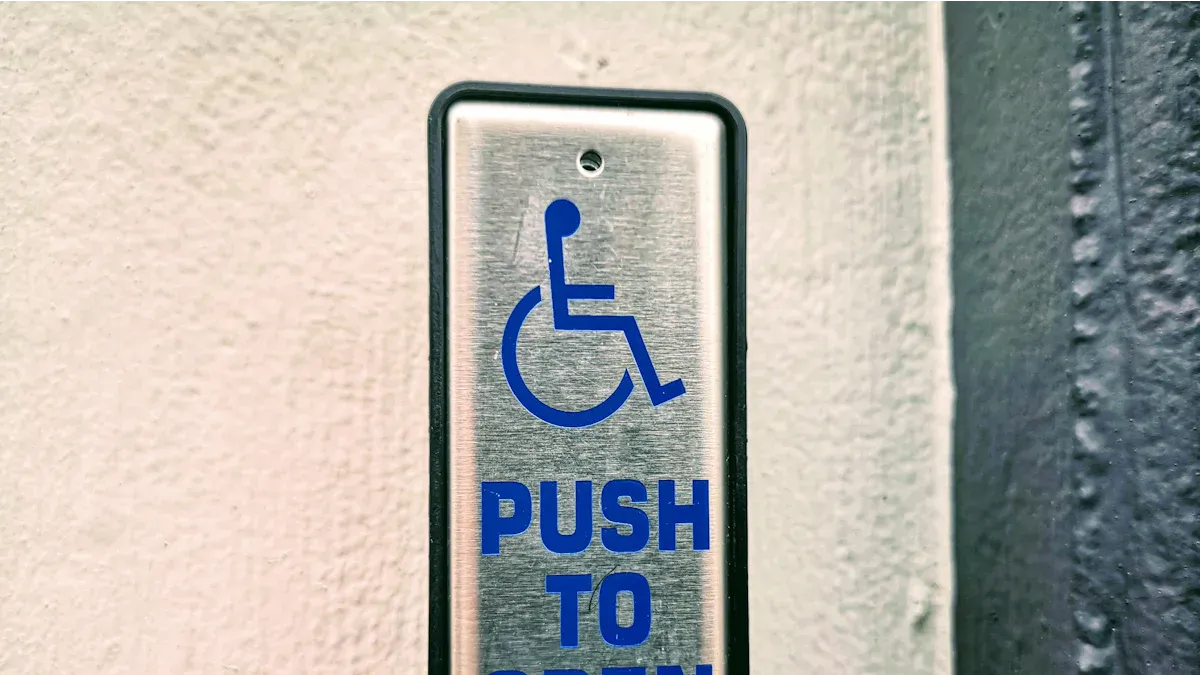
Choosing an Automatic Door Motor requires careful thought. First, assess traffic flow to determine if a high-energy or low-energy option is appropriate. Next, consider how to choose an automatic door motor that integrates seamlessly with existing access control and security systems. This ensures reliable operation and helps prevent an automatic door motor not working unexpectedly. Finally, evaluate the motor’s design and configuration; this affects aesthetics and how to install an automatic door motor for optimal function. A reputable automatic door motor supplier offers diverse options for various needs.
Key Takeaways
- Choose the right motor type. High-energy motors work for busy places. Low-energy motors are for controlled access areas.
- Safety is very important. Automatic doors have features to prevent accidents. These include sensors and automatic reversal systems.
- Integrate your motor with security systems. This allows controlled entry. It also provides safe exits during emergencies.
- Consider the motor’s design and environment. The motor should look good with the door. It must also withstand weather conditions.
- Look for performance and durability. Check the motor’s power. Also, consider its energy efficiency and expected lifespan.
Understanding Automatic Door Motor Energy Types
Selecting the correct automatic door motor begins with understanding its energy type. Different environments demand different operational speeds and safety considerations. This choice directly impacts both the door’s performance and the safety of its users.
High-Energy Automatic Door Motors for High Traffic
High-energy automatic door motors are essential for areas experiencing heavy foot traffic. These motors allow doors to open and close quickly. They are ideal for environments where many people pass through continuously. For example, grocery stores, retail outlets, and main building entrances frequently use these motors. Their quick operation effectively manages large crowds and frequent use. The American National Standards Institute (ANSI) 156.10 governs these motors. This standard mandates stricter safety measures. These measures include specific sensors and guard rails to protect users. High-energy doors can accommodate these necessary safety devices during installation.
Low-Energy Automatic Door Motors for Controlled Access
Low-energy automatic door motors suit areas with lighter traffic or where controlled access is important. These motors operate doors at slower speeds. This slower movement provides a safer passage for individuals, especially in environments where people might move more slowly. Examples include offices, medical facilities, and assisted living centers. These motors often do not require the extensive safety guard rails seen with high-energy doors. Their design prioritizes user safety through controlled, deliberate movement. They offer a gentle and accessible entry solution.
Safety Features and Compliance for Your Automatic Door Motor
Safety is paramount for any automatic door motor. Industry regulations mandate specific features to prevent accidents. Operators must include at least two entrapment protection mechanisms. One mechanism must be an inherent reversal system. This system automatically reverses the door if it detects an obstruction. The second mechanism must be either an electric eye or an edge sensor. These external sensors detect objects in the door’s path.
For common garage door operators, a manual safety release handle is mandatory. This allows disconnection of the operator from the door during power outages or safety feature failures. Visual alerts, such as a flashing light, and audible alerts, like a buzzer, warn nearby individuals when the door is about to close. This is especially important when someone operates the door remotely.
UL 325 standards also require built-in mechanisms to prevent entrapment. Type A entrapment protection involves inherent sensing devices. These devices are integrated into the door operator. They automatically detect obstructions and reverse or stop the door without external sensors. Type B entrapment protection uses external sensors. These include photoelectric or contact-activated edge sensors. They detect obstructions and signal the operator to stop or reverse movement. All gates must also have a way for manual operation. This ensures the door can open or close during power failure or malfunction.
Various sensors enhance the safety of an automatic door motor. Motion detector sensors use microwave technology. They detect movement from people or objects, triggering the door to open. Presence sensors activate when someone remains motionless within the door’s range. This prevents collisions. Dual technology sensors combine both motion and presence sensing. Some models even feature a light row to show where a person is. Photoelectric beam sensors sit on each side of the door. They work with other sensors to detect anyone in the threshold, stopping the door from closing on them. Active infrared sensors emit a signal to the floor. The door activates when the signal bounces back from an obstruction. Passive infrared sensors detect heat patterns in the area to activate the door. Microwave sensors emit a wide range of wavelengths. They analyze the returning signal to determine an object’s proximity. These diverse sensor types work together to ensure safe and reliable door operation.
Integrating Your Automatic Door Motor with Access Control

Integrating an automatic door motor with access control systems creates a secure and efficient entry point. This integration allows for controlled access, enhanced security, and safe emergency exits. It ensures only authorized individuals can enter specific areas.
Activation Methods for Your Automatic Door Motor
Various methods activate an automatic door motor. These methods range from simple manual controls to advanced sensor technologies. They provide hands-free operation and improve hygiene.
Sensor technologies are common for automatic door activation. Infrared sensors detect changes in reflection patterns. Ultrasonic sensors use high-frequency sound waves to identify obstacles. Microwave sensors monitor frequency changes caused by moving objects. These sensors are crucial for hands-free entry. They also improve hygiene and provide ADA-compliant accessibility in commercial settings. Modern sensors often use infrared, microwave, or dual-technology detection. This ensures accuracy and minimizes false triggers. Installers typically place them above or to the side of the door.
Automatic activation devices offer hands-free operation for high-traffic environments. These include floor loop sensors, motion detectors, and presence detectors. Motion sensors respond to environmental changes to trigger door opening. Touchless systems use technologies like capacitive touch or infrared beams for hygiene-conscious activation.
Manual activation methods are also available. These include simple devices like push buttons, remote controls, and pull cords. They suit defined use or traffic patterns. However, they are not ideal for high-cycle applications. Enhanced activation devices, such as the LZR-Widescan Multi-Function Device, manage activation areas. They offer flexibility, especially for untrained users or unfamiliar traffic.
Advanced Security System Integration for Automatic Door Motors
Integrating an automatic door motor with advanced security systems provides robust protection. Biometric systems offer the highest level of security. These systems use fingerprints, facial recognition, or retina scans. They ensure only individuals with approved credentials can enter.
Access can be defined based on roles or credentials. This restricts entry to sensitive areas. For example, only finance department staff can access financial records. Real-time monitoring offers visibility into who entered specific areas and when. Immediate access revocation allows instant disabling of access for departing employees.
Detailed audit trails log every entry with a timestamp. This provides a clear record of who accessed which area and when. Strong encryption protects all data transmissions between credentials and readers. This prevents hacking. Multi-factor authentication can be used for high-security areas. Real-time monitoring also provides instant alerts for forced door attempts or invalid credential usage. This helps prevent unauthorized access. Seamless integration with existing infrastructure creates a unified security ecosystem. This includes video surveillance cameras, alarm systems, and building management systems.
Emergency Egress and Fail-Safe Options for Automatic Door Motors
Automatic door motors must incorporate fail-safe devices for emergency egress situations. These devices automatically unlock doors when a fire alarm triggers or during a power loss. This ensures free passage for evacuation. This functionality prevents occupants from becoming trapped. It also facilitates quick evacuation. The National Construction Code (BCA Part D2) mandates that all doorways in the path of required exits must be readily openable without a key from the egress side. The design and installation of these fail-safe devices must comply with AS 1670.1. This standard outlines requirements for fire detection and alarm systems, including their integration with door mechanisms. These devices also fail ‘safe’. This means they default to an unlocked state upon power loss or malfunction.
Fail-safe locks are a crucial mechanism for automatic door motors in emergency egress situations. They enable easy entries and exits, even during a power failure. This characteristic makes them suitable for main access points like lobby or office doors. They are often used with magnetic locks, which inherently require power to operate.
For automated doors in escape and rescue routes, a system solution is recommended. This solution comprises a door control unit, an electronic locking element, and a panic lock. The electronic locking element can be escape door locks or emergency exit electric strikes. This setup ensures security against unauthorized access and free access for evacuating individuals. The door control unit acts as the ‘brain’. It monitors opening and closing procedures. A self-locking panic lock guarantees quick opening in an emergency. The system automatically unlocks if a motor lock is used when activated by a fire alarm system or during a power failure. The door can still be passed through in the direction of emergency exit because the emergency exit closure automatically unlocks. Additionally, an emergency button on the door control unit can open the door. This works even if multiple people push against it in a panic.
Specific building codes relate to emergency egress for automatic doors. IBC section 1010.1.2 (Door Swing) mandates that egress doors must be pivoted or side-hinged swinging types. This generally excludes overhead doors from most egress situations. IBC section 1010.1.4.2 addresses power-operated doors. It requires them to be manually operable during power failure. Opening forces must not exceed those specified in Section 1010.1.3, except for the initial 50 pounds to set the door in motion. These doors must also open to their full width from any position when force is applied from the egress side. Compliance with BHMA standards A156.10 (for power-operated pedestrian doors), A156.19 (for power-assisted and low-energy power-operated swinging doors), and A156.38 (for low-energy power-operated sliding and folding doors) is also specified for various types of automatic doors. While ANSI 404.3 states that automatic doors can be used, the interpretation of IBC 1010.1.4.2 suggests it does not intend for overhead doors to be considered a form of sliding door for egress. This is supported by several points. BHMA A156.10 is titled ‘Standard for Power Operated Pedestrian Doors’. This raises questions about whether overhead doors are considered ‘pedestrian doors’. The code specifies ‘open to the full width’ rather than ‘full height’. There is a specific reference to ‘horizontal sliding’ doors, with no mention of vertical sliding doors. Common definitions of ‘sliding doors’ typically refer to horizontal movement. This further indicates that overhead doors are not generally suitable for egress under these provisions.
Design and Environmental Fit for Your Automatic Door Motor
The motor’s design and its environment are crucial considerations. They affect both the door’s appearance and its long-term performance. A well-chosen motor enhances the building’s overall functionality and aesthetic.
Aesthetic Impact and Door Type Compatibility of Automatic Door Motors
An automatic door motor should complement the door’s design and the building’s architecture. Manufacturers offer various motor configurations. Some motors integrate discreetly within the door frame or header. Others mount visibly. The motor’s size and shape must suit the specific door type. This includes sliding, swinging, or revolving doors. Compatibility ensures proper function and maintains the desired visual appeal. A motor that is too bulky can detract from a sleek door design.
Noise Levels and Operational Smoothness of Automatic Door Motors
Operational noise levels significantly impact user experience. Different automatic door motor types produce varying sounds. Belt drive and direct drive systems are generally quieter than chain drive or screw drive systems. The quietest garage door openers often operate below 60 dB. Brushless DC motors are known for their smooth and quiet operation. For example, the YF150 Automatic sliding door motor, a 24V 60W brushless DC motor, operates at a noise level of ≤50dB. This motor integrates the motor body and gearbox to prevent vibration noise. It also uses worm gear transmission for efficiency and quietness.
Brushless motors contribute to operational smoothness. They provide silent operation, high torque, and a long service life. They also boast high efficiency. Integrating the motor with a gearbox, often using European technology, ensures strong driving and reliable operation. This increases power output, even for large doors. Helical gear transmission within the gearbox guarantees stable and reliable operation. DC door motors also enhance operational smoothness. They offer energy efficiency and smooth, easy control. This results from optimized structural design, leading to reliable electric doors with high output torque and consistent performance.
Environmental Durability and Weather Resistance for Automatic Door Motors
The motor’s environment dictates its required durability and weather resistance. Motors for outdoor installations need robust protection against elements. Manufacturers use specific materials for weather resistance. These include ABS housing and stainless steel. Manusa’s drive units incorporate high-quality metal elements. These elements undergo anodisation or lacquering. Anodization creates a protective surface layer through an electrolytic process. Lacquering involves a plastic paint covering that is polymerized in a drying oven. These finishes contribute to the components’ durability. They protect against corrosion and wear.
Performance and Durability of an Automatic Door Motor
The performance and durability of an automatic door motor are critical for long-term reliability. These factors ensure the door operates efficiently and lasts for many years.
Power Requirements and Horsepower for Your Automatic Door Motor
The power of an automatic door motor, often measured in horsepower (HP), determines the maximum door weight it can handle. Matching the motor’s power to the door’s size and material is essential. A motor with insufficient power struggles, leading to premature wear.
| Horsepower (HP) | Door Type/Weight Considerations |
|---|---|
| 1/3 HP | Suitable for single garage doors, lightweight, and standard sizes (up to 9 ft wide). Ideal for doors made of aluminum or fiberglass. |
| 1/2 HP | Most common for residential garage doors. Handles double garage doors (up to 16 ft wide) and standard-weight doors (up to 300 lbs). Good for doors made of steel or wood. |
| 3/4 HP | Recommended for heavier or oversized garage doors, such as custom wood doors, insulated doors, or doors with decorative hardware. Can handle doors weighing up to 500 lbs. Also suitable for garages with frequent use. |
| 1 HP | Designed for very heavy, oversized, or commercial-grade garage doors. Ideal for doors weighing over 500 lbs, such as solid wood doors or carriage house doors. Provides maximum lifting power and durability. |
| 1 1/4 HP | Offers superior power for extremely heavy or custom garage doors, often found in larger residential or light commercial applications. |
| 1 1/2 HP | Provides robust power for the heaviest residential garage doors or specialized applications requiring extra lifting capacity. |
| 2 HP | Typically used for commercial or industrial garage doors, or very large and heavy custom residential doors. |
| DC (Direct Current) Motors | Often rated by ‘HPC’ (Horsepower Comparable) or ‘HPc’ (Horsepower Class) and can offer similar lifting power to AC motors with added features like battery backup and softer starts/stops. |
Cycle Testing and Lifespan Expectations for Automatic Door Motors
Manufacturers test automatic door motors for many cycles to ensure durability. This testing helps predict how long a motor will last. A well-maintained motor can operate for many years. Automatic garage door openers typically have an average life expectancy of 10 to 15 years before needing replacement.
| Motor Type | Lifespan (Years) |
|---|---|
| Sliding Gate | 10-15 (up to 20 with maintenance) |
| Swing Gate | 10-15 |
| Barrier Gate | 10-15 |
| Cantilever Gate | 15-20 |
| Vertical Lift Gate | ~15 |
| Bi-folding Gate | 10-15 (with regular maintenance) |
| Telescopic Gate | 10-15 |
Energy Efficiency and Operating Costs of an Automatic Door Motor
Energy efficiency directly impacts operating costs. Motors with high efficiency ratings reduce electricity consumption and environmental impact. The Energy Star certification is an international standard for energy efficiency. It requires products to use less electricity to maintain approval. The IECC (International Energy Conservation Code) is another building code relevant to energy efficiency for automatic doors.
Variable Frequency Drives (VFDs) greatly enhance energy efficiency. VFDs manage the startup and shutdown of motors. They gradually ramp up or down the motor’s speed. This prevents high electricity spikes. It also reduces mechanical stress on the motor. This leads to significant energy savings and lower operational costs.
Smart Features and Maintenance for Your Automatic Door Motor
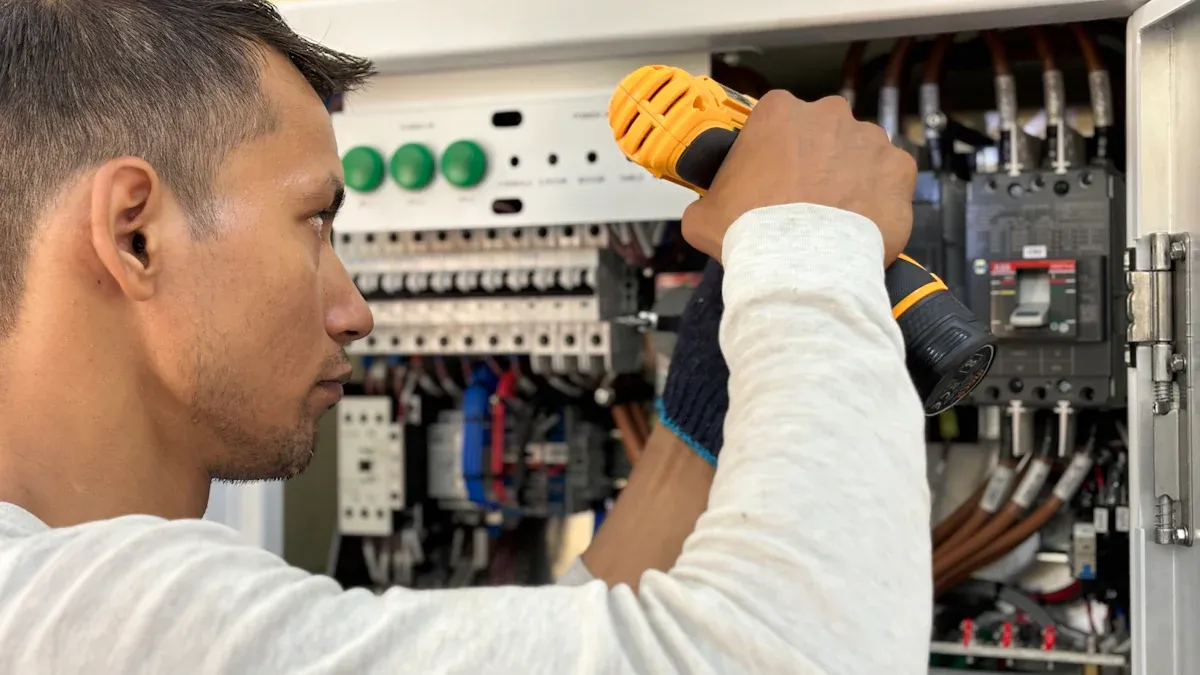
Modern automatic door motors offer advanced features. These features improve convenience and simplify upkeep. Understanding these innovations helps users choose the best system.
Smart Features and Drive Types in Automatic Door Motors
Smart features make automatic doors more efficient. AI-enhanced systems use sensors to track vibrations and temperature. They also count door cycles. AI algorithms predict when parts might fail. This allows for proactive care. Remote diagnostics are becoming standard. They help maintenance teams identify issues before failures occur. Cloud-based alerts notify users of potential problems. Some systems integrate into smart home ecosystems. They offer comprehensive protection. Remote control protocols like Wi-Fi or Bluetooth allow easy management.
Different drive types also affect performance. Direct drive motors are very quiet. They have only one moving part. This makes them highly durable. They require minimal maintenance. Direct drive motors handle heavier doors easily. Belt drive motors are also quiet. A rubber belt minimizes vibrations. They are reliable but may need belt replacement over time. Both types ensure smooth, vibration-free operation. They enhance system reliability.
Maintenance Needs and Serviceability of Automatic Door Motors
Regular maintenance extends an automatic door motor’s lifespan. Users should inspect the drive mechanism quarterly. This includes the motor itself. Lubricating moving parts reduces friction. It prevents premature wear. Occasionally, components need replacement. This ensures reliable and safe operation. Smart features assist with maintenance. Remote monitoring transmits operational data. This helps maintenance teams schedule repairs proactively. It minimizes downtime.
Warranty and Support Services for Your Automatic Door Motor
Manufacturers offer warranties for automatic door motors. These warranties cover defects in materials and workmanship. The warranty period typically ranges from one to five years. This depends on the manufacturer and model. For example, Power Access offers a 1-year limited warranty on openers. They provide a 10-year warranty for major components like the motor in some models. Florida Automatic Doors offers a 3-year manufacturer warranty on Micom operators. Other parts, like sensors, usually have 1 to 3-year warranties. Always check the specific terms.
Selecting an automatic door motor demands careful thought. Users must align their choice with specific application requirements. They should balance performance, safety, durability, and cost for optimal results. Thorough research is essential. Seeking professional advice helps with complex installations. This ensures a successful and long-lasting solution for any entry point.
FAQ
❓ What is the main difference between high-energy and low-energy automatic door motors?
High-energy motors open and close doors quickly. They suit busy areas like retail stores. Low-energy motors operate doors slowly. They are ideal for places needing controlled access, such as offices or medical facilities. This difference impacts speed and safety requirements.
🛡️ How do automatic door motors ensure user safety?
Automatic door motors include several safety features. They have entrapment protection mechanisms. These mechanisms reverse the door if they detect an obstruction. Sensors like electric eyes or edge sensors also prevent collisions. Manual safety releases allow operation during power outages.
💡 Can automatic door motors connect with smart home systems?
Yes, many modern automatic door motors offer smart features. They can integrate into smart home ecosystems. Users manage them remotely via Wi-Fi or Bluetooth. AI-enhanced systems predict maintenance needs. They also provide remote diagnostics and cloud-based alerts.
⏳ What is the typical lifespan of an automatic door motor?
Automatic door motors generally last 10 to 15 years. Regular maintenance extends their lifespan. Factors like usage frequency and environmental conditions also affect durability. Manufacturers test motors for many cycles to ensure long-term reliability.