
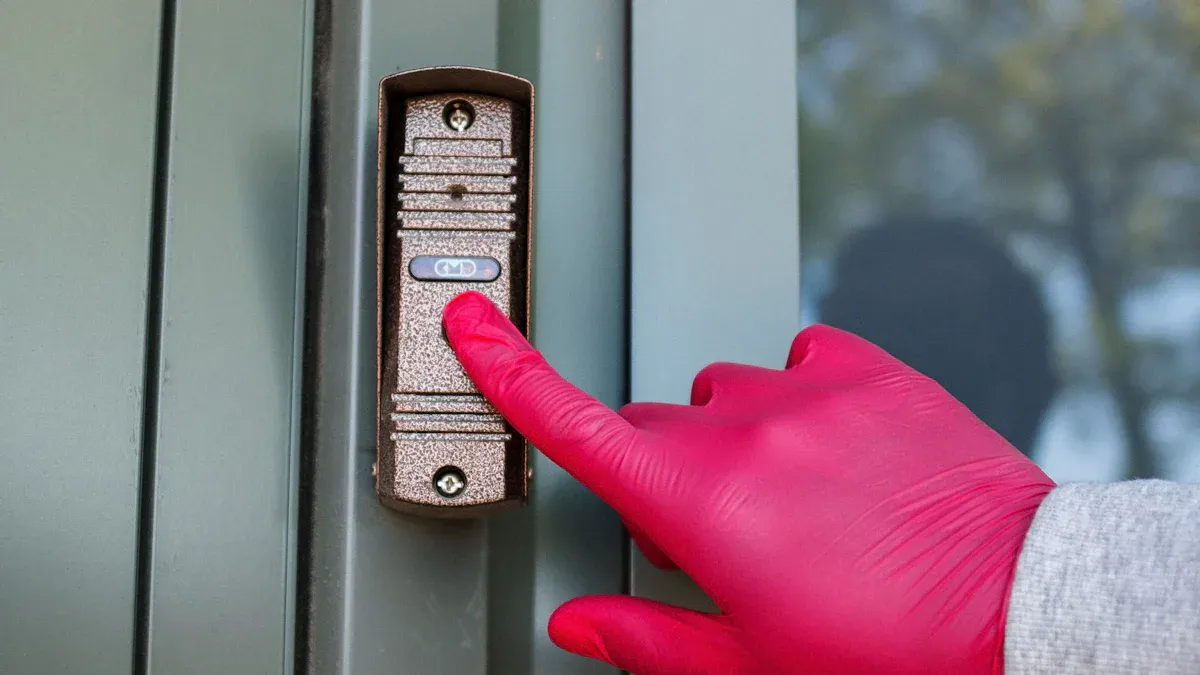
An automatic swing door opener represents a significant smart home upgrade for 2026. It enhances daily convenience and accessibility for all occupants. The popularity of these systems continues to grow due to technological advancements. Robust Automatic door arm systems now offer seamless integration into modern homes. Advanced features like Microwave motion sensor door openers and efficient automatic door motors provide superior performance. Enhanced Automatic door safety sensors ensure secure and reliable operation.
Key Takeaways
- Automatic swing door openers make homes more convenient and accessible. They come in different types like electro-mechanical and hydraulic. Each type has its own strengths.
- Choosing an opener means checking door weight, size, and how it opens. You also need to pick how it turns on, like with a button or motion sensor. Make sure it fits your door and space.
- Safety is very important for these doors. They have features that stop the door if something is in the way. They also have ways to open the door in an emergency. This keeps everyone safe, including kids and pets.
- Installation can be simple or complex. You can do it yourself for some models. Professionals ensure it works right and safely. They also help keep your warranty valid.
- Regular cleaning and checks help your door opener last longer. This prevents problems and keeps it working well. Knowing the costs for buying, installing, and keeping it running helps you plan.
Understanding Automatic Swing Door Opener Types

Selecting the right automatic swing door opener requires understanding the different types available. Each design offers distinct advantages for various applications. Homeowners can choose based on their specific needs for power, speed, and operational characteristics.
Electro-Mechanical Arm Automatic Swing Door Openers
Electro-mechanical arm operators utilize electric motors and gears to move door panels. These systems offer a balance of power and efficiency. They are generally quieter during operation and boast higher energy efficiency compared to some other types. Installation for electro-mechanical units is often simpler, making them a popular choice for residential settings. They provide good control over speed, though force control can be less precise.
Hydraulic Piston Automatic Swing Door Openers
Hydraulic piston operators employ fluid pressure to move mechanical parts. These systems deliver high power output, making them suitable for heavy-duty applications. While generally slower, they offer exceptional precision in their movements. However, hydraulic systems can be noisier due to pump operation and may require more maintenance, including regular fluid checks. Their initial cost is typically higher.
Here is a comparison of these two primary types:
| Feature | Hydraulic Operators | Electromechanical Operators |
|---|---|---|
| Operation | Uses fluid pressure to move mechanical parts. | Uses electric motors and gears to move mechanical parts. |
| Power | High power output. | Moderate power output. |
| Speed | Generally slower, very precise. | Generally faster, precision can vary. |
| Maintenance | Requires regular fluid checks. | Requires less maintenance. |
| Noise | Can be noisy. | Generally quieter. |
| Efficiency | Can be less efficient. | More energy-efficient. |
| Cost | Higher initial cost. | Lower initial cost. |
| Installation | More complex due to fluid lines. | Simpler installation. |
Low-Energy Automatic Swing Door Operators
Low-energy automatic swing door operators prioritize safety and accessibility. They operate at slower speeds and with reduced force. This design minimizes the risk of injury, making them ideal for environments with children, the elderly, or individuals with disabilities. These operators often comply with ADA (Americans with Disabilities Act) standards, ensuring easy access for everyone. They provide a gentle, controlled opening and closing motion.
Full-Energy Automatic Swing Door Operators
Full-energy automatic swing door operators deliver robust power and speed. They are designed for environments demanding rapid and frequent door cycling. These operators move doors with significant force, making them suitable for high-traffic commercial or public spaces. They provide quick access and egress, optimizing flow in busy areas. However, their powerful operation necessitates stringent safety protocols.
Full-energy automatic swing door operators are regulated by ANSI 156.10. This standard mandates stricter safety measures. It requires the incorporation of sensors and guard rails to ensure safe operation in high-traffic environments. These safety features prevent accidental contact with the moving door. They protect individuals from potential injury. For full-energy automatic swing door operators to comply with ANSI/BHMA A156.10, all specified safety requirements must be met. Additionally, if a knowing act device is used with a full-energy operator, adherence to all other safety requirements outlined in ANSI/BHMA A156.10 is mandatory. This comprehensive approach to safety ensures reliable performance. It also prioritizes user protection in demanding applications. Choosing a full-energy automatic swing door opener requires careful consideration of these safety standards.
Key Features and Specifications for Your Automatic Swing Door Opener
Choosing the right automatic swing door opener involves understanding its core features and specifications. These details ensure the opener functions effectively and safely with your specific door and environment. Careful consideration of these elements guarantees optimal performance and longevity.
Door Weight and Width Capacity for Automatic Swing Door Openers
The physical dimensions and weight of your door directly influence the type of opener you need. Manufacturers design automatic swing door openers to handle specific maximum door weights and widths. Exceeding these limits can lead to premature wear, malfunction, or even safety hazards. Always verify your door’s exact measurements before selecting an opener.
Here are some examples of door weight and width capacities for various models:
| Model | Max Door Weight | Max Door Width |
|---|---|---|
| Olide DSW120 | 120 kg | 1200 mm |
| Stanley M-Force | 700 lbs | 48 inches |
| Stanley Magic Access | 125 lbs | 42 inches |
These specifications highlight the range available, from lighter residential doors to heavier commercial applications. Matching the opener’s capacity to your door prevents operational issues.
Activation Methods and Sensor Technologies
Modern automatic swing door openers offer diverse activation methods, providing convenience and flexibility. These systems also incorporate advanced sensor technologies for both triggering operation and ensuring user safety.
Common activation methods for residential automatic swing door openers include:
- Push-button remotes and wall switches: Many kits include these as standard.
- Keypads or key fob remotes: These offer secure triggering of the door.
- Wireless remote controls: Similar to garage door openers, users can carry or mount these.
- Motion sensors: These detect approach and open the door automatically, useful for hands-free access or pet applications.
- RFID tags and smart triggers: Advanced systems use RFID for hands-free access or integrate with smart home systems for scheduled or voice-activated commands.
- Voice assistant integration and smartphone control: Some systems offer direct integration with platforms like Alexa and Google Assistant, or through dedicated apps.
- Push Plates: These are large wall switches designed for easy pressing with a hand or elbow.
- Sensor Switches: These provide touch-free activation.
- Access Control Keypads: These offer restricted access.
Beyond simple activation, sophisticated sensor technologies enhance safety and precision. For instance, laser-based time-of-flight sensors, such as BEA’s LZR-i30 and LZR-FLATSCAN SW, provide high precision for accurate object detection. They create three-dimensional safety zones with multiple laser curtains. The LZR-FLATSCAN SW specifically offers 170 detection points across a single curtain, covering the entire door face, including the hinge area, with Finger Detection Technology™. These are ideal for detecting people and vehicles in various environments.
Another advanced technology is active infrared combined with Position Sensitive Detection (PSD). The SafePath SSS-5, for example, functions as a door-mounted presence sensor. It provides safety protection on swing, bi-fold, revolving, and low-energy automatic doors. This technology detects individuals in the door’s path while opening or closing, prompting the door to slow, stop, or reopen. PSD technology, similar to that in autofocus cameras, ensures precise pedestrian detection within the moving door panel’s path.
Power Source, Horsepower, and Backup Options
Understanding the power requirements for your automatic swing door opener is essential for proper installation and reliable operation. Residential units typically operate on standard household electricity.
- Standard Power: Residential automatic swing door openers typically require 120VAC, 60Hz, single-phase power. This is the standard voltage found in wall sockets in the USA.
- Current Draw: The current draw for an automatic door opener can be around 1 amp, though this varies by model. Electricians ensure the opener connects to an appropriate circuit to prevent tripping.
- UL Listing: For safety and compliance, especially in the USA market, using automatic door openers that are UL Listed is recommended. Products from regions like China may have different power requirements (e.g., 220VAC, 50Hz) and might not be UL Listed for commercial or residential installation in the USA.
Some models also offer battery backup options. These ensure the door remains operational during power outages, providing continued accessibility and security. Horsepower ratings indicate the motor’s strength, directly correlating with the door’s weight and operational speed capabilities. Higher horsepower generally means the opener can handle heavier doors or operate them more quickly.
Noise Levels and Operation Speed of Automatic Swing Door Openers
The operational characteristics of an automatic swing door opener significantly impact user experience. Noise levels and operation speed are two critical factors. They influence comfort, convenience, and safety within any environment. Understanding these aspects helps in selecting a suitable model for specific needs.
Noise levels are particularly important in residential settings or quiet commercial spaces. Quieter models of automatic swing door openers operate at less than 55 dB. This level is comparable to a quiet conversation or a refrigerator hum. Residential automatic swing door openers can have noise levels ranging from 40 dB to 60 dB. This range covers various motor types and designs. DC motor-based openers are typically quieter. They operate at 40-45 dB. AC motor openers may be in the 50-60 dB range. Manufacturers often prioritize noise reduction through advanced motor designs and sound-dampening materials. A quieter operation enhances the overall ambiance of a home or office.
Operation speed dictates how quickly a door opens and closes. This factor directly affects traffic flow and user convenience. Faster speeds are beneficial in high-traffic areas. They minimize waiting times and prevent bottlenecks. However, speed must always balance with safety. Full-energy operators, designed for rapid cycling, require stringent safety measures. These include advanced sensors and safety zones. Low-energy operators, conversely, prioritize safety. They operate at slower, controlled speeds. This design reduces the risk of impact. It makes them ideal for environments with vulnerable individuals.
Several factors influence an opener’s speed. The door’s weight and size play a significant role. Heavier doors require more power and may operate slower. The motor’s horsepower also affects speed. Higher horsepower motors can move doors more quickly. Adjustable speed settings are a common feature in modern openers. Users can customize the opening and closing speeds. This customization allows for optimal performance based on specific requirements. For instance, a slower closing speed prevents slamming. A faster opening speed provides quick access.
Choosing the right balance between noise and speed depends on the application. A home environment typically favors quiet operation. A commercial entrance might prioritize speed and efficiency. Manufacturers continually innovate to offer quieter, yet efficient, solutions. They integrate advanced motor technologies and sophisticated control systems. These advancements ensure both comfort and performance.
Prioritizing Safety and Security in Automatic Swing Door Openers
Safety and security are paramount considerations for any automatic swing door opener installation. These systems must protect users from potential hazards. They also need to integrate seamlessly with existing security measures.
Obstacle Detection and Reversal Mechanisms
Automatic swing door openers incorporate a built-in safety feature for obstacle detection. When an obstruction is identified during operation, the door immediately halts its opening or closing cycle. Infrared sensors facilitate this mechanism. These sensors are typically mounted on the door’s swinging panel. They emit near-infrared light and detect reflections from objects within their range. Upon receiving sufficient reflected infrared light, a recognition signal is sent to the door’s electronic control unit. This unit then directs the door to stop or reverse its movement. This action prevents contact with the detected object. A key advantage of these panel-mounted sensors is their ability to differentiate between objects located in front of and behind the door. This allows for more precise and safe operation.
Emergency Release Features for Automatic Swing Door Openers
Emergency release features ensure continued access during power outages or system malfunctions. Several options provide this critical functionality.
- Manual Release Key: Many systems include a key or lever. This disengages the motor. It allows manual door movement during power outages.
- Battery Backup System: Some systems have built-in battery backups. These enable continued operation via remote or keypad during power failures.
- Mechanical Disengagement Lever: This lever allows users to separate the door from the motor. It facilitates manual opening or closing, especially for larger doors.
- External Power Sources: Options like solar panels or generators can connect. They ensure continuous door operation during extended power outages.
Secure Locking Integration with Automatic Swing Door Openers
Integrating automatic swing door openers with existing home security systems requires careful planning. Control modules like Camden CX-12 or CX-33 can integrate access control and automatic door hardware. These modules ensure outside sensors are only active after access control is triggered. They also provide a delay between unlocking and door opening. Implement a delay, such as 0.5 to 1 second, between pressing the button or triggering the access control and the door operator firing. This prevents the strike from being ‘loaded’. It ensures proper release before the door opens. For egress, consider alternatives to traditional REX PIRs. Curtain motion detectors offer narrow coverage. A system with two REX sensors wired in series can differentiate between passing traffic and actual egress.
Child and Pet Safety Considerations
Prioritizing the safety of children and pets is crucial when selecting an automatic swing door opener. Manufacturers design these systems with specific features to prevent accidents and ensure a secure environment. These safety mechanisms protect vulnerable occupants from potential harm.
Automatic swing door openers incorporate several key safety features:
- Obstacle Detection: This feature senses when someone or something, such as children or pets, blocks the door’s path. The door then stops or reverses immediately to prevent impact, ensuring safety and preventing damage. This intelligent detection system minimizes the risk of injury.
- Emergency Release: This allows manual opening of the door during power outages or emergencies. It ensures individuals are not trapped and can exit quickly. This feature provides peace of mind, knowing the door will not become a barrier in critical situations.
- Safety Sensors: These sensors monitor movement and objects near the door. They signal the control unit to open, close, or stop the door. They often include an auto-reverse function, causing the door to reopen if an object is detected during closing. This prevents harm to children and pets.
These integrated safety measures ensure the automatic swing door opener operates reliably and securely. They provide a safe passage for all users, including the youngest family members and household pets.
Assessing Your Home’s Specific Needs for an Automatic Swing Door Opener
Selecting the ideal automatic swing door opener requires a thorough evaluation of your home’s unique characteristics. This assessment ensures the chosen system integrates seamlessly and performs optimally. Careful consideration of door specifications, available space, and expected usage patterns is crucial for a successful installation.
Door Material and Construction Compatibility
The material and construction of your door significantly influence the type of automatic swing door opener you should consider. Different door types exert varying demands on an opener’s motor and mounting hardware. For instance, solid wood or metal doors are considerably heavier than hollow-core doors. They require more powerful operators with higher torque capabilities. Glass doors, especially frameless designs, often necessitate specialized mounting brackets or clamping mechanisms to ensure secure attachment without compromising the glass integrity.
The door’s existing frame and hinges also play a vital role. They must withstand the additional forces exerted by the automatic opener during operation. Weak or damaged frames may require reinforcement before installation. Similarly, worn hinges can lead to uneven door movement and premature opener failure. Assess these components for their structural integrity. This ensures they can support the new system effectively.
Installation Space and Door Swing Clearance
Adequate installation space and clear door swing clearance are fundamental for the safe and efficient operation of an automatic swing door opener. The door must have an unobstructed path throughout its entire opening and closing arc. Obstacles such as walls, furniture, or other architectural features can impede movement and cause damage. Measure the full swing radius of your door to identify any potential interferences.
Industry standards, such as ANSI A156.10, provide detailed specifications for these clearances. For example, on the swing side, two guide rails are necessary. They must extend at least to the leading edge of the widest door when fully open. For doors serving both egress and ingress, these guide rails must project from the door jambs on the swing side. They should extend no less than the outside leading edge of the open door plus 55 inches (1400 mm). Guide rails must be a minimum of 30 inches (760 mm) high from the floor. The maximum clearance between the rail and the door in the fully open position, or at its closest point in the arc of travel, is 6 inches (150 mm). A minimum clearance of 2 inches (51 mm) is required between the rail at the hinge side and the door in the fully open position. Free-standing guide rails must have a maximum dimension of 2 inches (51 mm) between the rail and the jamb or adjacent surface.
A safety zone is also mandatory on the swing side of all power-operated swinging doors. If an overhead sensor is used for this safety zone, its active area must extend to within 5 inches (125 mm) of the closed door’s face at the center of the opening. The safety zone must extend a minimum of 5 inches (125 mm) beyond the leading edge of the door in the open position, measured at the center of the door opening. The width of the active area, measured perpendicular from the closed door’s face, should be the door opening width minus a maximum of 10 inches (255 mm) (5 inches from each side), measured parallel to the door face at 15 inches (380 mm) and 30 inches (760 mm). These precise measurements ensure safety and compliance.
Usage Frequency and Traffic Volume
The expected usage frequency and traffic volume significantly impact the durability requirements of your automatic swing door opener. A door in a high-traffic area, such as a main entrance or a frequently used interior passage, experiences considerably more open/close cycles than a door in a seldom-used room. High-traffic areas necessitate commercial-grade durability for automatic swing door openers.
The ‘duty cycle’ is a crucial specification. It indicates the number of open/close cycles an opener can handle per hour. Residential units are typically designed for approximately 50 cycles per day. In contrast, commercial-grade models are built to support 300 or more daily operations. Choosing an opener with a duty cycle appropriate for your expected usage prevents premature wear and costly repairs. Overworking a residential-grade opener in a high-traffic setting will shorten its lifespan. Conversely, installing an overly robust commercial unit for light residential use might be an unnecessary expense. Match the opener’s design to the intensity of its intended use for optimal performance and longevity.
Accessibility Requirements and ADA Compliance
When considering an automatic swing door opener for a home or public space, understanding accessibility requirements and ADA compliance is crucial. The Americans with Disabilities Act (ADA) does not mandate the installation of automatic doors. However, it provides specific technical requirements when these doors are installed. These guidelines ensure that automatic doors enhance accessibility for everyone, including individuals with disabilities.
Compliance with ADA standards involves several key considerations. For instance, automatic doors serving as part of an accessible means of egress must meet certain conditions. They require sufficient maneuvering clearance. This clearance is necessary unless the system provides standby power or the door remains open when power is off. If an automatic door is part of a means of egress and lacks standby power, it must offer 32-inch minimum break-out openings. This swing-out option operates in emergency mode, unless manual swinging doors serve the same means of egress.
Most requirements for automatic doors are found in ANSI/BHMA A156.10. This standard covers essential aspects such as clearances, timing, and the precise locations of sensors and push buttons. Section 404.3.2 of the ADA Standards specifically details when maneuvering clearances are necessary for automatic and power-assisted doors.
- Automatic doors that are part of an accessible means of egress must have standby power. Alternatively, they must remain open in power-off conditions. Another option is to provide the minimum accessible maneuvering clearances required for a manual door.
- The timing of door closing is also important. If the push button is further away, the hold-open time may need to be increased. ANSI/BHMA A156.10 regulates this timing.
- The placement of sensors or push-buttons is crucial. A level, clear floor space must be provided at the button. The door should not swing into this space.
These detailed specifications ensure that an automatic swing door opener provides safe and convenient access for all users, aligning with the principles of universal design.
Installation Considerations for Your Automatic Swing Door Opener
Installing an automatic swing door opener requires careful planning and execution. Understanding the various aspects of installation ensures optimal performance and safety. Proper installation also contributes to the longevity of the system.
Complexity of Automatic Swing Door Opener Installation
The complexity of automatic swing door opener installation varies significantly. Factors such as door type, existing door frame, and electrical requirements influence the process. Heavy doors or those with unique mounting needs often present greater challenges. Integrating the opener with existing access control systems or smart home technology also adds layers of complexity. These installations may require specialized tools and technical expertise. Incorrect installation can lead to operational issues or safety hazards.
DIY vs. Professional Installation for Automatic Swing Door Openers
Homeowners often consider DIY installation for an automatic swing door opener. However, this approach carries inherent risks. Improper wiring can create electrical hazards. Incorrect mounting can damage the door or the opener itself. Professional installers possess the necessary training and experience. They ensure correct wiring, secure mounting, and proper calibration. Professionals also understand local building codes and safety regulations. This expertise minimizes risks and guarantees compliance.
Warranty and Professional Installation Benefits
Professional installation often preserves the manufacturer’s warranty. Warranties for automatic swing doors generally cover the door itself, the motor, the controller, and other installation components. The length and scope of manufacturer warranties can vary. Both limited and extended warranty options may be available.
- Manufacturer’s Warranty: This typically ranges from one to five years. It covers defects in materials and workmanship. Some manufacturers offer limited lifetime warranties on specific components like the motor or frame.
- Parts and Components Warranty: This varies by component. Motors might have a longer warranty, for example, five years. Electronic components often have shorter warranties, perhaps one to two years.
- Labor Warranty: This is usually shorter, around six months to one year. It covers repair or replacement costs by certified technicians.
Professional installers also provide ongoing support and maintenance. This ensures the system operates efficiently for years to come.
Permitting and Building Codes for Automatic Swing Door Openers
Installing an automatic swing door opener often requires adherence to specific permitting and building codes. These regulations ensure safety, accessibility, and structural integrity. Local jurisdictions, state authorities, and national standards all contribute to the regulatory landscape. Property owners must understand these requirements before beginning any installation project.
Building codes vary significantly by location. Homeowners should consult their local building department. They can determine specific permit requirements for automatic door installations. Many areas consider automatic door openers a significant modification. Therefore, they necessitate a permit. This process typically involves submitting plans and undergoing inspections. Compliance ensures the installation meets safety standards.
National standards, such as the Americans with Disabilities Act (ADA) and ANSI/BHMA A156.10, also play a crucial role. The ADA sets guidelines for accessibility. It ensures automatic doors provide safe passage for individuals with disabilities. ANSI/BHMA A156.10 specifically outlines safety and performance standards for power-operated pedestrian doors. These standards cover aspects like opening force, closing speed, and safety sensor requirements. Adhering to these codes protects users and prevents potential legal issues.
Ignoring permitting and building codes carries significant risks. Non-compliant installations can result in fines, project delays, or even forced removal of the system. More importantly, improper installation compromises safety. It increases the risk of accidents or injuries. Always consult with a qualified professional or the local building authority. They provide accurate information regarding applicable codes and permitting processes. This proactive approach ensures a safe, compliant, and successful automatic door opener installation.
Budgeting and Cost Analysis for an Automatic Swing Door Opener in 2026
Investing in an automatic swing door opener requires a clear understanding of the associated costs. This includes the initial purchase, installation, and long-term maintenance. A comprehensive budget helps homeowners make informed decisions and avoid unexpected expenses.
Initial Purchase Price Ranges for Automatic Swing Door Openers
The initial purchase price for an automatic swing door opener varies significantly based on type, features, and brand. Residential automatic swing door openers typically range between $350 and $715. Basic models offer essential functionality, while advanced units include smart home integration, enhanced safety features, and more robust construction. Commercial-grade operators, designed for higher traffic and heavier doors, command higher prices due to their increased durability and power. Factors such as motor strength, material quality, and included accessories directly influence the price point.
Installation Costs Breakdown
Installation costs for an automatic swing door opener depend on several factors. Professional installation generally ranges from $200 to $800, but this can vary by region and the complexity of the job. Simple installations on pre-wired doors cost less. More complex projects, requiring new electrical wiring, door frame modifications, or integration with existing access control systems, increase labor costs. DIY installation eliminates labor fees but requires specific tools and technical knowledge. Incorrect DIY installation can lead to costly repairs or safety hazards.
Long-Term Maintenance Expenses
Long-term maintenance expenses for automatic swing door openers are generally minimal but essential for optimal performance and longevity. Routine cleaning and lubrication of moving parts prevent wear and tear. Owners should inspect sensors and safety mechanisms regularly to ensure proper function. Professional servicing, recommended annually, typically costs between $75 and $150. This service includes adjustments, component checks, and minor repairs. Neglecting maintenance can lead to premature component failure, resulting in more expensive repair or replacement costs down the line.
Value-Added Features vs. Cost for Automatic Swing Door Openers
Homeowners evaluate the balance between desired features and overall cost when selecting an automatic swing door opener. Basic models provide essential functionality at a lower price point. These typically include standard activation methods and fundamental safety mechanisms. However, advanced features significantly enhance convenience, security, and accessibility. They also increase the initial investment.
Consider the value proposition of various enhancements:
- Smart Home Integration: Openers compatible with smart home ecosystems offer remote control, scheduling, and voice activation. This adds considerable convenience but raises the price. Users gain seamless control through their existing smart devices.
- Advanced Sensor Technologies: High-precision sensors, like laser-based or active infrared systems, improve safety and reliability. They offer superior obstacle detection and presence sensing. These sophisticated components contribute to a higher cost compared to basic pressure plates or simple motion detectors.
- Battery Backup Systems: A battery backup ensures continued operation during power outages. This feature provides critical accessibility and security. It adds to the overall cost but offers significant peace of mind.
- Adjustable Speed and Force Controls: Fine-tuned control over door speed and opening force allows for customization. This optimizes performance for specific user needs or environmental conditions. Such precision often comes with more advanced motor and control units, impacting the price.
- Enhanced Security Features: Integration with secure locking mechanisms or advanced access control systems provides superior protection. These features add complexity and cost but deliver robust security solutions.
Ultimately, the decision rests on individual priorities and budget. Investing in value-added features often translates into greater long-term satisfaction, enhanced safety, and improved daily living. Homeowners should weigh the benefits of these advanced capabilities against their financial commitment. They ensure the chosen opener meets specific needs without unnecessary expenditure.
Top Automatic Swing Door Opener Models and Brands in 2026
The automatic swing door opener market continues its rapid evolution. Many manufacturers offer innovative solutions for diverse needs. Homeowners benefit from advanced technology and increased competition. This section explores leading brands, popular residential models, and a comparative analysis of top features.
Leading Manufacturers and Their Offerings
Several companies dominate the automatic swing door opener industry. They provide a wide range of products for residential and commercial applications. Stanley Access Technologies, for example, offers robust and reliable systems known for their durability. Olide Automatic Door focuses on user-friendly designs and smart home integration. Ningbo Beifan Automatic Door Factory specializes in automatic door motors and operators. They contribute significantly to the core technology of many systems. Other notable brands include Dormakaba and Besam, recognized for their high-performance commercial solutions. These manufacturers consistently push the boundaries of innovation in door automation.
Popular Residential Automatic Swing Door Openers
Residential automatic swing door openers prioritize convenience, safety, and aesthetic integration. Homeowners often choose models featuring quiet operation and compact designs. Popular options include those with seamless smart home connectivity. These allow control via smartphone apps or voice assistants. Many residential units also offer easy DIY installation options. They come with comprehensive safety sensors for obstacle detection. Battery backup systems are also a highly sought-after feature. They ensure continued access during power outages.
Comparative Feature Analysis of Top Models
When evaluating top automatic swing door opener models, several features stand out. Users often compare ease of installation, smart capabilities, and noise levels.
| Feature | Basic Models | Mid-Range Models | Premium Models |
|---|---|---|---|
| Installation | Simple DIY | Moderate DIY/Pro | Professional |
| Smart Features | Limited | App Control | Full Integration |
| Noise Level | Moderate | Low | Very Low |
| Safety Sensors | Standard | Enhanced | Advanced Laser/IR |
| Backup Power | Optional | Often Included | Standard |
Premium models typically offer advanced safety sensors, full smart home integration, and ultra-quiet operation. Mid-range options balance cost with enhanced features. Basic models provide essential automation at an accessible price point.
User Reviews and Ratings for Automatic Swing Door Openers
User reviews and ratings offer invaluable insights into the real-world performance of automatic swing door openers. Prospective buyers often consult these testimonials before making a purchase decision. They provide practical perspectives beyond manufacturer specifications. These reviews highlight both the strengths and potential weaknesses of various models.
Many users consistently praise automatic swing door openers for their enhanced convenience and accessibility. They frequently mention the ease of hands-free operation, especially for individuals carrying groceries or managing mobility challenges. Positive feedback often centers on the reliability of the automatic door motors and the responsiveness of activation methods. Customers appreciate the seamless integration with smart home systems, allowing for remote control and scheduling. For instance, a common sentiment involves the significant improvement in daily life for elderly family members.
Conversely, some reviews point out areas for improvement. Installation complexity occasionally receives criticism, particularly for DIY attempts. Users sometimes report challenges with wiring or calibrating sensors. Noise levels can also be a concern for certain models, especially in quiet residential environments. Specific feature performance, such as the accuracy of certain motion sensors or the longevity of battery backup systems, also appears in detailed feedback. These constructive criticisms help manufacturers refine their products.
Overall ratings significantly influence consumer choices. Products with consistently high ratings often indicate superior performance, durability, and customer satisfaction. Buyers typically prioritize models with a strong track record of positive user experiences. They look for openers that deliver on their promises of convenience, safety, and reliability. Review platforms often feature detailed breakdowns of pros and cons, helping individuals weigh their options effectively. Consulting a variety of review sources provides a comprehensive understanding of a product’s true value.
Maintenance and Longevity Tips for Your Automatic Swing Door Opener
Proper maintenance ensures the reliable operation and extended lifespan of an automatic swing door opener. Regular care prevents malfunctions and maintains safety features. Owners should establish a consistent maintenance schedule.
Routine Cleaning and Inspection Practices
Regular cleaning prevents dust and debris accumulation on sensors and tracks. This practice is crucial for optimal performance. Owners should start by removing loose dust with a vacuum or soft brush. They can use a damp cloth with mild detergent for tracks and rollers. Gently cleaning sensors ensures unobstructed operation. All components must be dry post-cleaning to prevent rust or deterioration.
Tip: Use silicone-based lubricant instead of grease to reduce friction without attracting dirt.
Owners should inspect doors for smooth operation and unusual noises or movements. They conduct a visual inspection for loose screws or bolts and clear tracks. Testing door operation involves opening and closing it several times, noting irregularities. The American Association of Automatic Door Manufacturers (AAADM) recommends daily safety checks. These include activating the door to ensure smooth opening and closing, confirming it stops without impact, and verifying it stays open for at least five seconds. Owners also inspect the floor area for obstructions and check the door’s overall condition for loose parts and proper signage. AAADM also recommends annual inspections by an AAADM-certified inspector.
Lubrication and Component Checks
Proper lubrication and regular component checks are vital for an automatic swing door opener’s longevity. Owners should apply sprayable white lithium grease or silicone-based lubricant generously to the movable part of the actuator arm monthly. They cycle the arm multiple times after application. Avoid solvent-based lubricants, such as regular WD-40, as these can degrade factory grease.
Owners must periodically check key components. They replace batteries every three to four years. Safety devices, like photo beams, require quarterly testing. If the door opens but does not close, owners should check the photo beam for obstructions or misalignments. Every few months, owners disconnect actuator arms and manually move gates to check for free movement. They contact maintenance if friction is detected in hinges. Annually, owners tighten all screws securing wires to terminal blocks and test all circuit board functions.
Troubleshooting Common Issues with Automatic Swing Door Openers
Automatic swing door openers occasionally encounter minor issues. Owners can often resolve these problems with basic troubleshooting steps. Common issues include unresponsive sensors, unusual noises, or inconsistent door movement. Consulting the owner’s manual provides specific guidance for many problems. If simple troubleshooting does not resolve the issue, or if the problem involves electrical components or complex mechanical parts, owners should contact a qualified professional. This ensures safe and effective repairs.
Extending the Lifespan of Your Automatic Swing Door Opener
Maximizing the operational life of an automatic swing door opener requires proactive measures beyond routine maintenance. Owners can significantly extend their investment through careful usage, environmental protection, and timely interventions. These practices ensure the system performs reliably for many years.
Proper usage forms the foundation of longevity. Users should always allow the opener to complete its cycle without manual interference. Forcing the door open or closed against the motor’s operation places undue stress on internal components. This stress leads to premature wear and potential failure. Educate all users on the correct way to interact with the automatic door. This prevents accidental damage.
Environmental factors also play a crucial role. Extreme temperatures, humidity, and corrosive elements can degrade an opener’s performance over time. Consider protective enclosures or weather-resistant coatings for units exposed to harsh outdoor conditions. Regularly clean the exterior to prevent dirt and grime buildup. This buildup can affect seals and moving parts.
- Avoid Manual Interference: Let the opener complete its cycle naturally.
- Protect from Elements: Shield the unit from extreme weather.
- Address Issues Promptly: Repair minor problems before they escalate.
- Consider Component Upgrades: Replace worn parts with newer, more efficient versions.
Timely repairs and component upgrades also contribute significantly to an opener’s lifespan. Do not ignore minor malfunctions. A small issue can quickly escalate into a major repair if left unaddressed. Consult a professional technician for any unusual noises, erratic movements, or decreased performance. Furthermore, consider upgrading older components, such as sensors or control boards, with newer, more efficient versions. Modern parts often offer improved durability and advanced features. This proactive approach prevents system breakdowns and ensures continuous, reliable operation.
Choosing the best automatic swing door opener in 2026 involves understanding various types, key features, and safety protocols. An informed decision directly leads to enhanced home convenience and improved accessibility for every resident. This thoughtful selection creates a lasting positive impact on daily life, offering unparalleled comfort and ease within the home environment.
FAQ
What is the difference between low-energy and full-energy automatic swing door operators?
Low-energy operators move doors slowly with reduced force. They prioritize safety for all users. Full-energy operators move doors quickly with significant force. They suit high-traffic areas. Full-energy operators require strict safety protocols and sensors.
Do automatic swing door openers require a lot of maintenance?
Automatic swing door openers require minimal maintenance. Routine cleaning and lubrication prevent wear. Annual professional inspections ensure optimal performance and longevity. Neglecting maintenance can lead to costly repairs.
Can individuals install an automatic swing door opener themselves?
DIY installation is possible for some models. However, it carries inherent risks. Professionals ensure correct wiring, secure mounting, and proper calibration. They also understand building codes. Professional installation often preserves the manufacturer’s warranty.
Are automatic swing door openers safe for children and pets?
Yes, manufacturers design automatic swing door openers with safety features. Obstacle detection stops or reverses the door upon sensing children or pets. Emergency release features prevent entrapment. Safety sensors monitor movement near the door. 🐾