
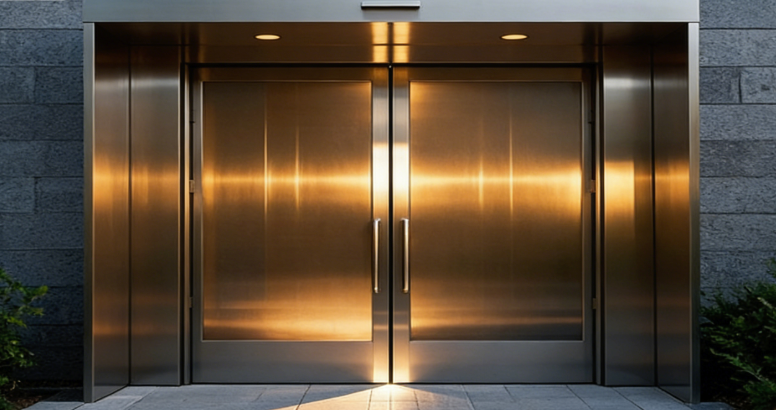
An Automatic Door Operator utilizes sensors, a control unit, and a motor system to detect presence and facilitate door movement. When a sensor identifies a person, it transmits a signal to the control unit. This unit then activates the automatic sliding door opener motor type to open the door. Following a predetermined duration, or once the area is clear, the control unit signals the motor to close the door. This technology is crucial for an automatic sliding door opener for high traffic areas, a market anticipated to reach $2.73 billion by 2026. For those considering a purchase, an automatic sliding door opener buying guide can offer valuable insights. Additionally, understanding key automatic sliding door opener tips is essential. These Tips for Choosing Automatic Sliding Door Opener will help ensure you select the most suitable system for your needs.
Key Takeaways
- Automatic doors use sensors to see people, a control unit to think, and a motor to move the door.
- Different sensors, like infrared and microwave, help the door know when to open and stay open safely.
- Safety features, such as obstacle detection and emergency overrides, are very important to prevent accidents.
The Core Mechanism of an Automatic Door Operator
Sensor Detection and Signal Transmission
An automatic door system begins its work with sensors. These sensors act like the eyes of the Automatic Door Operator, constantly scanning the area around the door. They detect when someone approaches or stands near the doorway. Once a sensor identifies a presence, it immediately sends a signal. This signal travels to the control unit, which is the system’s brain.
Different types of sensors serve various purposes. Motion sensors are very common. They detect movement within a specific range. These are great for busy areas because they trigger the door to open as someone walks toward it. Some motion sensors use infrared (IR) to sense warm objects, while microwave sensors emit signals that reflect off moving objects, detecting movement from greater distances. Proximity sensors, on the other hand, detect a person’s presence without requiring actual movement. They use technologies like capacitive or ultrasonic waves to keep the door open when someone is nearby. Pressure sensors are another type; they activate when someone applies force, often by stepping on a mat near the door. Photoelectric sensors work by emitting a light beam. When something interrupts this beam, the door receives a signal to open. Many modern automatic doors use a combination of these sensors. This mix, like microwave motion and infrared sensors together, makes the system more reliable and safer for everyone.
Control Unit Processing and Command
After receiving a signal from the sensors, the control unit takes over. Think of this unit as the central processing unit for the entire automatic sliding door system. It processes the input from all the sensors, including motion, presence, and safety sensors. This processing helps the unit decide exactly when to open, close, or pause the doors.
The control unit manages many operations. It handles basic functions like automatic opening, holding the door open, or keeping it closed. It also allows for a half-open mode. This unit receives all detection signals from the sensors or other switches. Then, it uses these signals to drive the motor and control the door’s movement. The control unit also connects with other access control systems, such as safety beam photocells or electric locks. It offers flexible adjustments for various parameters. You can change the door’s position, how far it slides, and its opening or closing speed. The control unit also includes important safety features, like overload protection, which prevents wear and tear if the door gets stuck. It even has a self-learning function, ensuring smooth and reliable operation over time.
The control unit uses smart algorithms to make these decisions. A common one is the PID (Proportional-Integral-Derivative) controller, which helps fine-tune the door’s movement. It also relies on conditional statements, like IF-THEN-ELSE or WHILE statements. These statements form the core of its logic. For example, an IF-THEN statement might say: “IF a sensor detects a person, THEN open the door.” WHILE statements ensure continuous monitoring. They make sure the door operates within acceptable levels. These algorithms are essentially software that generates the necessary signals for the motor drive system.
Motor Activation and Door Movement
Once the control unit processes the information and makes a decision, it sends a command to the motor. The motor is the power behind the Automatic Door Operator, providing the force to move the door panels.
Automatic sliding door operators typically use specific types of motors. These include Right Angle Gearmotors, AC Induction Motors, and DC Gear Motors. Each type offers different characteristics suitable for various door applications.
The motor’s power output is crucial. It directly relates to the door’s weight. Heavier commercial doors need motors with higher horsepower to operate correctly. If the motor lacks enough power, it can strain the system and shorten the motor’s life. However, using a motor with too much horsepower can be an unnecessary expense. DC motors are particularly good because they offer precise control over the door’s opening and closing speeds. This allows for specific adjustments based on how quickly or slowly the door needs to move for operational needs.
Key Components of an Automatic Sliding Door Operator
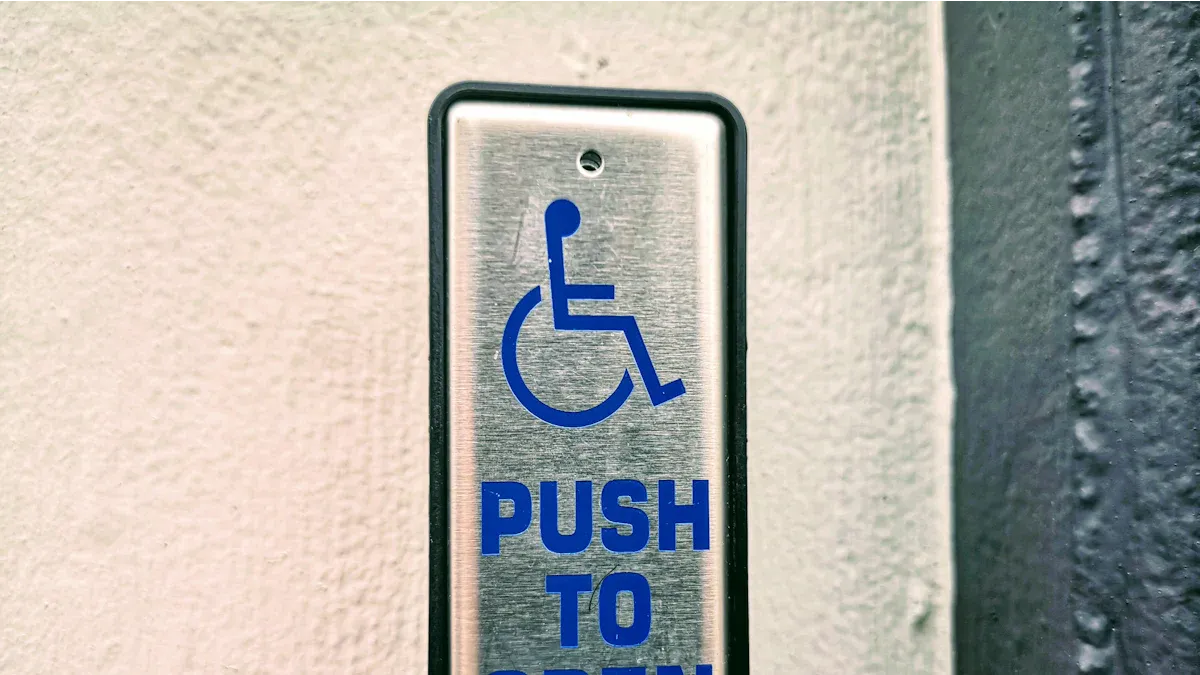
An automatic sliding door relies on several key components working together. Each part plays a vital role in making the door open and close smoothly and safely. Understanding these components helps you appreciate the technology behind these everyday conveniences.
Sensors
Sensors are the “eyes” of an automatic door system. They detect when someone approaches or stands in the doorway. Once a sensor identifies a presence, it sends a signal to the control unit. Different types of sensors serve various purposes, making the system reliable and safe.
Here is a look at common sensor types and their operational principles:
| Sensor Type | Operational Principle | Key Characteristics |
|---|---|---|
| Infrared (IR) Sensors | Emit infrared light and detect interruptions in the beam. | Active IR: Emits beam, detects interruptions; highly sensitive, good for high-traffic. Passive IR: Detects infrared radiation from warm objects; cost-effective, limited range/sensitivity, for residential/low-traffic. |
| Ultrasonic Sensors | Emit high-frequency sound waves, measure time for reflection. | Detects movement in dark and through obstacles; versatile. |
| Microwave Sensors | Emit microwave signals, detect changes in reflected signal frequency/phase. | Highly sensitive, detects through non-metallic materials (glass, plastic); suitable for areas with heavy air circulation or high humidity. |
| Laser Sensors | Use laser beams to detect movement. | High precision, detects small distance changes; used in high-accuracy applications (industrial automation); more expensive but superior performance. |
| General Working Principles | Detection & Signal Processing: Sensor emits signal (IR, ultrasonic, microwave, laser), processes interruptions/reflections to decide door action. Signal Transmission & Control: Sends signal to control system, which activates motor, manages speed/timing. Safety Features: Multiple features (e.g., IR + ultrasonic, obstacle detection) and redundancy for reliable operation and accident prevention. | These principles apply across various sensor types to ensure safe and effective automatic door operation. |
Each sensor type offers unique advantages and disadvantages:
| Sensor Type | Advantages | Disadvantages |
|---|---|---|
| Infrared Sensors | Reliable for detecting people; relatively inexpensive; works well in most settings. | Prone to false positives; may not detect non-heat-generating objects like trolleys or carts; can be overly sensitive to heat sources like sunlight. |
| Pressure Sensors | Simple and effective; ideal for areas with specific traffic flow. | Less sensitive to non-human objects; requires maintenance as mats wear out over time. |
| Radar-Based Sensors | Fast activation; can detect a wide range of objects, including trolleys and wheelchairs. | More expensive; may detect irrelevant movements beyond the intended activation zone, leading to unnecessary door openings. |
Control Unit
The control unit acts as the central processing unit for an automatic sliding door system. It receives input from sensors, interprets these signals, and then directs the motor’s actions. Its internal logic board contains programming that dictates the door’s speed, duration of movement, and direction.
This vital component often features:
- A PHILIPS chip
- A module design
These elements contribute to its ability to manage complex operations and ensure smooth door function.
Motor System
The motor system provides the power to move the door panels. It translates electrical energy into mechanical force, making the door slide open and closed. The type of motor used depends on the door’s size, weight, and required performance.
Automatic doors use various motor types:
- AC Motors (Alternating Current Motors): These are common in commercial and industrial doors because they offer high power and durability.
- Types: Single-Phase Induction Motors work well for smaller or residential doors, while Three-Phase Induction Motors handle heavy-duty applications.
- Advantages: They are durable, reliable, and suitable for frequent, heavy use.
- Disadvantages: They are less energy-efficient than DC motors and have limited speed control.
- DC Motors (Direct Current Motors): Modern automatic doors often prefer DC motors for their efficiency, quiet operation, and smart control.
- Types: Brushless DC (BLDC) Motors are high-end, efficient, and require little maintenance. Brushed DC Motors are for lower-cost systems. Servo Motors offer high precision, ideal for hospital or lab doors.
- Advantages: They are energy-efficient, quieter, offer precise speed and position control, and are compact and lightweight.
- Disadvantages: They have a higher initial cost than AC motors and need a DC conversion power supply.
- Stepper Motors: These motors are for systems needing precise movement and control, such as doors in medical facilities or smart homes.
- Advantages: They provide highly accurate positioning, require low maintenance, and are perfect for programmed movements.
- Disadvantages: They have lower torque than AC/DC motors, so they are not ideal for heavy-duty applications.
Brushless DC (BLDC) sliding door motors are particularly good for applications that need high efficiency, quality, and a strong power-to-volume ratio. These high-performance motors deliver significant torque across a wide speed range. They are a type of DC motor but do not have brushes, relying instead on electronic commutation.
The right motor choice is crucial for door performance. Here are some recommendations:
| Door Type | Recommended Motor |
|---|---|
| Sliding Automatic Doors | Brushless DC (BLDC) Motor |
| Swing Automatic Doors | AC Induction Motor / DC Motor |
| Revolving Automatic Doors | Three-Phase AC Motor |
| Folding Automatic Doors | Stepper Motor / DC Motor |
| Industrial Automatic Doors | High-Power AC Induction Motor |
Motor specifications like RPM, torque, and power consumption greatly impact how an automatic door performs.
- RPM (Revolutions per Minute): Higher RPM generally means faster door operation. However, this can sometimes reduce the available torque.
- Torque Requirements: Heavier doors need motors with higher torque to move them effectively.
- Efficiency (Power Consumption): Motors that use less energy are better for saving costs and helping the environment. Efficient motors also produce less heat, which makes them last longer.
The speed and torque of an automatic door motor are crucial. While higher RPM often means faster door operation, it might reduce torque. Conversely, heavier doors require motors with greater torque. For example, airports need fast speeds for high traffic, but industrial settings with heavy doors need higher torque. Motor efficiency, which measures how well electrical energy turns into mechanical energy, is also very important. Lower power consumption saves money and helps the environment. Efficient motors also generate less heat, extending their lifespan. Green buildings often choose highly efficient motors to cut energy costs.
Drive Mechanism
The drive mechanism connects the motor to the door panels. It translates the motor’s rotational movement into the linear motion needed to open and close the door.
Common drive mechanisms include:
- Chain
- Belt
- Rack and pinion
Here is how different mechanisms convert rotational motion into linear door movement:
| Mechanism | How it translates rotation to linear motion |
|---|---|
| Rack and Pinion | A rotating gear (pinion) meshes with a linear gear (rack). As the pinion rotates, it moves the rack in a straight line. This is common in sliding doors, gates, and some garage door openers. |
| Lead Screw / Ball Screw | A rotating threaded rod (lead screw) engages with a nut. As the screw turns, the nut moves linearly along the screw. Ball screws use recirculating balls between the screw and nut to reduce friction and improve efficiency. These are precise and often used in automated doors, CNC machines, and linear actuators. |
| Belt and Pulley System | A motor drives a pulley, which in turn moves a continuous belt. The door is attached to the belt, and as the belt moves, the door slides linearly. This is a common mechanism for garage door openers, where the belt runs along a track. |
| Chain Drive System | Similar to a belt and pulley system, but uses a chain instead of a belt. A motor drives a sprocket, which moves a chain. The door is connected to the chain, translating rotational motion into linear movement. Also widely used in garage door openers due to its durability. |
| Crank and Slider Mechanism | A rotating crank is connected to a sliding rod (slider) via a connecting rod. As the crank rotates, the slider moves back and forth in a linear path. While less common for direct door opening, variations can be found in some specialized door systems or linkages. |
| Cam Mechanism | A rotating cam (an irregularly shaped disk) interacts with a follower, causing the follower to move linearly. The shape of the cam dictates the motion profile of the follower. Cams can be used for specific, often intermittent, linear movements in automated systems. |
| Hydraulic/Pneumatic Cylinders | While not directly converting rotational motion from a motor to linear motion within the cylinder itself, these systems often use a motor to drive a pump (rotational) that generates fluid pressure. This pressure then extends or retracts a piston within a cylinder, producing linear motion. Used in heavy-duty industrial doors or gates. |
| Linear Motor | This is a direct conversion method where the motor itself produces linear motion without intermediate mechanical components. It’s essentially a rotary motor unrolled flat. The ‘stator’ is fixed, and the ‘rotor’ moves linearly. Used in high-speed, high-precision applications like maglev trains, but also in some advanced automated sliding doors. |
| Leverage Systems (e.g., Scissor Lift Mechanism) | A motor might drive a lead screw or hydraulic cylinder, which then actuates a series of interconnected levers (like a scissor lift). This converts a relatively small linear input into a larger, often vertical, linear displacement. Used in some vertical lift doors or platforms. |
Safety Features
Safety is paramount for any automatic door. These systems include many features to prevent accidents and ensure safe operation for everyone.
Essential safety features include:
- Presence and Motion Sensors: High-quality infrared or microwave sensors detect movement and people in the doorway, preventing unexpected closures.
- Safety Beams: Infrared safety beams at low levels protect against entrapment, especially for children, wheelchair users, and pets.
- Obstacle Detection and Auto-Reverse: The door must stop and reverse direction immediately if it detects an obstruction during movement. This prevents injury or damage.
- Manual Override and Emergency Break-Out: These features allow manual opening or break-away operation for quick evacuation during power failure or fire.
- Backup Power Supply: Battery backups ensure continued function during outages, especially in critical areas.
- Audible and Visual Alerts: Alarms or warning lights provide extra user awareness in certain commercial environments.
Industry standards guide the implementation of these safety features. Some key standards include:
- EN 16005 (Europe): This standard specifies minimum requirements for motion sensors, safety devices, door response time, detection ranges, obstacle detection, auto-reverse features, and emergency opening/break-out mechanisms.
- ANSI/BHMA A156.10 (United States): This standard covers activation sensor range, door opening speeds, force limitations for opening and closing, placement of safety beams and presence sensors, signage, and manual override requirements.
- ISO 9386-1: This standard focuses on accessibility and performance, including safe force limits for elderly and disabled persons, manual and powered control interaction, and door opening cycles.
Safety edge sensors instantly detect obstacles like pedestrians, vehicles, or objects using high-sensitivity sensors. Upon detection, pressure-sensitive devices quickly signal the control system. This causes the door to immediately stop or reverse, effectively preventing injuries such as pinching or collisions.
Modern automatic doors use several systems to prevent accidents:
- Obstruction Detection: Doors detect obstacles and immediately stop operation to prevent injuries. This protects people from getting hurt when the door closes.
- Control Systems and Backup Features: These ensure reliable operation, even in unexpected situations. Backup systems, such as manual override functions and battery backups, are critical during power outages or emergencies.
- Ultrasonic Sensors: These sensors emit high-frequency sound waves. They detect changes in the returning echoes caused by nearby movement, prompting the door to open.
- Safety Sensors: These sensors detect objects or people in the door’s path. They hold the door open until the path is clear, preventing accidents.
Sensor systems, like motion and presence sensors (infrared, radar), detect individuals or objects in the doorway’s path. Motion sensors prompt opening, while presence sensors create an invisible field to prevent closing on obstructions. This is crucial for avoiding crushing accidents. Pressure-sensitive edges or contact strips along door edges detect physical contact, causing immediate reversal or stopping. Anti-crush protection uses proximity sensors to slow door motion when an object approaches, allowing time to stop or reverse before contact. During power outages, battery backups ensure continued door function for evacuation. For fires, doors integrate with alarm systems and have emergency breakaway features for manual opening, making quick exits possible.
Industry standards require regular inspection, testing, and maintenance. This includes sensor alignment, cleaning, software updates, and battery replacement schedules. This ensures safety features like sensors and emergency systems work as intended. Compliance also means following accessibility standards like the Americans with Disabilities Act (ADA) and local building codes. These require features such as appropriate door width, motion sensors, and easy operation for people with disabilities.
Operational Sequence and Safety in Automatic Door Operators

Initiating Door Opening
An automatic door system starts its operation when sensors detect someone. These sensors act like the door’s eyes. They constantly scan the area. When a sensor identifies a person, it sends a signal to the control unit. Different sensor types work together. Infrared sensors detect changes in light reflection. Ultrasonic sensors use sound waves to find obstacles. Microwave sensors monitor frequency changes from moving objects. This initial detection tells the door it is time to open.
Managing Door Movement
Once the control unit receives the signal, it manages the door’s movement. An Automatic Door Operator uses high-precision control systems. These systems ensure consistent speed and accurate positioning. They use intelligent control technology. They adapt to environmental changes. For example, they adjust speed and sensitivity based on ambient light or traffic flow. This improves efficiency and safety. The door also has mechanisms to detect obstacles during movement. Sensors like infrared and ultrasonic identify obstructions. If an obstacle appears, the system halts movement immediately. Advanced systems adjust door movement in real-time based on the obstacle’s size and location.
Ensuring Safe Door Closure
Closing the door safely is just as important as opening it. The system ensures a controlled closure. Doors must take at least five seconds to move from a 90-degree open position to 12 degrees from the latch. This accessibility closing speed prevents quick closures. Some doors have a delayed action feature. This holds the door open for a minute or two before closing. Safety sensors are crucial during closure. They detect obstructions in the doorway. This prevents the door from closing on people or objects. A “pocket screen safety feature” also prevents trapping behind the door leaf. Sensor strips monitor the door’s path. If they detect a collision risk, the door stops. This prevents crushing, shearing, and impact.
Automatic sliding door operators are sophisticated systems. They seamlessly integrate various components for convenient and safe access. Sensors, the control unit, the motor, and the drive mechanism work together. This coordinated action ensures efficient and reliable operation. Understanding these core elements highlights the engineering behind these ubiquitous modern conveniences.
FAQ
How do automatic doors know when to open?
Sensors detect people approaching or in the doorway. They send a signal to the control unit. This tells the door to open.
What happens if someone stands in the way of a closing door?
Safety sensors detect the obstruction. The door stops and reverses immediately. This prevents injuries and damage.
Are automatic doors energy efficient?
Many modern automatic doors use energy-efficient DC motors. These motors help save electricity. They also operate quietly.