
Introduction
Automatic swing door operators do more than add convenience at an entrance: they reduce a common physical barrier that manual doors often create for people with disabilities, older adults, and anyone moving through a building with limited strength or mobility. This article explains how these systems support accessibility by easing door operation, helping facilities meet ADA expectations around usable entryways, and addressing real-world issues such as door weight, air pressure, and closing force. You’ll also see why operators are often treated as a practical upgrade for commercial spaces aiming to improve both compliance and everyday access.
Why Automatic Swing Door Operators Are a Strategic Accessibility Upgrade
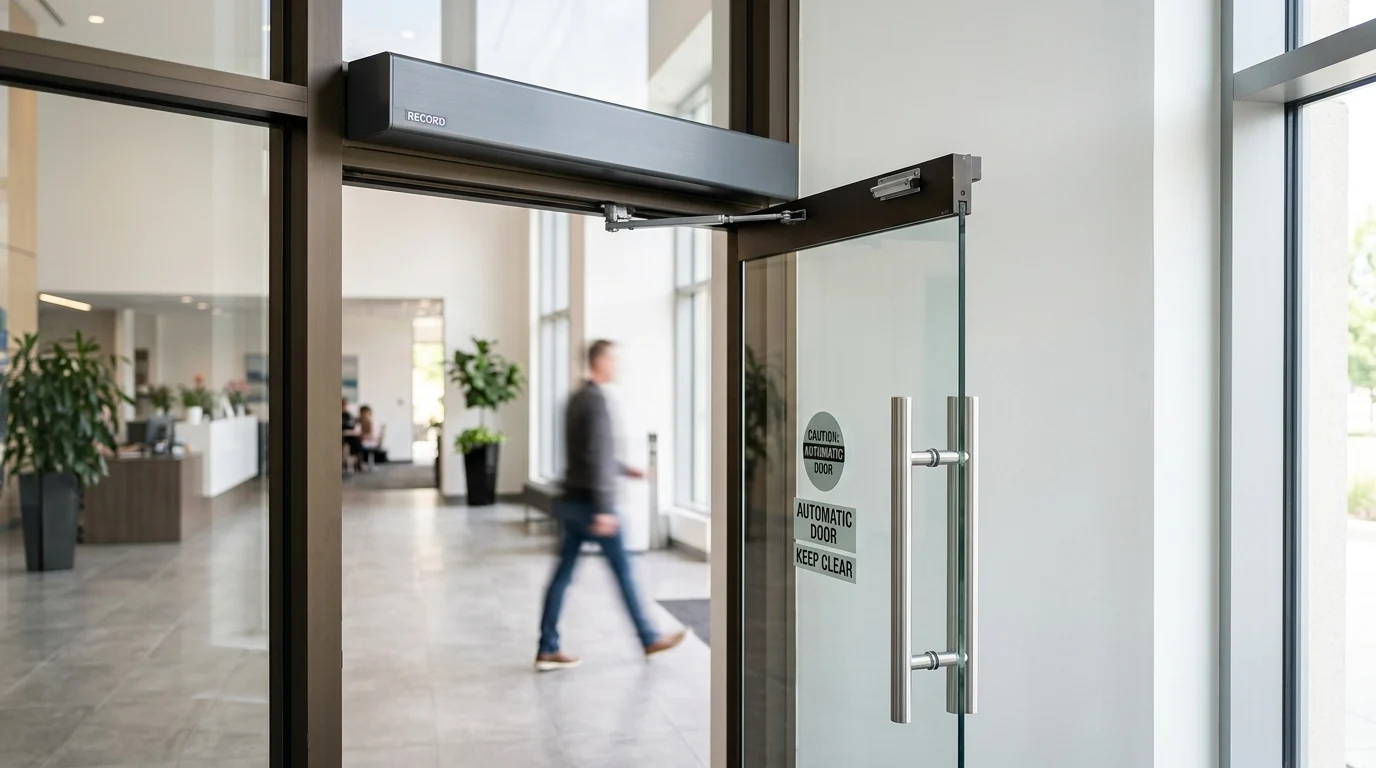
Integrating automatic swing door operators into commercial infrastructure represents a fundamental shift from mere regulatory compliance to proactive universal design. While the Americans with Disabilities Act (ADA) mandates strict physical parameters for building access, manual doors frequently present functional barriers that static measurements fail to capture. By automating the entry sequence, facility managers eliminate the physical burden of door operation, transforming entryways into seamless, barrier-free transit corridors.
The strategic deployment of these electromechanical systems directly addresses the rigorous demands of modern building codes. Specifically, interior manual doors must require no more than 5.0 pounds of force to open under federal ADA guidelines. Maintaining this threshold is notoriously difficult due to HVAC stack pressures, heavy commercial hinges, and structural settling. Automatic operators bypass these environmental variables entirely, ensuring consistent, verifiable accessibility regardless of external conditions.
How they support accessibility goals
Automatic swing door operators support broader accessibility goals by adhering to the principles of universal design, ensuring environments are usable by all individuals without adaptation. For users with mobility impairments who use wheelchairs, walkers, or crutches, an automated entryway removes the complex biomechanical requirements of simultaneous pulling, twisting, and maneuvering. Beyond mobility impairments, these systems assist individuals with temporary injuries, aging populations facing reduced upper-body strength, and patrons managing heavy loads.
Furthermore, the integration of automated access aligns with global inclusivity frameworks, such as those promoted by the ISO regarding accessible built environments. By standardizing the physical effort required to zero, facilities achieve a level of equity that manual doors simply cannot provide, mitigating the risk of accessibility-related grievances and enhancing the overall user experience.
Which commercial settings benefit most
While universal access is broadly beneficial, specific commercial environments yield a higher return on investment when deploying automatic operators. Healthcare facilities, including hospitals and outpatient clinics, represent the most critical deployment zones. In these settings, touchless automated entry minimizes cross-contamination and accommodates the constant flow of stretchers, wheelchairs, and medical equipment. Industry data indicates that healthcare facilities upgrading to automated swing operators experience up to a 40% reduction in door-related maintenance calls, as the automated control prevents the physical abuse and rapid wear associated with manual forced entries.
Educational institutions and high-density retail environments also see substantial benefits. In retail, frictionless entry directly correlates with improved foot traffic flow and customer retention. For higher education campuses, retrofitting heavy, historically significant doors with automated operators allows universities to meet modern accessibility mandates without compromising architectural integrity. Municipal buildings and transit hubs similarly rely on these operators to handle high-volume ingress and egress while maintaining strict ADA adherence.
What Automatic Swing Door Operators Are and How They Work
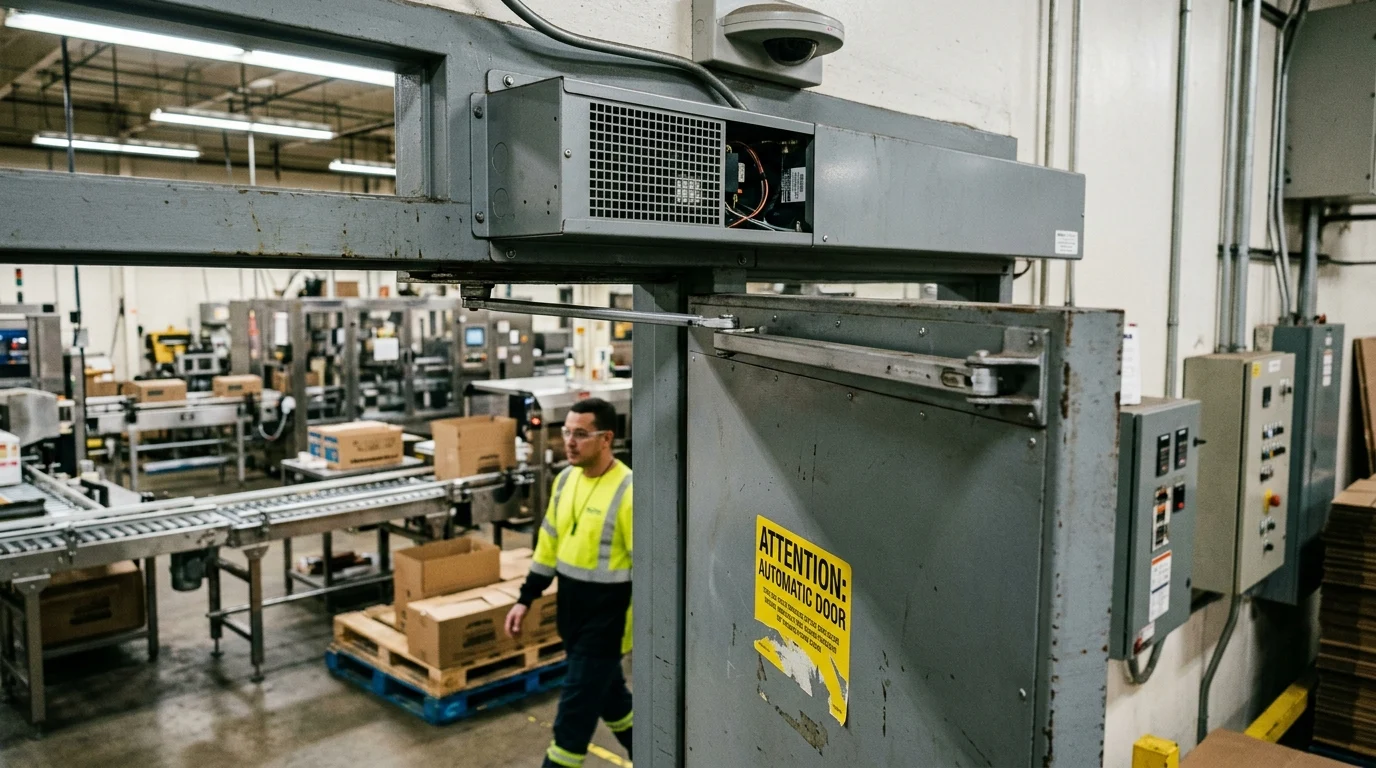
Automatic swing door operators are sophisticated electromechanical or electrohydraulic devices designed to open and close swinging doors automatically. Mounted typically on the door frame header, these systems translate electrical energy into controlled kinetic motion, governing the door’s acceleration, swing speed, backcheck, and latching force. Understanding their mechanical architecture and operational classifications is essential for specifying the correct hardware for a given architectural layout.
Core components, activation methods, and safety devices
At the core of an automatic swing door operator is a motorized drive system, typically utilizing a brushless DC motor paired with a precision gearbox. This motor is governed by a microprocessor-based controller that dictates the door’s operational parameters, including opening speed, hold-open time, and closing force. Electrohydraulic variants combine a standard hydraulic door closer with an electric motor that pumps fluid to open the door, relying on spring tension for closure.
Activation methods vary based on application and code requirements. “Knowing act” switches, such as push plates or touchless wave sensors, require deliberate user intent to initiate the opening cycle. Conversely, sensor-activated systems utilize microwave radar for motion detection and active infrared sensors for presence detection, ensuring the door opens as a user approaches and remains open while the user is in the swing path. To prevent injury, sophisticated safety devices, including overhead presence sensors and door-mounted photoelectric beams, continuously scan the swing area to halt or reverse the door if an obstruction is detected.
Low-energy vs full-power systems
Automatic swing doors are broadly classified into two categories under ANSI/BHMA standards: low-energy and full-power systems. The choice between these systems dictates the required safety sensors, activation methods, and operational speeds.
| Feature | Low-Energy Operators (ANSI/BHMA A156.19) | Full-Power Operators (ANSI/BHMA A156.10) |
|---|---|---|
| Activation | Knowing act (push plate, wave sensor) | Automatic (motion sensors, floor mats) |
| Opening Speed | Slow (typically 3 to 5 seconds to 90 degrees) | Fast (typically 1.5 to 3 seconds to 90 degrees) |
| Safety Sensors | Not strictly required by code (but recommended) | Mandatory (overhead presence, guide rails) |
| Application | Retrofits, moderate traffic, strict ADA compliance | High traffic, retail entrances, hospitals |
| Kinetic Energy | Limited to 1.25 lbf-ft | High kinetic energy, requires robust guarding |
Low-energy operators are highly favored for ADA retrofits because they are cost-effective, require less structural modification, and do not mandate the installation of extensive safety guide rails. Full-power operators, while more complex and expensive, are necessary for environments where high-speed, hands-free traffic flow is the primary objective.
Single-door vs double-door configurations
The configuration of the swing door system—whether single or double—significantly impacts the specification of the operator. Single-door configurations are straightforward, requiring a single operator unit and a clear width of at least 32 inches when the door is opened to 90 degrees, per ADA guidelines. These are standard for individual offices, restrooms, and secondary entrances.
Double-door configurations introduce mechanical complexity. They can operate as simultaneous pairs, where both leaves open concurrently via a synchronized controller, or as independent leaves. In simultaneous pairs, the operators must be precisely calibrated to prevent overlapping astragals from binding. Dual-egress configurations, commonly found in hospital corridors, feature two doors swinging in opposite directions to facilitate bidirectional traffic and emergency egress. These setups require specialized operators capable of managing asymmetrical wind loads and complex fire-alarm integration protocols.
How Automatic Swing Door Operators Improve Accessibility and Compliance
The primary utility of automatic swing door operators lies in their ability to resolve complex compliance gaps that manual doors cannot overcome. While architectural blueprints may technically adhere to ADA spacing and clearance requirements, real-world environmental factors often render manual doors non-compliant post-installation. Automated operators serve as an active countermeasure to these dynamic physical challenges.
Common ADA-related door challenges they solve
One of the most persistent ADA compliance failures involves excessive door opening force. Under federal ADA standards, interior doors must open with a maximum of 5.0 pounds of force. However, exterior doors are not assigned a specific federal push-force limit, though many local jurisdictions and building codes mandate an 8.5-pound maximum. Achieving this low resistance on exterior doors is frequently impossible due to heavy weatherstripping, robust latching hardware, and substantial wind loads or building stack pressures.
Automatic operators completely neutralize the push-force dilemma. By relying on an electromechanical motor rather than human exertion, the system bypasses the manual force limitation entirely. Furthermore, automated operators solve the challenge of closing speed compliance. ADA regulations stipulate that a door equipped with a closer must take at least 5 seconds to move from a 90-degree open position to 12 degrees from the latch. Automated controllers allow for precise, digital adjustment of this sweep speed, ensuring the door closes slowly enough for individuals with mobility impairments to pass safely without the risk of being struck.
Site limitations and code coordination issues
Site limitations often present insurmountable hurdles for manual door compliance, particularly regarding maneuvering clearances. The ADA requires specific clear floor space on both the push and pull sides of a manual door to allow wheelchair users to approach, reach the hardware, and maneuver through the opening. In tight corridors, historic buildings, or poorly designed vestibules, providing this lateral clearance is structurally impossible.
When a door is fully automated, the strict manual maneuvering clearance requirements are often relaxed or eliminated by local code authorities, as the user no longer needs to position themselves to physically manipulate the door. Additionally, automatic operators resolve vestibule spacing issues. ADA guidelines mandate a minimum of 48 inches of clear space between two doors in a series, plus the width of any door swinging into the space. In constrained vestibules where this 48-inch threshold cannot be met, synchronizing the doors with automatic operators to function as a single unit—where the second door opens before the user reaches it—can sometimes provide an engineered alternative to costly structural demolition.
How to Evaluate Automatic Swing Door Operators for Your Facility
Evaluating automatic swing door operators requires a rigorous analysis of the facility’s operational demands, structural capacity, and long-term budget. Not all operators are engineered for the same environment; selecting an underpowered unit for a high-traffic entrance will lead to premature mechanical failure, while over-specifying a system can result in unnecessary capital expenditure.
Key specification and comparison points
When specifying an automatic operator, the primary technical consideration is the system’s duty cycle rating. Light-duty operators are designed for approximately 100 to 200 cycles per day, whereas heavy-duty systems are engineered to withstand continuous use, often exceeding 1 million cycles over their lifespan. Facility managers must accurately audit daily traffic to select an appropriate motor classification.
Another critical specification point is the header size and aesthetic footprint. Operators typically require a minimum of 4.5 to 6 inches of vertical clearance above the door frame for surface mounting. If overhead space is restricted, in-floor operators or concealed overhead systems must be specified. Additionally, integration with existing access control systems—such as card readers, biometric scanners, and fire alarm relays—requires operators equipped with advanced input/output programmable logic controllers capable of handling complex sequencing delays, such as unlocking an electric strike 0.5 seconds before the motor engages.
Cost, maintenance, and retrofit considerations
Financial evaluation must encompass the total cost of ownership, including initial equipment procurement, specialized installation, and ongoing preventative maintenance. Retrofitting an existing manual door is generally more cost-effective than a complete door replacement, provided the existing hinges and frame are structurally sound.
| Expenditure Category | Low-Energy Operator (Retrofit) | Full-Power Operator (New Install) | Lifecycle Expectancy |
|---|---|---|---|
| Equipment Hardware | $1,200 – $2,500 per leaf | $3,000 – $5,500 per leaf | 10 – 15 Years |
| Installation Labor | $500 – $1,000 | $1,500 – $3,000 | N/A |
| Annual Maintenance | $150 – $300 | $300 – $600 | N/A |
| Electrical Prep | Minimal (115 VAC tap) | Extensive (Dedicated circuits) | N/A |
Maintenance is a non-negotiable factor in the lifecycle of automated doors. Unlike manual closers, automatic operators feature complex gearboxes and electronic sensors that require annual or bi-annual calibration. Failure to maintain these systems not only voids manufacturer warranties but also exposes the facility to significant liability if a sensor fails and the door strikes a pedestrian. Therefore, the evaluation process must account for the availability of certified service technicians in the facility’s geographic region.
How to Select and Implement Automatic Swing Door Operators
Successful implementation of automatic swing door operators relies on a systematic approach, transitioning from initial site assessment to meticulous vendor selection. A poorly planned installation can compromise building security, violate fire codes, and negate the accessibility benefits the system was intended to provide.
Step-by-step assessment process
The implementation process begins with a comprehensive structural and electrical audit of the target entryway. First, evaluate the physical integrity of the door leaf and frame; automatic operators exert significant torque, and installing them on degraded hinges or hollow metal frames without proper reinforcement will cause structural failure. Next, analyze the required electrical infrastructure. Most commercial operators require a dedicated 115 VAC, 15 Amp circuit routed directly to the header. Relying on shared circuits can cause voltage drops that reset the operator’s microprocessor.
Key Takeaways
- The most important conclusions and rationale for Automatic Swing Door Operators
- Specs, compliance, and risk checks worth validating before you commit
- Practical next steps and caveats readers can apply immediately
Frequently Asked Questions
How do automatic swing door operators improve ADA compliance?
They remove the need to manually overcome door weight, pressure, and latch resistance, helping entrances stay accessible even when manual opening force would exceed ADA limits.
Which buildings benefit most from automatic swing door operators?
Healthcare facilities, schools, retail stores, municipal buildings, and transit hubs benefit most because they handle high traffic, mobility devices, and frequent accessibility needs.
What activation methods are commonly used on automatic swing doors?
Common options include push plates, touchless wave sensors, motion sensors, and presence sensors. The best choice depends on traffic flow, safety needs, and code requirements.
Can automatic swing operators be added to existing doors?
Yes, many existing commercial swing doors can be retrofitted with an operator, making them a practical upgrade for older buildings or historic entrances.
What safety features should an automatic swing door system include?
Look for presence sensors, photoelectric beams, controlled opening speed, backcheck, and obstruction detection to help prevent contact and keep users safe in the swing path.