
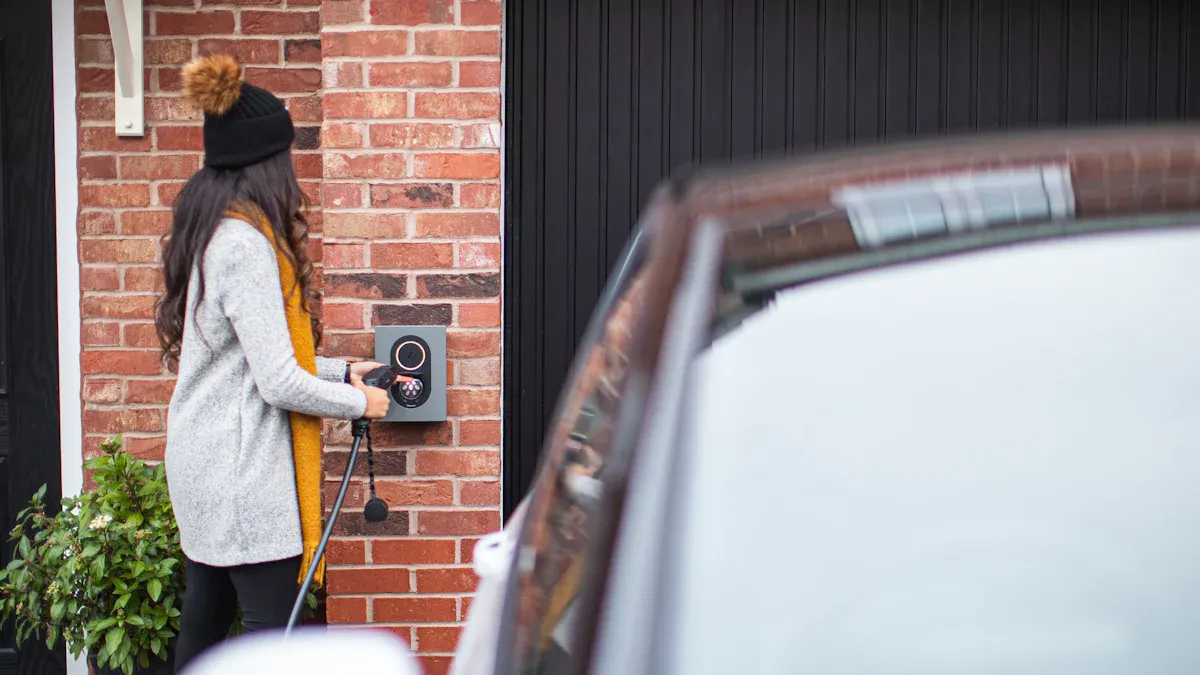
Residential automatic electric door openers offer convenience and safety for homes. They handle intermittent use with lighter doors. A home automatic open and close door system focuses on user ease. Conversely, commercial automatic electric door openers demand continuous, heavy-duty operation. Businesses use them for larger, heavier doors. A commercial automatic sliding door opener emphasizes robust performance and security. This auto door operator ensures reliable function. An auto close sliding door feature is crucial for efficiency. An automatic closing sliding door maintains environmental control.
Key Takeaways
- Residential door openers offer convenience and safety for homes. They handle lighter doors and are used less often.
- Commercial door openers are strong and secure. They work well for businesses with heavy doors and constant use.
- Residential openers connect to standard home power. Commercial systems use more complex wiring and higher voltage.
- Residential openers have simple safety features. Commercial systems include advanced security and emergency releases.
- Residential openers cost less and are easier to install. Commercial systems are more expensive and need expert installation.
Usage and Durability of Automatic Electric Door Openers

Residential Usage Patterns
Residential automatic electric door openers primarily serve convenience and safety for homeowners. People use these systems intermittently throughout the day. The average daily cycle count for a residential automatic electric door opener is approximately 4 cycles per day, assuming moderate use. This usage pattern means the opener experiences less wear and tear compared to commercial units. For example, an opener with a 15,000-cycle capacity operating at 6 cycles per day is projected to last for about 6.8 years. This projection highlights the design for typical home demands.
Commercial Operational Demands
Commercial automatic door openers face significantly higher operational demands. Businesses require these systems for continuous, heavy-duty operation. They often handle hundreds or even thousands of cycles daily. This constant use necessitates robust construction and powerful motors. Commercial environments, such as retail stores, hospitals, and industrial facilities, depend on these doors for smooth traffic flow and security. The systems must withstand frequent opening and closing without failure. Downtime can significantly impact business operations and safety.
Expected Lifespan and Material Strength
The expected lifespan of an automatic door opener system directly correlates with its usage and the quality of its components. Residential openers, with their lower cycle counts, generally last longer than commercial units in terms of years, though commercial units are designed for higher total cycles. Material strength plays a crucial role in durability. Commercial systems use heavy-duty metals and industrial-grade components to endure constant stress. Residential systems often incorporate lighter materials suitable for home use.
Consider the typical lifespan of various components:
| Component | Typical Lifespan (Years) |
|---|---|
| Garage Door Opener | 10-15 |
| Plastic Rollers | A few |
| Steel Rollers | 10-15 |
| Nylon Rollers | 12-20 |
| Springs | ~7 |
| Cables | 8-10 |
Other critical components also have specific lifespans:
| Component | Typical Lifespan (Years) |
|---|---|
| Motor | 10-20 |
| Gear Assembly | 5-10 |
| Control Board | 5-10 |
| Safety Sensors | 5-10 |
| Remote Control | 2-5 |
These figures illustrate the varying durability of parts within an automatic electric door opener system. Regular maintenance and choosing appropriate materials for the intended use significantly extend the system’s overall life.
Door Types and Weight Capacity for Automatic Electric Door Openers
Residential Door Specifications
Residential settings typically feature standard-sized doors. These include garage doors, patio sliding doors, and interior doors. Homeowners prioritize aesthetics, quiet operation, and ease of use. Residential doors are generally lighter in construction. They do not require the heavy-duty mechanisms found in commercial applications. A typical residential garage door weighs between 130 and 350 pounds, depending on material and insulation. Interior doors are significantly lighter, often weighing 50 to 100 pounds. The design of an automatic electric door opener for a home focuses on smooth, quiet performance for these lighter loads.
Commercial Door Varieties
Commercial environments demand a wider array of door types. Businesses utilize sliding doors, swinging doors, revolving doors, and high-speed industrial doors. Each type serves specific functional, security, and traffic flow needs. For instance, retail stores often use automatic sliding doors for high pedestrian traffic. Hospitals employ wide swinging doors for accessibility and emergency egress. Industrial facilities might use heavy-duty roll-up doors for vehicle access. These commercial doors are built for continuous operation. They often integrate with complex access control systems, ensuring security and efficiency.
Weight and Size Limitations
The weight and size capacities of automatic door openers vary significantly between residential and commercial models. Residential openers handle lighter doors with less demanding structural requirements. Commercial systems, however, accommodate much heavier and larger doors. For example, the SW200 Electric Swing Door Opener, designed for heavy-duty commercial use, supports a maximum door weight of 200kg. This capability ensures reliable operation for substantial entryways in busy environments. Building codes also dictate door dimensions for public access. For swinging doors, the smallest single leaf must allow for a 32-inch door opening to comply with standard regulations, ensuring wheelchair accessibility. The maximum leaf size for a swinging door is typically 48 inches under most building codes. Commercial door systems must meet these stringent requirements for both safety and functionality.
Power and Motor Requirements for Automatic Electric Door Openers
The power and motor requirements for automatic electric door openers represent a critical distinction between residential and commercial applications. These components dictate the opener’s ability to handle door weight, frequency of use, and overall longevity. Manufacturers design motors specifically for the demands of their intended environment, ensuring optimal performance and safety.
Residential Motor Horsepower
Residential automatic electric door openers typically feature motors with lower horsepower ratings. These motors are sufficient for the intermittent operation and lighter doors found in homes. For instance, a half-horsepower motor often suffices for single residential garage doors. Larger residential doors, or those made from heavier materials, might require a three-quarters horsepower motor. This rating can handle doors up to approximately 16×8 feet. The focus for residential motors remains on quiet operation and smooth performance, as homeowners prioritize comfort and minimal disruption. While these motors are robust for home use, they are not designed for the continuous cycling of commercial environments.
Commercial Industrial-Grade Motors
Commercial environments demand significantly more powerful and durable motors. Industrial-grade motors power commercial automatic electric door openers. These motors are engineered for continuous, heavy-duty operation, often cycling hundreds or thousands of times daily. Businesses require these robust systems to manage large, heavy doors, such as those found in warehouses, loading docks, or high-traffic retail entrances. Commercial motors typically start at one horsepower and can go much higher, depending on the door’s size, weight, and operational speed requirements. Their construction emphasizes longevity and reliability under constant stress, often incorporating advanced cooling systems and heavy-duty gearing to prevent overheating and wear.
Electrical Wiring Differences
The electrical wiring for automatic electric door openers also varies considerably between residential and commercial installations. Residential openers typically connect to a standard 120-volt electrical circuit outlet. A dedicated circuit is often recommended due to the opener’s power load, and these outlets are usually supplied by GFCI outlets for enhanced safety. Homeowners should consult with an electrician or an experienced garage door mechanic to ensure proper connections and inspect the breaker panel.
For residential setups, specific wiring types are used, including transceiver cables, steel wire, jumper wires, and copper wiring, with needs varying by the garage configuration. Sensor voltage typically ranges from 12 to 24 volts, depending on the sensor’s size, power, and range. Higher voltage might be necessary for multi-door systems. Installers must follow strict safety guidelines:
- They should not connect the opener to a power source until instructed.
- The control button must be located within sight of the door, at a minimum height of 5 feet to prevent access by small children, and away from all moving parts.
- An Entrapment Warning Label must be installed next to the control button, and the Emergency Release Marking attached on or near the emergency release.
- After installation, the door must reverse upon contact with a 1 1/2 inch high object (or a 2×4 board laid flat) on the floor.
- For operators not equipped for permanent wiring, installation instructions must state: ‘This operator not equipped for permanent wiring. Contact licensed electrician to install a suitable receptacle if one is not available.’
Commercial wiring systems are generally more complex, often involving higher voltage requirements and integration with building management systems. They adhere to more stringent electrical codes and often require specialized industrial electricians for installation and maintenance.
Hardware and Components of Automatic Electric Door Openers
Residential Track Systems and Safety Features
Residential automatic electric door openers prioritize user safety and smooth operation. Sliding doors, a common type, move horizontally along a track. Maintaining these tracks free of debris ensures smooth operation. These systems incorporate several key safety features. Auto-reverse mechanisms stop or reverse the door if it encounters resistance, preventing pinching or harm. Manual operation capabilities allow users to push the door open or use quick-release mechanisms during emergencies or power outages. Secure activation methods, such as RFID key tags, keypad codes, biometric triggers, or remote controls, ensure only authorized individuals can activate the door. Safety sensors detect obstacles and trigger auto-reverse functions. Some smart openers integrate with home security systems, allowing remote monitoring and connection with alarm systems. Electronic locking bolts, like the AutoSlide iLock edition, provide automatic locking when the door is not in use. Specific modes, such as AutoSlide’s ‘Secure Mode,’ disable motion sensors and unsecured triggers, allowing activation only via authorized wireless buttons or tags.
Commercial Heavy-Duty Tracks and Security
Commercial automatic door openers require heavy-duty tracks and robust security measures. These systems handle larger, heavier doors and endure constant, high-volume traffic. Manufacturers construct commercial tracks from durable materials, such as reinforced steel, to withstand continuous stress and prevent wear. Security features often include advanced locking mechanisms, integration with building access control systems, and tamper-resistant designs. These components ensure the door remains secure against unauthorized entry and operates reliably in demanding environments.
Residential Smart Home Integration
Modern residential automatic electric door openers often integrate seamlessly with smart home ecosystems. This integration offers homeowners enhanced control and convenience. Compatible platforms include Amazon Alexa, Google Assistant, Apple HomeKit, and SmartThings. Aladdin Connect also works with Samsung SmartThings, Alarm.com, and Brilliant Smart Home Systems. Users can control their doors remotely, check door status, and receive notifications through smartphone apps. This connectivity allows for greater peace of mind and improved home management.
Commercial Access Control Systems
Commercial automatic door openers integrate with sophisticated access control systems. These systems provide enhanced security and operational efficiency for businesses. They manage who enters and exits a building. Businesses often use these systems in high-traffic areas or secure zones. The integration ensures only authorized personnel can operate the doors.
Many modern commercial access control systems are cloud-controlled. This technology offers real-time visibility of all doors. Managers can oversee access from any location with a few clicks. This eliminates the need for physical keys, simplifying key management. Users can remotely control access via a laptop or smartphone. This feature provides flexibility for businesses.
These systems also offer detailed access visibility. Dashboards and reports show entry and exit times. This helps businesses monitor activity and enhance security protocols. They support customized access schedules. For example, a system can allow employees access during business hours only. It can restrict access for visitors to specific times. This level of control is crucial for maintaining security in commercial environments. The systems often include features like audit trails. These trails record every door event. This provides a comprehensive log for security reviews.
Commercial access control systems are essential for various business types. Retail stores use them to manage staff entry. Hospitals control access to sensitive areas. Office buildings secure their premises after hours. These systems ensure smooth operations while maintaining a high level of security. They represent a significant upgrade from traditional lock and key methods.
Installation and Cost of Automatic Electric Door Openers
Residential Installation Considerations
Installing an automatic electric door opener in a home typically involves a straightforward process. Homeowners often choose professional installation for garage door openers. This usually adds 2 to 3 hours to the overall installation timeline. The total time for setting up a garage door opener generally ranges from 1.5 to 4 hours. This duration depends on the opener type, any required repairs, and system complexity. For other residential gate opener types, installation times vary.
| Gate Opener Type | Professional Installation | DIY Installation |
|---|---|---|
| Swing Gate | 4-6 hours | 6-8 hours |
| Sliding Gate | 6-8 hours | 8-12 hours |
| Underground Gate | 1-2 days (8-12 hours) | 2-3 days |
| Solar Gate | 6-8 hours | 8-10 hours |
These timeframes highlight the varying complexity of different residential systems.
Commercial Specialized Installation
Commercial automatic electric door opener installations demand specialized expertise and certifications. Companies and their technicians often complete various training and certification programs from leading industry organizations. The American Association of Automatic Door Manufacturers (AAADM) is particularly significant. It sets industry standards for the installation, sensing devices, and safety requirements of automatic pedestrian doors. AAADM also certifies automatic door inspectors. Technicians with AAADM certification are trained to properly install, inspect, and repair all components of automatic doors. Other important certifications include SafeDoorPM, which ensures adherence to manufacturer specifications and OSHA standards. ISNetworld Certification indicates a contractor’s commitment to safety practices. RAVS Plus, an advanced ISN process, involves a thorough review of a company’s training materials and an in-person inspection of their operations. These certifications signify a high level of health and safety compliance.
Initial Purchase Price Comparison
The initial purchase price for automatic electric door openers varies significantly between residential and commercial models. Residential units are generally less expensive due to their simpler design and lower power requirements. A basic automatic sliding door opener for residential use typically costs between $2,000 and $4,000. This price often includes the opener unit and basic installation labor. Advanced residential models, which may feature smart home integration, motion sensors, or touchless buttons, range from $4,000 to $10,000. Commercial automatic door openers, however, command higher prices. Their robust construction, industrial-grade motors, and complex integration with access control systems contribute to this higher cost. Businesses invest more in these systems for their durability, security, and ability to handle continuous, heavy-duty operation.
Long-Term Maintenance Costs
Residential automatic electric door openers require periodic maintenance. This ensures their smooth operation and extends their lifespan. For residential automatic electric garage door openers, scheduling maintenance service once every two years typically costs between $100 and $200. This translates to an estimated annual maintenance cost of $50 to $100. Electric gate openers also benefit from regular upkeep. Owners should regularly clean the gate and opener, keeping them free from debris and dirt. Lubrication of moving parts, as recommended by the manufacturer, is crucial. Periodic inspection of the system helps identify any signs of wear or damage early. Scheduling professional servicing annually addresses potential issues before they escalate. This proactive approach prevents minor problems from becoming expensive repairs.
Commercial automatic door openers, with their heavy-duty usage and complex systems, incur higher long-term maintenance costs. Businesses rely on these doors for continuous operation. Therefore, proactive maintenance is essential. Regular professional servicing prevents unexpected breakdowns. Such failures can disrupt operations and lead to significant financial losses. Maintenance for commercial systems often includes more frequent inspections. It also involves the replacement of worn industrial-grade components. Calibration of advanced access control features is another key aspect. Investing in a comprehensive maintenance plan for commercial openers ensures optimal performance. It also enhances security and maximizes the system’s operational life. This proactive approach minimizes costly emergency repairs. It also maintains compliance with safety regulations. Businesses prioritize consistent functionality. They understand the value of preventing downtime. This makes regular maintenance a critical investment for commercial establishments.
Safety Features in Automatic Electric Door Openers
Residential Safety Sensors
Residential automatic electric door openers prioritize user safety. They incorporate several critical features to prevent accidents. UL 325, a key standard, guides product safety advances for these systems. This standard mandates at least two entrapment protection mechanisms. An inherent reversal system causes the door to reverse if it hits an object while closing. Photo eye sensors or edge sensors are also mandatory. These devices prevent the door from closing if an object is in its path. Installers mount photo eyes no higher than six inches off the floor. A manual safety release handle allows disconnection of the operator from the door during power outages. With mobile app operation, the standard now requires visual (flashing light) and audible (buzzer/speaker) indications. These alerts notify nearby individuals that the door is about to close. California’s SB 969 law, effective July 1, 2019, requires new residential garage door openers to have a battery backup function. This ensures operation during electrical outages.
Commercial Emergency Release Mechanisms
Commercial automatic electric door openers include robust safety features for high-traffic environments. Emergency release mechanisms are a crucial safety feature in these systems. Their primary function is to enable manual operation of the door. This is vital during power failure or malfunction. This capability ensures safety during emergencies. It facilitates rapid and secure evacuation or access. These mechanisms allow personnel to quickly open or close heavy commercial doors without power.
Compliance and Regulations
Compliance with industry standards and regulations is paramount for automatic electric door openers. UL 325 is the industry’s highest safety requirement. It applies to garage door openers, commercial door operators, and gate operators. All products undergo rigorous testing to meet this standard. For slide gate operators, 2018 updates required a minimum of two independent means of entrapment zone protection. This applies to both open and close directions. An inherent reversing system counts as one device. These regulations ensure the safe installation and operation of automatic doors in both residential and commercial settings.
Selecting the appropriate automatic electric door opener is essential. This decision hinges on specific needs, intended usage, and available budget. Residential openers prioritize convenience and safety, perfectly suiting home environments. Conversely, commercial systems offer robust durability and enhanced security, meeting the rigorous demands of businesses. Making the right choice guarantees optimal performance, extended longevity, and paramount safety for all users.
FAQ
What is the primary distinction between residential and commercial automatic door openers?
Residential openers prioritize convenience and safety for intermittent home use. They handle lighter doors. Commercial openers emphasize robust performance and security. They manage continuous, heavy-duty operation with larger, heavier doors.
Can a homeowner use a commercial automatic door opener for their garage?
Homeowners can use commercial openers. However, commercial units are often overkill for residential needs. They cost more and require specialized installation. Residential openers offer sufficient durability and features for typical home use.
How frequently do automatic door openers require maintenance?
Residential openers typically need professional maintenance every one to two years. Commercial openers, due to their high usage, require more frequent and comprehensive servicing. Regular maintenance ensures optimal performance and extends lifespan. 🛠️
Do commercial automatic door openers offer smart home integration?
Commercial openers integrate with sophisticated access control systems. These systems provide advanced security and operational efficiency. They manage access, track activity, and offer remote control. This functionality is similar to smart home features but on an industrial scale.