
In modern architectural design and commercial spatial planning, the installation of an automatic sliding door operator has shifted from being a premium structural luxury to a core operational and regulatory requirement. From high-traffic retail complexes and corporate headquarters to clinical healthcare facilities and modern industrial logistics parks, these automated systems do much more than facilitate smooth pedestrian transitions. They integrate sophisticated sensor arrays, advanced propulsion mechanisms, and intelligent access logic to dramatically improve building security, interior spatial workflow, and environmental climate control.
As a premier industry-leading manufacturer and global supplier of entrance automation systems, Ningbo Beifan Automatic Door Factory (operating globally via automaticdoorblog.com) has pioneered the development of high-performance entrance solutions since 2007. Specializing in advanced automatic door motors, ruggedized automatic sliding door operators, and premium structural automatic door accessories, Beifan delivers engineering excellence structured for international commercial standards. This comprehensive guide provides an in-depth analysis of automatic sliding door operators, evaluating their internal mechanics, commercial advantages, and technical procurement criteria.
1. Technical Anatomy of an Automatic Sliding Door Operator
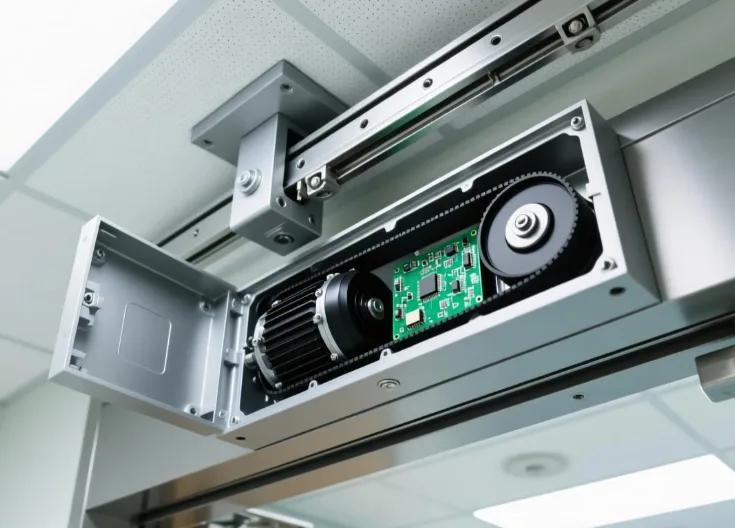
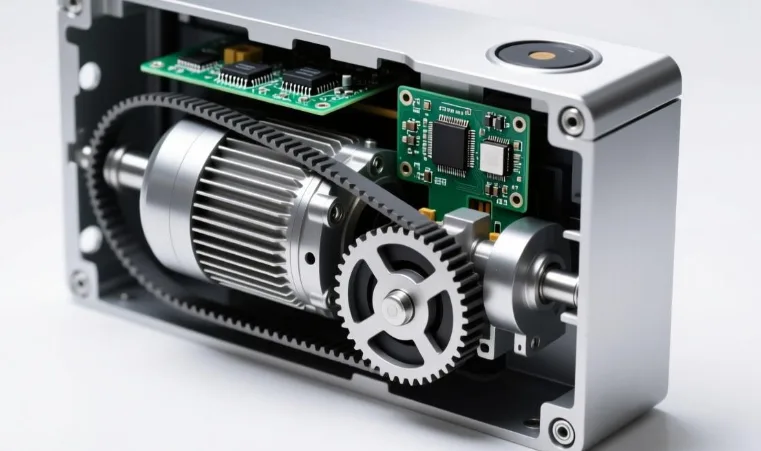
An automatic sliding door operator is a high-precision electro-mechanical assembly housed discreetly inside an overhead structural aluminum transom header. This system manages the complete kinetic cycle—including acceleration, high-speed travel, deceleration, and absolute positioning—of heavy commercial door leaves. A high-performance commercial operator consists of several tightly integrated sub-systems:
- Microcontroller Program Unit (The Intelligent Core): The microprocessor acts as the brain of the operator. It samples real-time telemetry data from digital positional encoders and environmental sensors, executing advanced closed-loop control algorithms to dynamically adjust opening speeds, braking parameters, hold-open delays, and obstruction-reversal tolerances.
- High-Torque DC Brushless Motor (The Propulsion Source): The reliability of mechanical output under continuous workload relies heavily on the motor. Premium automation platforms, such as Beifan’s signature BF150 Automatic Sliding Door Operator and the heavy-duty YF200 system, utilize premium automatic door motors. These brushless variants deliver high starting torque, low acoustic footprints, and exceptional thermal dissipation profiles under continuous 24/7 duty cycles.
- Extruded Aluminum Track & Carrier Wheels: The architectural header features an integrated heavy-duty alloy track profile. Dual or triple-wheel hanger carrier groups, surfaced with self-lubricating, wear-resistant polyurethane or specialized industrial nylon, glide along this track to eliminate structural vibrations and minimize friction.
- Reinforced Timing Belts: Heavy-duty, fiber-reinforced fiberglass or Kevlar-core toothed synchronous belts transfer torque directly from the motor pulley to the door leaf hangers, preventing mechanical slippage and ensuring positioning accuracy down to the millimeter.
- Multi-Tiered Activation & Safety Sensor Arrays: Modern operators rely on combined microwave radar sensors for directional motion detection alongside active infrared presence curtains to prevent closing cycles if individuals or physical assets remain stationary in the path of travel.
2. Performance Mapping: Core Specifications
When engineering a modern entryway, identifying the precise performance capabilities of your automation equipment prevents premature mechanical fatigue and ensures compliance with building safety codes. Below is a comparative breakdown of standard versus heavy-duty commercial configurations:
| Operational Metric | Standard Commercial (e.g., BF150 / YF150) | Heavy-Duty Industrial (e.g., YF200 System) |
|---|---|---|
| Max Weight Capacity (Single Leaf) | Up to 150 kg | Up to 250 kg |
| Max Weight Capacity (Bi-Parting) | 130 kg + 130 kg | 200 kg + 200 kg |
| Opening Velocity Range | 250 to 500 mm/sec (Adjustable) | 300 to 700 mm/sec (Adjustable) |
| Closing Velocity Range | 150 to 450 mm/sec (Adjustable) | 200 to 600 mm/sec (Adjustable) |
| Motor Specifications | 24V DC Brushless, 60W–75W | 24V DC Brushless, 100W–120W |
| Acoustic Emission Level | < 50 dB (Whisper-Quiet Profile) | < 55 dB (Optimized for Heavy Framing) |
| Quality Certifications | ISO9001 / CE Safety Certified | ISO9001 / CE Safety Certified |
3. Strategic Advantages of High-Performance Operators
A. Optimizing Building Energy Efficiency
According to rigorous architectural studies on building energy footprints, commercial facilities utilizing properly calibrated automatic doors exhibit substantially lower thermal energy loss. An intelligent automatic sliding door operator minimizes structural open-times via rapid cycle execution and directional radar recognition, preventing the mixing of conditioned interior air with external environmental elements. This active climate separation reduces HVAC energy consumption by an estimated 20% to 30% in high-traffic retail environments and corporate high-rises.
B. Regulatory Compliance and Universal Accessibility
Implementing reliable entrance automation ensures absolute compliance with international accessibility frameworks, such as the Americans with Disabilities Act (ADA) and European Standard EN 16005. By eliminating manual physical resistance and the need to turn door handles, automated entryways support inclusive building design for elderly individuals, wheelchair users, and pedestrians carrying goods or pushing strollers.
C. Advanced Safety Ecosystems and Security Integration
Safety is paramount in automated entries. If a door leaf encounters an obstacle while closing, the micro-controller instantly registers an increase in motor current, triggering an automated safety reversal within milliseconds. Furthermore, these units link directly into Building Management Systems (BMS), Access Control systems (biometrics, RFID readers, keypads), and emergency fire signals—instantly opening or unlocking to guarantee safe egress routes during critical building evacuations.
4. Technical Procurement & Engineering Considerations
Specifying the optimal operator configuration for your architectural project involves assessing several environmental and mechanical variables:
- Structural Leaf Loading: Calculating the combined mass of the glass panels (tempered or insulated double-glazing) and heavy aluminum profile framing determines whether a standard or heavy-duty operator is required. Overloading a system accelerates gear and brush wear, shortening components’ lifespans.
- Expected Duty Cycles: Entrances to public hospitals, transportation hubs, and major supermarkets encounter thousands of daily operations. These high-frequency environments demand heavy-duty automatic door motors with superior heat dissipation and robust mechanical components.
- Environmental and Wind Loading: Main exterior entryways often face strong external wind pressures or structural stack effects. In these conditions, operators require sufficient motor wattage and precise torque management to execute positive seals upon closing without causing system errors.
Conclusion
An automatic sliding door operator is far more than a functional convenience; it is a critical component that governs a building’s security, efficiency, accessibility, and visual appeal.
Backed by close to two decades of strict engineering and manufacturing excellence, Ningbo Beifan Automatic Door Factory produces ISO9001 and CE-certified automatic door solutions trusted by contractors, architects, and developers globally. Whether you require standard residential operators, high-frequency commercial drivetrains, or specialized automatic door accessories, Beifan delivers world-class support tailored to your technical requirements.
Explore the extensive product lineup at automaticdoorblog.com and contact our engineering team to request a detailed, factory-direct quotation today!