
In the contemporary architectural landscape, the entrance is no longer just a point of ingress; it is a critical component of building efficiency, safety, and aesthetic identity. Automatic sliding door systems have become the gold standard for high-traffic environments, ranging from retail hubs to healthcare facilities.
This guide explores the technical intricacies, safety standards, and selection criteria for commercial automatic doors, providing the definitive resource for architects, contractors, and facility managers.
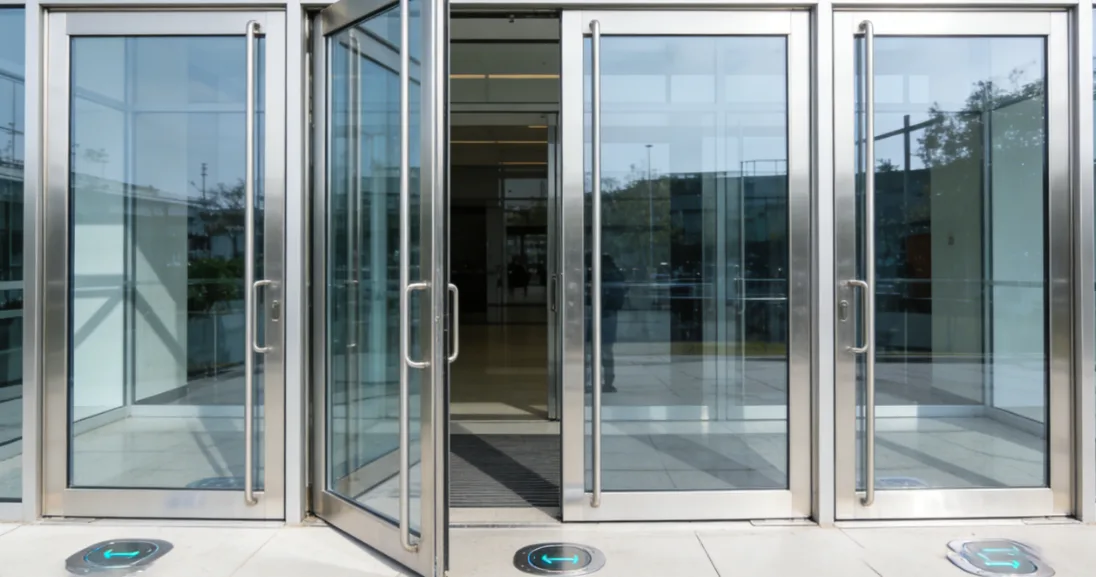
What Are the Core Components of an Automatic Sliding Door System?
Understanding the anatomy of an automatic door is crucial for procurement and maintenance. A standard system is a synergy of mechanical precision and electronic intelligence.
1. The Operator (The Brain and Brawn)
The operator is the drive unit housed within the header. It typically consists of:
- Brushless DC Motor: Known for longevity and quiet operation compared to brushed motors.
- Controller (Microprocessor): Manages door speed, braking, and safety logic.
- Drive Belt: Often reinforced with fiberglass to prevent stretching.
2. Activation and Safety Sensors
Modern doors utilize a combination of technologies:
- Microwave Sensors: Used for motion detection to open the door.
- Active Infrared (AIR) Sensors: Used for presence detection to prevent the door from closing on a pedestrian.
3. Door Panels and Track System
Usually constructed from extruded aluminum profiles for a balance of strength and weight.
| Component | Standard Specification | High-Performance Specification |
|---|---|---|
| Motor Type | 24V Brushed DC | 24V/40V Brushless DC |
| Weight Capacity | Up to 100kg/leaf | Up to 250kg+/leaf |
| Opening Speed | 0.5 m/s | 0.7 – 1.0 m/s (Adjustable) |
| Safety Compliance | Basic Photoelectric | EN 16005 / ANSI A156.10 |
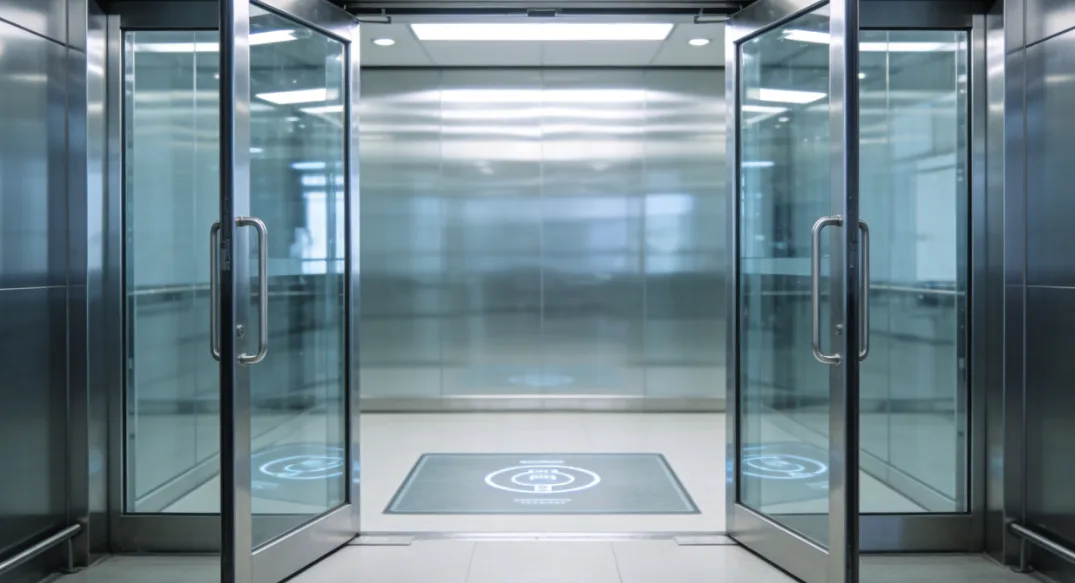
How Do Different Types of Automatic Doors Compare?
When designing a commercial space, choosing the right configuration is vital. For more details on specific models, you can visit Automatic Door Blog to explore professional hardware solutions.
Single Slide vs. Bi-Parting Doors
- Single Slide: Ideal for narrow corridors or side entrances where space is limited on one side.
- Bi-Parting: The standard for main entrances, providing a wider clear opening and a symmetrical, welcoming aesthetic.
Telescopic Sliding Doors
If you have a narrow structural opening but require a wide passage, telescopic automatic doors are the solution. They use a multiple-leaf design where two leaves slide into the same side space, providing approximately 30% more opening width than standard sliding doors.
Expert Insight: According to the American Association of Automatic Door Manufacturers (AAADM) , the choice of door type should be dictated by the “Peak Pedestrian Flow” (PPF) calculated during the building’s design phase.
[Placeholder for Image 1: A diagram showing the internal components of a commercial automatic sliding door operator with callouts for the motor, controller, and belt.]
Alt-text: Technical diagram of an automatic sliding door operator highlighting the brushless motor and microprocessor controller.
What Are the International Safety Standards for Automatic Doors?
To ensure public safety and minimize liability, automatic doors must adhere to rigorous international standards. These aren’t just suggestions; they are benchmarks for legal compliance.
EN 16005 (European Standard)
This standard focuses on “Safety in use of power-operated pedestrian door sets.” It mandates:
- Low Energy Movement: Reducing force in areas with elderly or disabled users.
- Safety Distances: Ensuring gaps between moving leaves and fixed parts do not create finger-trap hazards.
- Emergency Break-out: Doors must be capable of being pushed open manually in the direction of escape during power failures.
ANSI/BHMA A156.10 (American National Standard)
This standard defines the requirements for power-operated pedestrian doors. It specifies the timing for door opening/closing and the placement of safety mats or sensors to ensure a “Detection Zone” that covers the entire path of the door.
How to Install an Automatic Sliding Door: A Step-by-Step Technical Guide
Proper installation is the foundation of a 10-year+ service life. While specific Automatic Sliding Door Products come with dedicated manuals, the general process follows these professional steps:
- Site Preparation: Ensure the floor is perfectly level within a 3mm tolerance across the entire span.
- Header Mounting: The aluminum header must be secured to a structural support (steel or reinforced concrete). Use a laser level to ensure 100% horizontality.
- Hanging the Leaves: Attach the carriage rollers to the door panels and hang them onto the track.
- Belt Tensioning: Adjust the drive belt. Over-tensioning leads to motor wear; under-tensioning leads to “slapping” noises.
- Sensor Calibration: Program the microwave sensors for the desired “Look-down” angle to avoid detecting cross-traffic.
- Commissioning: Perform a minimum of 50 test cycles and complete a safety checklist as per AAADM or EN 16005 guidelines.
[Placeholder for Image 2: A technician using a laser level and specialized tools to install a commercial door header.]
Alt-text: Professional installation of an automatic sliding door system showing precision leveling techniques.
Why Is Maintenance Crucial for Commercial Automatic Doors?
Neglecting maintenance leads to “Downtime Costs”—the hidden loss of revenue when a retail entrance is blocked.
Common Failure Points and Solutions
- Worn Rollers: Causes a grinding noise. Solution: Replace with high-density nylon or steel-core rollers.
- Sensor Interference: Dust buildup on infrared lenses. Solution: Monthly cleaning with non-abrasive cloths.
- Battery Backup Failure: The door fails to open during power outages. Solution: Annual testing of the UPS (Uninterruptible Power Supply) module.
Comparison: DIY Maintenance vs. Professional Service Contracts
| Feature | DIY Maintenance | Professional Contract |
|---|---|---|
| Cost | Low (Internal labor) | Fixed annual fee |
| Safety Certification | None | Certified Inspection Report |
| Spare Parts | Generic/Third-party | OEM (Original Equipment Manufacturer) |
| Liability Protection | Low | High |
How to Choose the Right Automatic Door Manufacturer?
When sourcing from global markets, especially through Automatic Door Blog, look for the following “Quality Indicators”:
- Certification Transparency: Can they provide CE, UL, or ISO certificates upon request?
- Motor Quality: Do they use reputable brands (e.g., Dunkermotoren) or high-quality proprietary brushless motors?
- Software Flexibility: Can the controller be programmed via a handheld device or onboard buttons?
- Weather Sealing: Look for interlocked brush seals to enhance HVAC efficiency and reduce energy costs.
[Placeholder for Image 3: A sleek, all-glass automatic sliding door entrance at a luxury hotel, showcasing aesthetic integration.]
Alt-text: Modern all-glass automatic sliding door entrance providing high transparency and architectural appeal.
What Are the Future Trends in Automatic Door Technology?
As we move toward “Smart Buildings,” automatic doors are evolving:
- Integration with Access Control: Facial recognition and mobile HID credentials.
- IoT Monitoring: Doors that “email” the facility manager when a component is nearing its end-of-life (Predictive Maintenance).
- Energy Recovery: Speed-optimized opening cycles that minimize the loss of conditioned air.
FAQ: Frequently Asked Questions About Automatic Sliding Doors
What is the average lifespan of a commercial automatic sliding door?
With proper maintenance, a high-quality commercial automatic sliding door system typically lasts between 10 to 15 years. The lifespan depends heavily on the duty cycle (number of openings per day) and the environment—doors in coastal areas may require more frequent track cleaning due to salt air.
Can automatic sliding doors be used for fire exits?
Yes, but they must be equipped with a “Break-out” (Panic) function. This allows the door panels to be swung outward manually like a traditional door in an emergency. In many jurisdictions, this is a legal requirement for any door located on a primary egress path.
How much power does an automatic door consume?
Modern systems are highly efficient. In standby mode, they consume as little as 10-30 watts. During operation, the peak power can reach 150-250 watts. Many operators now feature “Eco-modes” that reduce power consumption when the door is inactive for long periods.
What should I do if my automatic door keeps opening and closing on its own?
This phenomenon is known as “ghosting.” It is usually caused by the sensor detecting the movement of the door panels themselves or reflections from nearby glass. This can be fixed by adjusting the sensor’s sensitivity or changing the detection angle so it does not “see” the door leaves.
Are automatic sliding doors waterproof for outdoor use?
While the glass and aluminum are waterproof, the operator (motor and controller) is not. All outdoor-facing automatic doors must be installed with a weather shroud or cover, and the header must be properly caulked to prevent water ingress into the electronic components.