
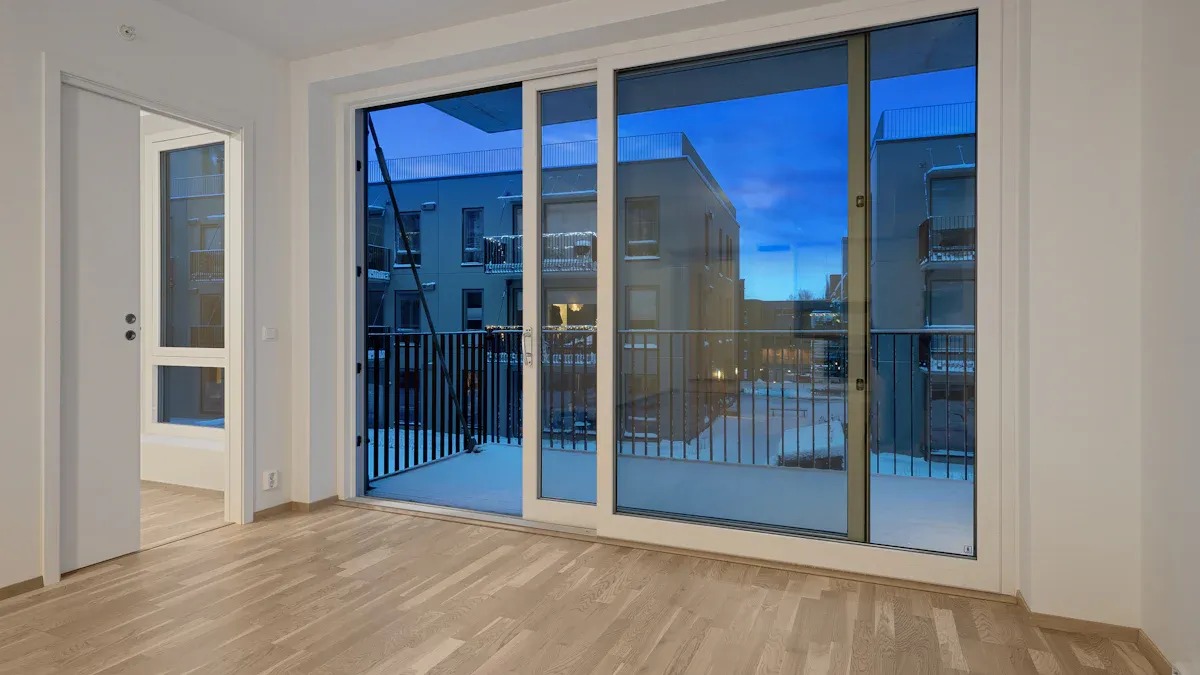
The ideal Sliding Door Opener depends significantly on the door’s material. Glass, wood, or metal doors each present unique demands. These demands include weight capacity, aesthetic integration, and specific functional features. For instance, an Automatic Sliding Door Opener designed for a heavy metal door will differ from one suitable for a lighter glass door. A Commercial Sliding Door Opener often requires robust features for high traffic. Some applications might necessitate a Double sliding door opener. A Remote control sliding door opener offers enhanced convenience. A Brushless DC motor sliding door opener provides efficiency and quiet operation. Selecting the correct opener ensures optimal performance, safety, and longevity for a specific door.
Key Takeaways
- Match your sliding door opener to the door material. Glass, wood, and metal doors each need different opener features.
- Glass doors need openers that look good and work smoothly. They also need strong safety sensors to prevent accidents.
- Wooden doors need powerful openers that can handle their weight. The opener should also match the door’s style and offer good security.
- Metal doors need very strong and durable openers. These openers must handle heavy use and provide high security.
- Always consider installation, power, cost, and maintenance. These factors help ensure your door opener works well for a long time.
Understanding Sliding Door Opener Systems
Sliding door opener systems represent a diverse category of mechanisms designed to facilitate the movement of sliding doors. These systems vary significantly in their operation, power source, and integrated features, catering to a wide array of applications and door types. Understanding these fundamental differences helps in selecting the most appropriate solution for specific needs.
Automatic vs. Semi-Automatic Sliding Door Openers
Automatic sliding door openers operate independently, detecting presence or motion to open and close doors without direct human intervention. The market for these systems segments primarily by opening type: Single Sliding and Bi-Parting. Single sliding doors currently dominate the market due to their widespread adoption, simplicity, and cost-effectiveness in various settings like retail stores, hospitals, and offices. Conversely, bi-parting doors are experiencing rapid growth, especially in environments demanding higher traffic flow and wider openings, such as shopping malls and airports. This growth is driven by urbanization and the need for enhanced accessibility. Beyond opening types, product types also include linear and curved designs. Semi-automatic openers, however, require a manual trigger, such as pushing a button or a light pull, to initiate the automatic opening or closing sequence.
Motorized vs. Manual Sliding Door Openers
Motorized sliding door openers utilize an electric motor to power the door’s movement. These systems offer convenience and efficiency, particularly for heavy doors or high-traffic areas. The motor provides consistent and smooth operation, often with adjustable speeds. Manual sliding door openers, in contrast, rely entirely on human effort to slide the door along its track. While simpler and less expensive, they lack the automation and ease of use provided by motorized systems, making them less suitable for accessibility requirements or frequent use.
Key Features for Any Sliding Door Opener
Any effective Sliding Door Opener incorporates several essential features to ensure optimal performance, safety, and user experience. Safety features are paramount. Sensor systems for obstacle detection prevent collisions by identifying people or objects in the door’s path. These include infrared sensors, which detect presence to stop or reverse the door, and microwave motion sensors, which trigger opening upon approach. Pressure sensors detect contact on the door’s edge or floor, prompting the door to stop or reverse. Safety beams and light curtains create invisible barriers that halt or reverse door movement when broken. Emergency stop buttons and manual override functions provide critical control during power failures or malfunctions. Compliance with safety standards, such as ANSI/BHMA for American doors and EN 16005 for European pedestrian doors, ensures the systems meet established safety criteria. User safety features like slow speed mode, soft start and stop, and visual or audible alerts further enhance protection.
Choosing a Sliding Door Opener for Glass Doors
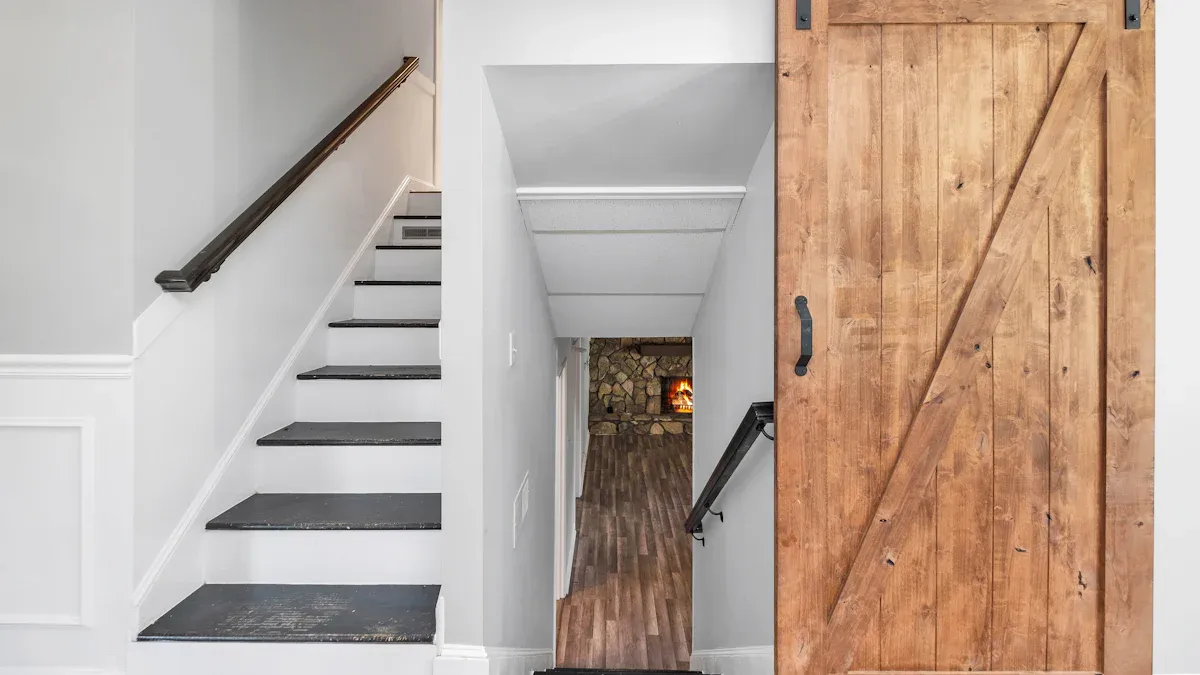
Glass doors offer aesthetic appeal and allow natural light to penetrate spaces. However, their unique characteristics demand specific considerations when selecting a Sliding Door Opener. The transparency and often frameless design of glass doors require openers that prioritize both functionality and visual integration.
Key Considerations for Glass Door Openers
When choosing an opener for glass doors, several factors come into play. The weight of glass, despite its delicate appearance, can be substantial. Therefore, the opener must possess adequate weight capacity to handle the door’s mass safely and efficiently. Aesthetics are also paramount; the opener’s design should complement the sleek, modern look of glass, often requiring minimalist hardware and discreet installation. Safety features become critical due to the potential for shattering and the need to prevent pinch points. Smooth and quiet operation is also highly desirable, enhancing the user experience in environments where glass doors are common, such as offices, retail spaces, and healthcare facilities.
Recommended Sliding Door Opener Types for Glass
For glass doors, linear sliding door openers are generally the most recommended. These include single-leaf and bi-parting configurations. Single-leaf systems move one glass panel, while bi-parting systems move two panels simultaneously in opposite directions, creating a wider opening. Telescopic sliding door openers also suit glass applications, especially when a very wide opening is necessary in a limited wall space. These systems often feature sleek, compact designs that minimize visual intrusion, preserving the door’s transparent quality. Many manufacturers design these openers specifically for glass, offering specialized clamps or mounting hardware that avoids drilling into the glass itself, maintaining its structural integrity and aesthetic.
The weight capacity of the chosen opener is a critical specification for glass doors. For single sliding doors, the maximum weight capacity often reaches 2 x 130 kg. Telescopic sliding doors can support a maximum weight capacity of 4 x 90 kg on both sides. More robust systems can handle even heavier glass panels:
| Door Configuration | Maximum Door Leaf Weight |
|---|---|
| Single leaf | 180 kg |
| Double leaf | 180 kg per leaf |
These capacities ensure the opener can manage the weight of various glass thicknesses and sizes, providing reliable and safe operation.
Essential Features for Glass Door Openers
Safety features are non-negotiable for glass door openers. Advanced sensor systems are crucial for detecting obstacles and preventing collisions. These include infrared presence sensors, which stop or reverse the door upon detecting a person or object, and microwave motion sensors, which trigger the door to open as someone approaches. Pressure sensors on the door’s edge or floor also provide an additional layer of protection.
Compliance with international and national safety standards is also vital. These standards ensure the opener meets rigorous safety criteria:
- EN 16005 (Europe): This standard governs power-operated pedestrian doors, including sliding doors. It outlines minimum requirements for motion sensors, safety devices, door response time, detection ranges, obstacle detection, auto-reverse features, emergency opening, and break-out mechanisms.
- ANSI/BHMA A156.10 (United States): Applicable to power-operated sliding doors, it specifies activation sensor range, door opening speeds, force limitations for opening and closing, placement of safety beams and presence sensors, and requirements for signage and manual override.
- ISO 9386-1: This international standard focuses on accessibility and performance. It includes safe force limits for elderly and disabled persons, manual and powered control interaction, and door opening cycles and life expectancy.
The 2021 editions of the I-Codes, specifically Section 1010.3.2 (Power-Operated Doors), require automatic swinging, sliding, and folding doors to comply with either ANSI/BHMA A156.10, A156.19, or A156.38 standards. Section 1010.1.2 of the I-Codes permits power-operated doors in a means of egress if they comply with Section 1010.3.2. The 2021 edition of NFPA 101 – Life Safety Code, Section 7.2.1.9 (Powered Door Leaf Operation), also mandates compliance with the same ANSI/BHMA standards as listed in the I-Codes.
Other essential features include emergency stop buttons, manual override functions for power failures, and soft start/stop mechanisms for smooth, quiet operation. Adjustable speed settings allow customization for different traffic levels and user preferences.
Selecting a Sliding Door Opener for Wooden Doors
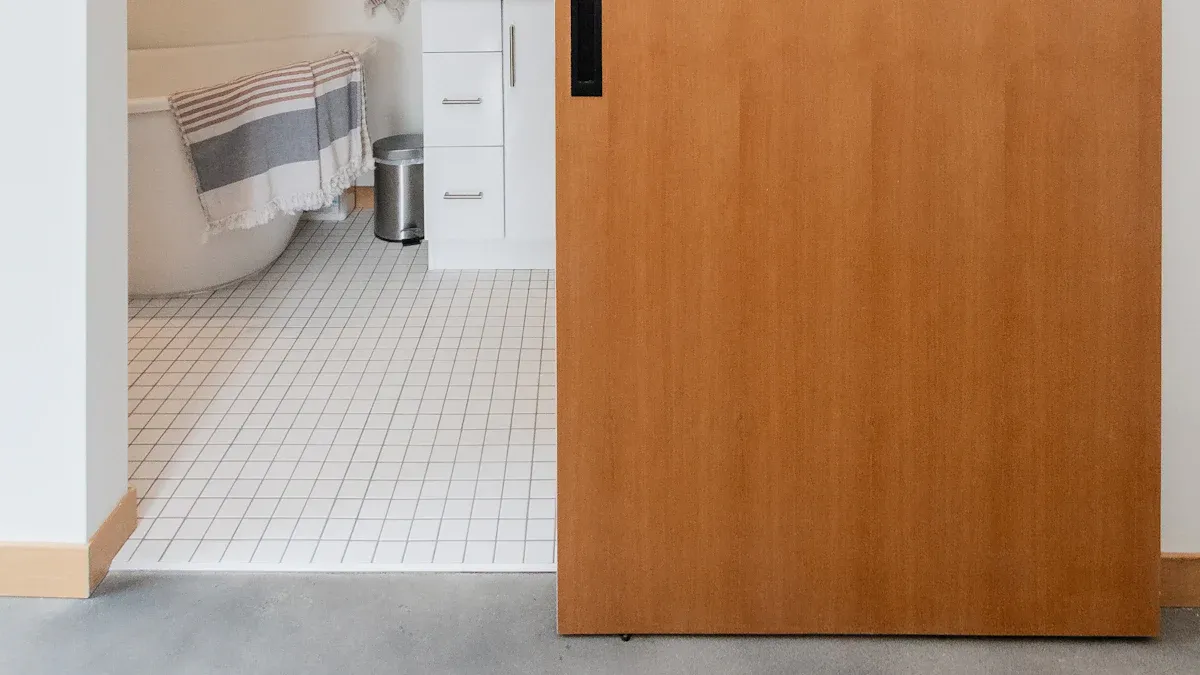
Wooden doors bring warmth, character, and often significant weight to any architectural design. Their diverse styles, ranging from rustic barn doors to elegant solid core panels, demand a Sliding Door Opener that respects their aesthetic while providing powerful and reliable operation. Choosing the correct opener ensures the door functions smoothly, preserves its integrity, and enhances the overall environment.
Key Considerations for Wooden Door Openers
When selecting an opener for wooden doors, several critical factors guide the decision. The door’s weight stands as a primary consideration; solid wood doors can be exceptionally heavy, necessitating an opener with a high weight capacity and robust motor. The door’s dimensions also play a role, as larger doors require more powerful systems. Aesthetics are equally important. Many wooden doors feature intricate designs or natural finishes, so the opener’s hardware should integrate discreetly or complement the door’s style without detracting from its visual appeal. Durability becomes crucial for wooden doors, as they represent a substantial investment and often serve as long-term fixtures. The opener must provide smooth, consistent operation to prevent undue stress or wear on the wood itself. Furthermore, security features are paramount, especially for exterior wooden doors, to protect the property effectively.
Recommended Sliding Door Opener Types for Wood
For wooden doors, especially those with considerable weight or ornate designs, robust and powerful opener systems are essential. Overhead track systems are a common and effective choice, as they distribute the door’s weight evenly and allow for smooth horizontal movement. These systems often feature heavy-duty tracks and rollers capable of supporting substantial loads. For very heavy or large wooden doors, industrial-grade motors with higher horsepower ratings become necessary. These motors ensure the door opens and closes effortlessly, preventing strain on the mechanism and the door itself.
Consider systems that offer adjustable speed settings. This feature allows for a slower, more controlled movement, which can be beneficial for preserving the wood and ensuring quiet operation. Brushless DC motors are particularly suitable for wooden doors due to their efficiency, quiet performance, and long lifespan, reducing maintenance needs. For applications where space is a concern, a telescopic sliding door opener can also be adapted for wooden panels, allowing multiple door sections to stack neatly, maximizing the opening width.
Essential Features for Wooden Door Openers
A high-quality automatic opener for wooden doors incorporates a range of features that enhance safety, convenience, performance, and security. These features ensure the door operates reliably and safely for many years.
| Feature | Description |
|---|---|
| Automatic Door Openers | |
| Safety Features | |
| Obstruction Detection | Automatically reverses if an obstruction is detected, preventing injury or damage. |
| Emergency Stop | Allows immediate halt of door operation in case of an emergency. |
| Manual Override | Enables manual operation during power outages or system malfunctions. |
| Safety Sensors | Infrared sensors detect presence in the doorway, preventing closure. |
| Convenience Features | |
| Remote Control | Operates the door from a distance for easy access. |
| Keypad Entry | Provides secure, keyless access with a programmable code. |
| Smartphone Integration | Controls and monitors door status via a smartphone app. |
| Timer-to-Close | Automatically closes the door after a preset time. |
| Battery Backup | Ensures operation during power failures. |
| Performance Specifications | |
| Motor Type | Available in various types, including DC and AC motors, offering different levels of power and efficiency. |
| Horsepower | Ranges from 1/2 HP to 1 1/2 HP, suitable for different door sizes and weights. |
| Opening Speed | Typically 7-12 inches per second, varying by model. |
| Noise Level | Ultra-quiet models available, ideal for attached garages. |
| Durability | Constructed with high-quality materials for long-lasting performance. |
| Security Features | |
| Rolling Code Technology | Changes the access code with each use, preventing code theft. |
| Vacation Lock | Disables remote access for extended periods of absence. |
| Auto-Lock | Automatically locks the door when closed. |
| Tamper-Resistant | Designed to resist forced entry attempts. |
| Compatibility | |
| Door Types | Compatible with various door types, including sectional, one-piece, and custom doors. |
| Smart Home Systems | Integrates with popular smart home platforms like Amazon Alexa, Google Assistant, and Apple HomeKit. |
| Accessories | Supports a wide range of accessories, including additional remotes, keypads, and sensors. |
| Installation & Maintenance | |
| DIY Friendly | Many models offer easy-to-follow installation instructions. |
| Professional Installation | Recommended for optimal performance and safety. |
| Low Maintenance | Designed for minimal upkeep with durable components. |
| Warranty | Typically includes a limited warranty on parts and motor. |
| Additional Features | |
| Lighting | Integrated lighting with adjustable timers. |
| Soft Start/Stop | Reduces wear and tear on the door and opener. |
| Diagnostic System | Provides error codes for easy troubleshooting. |
| Energy Efficiency | Models available with energy-saving features. |
| Customization Options | Various finishes and styles to match home aesthetics. |
Safety features like obstruction detection and emergency stop are paramount, protecting both users and the wooden door itself from damage. Manual override capabilities ensure the door remains functional during power outages. Convenience features such as remote control and smartphone integration offer modern ease of use, while a timer-to-close function adds an extra layer of security. Performance specifications, particularly motor type and horsepower, must match the wooden door’s weight for efficient operation. Ultra-quiet models are often preferred to maintain a peaceful environment. Security features like rolling code technology and auto-lock provide robust protection against unauthorized access. Finally, features like soft start/stop are especially beneficial for wooden doors, as they minimize stress on the door’s structure and prolong its lifespan.
Finding a Sliding Door Opener for Metal Doors
Metal doors offer superior security, durability, and fire resistance. They are common in industrial settings, commercial buildings, and secure facilities. These doors often carry significant weight and face demanding operational conditions. Therefore, selecting a Sliding Door Opener for metal doors requires careful consideration of power, resilience, and security features. The opener must withstand heavy use and protect the property effectively.
Key Considerations for Metal Door Openers
When choosing an opener for metal doors, several factors are crucial. The door’s weight is often substantial, requiring an opener with a high weight capacity and a powerful motor. Metal doors also vary in size and thickness, impacting the necessary force for operation. Durability is paramount; the opener must endure constant use and harsh environments without failing. Security features are also vital, especially for exterior or high-security metal doors. The opener should integrate with existing security systems. For exterior metal doors, environmental resistance is a key consideration.
Tip: For exterior metal doors, the opener must withstand various weather conditions. The design prevents dust, wind, and pests from entering. Manufacturers use corrosion-resistant materials to ensure durability despite exposure to moisture or harsh weather. The system is built to endure challenging environments, reducing the risk of mold buildup.
Recommended Sliding Door Opener Types for Metal
For metal doors, especially heavy-duty or industrial models, robust and powerful opener systems are essential. These systems often feature heavy-duty tracks, rollers, and industrial-grade motors. They provide the necessary power to move large, heavy metal panels smoothly and reliably. Overhead track systems are a common choice. They distribute the door’s weight evenly and allow for stable horizontal movement. For very large or exceptionally heavy metal doors, specialized industrial openers are available. These systems handle extreme loads.
| Series | Max Door Weight |
|---|---|
| LD 100 Series | 3,500 lbs |
| 200 Series | 22,000 lbs |
| XP 300 Series | 40,000 lbs |
| SW Series | 22,000 / 40,000 / 60,000 lbs |
These capacities demonstrate the range of heavy-duty openers available for metal doors. They ensure the opener can manage the weight of various metal door types, from standard commercial doors to massive industrial gates. Brushless DC motors are highly recommended for metal doors. They offer high torque, efficiency, and a long lifespan, reducing maintenance needs in demanding environments.
Essential Features for Metal Door Openers
A high-quality opener for metal doors incorporates features that enhance safety, security, and operational efficiency. Durability is a primary concern. Automatic door mechanisms are ideal for high-traffic areas like hospitals, hotels, banks, and department stores. They offer easy passage and reliable, secure operation. They are also user-friendly for individuals with special needs. GEZE, a prominent German company in automatic door systems, continuously tests and develops new automation systems. This commitment ensures reliability and quality. Their systems are suitable for high-traffic environments where durability is crucial.
Essential features include advanced safety sensors. These sensors detect obstructions and prevent collisions, protecting both people and the door. Emergency stop buttons and manual override functions are critical for safety during power outages or malfunctions. Security features are also paramount. These include robust locking mechanisms that integrate with the opener. Access control systems, such as keypads, card readers, or biometric scanners, provide secure entry. Rolling code technology enhances security by changing the access code with each use. This prevents unauthorized duplication. Adjustable speed settings allow customization for different traffic levels and security requirements. Soft start/stop mechanisms reduce wear and tear on the door and the opener. This prolongs their lifespan.
Universal Factors for Any Sliding Door Opener Choice
Choosing a door opener involves more than just the door material. Several universal factors influence the best selection. These factors include installation, power, and cost. Understanding these aspects ensures a successful and satisfactory outcome for any project.
Installation Complexity and Options
Installation complexity varies significantly depending on the door type and system. Standard single-panel residential doors typically require 1 to 3 hours for installation. Multi-panel residential doors take longer, usually 3 to 6 hours. Basic commercial storefronts need 4 to 8 hours. Large commercial projects, such as those in malls or office buildings, can extend to several days. An automatic gate opener installation generally takes four to eight hours. This timeframe depends on various factors. Professional installation for sliding gate openers often takes 6 to 8 hours. A do-it-yourself (DIY) approach can take 8 to 12 hours.
| Door Type | Installation Time (Hours) |
|---|---|
| Standard Single-Panel Residential | 1 – 3 |
| Multi-Panel Residential | 3 – 6 |
| Basic Commercial (Small Storefront) | 4 – 8 |
| Large Commercial (Mall/Office Building) | Days |
| Installation Type | Sliding Gate Openers (Hours) |
|---|---|
| Professional | 6 – 8 |
| DIY | 8 – 12 |
Power Requirements and Backup Solutions
Power requirements are crucial for reliable operation. Residential door openers commonly use single-phase AC power. Typical voltage options for residential models include 115V and 230V single-phase. These models come in various horsepower ratings. For example, 115V units offer ½, ¾, and 1 HP. 230V units provide ½, ¾, 1, and 2 HP. Backup solutions, such as battery backups, ensure continued operation during power outages. This feature is essential for security and convenience.
Budget Ranges for Sliding Door Openers
Budget is a significant consideration for any door opener purchase. Basic automatic sliding door systems typically range between $2,000 and $5,000. These systems offer essential functionality without specialized features. More advanced systems with specialized features can exceed $10,000. A basic automatic door without special features can cost between $10,000 and $15,000. Larger doors with additional features can quickly increase the cost to $20,000 or more. These higher-end systems often include enhanced security, advanced sensors, or custom designs.
Maintenance Needs for Longevity
Consistent maintenance significantly extends the lifespan of any automatic door system. Regular preventative measures ensure optimal performance and prevent costly repairs. Scheduled inspections and tune-ups guarantee smooth operation. This proactive approach prevents premature wear on components.
Preventative maintenance offers numerous benefits. It reduces repair costs by detecting minor issues before they escalate. This ensures doors serve efficiently for many years. It also improves safety and compliance, preventing potential risks and ensuring adherence to regulations like ADA. Regular upkeep prevents business disruptions, keeping doors operational and avoiding downtime. Well-maintained doors seal tightly, enhancing energy efficiency and reducing energy waste.
Sensors are critical components requiring diligent care. Keep sensors free of dust, dirt, and contaminants through regular cleaning. Ensure the sensor’s detection zone remains clear, avoiding obstructions. Handle sensors gently during any maintenance. Schedule regular professional maintenance for comprehensive checks. Implement additional protective measures for harsh environmental conditions.
Monthly maintenance tasks include a visual inspection for physical damage, misalignment, dust, and debris. Clean sensor lenses with a soft, lint-free cloth and a suitable cleaning solution. Perform a functionality test by triggering sensors to observe the door’s response. Quarterly, check and adjust sensor alignment. Optimize sensor sensitivity to prevent false triggers. Inspect wiring and connections for security, integrity, and corrosion. Annually, schedule a professional inspection, calibration, and testing. Install available software updates for sensors or door control systems. Replace batteries in battery-powered sensors as recommended.
Common failure points in door opener systems include sensors that do not read movement correctly. Dirty, shifted, or improperly angled sensors can cause doors to malfunction. Regular checking, cleaning, testing safety beams, and setting the correct angle for each sensor mitigate this issue. Belts can wear out or slip due to heavy use. Inspect the entire belt system, replace worn belts with stronger ones, and check rollers and pulleys. A tired or failing motor might drag, shake, or buzz. Perform load tests, check power, wiring, and speed, and replace the motor if it cannot maintain performance. Tracks can block, bend, or accumulate dirt. Clean tracks, clear rollers, fix or replace bent sections, and apply appropriate lubrication. A glitching control board can lead to erratic door behavior. Use diagnostic tools to identify and fix errors or wiring issues, or replace the faulty board. Skipping regular maintenance is a major failure point. Implement simple preventive maintenance plans that include scheduled cleaning, checking, and testing of all door components.
The ideal opener aligns with a door’s material, weight, and functional needs. Glass doors require openers prioritizing aesthetics, smooth operation, and safety. Wooden doors benefit from openers balancing weight capacity with design integration. Metal doors demand robust, high-security openers built for durability and heavy use. Always match the opener’s specifications to the door for optimal performance and satisfaction.
FAQ
What is the most important factor when choosing a sliding door opener?
The door’s material and weight are the most important factors. Each material, whether glass, wood, or metal, presents unique demands. The opener must match the door’s specifications for optimal performance, safety, and longevity.
Can one opener type work for all door materials?
No, one opener type does not work for all door materials. Glass doors require openers prioritizing aesthetics and smooth operation. Wooden doors benefit from openers balancing weight capacity with design. Metal doors demand robust, high-security openers built for durability.
How do safety features differ for glass, wooden, and metal doors?
Safety features are crucial for all doors. Glass doors require advanced sensors to prevent collisions and shattering. Wooden doors benefit from obstruction detection to protect the door’s integrity. Metal doors need robust locking mechanisms and access control for enhanced security.
Are DIY installations recommended for sliding door openers?
DIY installations are possible for some standard residential doors. However, professional installation is often recommended. Professionals ensure optimal performance, safety, and compliance with standards. Complex or heavy doors, like commercial or metal ones, particularly benefit from expert installation.
How often should one maintain a sliding door opener?
Consistent maintenance significantly extends the system’s lifespan. Monthly visual inspections and cleaning are recommended. Quarterly checks for alignment and sensitivity are also important. Annual professional inspections, calibration, and testing ensure optimal performance and prevent costly repairs.