
Automatic doors are essential for modern commercial buildings, retail stores, hospitals, and residential entrances. When they fail to function correctly—especially when an automatic sliding door won’t close properly or an automatic door fails to shut completely—it can create safety risks, energy loss, and accessibility issues. Below are the five most common causes and how they affect your system.
Sensor Malfunction or Misalignment
One of the most frequent causes of an automatic door not closing properly is a sensor issue. Modern doors rely on motion or infrared sensors to detect movement.
- Dust, dirt, or insect buildup on sensor lenses
- Incorrect sensitivity settings causing over-detection
- Misaligned sensor angle after impact or vibration
- Electrical interference from nearby equipment
When sensors misread the environment, the door may stay open continuously or stop mid-cycle. Regular cleaning and recalibration usually resolve the issue.
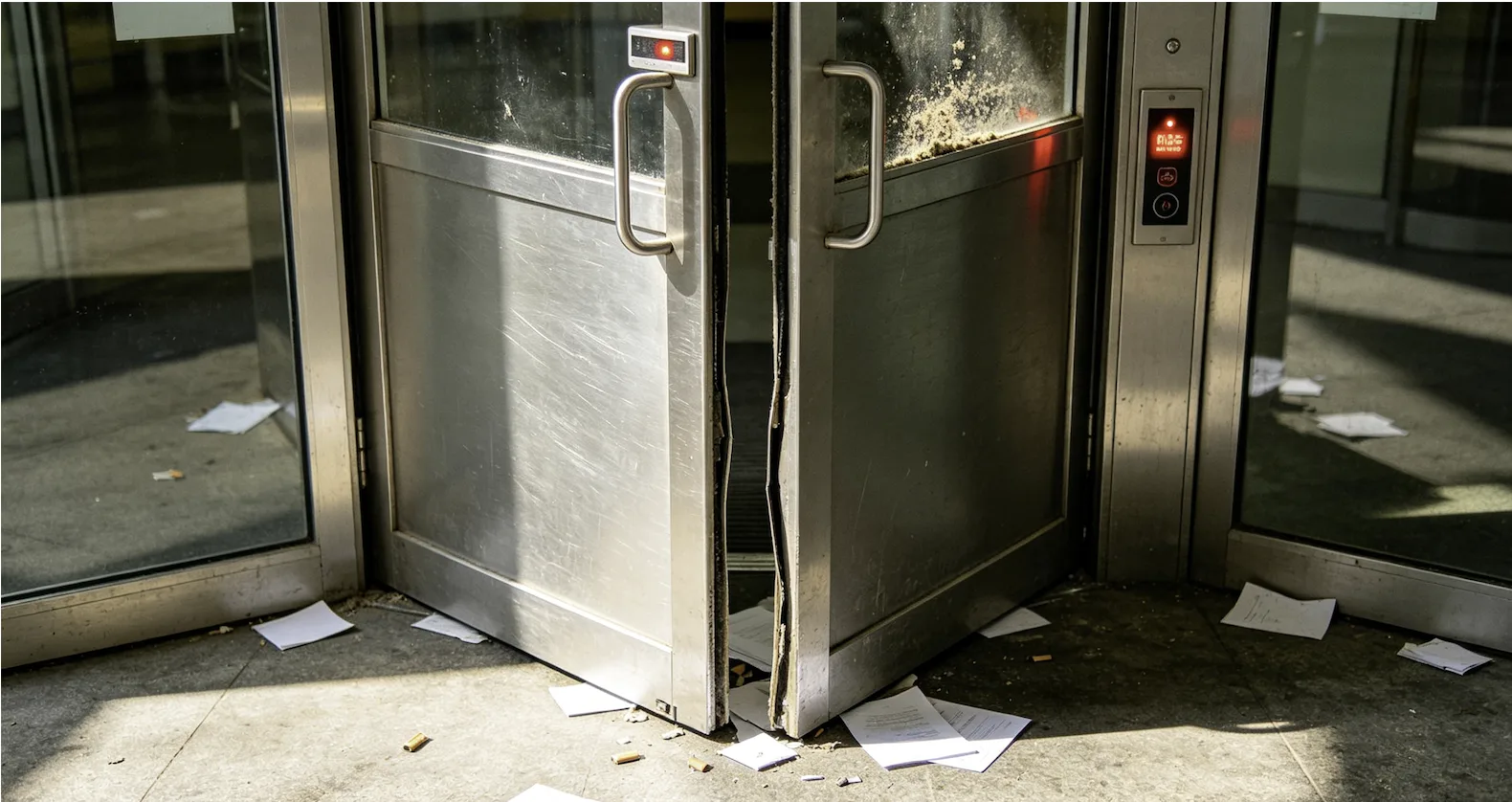
Obstructed or Dirty Door Tracks
For sliding systems, track conditions play a major role in performance. A blocked or poorly maintained track is a common reason for automatic sliding door repair needs.
- Debris such as dust, gravel, or small objects in the rail
- Worn or damaged rollers increasing friction
- Lack of lubrication causing stiffness
- Bent or misaligned track structure
Even minor obstructions can prevent smooth closure. Routine maintenance helps ensure stable and quiet operation.
Door Alignment or Structural Shift
Over time, heavy usage or building movement can cause misalignment, leading to incomplete closure.
- Loose hinges or mounting brackets
- Frame distortion due to long-term pressure
- Improper installation from the beginning
- Uneven floor or shifting building structure
When the door is not properly aligned, the closing mechanism struggles to engage fully, often leaving gaps or requiring manual assistance.
Motor or Control System Failure
The motor and control board are the core of any automatic door system. If either fails, the door may stop closing altogether.
- Weak or aging motor with reduced torque
- Faulty control board logic errors
- Unstable power supply or voltage drops
- Damaged wiring or loose connections
In such cases, professional diagnostics are required to determine whether repair or replacement is needed.
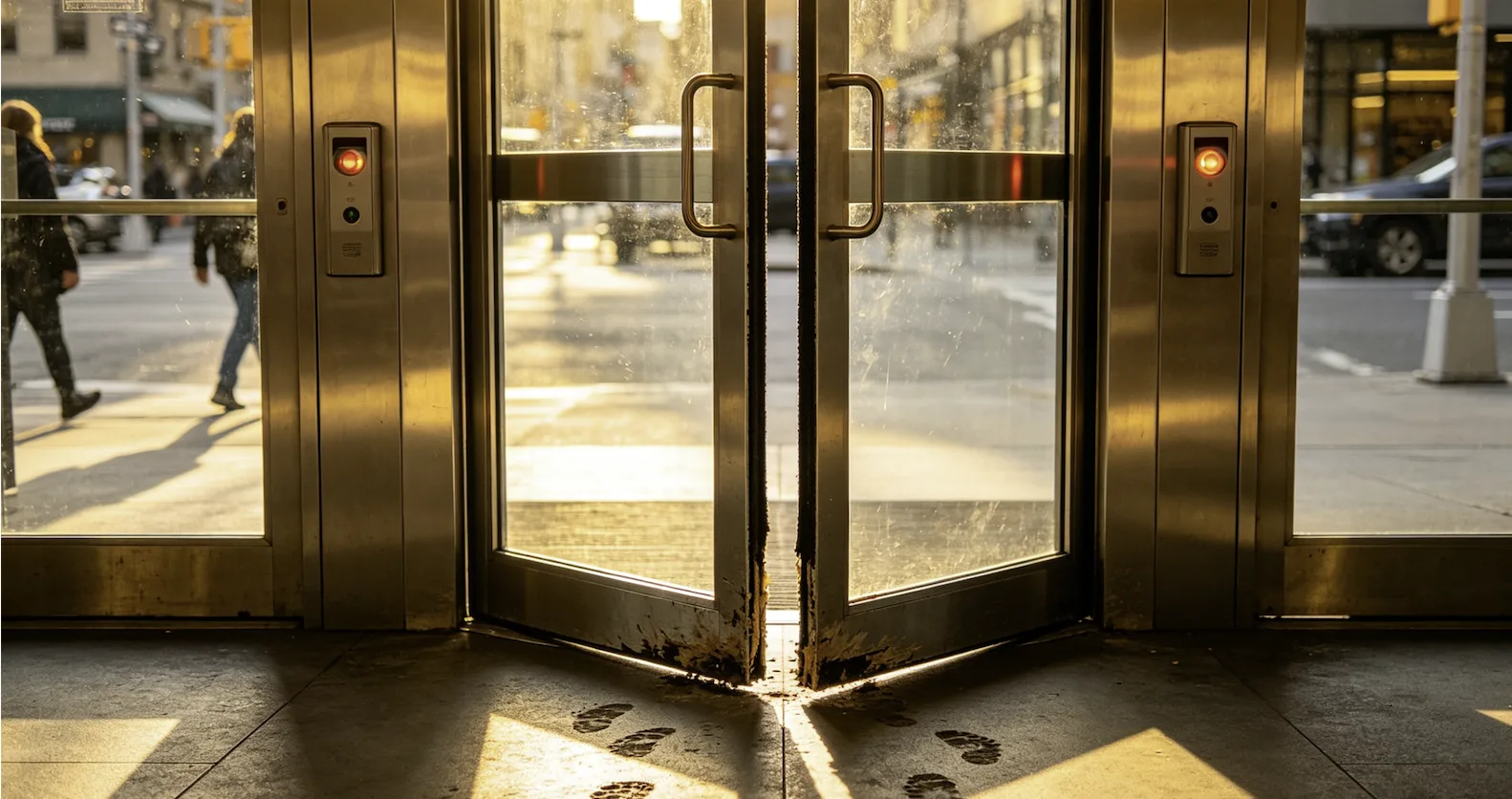
Safety Sensor or Anti-Pinch System Triggered
Modern automatic doors include safety features designed to prevent accidents, but these systems can sometimes be overly sensitive.
- False detection of movement or obstacles
- Misaligned safety beams
- Incorrect sensitivity calibration
- Software configuration errors
When the safety system is triggered incorrectly, the door may refuse to close even when the path is clear.
FAQ
Why does my automatic door keep staying open?
This usually happens due to sensor interference, misalignment, or an active safety trigger preventing closure.
What causes an automatic sliding door not to close fully?
Common causes include dirty tracks, roller damage, or motor weakness affecting smooth movement.
How do I reset an automatic door system?
Most systems can be reset by powering off the unit for a few minutes or using the built-in reset function on the control panel.
Can weather affect automatic door operation?
Yes, extreme temperatures, humidity, or wind can impact sensors and mechanical performance.
How often should automatic doors be serviced?
Regular maintenance every 6–12 months is recommended to ensure safety and optimal performance.
About Beifan Automatic Door
We specialize in providing professional insights, solutions, and services for automatic door systems, including sliding doors, swing doors, and commercial entrance automation systems.
Our services cover a wide range of solutions such as installation, maintenance, troubleshooting, and system upgrades for automatic entry doors used in commercial and residential environments.
With strong technical expertise in sensor technology, door control systems, and automation engineering, we are committed to delivering reliable, efficient, and long-lasting automatic door solutions that improve safety, convenience, and operational performance.