

Sustainable designs are fundamentally transforming automatic door manufacturing. This shift brings practical applications and significant benefits to the industry. The industry sees a bright future; experts project the automatic door manufacturing industry will reach USD 14.4 billion by 2025. Innovations in Automatic Door Accessories and the Autodoor Remote Controller highlight this progress. Sustainable practices impact every stage, from Automatic door material procurement to the final Commercial Automatic Door installation. The future of this industry clearly links to sustainable innovation.
Key Takeaways
- New materials like recycled aluminum and plant-based plastics make automatic doors better for the planet.
- Smart designs help automatic doors use less energy, which saves money and protects the environment.
- Making doors easy to fix and recycle helps keep materials in use and reduces waste.
- Technology like smart sensors and AI makes building automatic doors more efficient and less wasteful.
Sustainable Materials Revolutionizing Automatic Door Manufacturing
Manufacturers now embrace sustainable materials. These materials fundamentally change how automatic doors come to life. They offer environmental benefits and improve product performance.
Eco-Friendly Composites and Bio-Based Polymers
The industry actively seeks innovative materials. Eco-friendly composites and bio-based polymers lead this charge. Composite materials blend recycled wood fibers, plastics, and other sustainable components. These options reduce reliance on new timber. They also offer durability and resist warping. This makes them excellent choices for door manufacturing.
Bio-based polymers also offer exciting possibilities. These materials come from renewable resources. For example, bio-polyamides (Bio-PA) derive from natural fats and oils. They provide good friction coefficients, high wear resistance, and increased temperature resistance. They also offer improved impact properties. Rilsan PA 11, made from castor oil, serves as one example. It finds use in connectors, brake hoses, and flexible tubing. DuPont Zytel, a blend of nylon resin components, also sees use in automotive parts. Projects like BARBARA demonstrate 3D-printed car door handles from corn starch residue-based biopolymers. These biopolymers enhance with natural additives from horticultural waste. The BIOMOTIVE project aims to produce bio-based polyurethanes and fibers for car interiors and door handles. These advancements show the potential for similar applications in automatic door manufacturing.
Integrating Recycled Content in Automatic Door Components
Using recycled content significantly boosts sustainability. Recycled materials reduce waste and conserve resources. Aluminum stands out as a prime example. It offers high recyclability. Aluminum can be recycled repeatedly without losing its quality. This conserves energy and reduces landfill waste.
Recycled aluminum provides many benefits:
- High Recyclability: Aluminum recycles endlessly without quality loss.
- Energy-Efficient Performance: Well-insulated aluminum doors help lower a building’s energy use.
- Long Life Span: Durable aluminum doors require less frequent replacement.
- Easy Access and Enhanced Security: Automatic aluminum doors offer convenient access and improved security.
Closed-loop recycling systems for aluminum waste conserve natural resources. Recycling minimizes environmental damage from mining and processing raw materials. Companies using these systems decrease their carbon emissions. Recycling aluminum saves up to 95% of the energy needed to produce new aluminum from raw ore. This process also reduces waste from heavy metals. The lightweight nature of aluminum simplifies handling door components. This potentially lowers installation and repair costs. A lightweight door reduces stress on other parts of an automatic door system. This includes springs, tracks, and motors. It helps prevent future repairs. In cases of power loss, a lightweight aluminum door is easier to open manually. Using recycled aluminum significantly decreases the demand for extracting new raw materials. This process is energy-intensive and environmentally damaging. Recycled aluminum requires only a fraction of the energy needed for new aluminum. This directly leads to a substantial reduction in the carbon footprint.
Transparent Sourcing for Automatic Door Manufacturing
Transparent sourcing ensures materials come from ethical and sustainable origins. Manufacturers want to know where their materials originate. They also want to understand the environmental impact of their supply chain. Certifications help achieve this transparency.
Several certifications guide manufacturers:
- Cradle to Cradle Certified®: This certification includes ‘Material Health’ and ‘Product Circularity’ achievements. It applies to window, door, and façade frame systems.
- UL Solutions: This organization offers ‘Material Sourcing and Technical Insights’. It also provides ‘Supply Chain Transparency’ software solutions.
These certifications and tools help manufacturers verify their materials. They ensure responsible practices throughout the supply chain. This commitment to transparent sourcing builds trust. It also supports a truly sustainable future for automatic door manufacturing.
Energy Efficiency Innovations in Automatic Door Manufacturing

The journey towards sustainability in automatic door manufacturing embraces significant energy efficiency innovations. These advancements not only reduce environmental impact but also enhance operational performance. Manufacturers are discovering new ways to conserve energy at every stage.
Low-Power Mechanisms for Automatic Doors
Modern automatic doors now feature incredibly efficient mechanisms. Engineers design these systems to consume minimal power. They use advanced motors that operate smoothly with less electricity. For instance, brushless DC motors offer superior efficiency and a longer lifespan. These motors reduce energy waste significantly. Smart sensors also play a crucial role. They precisely detect movement, ensuring the door only opens when necessary. This prevents unnecessary cycles and saves power. Imagine doors that intelligently adapt to traffic flow, conserving energy during quiet periods. This smart approach makes every opening and closing more efficient.
Smart Energy Management in Automatic Door Production
Factories involved in automatic door manufacturing are also becoming energy-smart. They implement sophisticated energy management systems. These systems monitor energy use across the entire production line. They identify areas where energy is wasted. For example, smart controls can power down machinery during idle times. They optimize heating, ventilation, and lighting systems. This proactive management ensures every watt of energy serves a purpose. Companies achieve substantial energy savings and reduce their carbon footprint. This commitment to efficiency transforms the entire manufacturing process.
Renewable Energy Integration in Automatic Door Manufacturing
Integrating renewable energy sources marks a powerful step forward. Many automatic door manufacturing facilities now harness solar or wind power. Solar panels on factory roofs convert sunlight into clean electricity. Wind turbines can supplement the energy supply. This shift reduces reliance on fossil fuels. It provides a sustainable power source for production. Companies demonstrate a strong commitment to a greener future. They inspire others to adopt similar practices. This integration proves that sustainable production is not just a dream, but a tangible reality.
Circular Economy Principles for Automatic Door Manufacturing
The circular economy offers a powerful framework. It moves away from the traditional “take-make-dispose” model. Instead, it focuses on keeping resources in use for as long as possible. This approach creates value. It also reduces waste. Automatic door manufacturers embrace these principles. They design products for longevity and resource recovery.
Modularity for Automatic Door Repair and Upgrades
Modularity is a cornerstone of sustainable design. It means building automatic doors with easily replaceable components. If a part like a sensor or motor fails, technicians replace only that specific part. They do not need to replace the entire door system. This design choice significantly extends the product’s lifespan. It also reduces the amount of waste generated. Customers benefit from lower repair costs. Manufacturers can offer upgrades more easily. This keeps doors modern and functional for many years. It represents a smart and sustainable way to build.
Designing Automatic Doors for Disassembly and Material Recovery
Designing for disassembly is another vital step. It ensures that workers can easily take apart automatic doors at the end of their service life. Engineers carefully select materials. They also choose fasteners that allow for simple separation. This process maximizes the recovery of valuable materials. For example, they can separate metals, plastics, and glass. This design choice prevents materials from ending up in landfills. It allows them to re-enter the production cycle. This thoughtful approach ensures maximum material recovery. It supports a truly circular system.
End-of-Life Recycling Programs for Automatic Doors
Completing the circular loop requires robust recycling programs. Manufacturers establish systems to take back old automatic doors. They partner with specialized recycling facilities. These programs ensure proper sorting and processing of materials. For instance, aluminum frames go to aluminum recyclers. Glass panels go to glass recyclers. This creates a closed-loop system. It minimizes environmental impact. It demonstrates a strong commitment to sustainability in automatic door manufacturing. These programs transform old doors into valuable resources for new products. They build a more responsible future.
Smart Technologies Driving Sustainable Automatic Door Manufacturing
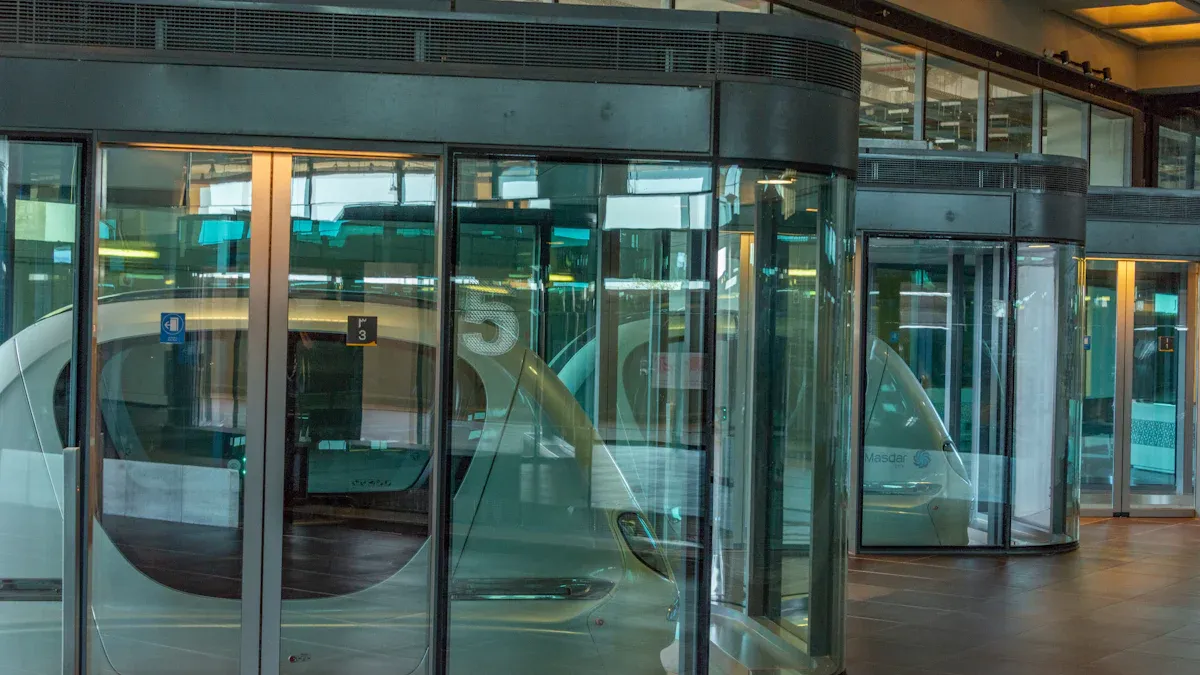
Smart technologies are revolutionizing automatic door manufacturing. These innovations bring efficiency and sustainability to the forefront. They help create better products and reduce environmental impact.
IoT for Optimizing Automatic Door Resource Use
The Internet of Things (IoT) plays a vital role in optimizing resource use. IoT sensors make automatic doors smarter. They precisely detect movement, ensuring doors open only when needed. This reduces false triggers and saves energy. Doors can connect to a building’s central system. This integration coordinates with lighting and heating, optimizing overall energy use. Occupancy sensors allow doors to adjust operation based on people’s presence. This helps conserve energy by controlling the indoor climate. IoT also monitors door conditions in real-time. It predicts potential failures. Proactive maintenance prevents malfunctions that waste energy. For example, if an automatic door lock starts to stick, IoT detects this minor defect. Facility managers can fix it proactively. This ensures smooth operation and prevents energy waste. Remote control capabilities also allow managers to adjust settings efficiently.
AI-Driven Efficiency in Automatic Door Manufacturing
Artificial intelligence (AI) brings incredible efficiency to automatic door manufacturing. AI algorithms can analyze vast amounts of data. They optimize production schedules, ensuring materials and machines work together seamlessly. This reduces downtime and boosts output. AI also enhances quality control. It can detect tiny defects in components faster and more accurately than human inspection. This leads to fewer faulty products and less material waste. Predictive maintenance powered by AI keeps machinery running smoothly. It anticipates when equipment needs service, preventing costly breakdowns. AI helps manufacturers make smarter decisions, leading to a more efficient and sustainable process.
Automation for Waste Reduction in Automatic Door Production
Automation significantly reduces waste in automatic door production. Automated systems ensure precision in every step. Computer-controlled cutting in frame lines precisely cuts elements. This minimizes material scrap. Integrated measuring systems scan parts to create 3D images. They check for length, cut angles, and hole positions, flagging defects immediately. Color detection technology automatically selects the correct processing program. This ensures accurate component processing. Profile identification allows machines to recognize parts and choose appropriate machining programs. Tool detection, often using NFC chips, verifies the correct tool is in use. This reduces costly errors. High-quality CNC routers streamline the cutting process. They create complex designs with precision and minimal waste. Wood waste from these processes goes to a shredder. The shredder processes it into homogeneous material. These wood chips then go to a central silo. They are used in a biomass combustion plant to generate heat for the facility. This closed-loop system turns waste into energy.
Market Impact and Future of Sustainable Automatic Door Manufacturing
Sustainable practices are reshaping the market for automatic doors. These changes bring exciting opportunities and drive the industry forward. Manufacturers embrace these shifts, creating a brighter future.
Meeting Green Building Standards with Automatic Doors
Sustainable automatic doors play a crucial role in achieving green building certifications. Buildings aim for standards like LEED or BREEAM. These certifications recognize structures that minimize environmental impact. Automatic doors contribute significantly. They offer superior energy efficiency, reducing a building’s overall energy consumption. Their sustainable materials also meet strict environmental criteria. Architects and developers actively seek these doors. They help projects earn valuable green points. This makes buildings more attractive and responsible.
Consumer Demand for Sustainable Automatic Doors
Consumers increasingly demand sustainable products. They want to support companies that prioritize the planet. This trend extends to automatic doors. Businesses and institutions now choose eco-friendly options. They understand the environmental benefits and the positive public image. People feel good knowing their choices support a healthier world. This growing demand encourages innovation in automatic door manufacturing. It pushes companies to develop even greener solutions.
Tip: Offering sustainable automatic doors can enhance a company’s brand reputation and attract environmentally conscious clients.
Regulatory Landscape for Sustainable Automatic Door Manufacturing
Governments worldwide are implementing stricter environmental regulations. These policies encourage sustainable practices across all industries. For automatic door manufacturing, this means new standards for energy efficiency and material sourcing. Regulations often provide incentives for companies adopting green technologies. This creates a supportive environment for sustainable innovation. Manufacturers who adapt quickly gain a competitive edge. They lead the way towards a more responsible and efficient future.
Sustainable designs are no longer optional; they are a necessity for automatic door manufacturing. These forward-thinking innovations offer substantial environmental benefits, economic gains, and strong competitive advantages. The entire industry is evolving. It moves towards a more responsible and efficient future, powered by sustainability. 🌿
FAQ
How do sustainable materials benefit automatic door manufacturing?
Sustainable materials like eco-friendly composites and recycled aluminum reduce environmental impact. They offer durability and energy efficiency. These choices conserve resources and lower carbon footprints. Manufacturers create stronger, greener doors for a better future. ♻️
What makes automatic doors energy-efficient?
Automatic doors achieve energy efficiency through low-power mechanisms and smart sensors. They open only when necessary, saving electricity. Manufacturers also integrate renewable energy in production. This commitment ensures minimal energy waste and a cleaner operation.
How do circular economy principles apply to automatic doors?
Circular economy principles mean designing doors for longevity and recyclability. Modularity allows easy repairs and upgrades. Doors are built for disassembly, recovering valuable materials at their end-of-life. This approach minimizes waste and maximizes resource use.
What role do smart technologies play in sustainable automatic door manufacturing?
Smart technologies like IoT and AI optimize resource use and reduce waste. IoT sensors ensure doors operate efficiently. AI improves production processes and quality control. Automation minimizes material scrap. These innovations drive a more efficient and sustainable future. 💡