
In the modern architectural landscape, automatic doors are no longer just a convenience; they are a critical component of building accessibility, energy efficiency, and safety. Whether you are managing a high-traffic retail space, a healthcare facility, or a corporate office, ensuring your entrance systems meet international safety standards is paramount. But what exactly makes an automatic door “safe” and “compliant”?
From sophisticated sensors to mandatory safety signage, these components work in harmony to prevent accidents and ensure seamless operation. As a leading automatic door accessories manufacturer, we understand that navigating the complexities of standards like ANSI/BHMA A156.10 can be challenging. This guide breaks down the essential accessories every facility manager and installer should prioritize.
Why Are Automatic Door Accessories Critical for Building Safety?
Safety in automated entrances is governed by strict regulations designed to protect pedestrians from entrapment, impact, and other potential hazards. According to the Builders Hardware Manufacturers Association (BHMA), compliance with standards such as ANSI/BHMA A156.10 (for power-operated pedestrian doors) is essential for reducing the risk of injury.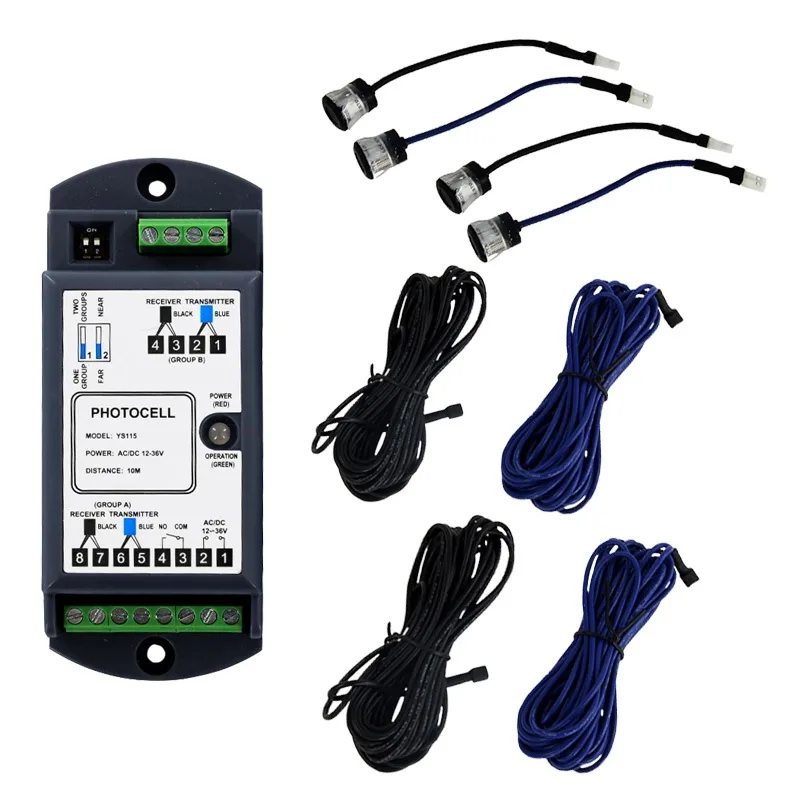
The Role of Sensors in Entrapment Protection
The primary function of automatic door accessories is to detect the presence of individuals within the door’s path. Without precise sensing technology, a door could close on a slow-moving pedestrian or a child, leading to significant liability issues and physical harm.
| Accessory Type | Primary Function | Safety Benefit |
|---|---|---|
|
Motion Sensors |
Detects approaching pedestrians to trigger opening. |
Ensures timely activation and smooth traffic flow. |
|
Presence Sensors |
Detects stationary objects or people in the door’s path. |
Prevents the door from closing while someone is in the threshold. |
|
Safety Beams (Photo Cells) |
Creates an invisible infrared barrier across the opening. |
Acts as a redundant safety layer to stop closing if the beam is broken. |
What Are the Must-Have Automatic Sliding Door Accessories?
When it comes to automatic sliding door accessories, the requirements are specific due to the lateral movement of the door panels. Sliding doors often serve as main entrances for supermarkets and hospitals, where “safety zones” must be meticulously maintained.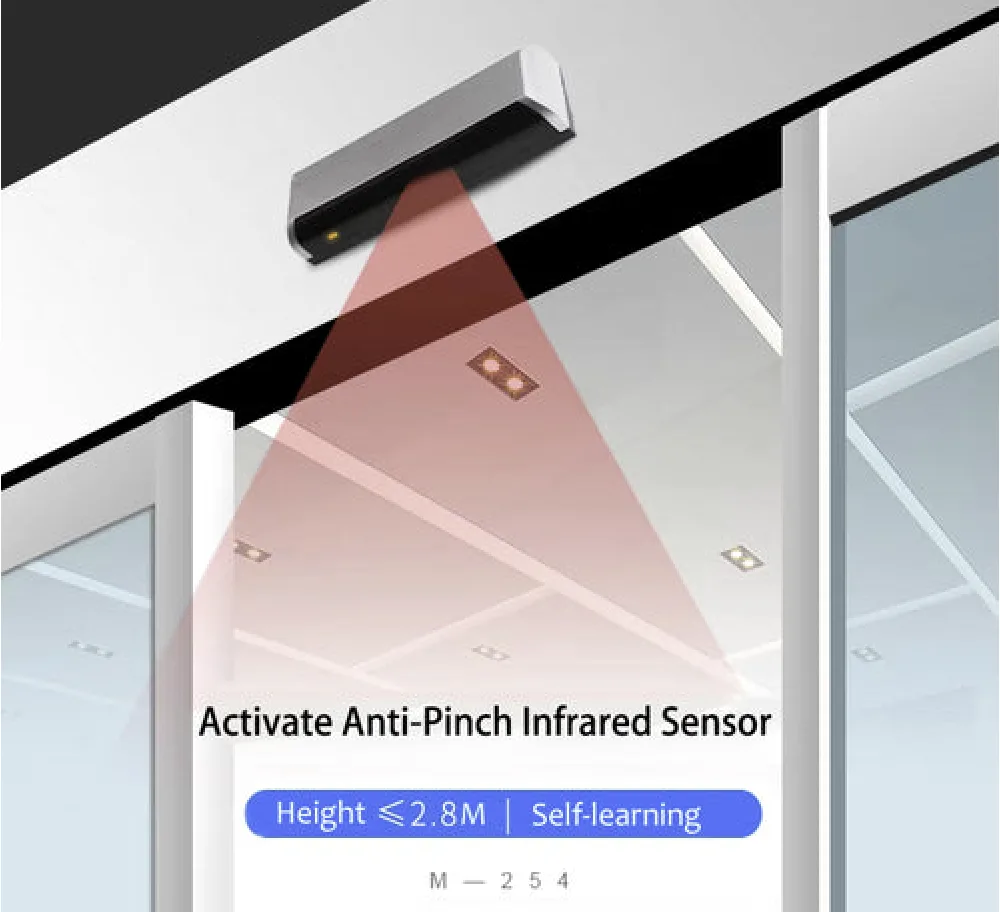
1. Combined Activation and Presence Sensors
Modern sliding doors utilize “dual-technology” sensors. These devices combine microwave technology for motion detection (activation) and active infrared technology for presence detection (safety). This ensures that the door opens as you approach and stays open as long as you are standing in the doorway.
2. Infrared Safety Beams (Photo Cells)
Often installed at heights of 20cm and 60cm from the floor, these automatic sliding door accessories provide a fail-safe mechanism. If a person or an object (like a shopping cart) blocks the beam, the door controller immediately halts or reverses the closing cycle.
3. Emergency Breakout Hardware
In the event of a fire or power failure, sliding doors must allow for manual “breakout.” This hardware allows the sliding panels to be pushed outward like a swing door, providing a clear egress path for emergency evacuation.
How Do Safety Signs and Decals Ensure Regulatory Compliance?
Compliance isn’t just about how the door moves; it’s also about how it communicates with the user. ANSI/BHMA standards specify the exact size, color, and placement of safety signage.
“All low energy doors shall be marked with signage visible from both sides of the door, with the words ‘AUTOMATIC CAUTION DOOR’. The sign shall be a minimum of 6 inches in diameter with black lettering on a yellow background.” — ANSI/BHMA A156.10 Standard
Essential Signage Checklist:
•”Automatic Door” (Green/White): Placed on the door to indicate it is power-operated.
•”In Emergency Push to Open”: Mandatory for sliding doors with breakout capabilities.
•”Caution Automatic Door” (Yellow/Black): Alerting users to be mindful of the door’s movement.
•Directional Arrows: Clearly marking the “Enter” and “Do Not Enter” sides of the opening.
How to Choose a Reliable Automatic Door Accessories Manufacturer?
Selecting the right automatic door accessories manufacturer is a strategic decision that impacts the longevity and safety of your entrance systems. A professional manufacturer doesn’t just sell parts; they provide certified solutions that adhere to global benchmarks.
Key Factors to Evaluate:
1.Certification and Testing: Ensure the products are tested for millions of cycles and comply with CE, UL, or ANSI standards.
2.Technical Support: Does the manufacturer provide wiring diagrams, installation guides, and troubleshooting assistance?
3.Compatibility: Are the accessories compatible with major door brands like Stanley, Dormakaba, or Besam?
4.Innovation: Look for manufacturers offering touchless activation switches and smart sensors that adapt to environmental changes (like rain or snow).
Comparison: Motion Sensors vs. Presence Sensors
Understanding the technical nuances between these two types of automatic door accessories is vital for correct installation.
| Feature | Motion Sensor (Activation) | Presence Sensor (Safety) |
|---|---|---|
|
Technology |
Microwave (Doppler Radar) |
Active Infrared (AIR) |
|
Detection Goal |
Moving objects only |
Both moving and stationary objects |
|
Primary Use |
Opening the door |
Preventing the door from closing |
|
Mounting Position |
Usually above the door header |
Header-mounted or integrated into the door leaf |
Step-by-Step: Ensuring Your Automatic Door is Compliant
Follow these steps to audit your current entrance system for safety and compliance:
1.Daily Safety Check: Perform a walk-through test every morning. Does the door open at the right distance? Does it stay open if you stop in the threshold?
2.Inspect Signage: Ensure all decals are clean, visible, and not peeling. Replace any signs that do not meet the 6-inch diameter requirement.
3.Test the Safety Beams: Block the infrared beam with an object to verify that the door stops or reverses immediately.
4.Verify Battery Backup: For doors in fire exit routes, test the battery backup system to ensure the door opens (or fails safe) during a power outage.
5.Consult a Professional: Have a certified AAADM (American Association of Automatic Door Manufacturers) inspector perform an annual inspection.
FAQ
What are the most essential automatic door accessories for a retail store?
For retail environments, the most essential accessories include high-performance motion sensors for smooth entry, presence sensors to protect customers with strollers or carts, and clear “Enter/Exit” signage to manage traffic flow.
How often should automatic door sensors be replaced?
While high-quality sensors from a reputable automatic door accessories manufacturer can last 5-10 years, they should be tested daily. If a sensor fails to detect presence consistently or shows signs of environmental interference, it should be replaced immediately to maintain compliance.
Can I use third-party accessories on my automatic sliding door?
Yes, many automatic sliding door accessories are designed to be universal. However, it is crucial to verify the voltage requirements (usually 12-24V AC/DC) and wiring compatibility with your specific door controller.
What is the difference between “Low Energy” and “Full Power” door requirements?
Low energy doors (often used for ADA compliance) move slower and with less force, requiring fewer sensors. Full power doors (high-traffic sliders) move faster and require comprehensive presence detection and safety mats or beams to meet ANSI/BHMA A156.10 standards.
Why is “Touchless Activation” becoming a standard accessory?
Touchless switches (wave-to-open) are increasingly popular as automatic door accessories because they improve hygiene by reducing physical contact and enhance accessibility for individuals with limited mobility.