
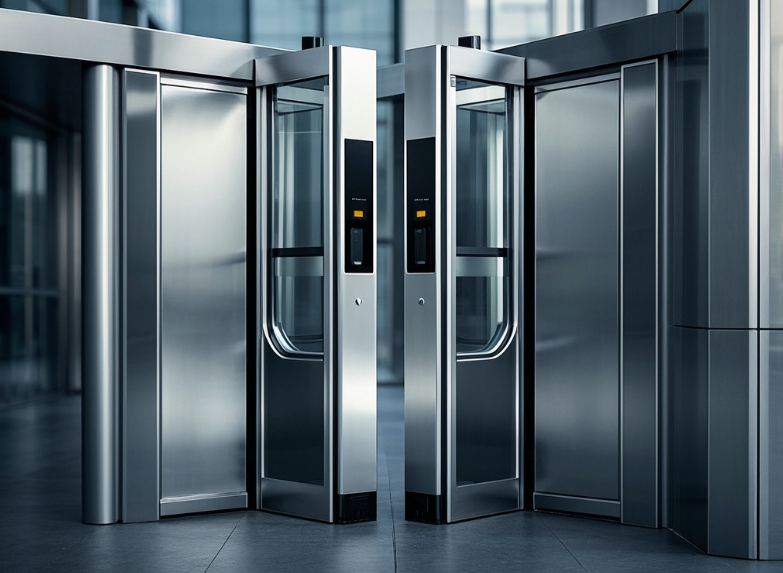
A Sliding Door Opener represents an automated device specifically designed for sliding doors. It efficiently converts electrical energy into mechanical motion, enabling effortless door operation. This essential technology finds common applications in various settings, from commercial establishments to residential spaces. The automatic sliding doors market, including the Double sliding door opener segment, demonstrates significant growth. It reached $2.45 billion in 2024 and projects a 7% annual growth rate over the next five years. This blog, “Sliding Door Opener Explained: Types, Features and Applications,” will detail how a Sensor sliding door opener functions and its benefits. An Automatic Sliding Door Opener enhances convenience and accessibility for users.
Key Takeaways
- A sliding door opener is an automatic device. It uses a motor to open and close doors. This makes doors easy to use.
- These openers make places more accessible. They help people in wheelchairs. They also make entry and exit smooth for everyone.
- Sliding door openers save energy. They close quickly. This keeps warm air in during winter and cool air in during summer.
- Safety is important for these doors. Sensors stop the door if something is in the way. This prevents accidents.
- Sliding door openers are common in many places. You can find them in stores, hospitals, and homes. They offer convenience and a modern look.
Understanding the Sliding Door Opener

Definition of a Sliding Door Opener
A Sliding Door Opener is an automated system that facilitates the opening and closing of sliding doors. It integrates several key components to perform this function. The system includes a motor and a drive mechanism, which are responsible for the physical movement of the door panels. A control unit manages the overall operation, coordinating all parts of the system. Sensors detect presence and provide input for activation and safety. Additionally, activation devices initiate the door’s opening sequence. When a person approaches, an inductive detector senses their presence and sends a pulse signal to the main controller. The main controller then processes this signal and instructs the motor to activate. This process converts electrical energy into the mechanical motion required to move the door.
Purpose and Benefits of a Sliding Door Opener
The primary purpose of a Sliding Door Opener is to enhance convenience, accessibility, and safety in various environments. These systems offer numerous benefits, particularly in commercial settings. They significantly improve customer flow by streamlining entry and exit, which minimizes congestion and reduces door-related accidents. Customers carrying items find the user-friendly experience intuitive.
Tip: Automatic sliding doors help businesses meet Americans with Disabilities Act (ADA) requirements. They provide wide, unobstructed entryways for wheelchair users and operate safely for everyone. This demonstrates a commitment to inclusivity and helps prevent legal issues.
Sliding door openers also contribute to energy efficiency and cost savings. Their rapid open-and-close mechanism helps regulate indoor temperatures. This reduces heat loss in winter and retains cool air in summer, leading to lower utility bills. Advanced sensors further optimize energy use, making them a financially sound choice. Furthermore, these doors enhance hygiene by eliminating the need for physical contact, which reduces germ transmission. They also increase security by integrating with security systems, motion sensors, and remote locking. This allows only authorized access and includes obstacle detection for safety.
Businesses also benefit from the modern appearance these doors provide. They offer a sleek, contemporary look that enhances a business’s aesthetic and creates a positive first impression. An inviting, easy-to-access entrance encourages more customers to enter, potentially increasing sales and revenue. Constructed from robust materials, these systems withstand frequent use and require minimal upkeep, offering long-term cost-effectiveness. They also come with customization options, available in various designs, materials, and sizes. This allows tailoring to match a building’s specific needs and appearance. Safety standards, such as UL 325 and ASTM F2200, govern the design and installation of these systems. UL 325 focuses on preventing accidents and clarifying wording, while ASTM F2200 emphasizes construction standards for gates to prevent entrapment and falling.
Common Applications of a Sliding Door Opener
Sliding door openers find widespread use across diverse sectors due to their functional advantages. Commercial establishments like retail stores, supermarkets, and office buildings frequently install them to manage high foot traffic efficiently. In healthcare facilities, their application is particularly critical. They are common at main entrances, in corridors, and within specialized areas such as emergency rooms, patient rooms, intensive care units, pharmacies, and procedure rooms. Public restrooms and sensitive areas also benefit from their controlled access and hygienic operation.
Note: Healthcare facilities utilize specialized sliding door systems. These include lead-lined heavy-duty doors for X-ray rooms and self-closing isolation doors for airborne infection rooms (AIIR). Smoke-rated slide doors with concealed high-temperature gaskets are also common in ICU systems.
Operating theaters and isolation infection rooms (AIIR) rely on these systems for maintaining sterile environments. Cleanroom ISO 3 and Cleanroom ISO 5 facilities, along with sterile cladded cleanrooms, also employ them to meet stringent cleanliness requirements. Automatic telescoping doors are ideal for interior or exterior healthcare applications where small wall openings limit traditional sliding doors. These applications include corridors, labs/pharmacies, waiting rooms, and areas requiring emergency egress. Beyond commercial and healthcare settings, residential properties also use sliding door openers for patios, balconies, and internal room dividers, offering convenience and modern living solutions.
Key Components of a Sliding Door Opener System
The Motor in a Sliding Door Opener
The motor acts as the powerhouse for a Sliding Door Opener system. It converts electrical energy into the mechanical force necessary to move the door panels. Manufacturers commonly use two main types of motors in these systems:
- Hydraulic motors
- Electromechanical motors These motors provide reliable and consistent operation. Most automatic door motors, including those for sliding doors, typically consume between 60 W and 150 W. The specific size and model of the door and motor cause variations in consumption. For instance, the YFS150 automatic door motor has a rated power consumption of 60W. In comparison, garage door openers generally use about 350-600 watts of power during operation. This can differ based on the model and efficiency. The motor’s power directly influences the door’s speed and ability to handle heavier panels.
Control Panel for a Sliding Door Opener
The control panel serves as the brain of the entire system. It receives signals from various sensors and activation devices. This central unit then processes these signals. It sends precise commands to the motor and other components. The control panel allows for comprehensive and precise adjustments to the door’s operation. Users can fine-tune door settings, adjust opening speed, modify how long the door stays open, and tweak the pulling force of the door.
| Component | Description | Importance |
|---|---|---|
| Control Unit | Processes signals from sensors | Coordinates the system’s actions |
| Controls the motor |
This unit ensures the door operates safely, efficiently, and in full compliance with programmed parameters and user preferences.
Drive Mechanism of a Sliding Door Opener
The drive mechanism translates the motor’s rotational energy into the linear motion required for door movement. This linear motion moves the door panels smoothly along their designated track. Common types of drive mechanisms employed in these systems include:
- Belt-and-pulley systems
- Belts
- Chains
- Gears A belt-and-pulley system often utilizes a continuous belt connected to the motor’s output shaft. The motor rotates a pulley, which then pulls the belt. This action directly moves the door panels. Chains and gears also provide robust and durable methods for transmitting power. They ensure smooth, consistent, and reliable door movement, even with frequent use.
Track and Rollers for a Sliding Door Opener
The track and rollers provide the essential framework for the door’s movement. The track guides the door panels horizontally. Rollers, attached to the door, move along this track. Common materials for tracks include aluminum, galvanized steel, and stainless steel. Aluminum tracks are suitable for powder coat finishes and resist corrosion well, especially in coastal areas. However, they require polymer wheels for smooth operation. For heavier wood panels, solid steel tracks and rollers offer robust support. Rollers are often made from polymer or other plastics, which tend to operate more quietly than metal alternatives. Carbon steel and stainless steel also serve as durable materials for tracks and rollers.
Sensors in a Sliding Door Opener
Sensors are crucial for the safe and automatic operation of the door. They detect approaching individuals or obstacles. Various types of sensors are employed in these systems. These include Active Infrared Sensors, Microwave Sensors, and Combination Sensors that integrate both technologies. Touch-free Door Switches offer an alternative activation method. Other sensor types include Motion Sensors, Pressure Sensors, and RFID Systems. Microwave sensors operate by emitting a wide range of wavelengths. They then detect the returning signal. By analyzing the pattern of this returning signal, these sensors accurately determine an object’s proximity. This ensures the door opens promptly and avoids collisions.
Power Supply for a Sliding Door Opener
The power supply delivers the necessary electrical energy to operate the door system. The power requirements vary significantly based on the door’s application and size.
| Type of Sliding Gate Opener | Typical Power Consumption (Watts) |
|---|---|
| Residential | 50 – 200 |
| Commercial | 200 – 1000+ |
| Industrial | 500 – several thousand (especially during startup) |
Several factors influence the power needs. The motor type plays a significant role. AC motors, generally more powerful for heavy-duty applications, can have high starting power but stabilize to lower running power. DC motors are more energy-efficient, especially for smaller to medium doors. The weight and size of the door directly impact power needs; heavier doors require more force. Frequency of use also affects overall energy consumption, as each start-up uses a burst of power. Operating speed also influences power, with faster operation generally requiring more power.
How a Sliding Door Opener Operates Step-by-Step
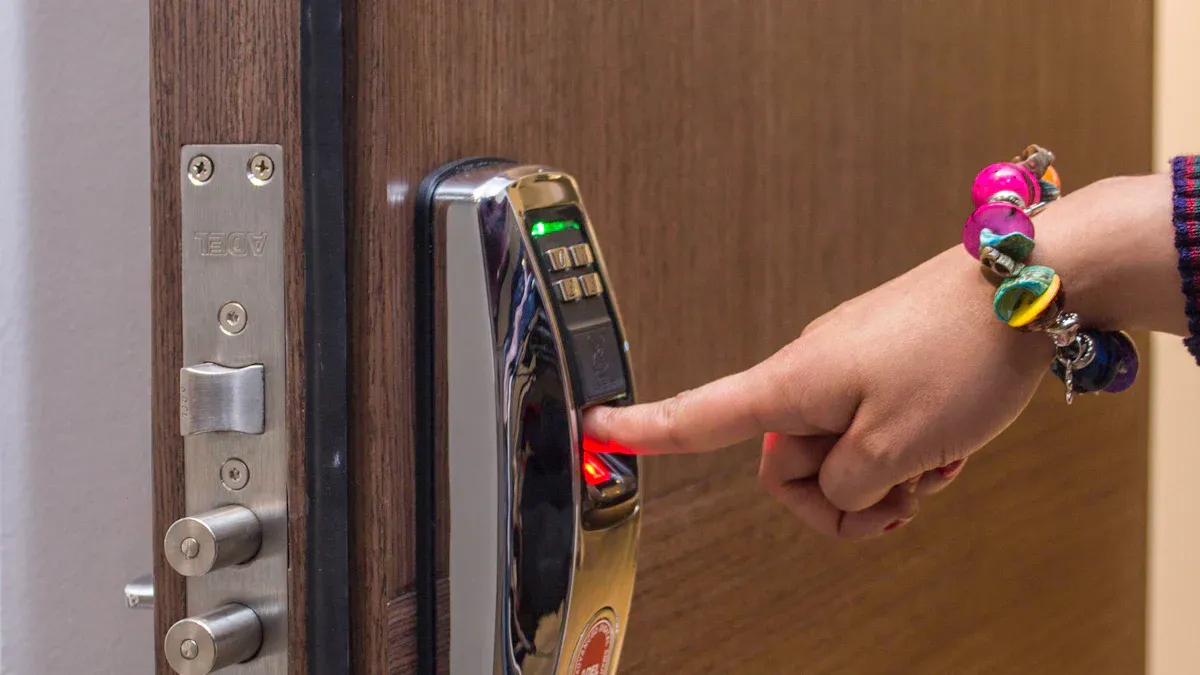
A sophisticated sequence of actions allows a sliding door to open and close automatically. This process involves several integrated components working in harmony.
Sensor Activation in a Sliding Door Opener
The operation begins with sensor activation. Sensors, strategically placed around the door, constantly monitor the surrounding area for movement or presence. When a person approaches the door, the sensor detects their presence. Different sensor types achieve this detection in various ways. For instance, microwave sensors emit electromagnetic waves and detect changes in the reflected signal caused by movement. Active infrared sensors project infrared beams and sense when an object breaks these beams. This initial detection triggers the entire opening sequence. Modern sensors respond very quickly. For example, some active infrared presence sensors can detect presence in less than 100 milliseconds. Other advanced motion and presence sensors boast an even faster response time, typically less than 5 milliseconds, ensuring immediate door activation.
Signal Transmission to the Control Panel
Once a sensor detects presence, it immediately transmits a signal. This signal travels to the control panel, which functions as the central processing unit of the door system. The control panel receives and interprets the information from the sensor. It then processes this input to determine the appropriate action. This step ensures the door responds correctly to the detected presence, preventing unnecessary openings or delays. The control panel acts as the system’s brain, coordinating all subsequent actions based on the received signals and its programmed parameters.
Motor Engagement and Door Movement
After receiving the signal from the sensor and processing it, the control panel sends a command to the motor. The motor then engages, converting electrical energy into mechanical motion. This mechanical force drives the door’s movement through the drive mechanism, which often uses belts, chains, or gears. The drive mechanism pulls the door panels along the track, guided by rollers. This action causes the door to open smoothly and efficiently.
Commercial sliding door openers operate at specific speeds to balance efficiency and safety.
| Door Movement | Speed Range (mm/s) |
|---|---|
| Open Door | 160 – 500 |
| Close Door | 160 – 400 |
Commercial sliding door openers typically open at a speed of 0.7 to 1.0 meters per second (m/s). The closing speed is generally slower, ranging from 0.5 to 0.8 m/s, to prioritize user safety. These speeds can vary based on factors such as door size, usage frequency, and the surrounding environment. The motor continues to operate until the door reaches its fully open position.
The Closing Sequence of a Sliding Door Opener
After the door opens, it remains open for a predetermined duration. This dwell time allows individuals to pass through comfortably. A timer within the control panel manages this duration. Once the dwell time expires, or if a safety sensor detects no further presence in the doorway, the control panel initiates the closing sequence. It sends a command to the motor to reverse its direction. The drive mechanism then pulls the door panels back along the track until they meet in the closed position. Safety sensors remain active during the closing process. They detect any obstructions in the door’s path. If an obstruction is detected, the control panel immediately stops or reverses the door’s movement to prevent injury or damage. This comprehensive sequence ensures safe, efficient, and automated door operation.
The Closing Sequence of a Sliding Door Opener
After the door reaches its fully open position, it remains open for a specific duration. This period, known as the dwell time, allows individuals ample opportunity to pass through the doorway without rushing. A timer integrated within the control panel meticulously manages this duration. Once the programmed dwell time elapses, or if safety sensors confirm no further presence within the doorway, the control panel initiates the closing sequence.
The control panel transmits a command to the motor, instructing it to reverse its operational direction. Subsequently, the drive mechanism engages, pulling the door panels smoothly along their designated track. This action brings the panels together until they meet in the fully closed position. Throughout this closing process, safety remains a paramount concern. The system’s safety sensors remain continuously active, vigilantly monitoring the door’s path for any potential obstructions.
Should a safety sensing device detect an obstacle during the closing sequence, it immediately triggers an automatic response. The door promptly reverses its movement, preventing collisions and ensuring the safety of individuals and property. This automatic obstacle reversal mechanism is a critical safety feature. Furthermore, some systems incorporate an optional standby power supply. This power backup system maintains the door’s operational status and its set position even during power outages. Such a feature proves crucial for continuous personnel safety and access control, especially in high-traffic or critical environments. This comprehensive sequence ensures the door closes safely, efficiently, and in full compliance with all programmed parameters.
Types and Advantages of a Sliding Door Opener
Different Types of Sliding Door Openers
Various types of automatic door openers cater to diverse needs and applications. Manufacturers primarily use two main categories for these systems: electro-mechanical and hydraulic. Each type offers distinct characteristics regarding mechanism, operation, and suitability for different door weights and environments.
| Feature | Electro-mechanical Sliding Door Openers | Hydraulic Sliding Door Openers |
|---|---|---|
| Mechanism | Utilizes an electric motor, gears, and a belt or chain drive system to move the door. | Employs a hydraulic pump, fluid, and cylinders to generate force and move the door. |
| Operation | Generally quieter and smoother, with precise control over door speed and position. | Can be powerful and robust, often used for heavy-duty applications. May have a slightly less smooth operation. |
| Maintenance | Requires regular lubrication of moving parts and occasional belt/chain tension adjustments. | Involves checking hydraulic fluid levels, inspecting for leaks, and periodic fluid changes. |
| Applications | Suitable for a wide range of commercial and residential doors, including standard sliding doors and automatic entrances. | Often preferred for heavy-duty industrial doors, blast-resistant doors, and applications requiring high force and durability. |
Beyond these core mechanisms, specialized designs like telescopic sliding door openers exist. These doors feature overlapping panels, allowing them to create wider openings in limited wall spaces. This offers flexible designs and customization options for various aesthetic and functional requirements.
Key Advantages of Using a Sliding Door Opener
A Sliding Door Opener offers numerous benefits, enhancing convenience, safety, and operational efficiency across many settings. These systems provide a space-efficient design, particularly telescopic models, which maximize open space within their frames. This makes them ideal for areas with limited wall space. They create wide, inviting entrances, suitable for high-traffic locations like shopping malls and airports.
Automatic operation, driven by sensors or motion detectors, provides hands-free convenience and improves accessibility. This is crucial for individuals using wheelchairs, strollers, or those with mobility challenges.
One emergency repair can cost more than a whole year of regular checkups.
These systems also contribute to energy efficiency. They incorporate features like adjustable speeds and sensors to minimize open time, helping to conserve indoor climate control. This reduces heating and cooling expenses. Furthermore, regular maintenance extends the lifespan of the doors, avoiding expensive replacements and reducing overall ownership costs. Proactive service is cheaper than reactive, urgent repairs.
Safety features are paramount. Integrated safety sensors detect obstacles, stopping and reversing the door to prevent accidents. For accessibility compliance, sliding door systems inherently meet ADA standards by eliminating the need for door swings. This benefits various building types. Accessible handle clearances and the use of heavy-duty, quiet rollers instead of traditional floor tracks also avoid trip hazards. Automation, activated by a simple wave, button press, or presence sensing, further enhances accessibility for people with disabilities.
A Sliding Door Opener operates as a sophisticated, integrated system. It automates door movement, significantly enhancing both convenience and safety for users. The system fundamentally relies on the seamless interaction of its sensors, a central control unit, and a powerful motor-driven mechanism. These components collectively ensure efficient, reliable, and secure door operation in diverse environments.
FAQ
How long does a sliding door opener typically last?
A sliding door opener typically lasts between 10 to 15 years with proper maintenance. The lifespan depends on usage frequency, environmental conditions, and the quality of the initial installation. Regular servicing significantly extends the system’s operational life.
Are automatic sliding door openers safe for users?
Yes, automatic sliding door openers prioritize safety. They incorporate advanced sensors that detect obstacles in the door’s path. If an obstruction occurs, the door immediately stops or reverses its movement. This prevents injuries and ensures user protection.
Do sliding door openers help with energy efficiency?
Sliding door openers contribute to energy efficiency. Their rapid open-and-close cycles minimize the time the door remains open. This helps maintain indoor temperatures, reducing heat loss in winter and retaining cool air in summer. Businesses can see lower utility bills.
What kind of maintenance do sliding door openers require?
Sliding door openers require regular maintenance. This includes checking sensors for proper function, lubricating moving parts, and inspecting the drive mechanism. Technicians also verify track alignment and roller condition. Proactive service prevents costly repairs and ensures reliable operation.
Tip: Schedule annual professional inspections for your sliding door opener. This ensures optimal performance and identifies potential issues before they become major problems.