
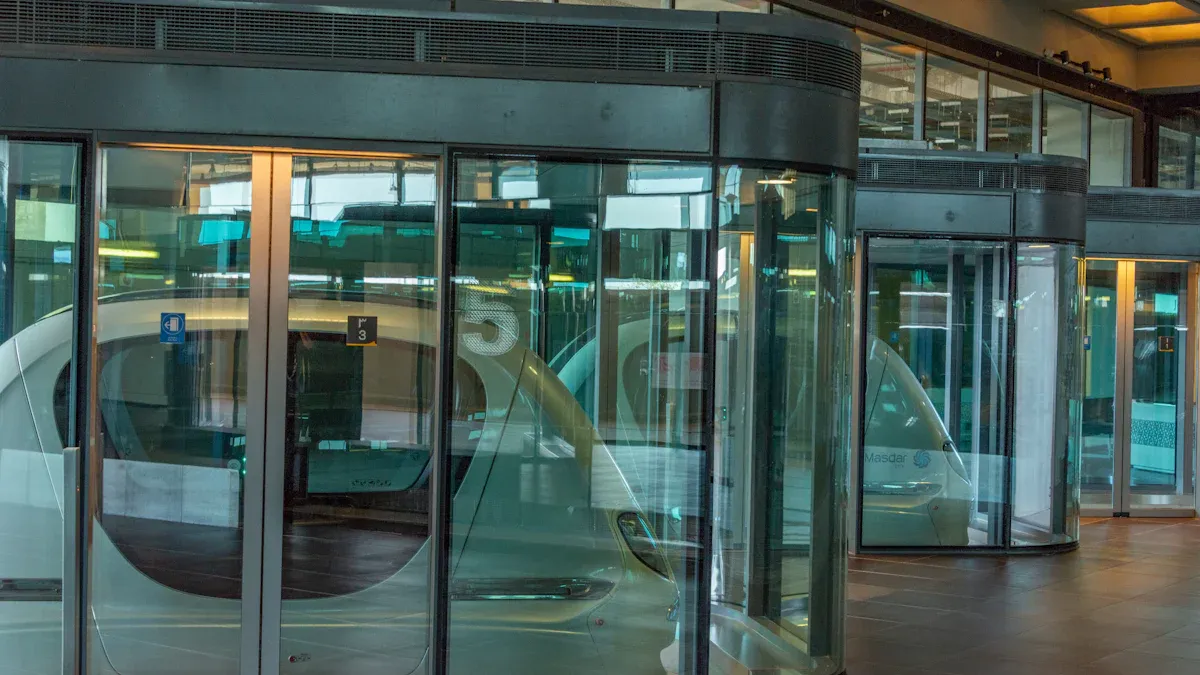
The market for Automatic Door Operators is undergoing rapid evolution. The integration of smart sensors and AI-driven intelligence is redefining these systems. Enhanced security features and sustainable designs are now standard. Connectivity and personalized user experiences represent key innovations. The global market for Automatic Door Operators is projected to reach USD 1723.95 million by 2025, with a Compound Annual Growth Rate (CAGR) of 6.3% from 2025 to 2035. Ningbo Beifan Automatic Door Factory stands as a leading Automatic door operator supplier. They are dedicated to helping customers understand What is an automatic door operator? and providing guidance on How to choose an automatic door operator? to meet modern demands.
Key Takeaways
- Automatic doors use better sensors. These sensors help doors see people and objects more clearly. This makes doors safer and work better.
- AI makes automatic doors smart. Doors can learn how people move. This helps them open and close at the right time. It saves energy and helps fix problems early.
- New automatic doors have strong security. They can use fingerprints or faces to let people in. This keeps buildings safe from unwanted entry.
- Automatic doors are now more eco-friendly. They use materials that are good for the Earth. They also use less power. This helps save energy and protect the environment.
Core Innovations in Automatic Door Operators for 2025
Automatic door technology continues to advance rapidly. Several core innovations define the capabilities of Automatic Door Operators in 2025. These advancements focus on making doors smarter, safer, and more efficient.
Advanced Sensor Technologies for Automatic Door Operators
Sensors are the "eyes and ears" of automatic doors. Their evolution significantly improves how doors detect people and objects. Early overhead approach sensors used Doppler reflection or infrared detection. These sensors had limited views. They sometimes failed to detect pedestrians wearing dark clothing against dark flooring. This created safety concerns.
To improve safety, early overhead sensors combined with floor control mats. Later, door belt loop sensors and other door-mounted sensors also joined the system. Sliding doors first used control mats and electric eye holding beams. Motion detection sensors on each side replaced these. A single overhead threshold protecting sensor with multiple emitters (3-5) then covered the doorway width.
Industry standards pushed for better threshold protection. Requirements became tighter, moving from 5 inches to 3 inches from the door face. Hold-open times also increased from 10 to 30 seconds. This required more diverse sensor types. Modern advancements now integrate both motion and presence detection into a single overhead unit. These advanced combination sensors often remove the need for separate cross-threshold holding beams. They also include a ‘look back’ ability for enhanced functionality.
AI and Machine Learning Integration in Automatic Door Operators
Artificial intelligence (AI) and machine learning (ML) bring new levels of intelligence to automatic doors. These technologies allow doors to learn and adapt. AI-powered systems can analyze traffic patterns. They predict when a door needs to open or close. This reduces waiting times and saves energy. For example, a door in a busy office building learns peak hours. It adjusts its sensitivity and opening speed accordingly.
Machine learning also enables predictive maintenance. The system monitors the door’s performance. It identifies potential issues before they cause a breakdown. This means technicians can fix problems proactively. This reduces downtime and extends the life of the door. AI also helps doors adapt to environmental changes. It adjusts to different lighting conditions or weather. This ensures consistent and reliable operation.
Enhanced Security Features for Automatic Door Operators
Security is a top priority for modern buildings. Automatic doors now offer advanced security features. They integrate with various access control systems. This allows for controlled entry into facilities. Doors pair with devices such as keycard readers, biometric scanners, or remote monitoring systems. This ensures restricted areas remain secure. Authorized personnel can still access them easily.
Safety standards guide the design of these security features. Low-energy operators follow ANSI 156.19. They activate through a "knowing act," like push buttons or card readers. These operators limit the speed and force of operation. Full-energy operators follow ANSI 156.10. They use motion sensors. This standard requires stricter safety measures, such as sensors and guard rails. Adding motion sensors to a low-energy operator reclassifies it as a full-energy opening under ANSI 156.10. This requires enhanced safety measures. Regular maintenance is crucial for these safety features. This includes testing sensors and obstacle detection. It ensures reliable performance and compliance with safety regulations.
Sustainable Design of Automatic Door Operators
Modern building practices focus on protecting the environment. This trend extends to the design of Automatic Door Operators. Manufacturers now prioritize sustainability. They aim to reduce the environmental impact of their products. This includes the materials they use and how much energy the doors consume.
Sustainable design starts with material choices. Many manufacturers now use eco-friendly materials. These materials help lower the carbon footprint of the doors. For example, automatic door operators often include recycled components. They also use materials that come from sustainable sources.
The use of recycled and sustainable materials in door systems offers significant environmental benefits. This practice helps reduce greenhouse gas emissions. It also promotes the effective use of resources.
This approach means less waste goes to landfills. It also reduces the need for new raw materials. Companies like Ningbo Beifan Automatic Door Factory understand this importance. They work to make their products more environmentally friendly.
Energy efficiency is another key part of sustainable design. Automatic doors can use a lot of power. Designers now create operators that consume less electricity. They use advanced motors and control systems. These systems optimize door movement. They open and close doors only when necessary. This saves energy throughout the day. For instance, some doors have sleep modes. They use very little power when not in use. This reduces overall energy consumption for buildings.
The entire life cycle of the door matters. Sustainable design considers how to make, use, and eventually recycle the door. Manufacturers design components for easy disassembly. This makes recycling parts simpler at the end of the door’s life. This holistic approach ensures that automatic door operators contribute positively to green building initiatives.
Smart Sensor Technologies Revolutionizing Automatic Door Operators

Smart sensor technologies are transforming how automatic doors function. These advancements make doors more responsive, efficient, and safe for everyone.
Next-Generation Presence Detection for Automatic Door Operators
New presence detection systems offer superior accuracy and customization. The OWL sensor, for example, uses both microwave and infrared technology. This dual-technology sensor creates a highly customizable detection area. It activates automatic doors and industrial gates. The OWL sensor includes features like vehicle motion detection and presence detection. It also has two configurable outputs. A remote control allows flexible setup of the presence detection area, direction detection, and hold time. This sensor provides door activation and protection in one unit. It also filters settings to disregard parallel traffic. It can distinguish between pedestrian and vehicle traffic for energy efficiency. Furthermore, 77GHz millimeter-wave radar sensors represent a significant advancement. These radar-based sensors improve detection accuracy. They reduce false triggers and perform better in various environmental conditions. Microbrain Intelligent Technology Co., Ltd. offers an Automatic Door Open 77GHz Wave Sensor. This product highlights the use of millimeter wave and IoT wireless technology.
Environmental Adaptive Sensors in Automatic Door Operators
Environmental adaptive sensors significantly improve automatic door operator performance. They use adaptive technology. This technology adjusts sensor sensitivity based on current environmental conditions. For instance, a sensor might become less sensitive during heavy rain to prevent false activations. It could increase sensitivity in low light conditions to ensure proper detection. This adaptability ensures consistent and reliable operation regardless of external factors.
IoT Integration for Remote Management of Automatic Door Operators
The Internet of Things (IoT) allows remote management of automatic doors. Platforms like ASSA ABLOY’s ‘Insight’ leverage IoT and connectivity. This platform improves operations, enhances service efficiency, and achieves energy savings. It also helps control maintenance costs for entrances. NOMNIO developed an IoT platform specifically for automatic sliding doors. This platform enables remote operation, maintenance, and management. Key features include remote operation and monitoring. Users can open, close, lock, and change modes via mobile or web. It also offers secure access management with role-based control. Custom scheduling and automation are available. The platform provides activity logs and diagnostics. It also includes remote maintenance and support tools. Westell’s RMX-4000 is another remote site management platform. It extends IoT capabilities for monitoring critical network infrastructure.
AI and Machine Learning Driving Intelligent Automatic Door Operators
Artificial intelligence (AI) and machine learning (ML) bring new levels of intelligence to automatic doors. These technologies allow doors to learn and adapt. AI-powered systems can analyze traffic patterns. They predict when a door needs to open or close. This reduces waiting times and saves energy. For example, a door in a busy office building learns peak hours. It adjusts its sensitivity and opening speed accordingly.
Predictive Maintenance for Automatic Door Operators
Predictive maintenance is a major benefit of AI. This technology allows machines to alert operators to problems before a failure occurs. It provides real-time insights. This drastically cuts down on costs associated with emergency callouts. It also positively impacts uptime. Predictive maintenance offers significant advantages for Automatic Door Operators:
- Significant Cost Savings: Early issue detection prevents expensive emergency repairs. It also extends the system’s lifespan.
- Increased Safety & Reliability: It prevents sudden failures. These failures could cause injuries or security vulnerabilities.
- Boosted Property Value: Modern AI-equipped installations enhance curb appeal and market value.
- Eco-Friendly & Energy Efficient: It optimizes energy usage through proper insulation and reduced waste.
- Improved Convenience: The system alerts users when maintenance is needed. This eliminates the need to remember scheduling.
Predictive maintenance addresses many common failure points. These include:
- Failure to Open or Close: This can stem from obstructions in the sensor path, power supply issues, or complex sensor/electrical connection problems.
- Unexpected Opening and Closing: Faulty sensors, improperly set sensitivity levels, or electrical issues often cause this.
- Slow-Moving Doors: Lubrication issues, mechanical wear and tear, or track obstructions may cause this.
- Unusual Noises During Operation: This indicates loose hardware, lack of lubrication, or mechanical malfunction.
- Misaligned Doors: Structural settling or impact damage typically results in this.
Personalized User Experience with Automatic Door Operators
AI also creates a personalized user experience. Doors can recognize individual users or groups. They adjust settings based on learned preferences. For instance, a door might open wider for someone using a wheelchair. It could hold open longer for a parent with a stroller. This customization improves convenience and accessibility for everyone. AI systems learn these preferences over time. They make door operation smoother and more intuitive.
Traffic Flow Optimization by Automatic Door Operators
AI helps optimize traffic flow. It analyzes how people move through an entrance. The system adjusts door speed and timing in real-time. This prevents bottlenecks during busy periods. It also saves energy during quiet times. For example, in a high-traffic area, the door might open faster. It could stay open longer to accommodate a rush of people. This intelligent management improves efficiency and user satisfaction.
Advanced Security and Access Control in Automatic Door Operators

Modern buildings demand strong security. Automatic door systems now offer advanced features to control access and prevent unauthorized entry. These innovations make facilities safer and more secure.
Biometric Authentication Systems for Automatic Door Operators
Biometric systems use unique physical traits for access control. These systems include iris scanners, retina scanners, fingerprint readers, hand geometry readers, facial recognition scanners, and vein recognition scanners. Facial recognition uses an algorithm to find a human face in a video or photo. It records the face’s characteristics and turns them into a unique code. This code then compares to a database to identify the person and allow access. Fingerprint reader technology registers the unique lines on skin. It creates data for access control. Advanced systems can use four fingers in 3D for high accuracy. Iris scanning identifies unique patterns in the human iris. It converts them into an iris code. This code compares to a database to grant or deny access. This technology is touchless, hygienic, and has a low false rejection rate. However, biometric data is very personal. It can lead to identity theft if it falls into the wrong hands. Privacy-focused systems create encrypted "data blobs" that cannot be easily reversed. Less private systems might store actual facial images.
Cybersecurity for Connected Automatic Door Operators
Connected automatic doors need strong cybersecurity. Users should immediately update default passwords to complex, unique ones. Implementing Two-Factor Authentication (2FA) adds an extra security layer. It requires a second verification step. Consistently updating firmware and apps helps patch security vulnerabilities. Enabling automatic updates is best. Enhancing network security involves using the latest encryption standards, like WPA3. It also means creating strong network passwords and separating networks for IoT devices. Choosing smart door systems from reputable manufacturers is important. These manufacturers prioritize cybersecurity and offer regular updates. Professional installation ensures secure setup and expert recommendations. Regular security audits and monitoring manufacturer alerts are also crucial. However, challenges exist. Some devices have hard-coded credentials or broadcast unencrypted information. Some manufacturers may not respond to vulnerability reports.
Anti-Tailgating and Intrusion Prevention in Automatic Door Operators
Automatic Door Operators use various methods to prevent tailgating and intrusions. Gate access control systems track entries and exits. They alert if someone forces a gate open or holds it open. Speed gate systems offer customizable anti-tailgating features. They use sensors and card readers to check user credentials. Turnstiles, like tripod turnstiles, allow only one person through at a time. Full-height rotor turnstiles provide higher security against jumping or climbing. These are similar to mantrap vestibules. Access control gates require users to present credentials. If authorized, the gate unlocks. It then re-locks after passage to prevent additional unauthorized entry.
Future Trends and Impact of Automatic Door Operators Beyond 2025
The future of automatic door technology promises even greater sophistication and integration. These systems will play a crucial role in creating smarter, safer, and more efficient environments.
Evolving Regulatory Landscape for Automatic Door Operators
Regulations for automatic doors continue to evolve. These standards ensure safety and performance. They guide manufacturers and installers. For example, European standards have set rules for automatic doors in new buildings since 2013. These rules require annual servicing and daily monitoring of operators. They also include detailed regulations for doors on escape routes. In America, the ANSI A156.10 standard outlines specific requirements for full-energy swing door operators. These regulations help maintain high safety levels.
| Standard | Scope | Key Requirements |
|---|---|---|
| European Standard | Safety of automatic doors in new constructions (since 2013) | Annual servicing, daily operator monitoring, detailed regulations for escape route doors |
| ANSI A156.10 | Full-Energy Swing Door Requirements (American standard) | Specific requirements for full-energy swing door operators |
Integration of Automatic Door Operators in Smart Infrastructure
Automatic door operators are becoming key components of smart city infrastructure. They integrate into smart building systems. Sensor-based systems and IoT drive this integration. Governments also promote smart building technologies. Urban development projects, especially in countries like Germany, support this trend. The market is moving towards energy-efficient and smart automatic door systems. These systems connect with building automation. This enhances user experience and operational efficiency within the larger urban context.
Emerging Technologies Shaping Automatic Door Operators
New technologies will further transform automatic doors. Advanced AI will allow doors to predict user needs with even greater accuracy. This includes anticipating traffic flow changes before they happen. Enhanced biometric systems will offer seamless and secure access. These systems might combine multiple biometric factors for ultimate security. Energy harvesting technologies could power some automatic door operators. This would reduce reliance on the main power grid. Materials science will also bring lighter, stronger, and more durable door components. These innovations will make automatic doors more intelligent, sustainable, and integral to our daily lives.
AI, advanced sensors, and sustainable design converge to transform automatic door operators. These innovations significantly enhance safety, boost efficiency, and improve the user experience. Ultimately, automatic door operators play a pivotal role in creating intelligent and secure built environments. They contribute to smarter, more responsive spaces.
FAQ
What is an automatic door operator?
An automatic door operator is a device. It opens and closes a door without human effort. It uses sensors to detect people. It also uses a motor to move the door. These systems make entry and exit easy.
How do smart sensors improve automatic doors?
Smart sensors make automatic doors safer and more efficient. They detect people and objects with high accuracy. Some sensors adapt to environmental changes. Others can tell the difference between people and vehicles. This prevents false openings and saves energy.
What role does AI play in modern automatic doors?
AI helps automatic doors become smarter. It analyzes traffic patterns. It predicts when doors need to open or close. AI also enables predictive maintenance. This means doors can signal when they need service. This reduces downtime and extends their lifespan.
How do automatic doors contribute to building security?
Automatic doors enhance security through advanced access control. They integrate with biometric systems like fingerprint or facial recognition. They also feature anti-tailgating technology. This prevents unauthorized people from entering. Cybersecurity measures protect connected door systems from digital threats.
Are automatic door operators energy efficient?
Yes, modern automatic door operators are designed for energy efficiency. They use advanced motors and control systems. These systems optimize door movement. They open and close only when necessary. This reduces electricity consumption. Many also use sustainable materials.