
Automatic door operators are crucial for public spaces. They fundamentally enhance accessibility, safety, hygiene, and operational efficiency, directly impacting millions daily in high-traffic environments like hospitals, airports, and commercial buildings. These systems increase accessibility for seniors and individuals with disabilities, ensuring ADA compliance. They also reduce cross-contamination, promoting public health. A reliable door operator motor powers these units, providing enhanced safety and controlled access. When selecting commercial door operator brands, facilities gain energy efficiency, as a sliding door operator helps maintain climate control. Understanding What is an Automatic Door Operator and How Does it Work? and knowing How to Choose the Right Automatic Door Operator for Your Building is vital for these critical environments.
Key Takeaways
- Automatic doors help everyone enter buildings easily. This includes people using wheelchairs or carrying many items.
- Automatic doors keep places cleaner. People do not need to touch door handles, which stops germs from spreading.
- Automatic doors make buildings safer. They prevent accidents and help people get out quickly in an emergency.
- Automatic doors save energy. They help keep the inside temperature steady, which lowers heating and cooling costs.
- Automatic doors are important for following rules that make buildings accessible to all people.
Enhancing Accessibility with Automatic Door Operators

Hospitals: Facilitating Patient and Equipment Movement
Automatic doors in hospitals are essential for patient and equipment movement. They allow healthcare workers to move swiftly without touching door handles, thereby reducing cross-contamination risks. These systems facilitate quick and easy movement for hospital staff, especially during critical emergencies. Revolving door systems, for instance, are designed with appropriate diameters and speeds to accommodate wheelchairs, walkers, and gurneys. Swing door operators integrate into new or existing door systems. Folding doors offer versatile solutions for large openings and narrow corridors, maximizing space in confined areas. Telescoping door systems, which are smoke-rated, enable larger openings for moving beds and equipment. These systems allow doors to remain fully or partially open, optimizing space utilization.
Airports: Streamlining Passenger Flow and Luggage Handling
Airports are bustling hubs where efficient passenger flow is paramount. Automatic doors streamline the movement of travelers, especially those managing luggage or traveling with children. An Automatic Door Operator prevents bottlenecks at entry and exit points, ensuring a smooth transition for everyone. This ease of passage significantly enhances the overall travel experience.
Commercial Buildings: Creating Welcoming and Accessible Entrances
Commercial buildings benefit greatly from automatic doors, creating welcoming and accessible entrances for all visitors. These doors improve access for the elderly, guests with disabilities, and families with young children. Manual doors often present physical barriers for individuals with mobility impairments, such as heavy doors or awkward handles. Automatic doors address these challenges. They also overcome limitations of manual door operation in high-traffic areas, which can cause bottlenecks and slow down movement. Automatic doors can address existing non-accessible conditions, like sloped landings or insufficient maneuvering clearances, providing an accessible entry without expensive structural changes. They also serve as a reasonable accommodation for employees with disabilities, even in facilities that otherwise comply with ADA Standards.
Prioritizing Safety and Security with Automatic Door Operators
Hospitals: Preventing Collisions and Ensuring Emergency Egress
Hospitals prioritize patient safety, and automatic doors play a critical role. These systems feature technology that detects people in their path, preventing collisions. This sensing capability ensures doors open and close smoothly, significantly reducing accident and injury risks. For emergency egress, automatic doors, especially those with large entranceways and breakaway door functionality, facilitate quick and safe exits. Breakaway doors can open partially or fully, creating larger exits during emergencies. They even operate during power failures, making them ideal for critical areas like hospital entrances, exits, and ICUs.
Airports: Controlled Access and Crowd Management
Airports manage vast numbers of people, making controlled access and crowd management essential. Automated revolving and sliding doors effectively handle high volumes of pedestrian traffic. These systems integrate access controls to maintain security without hindering the flow of people. Sensors ensure doors open promptly, contributing to both security and efficiency in handling large crowds. An Automatic Door Operator helps maintain order and safety in these busy environments.
Commercial Buildings: Enhancing Security and Pedestrian Safety
Commercial buildings use automatic door operators to enhance both security and pedestrian safety. For security, facilities often install reinforced steel and aluminum security doors, offering high-impact resistance. Access-controlled automatic security entrances integrate keyless entry and biometric systems. Tailgating and piggyback prevention systems further enhance security compliance. Regarding pedestrian safety, touchless activation devices, such as motion-activated doors and wave-to-open sensors, reduce germ spread and offer convenience. Keyless entry systems integrate with access control for streamlined, hands-free access. Automatic sliding doors provide smooth, hands-free access for high-traffic areas, while automatic swing doors are space-efficient and ADA-compliant. These systems guide and secure traffic within buildings, ensuring visitors can enter and exit safely while complying with relevant safety standards.
Promoting Hygiene and Health with Automatic Door Operators
Hospitals: Reducing Contamination and Infection Risk
Automatic door operators significantly enhance hygiene in hospitals. They eliminate the need for physical contact with door handles, which are common points of contamination. This hands-free operation directly reduces germ transfer, a critical factor in medical centers where immunocompromised individuals are present. Touchless automatic door technology allows individuals to use access points without touching shared surfaces. These surfaces, known as ‘fomites,’ include door frames, push plates, and handles. They can harbor bacteria, viruses, and other germs, facilitating disease transmission.
A 2015 University of Leeds study highlighted that intra-hospital disease transmissions occur when pathogens from infected patients contaminate surfaces. Research shows the coronavirus can survive for extended periods on surfaces like glass and metal, common materials for hospital doors. By removing these contact points, automatic doors help prevent the acquisition and spread of bacteria and viruses. This complements good hand hygiene practices.
“Healthcare facilities are hotspots for potential infections. Automatic doors equipped with motion sensors or touchless access control reduce the spread of germs, as they eliminate the need for patients, staff and visitors to touch door handles. Automatic doors supplied with overhead activation sensors or touchless activation switches (wave here to open) maintain a barrier between clean and potentially contaminated areas, reducing the risk of cross-contamination. In healthcare settings, isolation rooms or clean rooms are critical for patients with contagious diseases. Automatic doors with airtight seals help maintain isolation protocols by minimizing the risk of airborne transmission.” — Ashley Estrada, product manager, Horton Automatics
Furthermore, minimizing door openings during surgery prevents Surgical Site Infections (SSI). Clinical guidelines from organizations like the CDC recommend this practice. A study titled ‘High Number of Door Openings Increases the Bacterial Load of the Operating Room’ suggests a correlation between frequent door openings and increased bacterial contamination. Automatic doors can help mitigate this risk by controlling access and reducing manual interaction.
Airports and Commercial Buildings: Mitigating Public Health Risks
Automatic doors also play a vital role in mitigating public health risks in airports and commercial buildings. They provide hands-free entry for customers and staff, limiting contact with handles. This significantly improves hygiene in high-traffic areas. By reducing the number of surfaces touched by multiple people, automatic doors mitigate the risk of rapid bacteria and virus spread.
Many automatic doors use non-porous, durable materials like stainless steel or tempered glass. These materials are easy to clean and resist bacterial growth, allowing for regular disinfection. Automatic door systems combined with radar movement detectors open and close through a completely non-contact process. This minimizes physical contact and helps avoid the transmission of bacteria and viruses. Such a hygienic solution is ideal for high-use areas. Additionally, automatic doors close promptly, which helps maintain indoor temperatures and reduces heat loss, contributing to a more stable and healthier indoor environment.
Boosting Operational Efficiency with Automatic Door Operators
Hospitals: Maintaining Climate Control and Energy Efficiency
Automatic door operators significantly contribute to operational efficiency in hospitals. They help maintain stable indoor temperatures. This reduces the load on heating and cooling systems. Consequently, hospitals achieve energy savings. Smart building automation systems are crucial for long-term energy consumption reduction. Automated windows, equipped with smart sensors, provide automatic ventilation. The heating system reduces its output when windows are open. Windows close automatically when temperatures drop too low. This system enhances the indoor climate. It also significantly cuts heating costs and overall energy consumption. Automated windows facilitate natural ventilation. This ensures an optimal indoor climate with low energy usage. This approach improves well-being and creates a healthier indoor environment. It also reduces the risk of airborne infections. An Automatic Door Operator contributes to energy efficiency at the entry level of buildings.
Airports and Commercial Buildings: Optimizing HVAC and Throughput
Automatic door operators optimize HVAC systems and improve throughput in airports and commercial buildings. They streamline traffic flow in high-traffic areas. Automatic sliding door drives swiftly open and close, preventing congestion. Their smooth operation minimizes disruptions, creating a seamless experience. These doors contribute to energy conservation. They minimize heat loss or gain in climate-controlled environments. Advanced sensors adjust door opening times. This reduces unnecessary heat exchange. It improves HVAC efficiency and lowers utility costs. This also reduces the carbon footprint. Automatic sliding glass door operators significantly reduce heating and cooling costs. They can cut energy consumption by up to 50% compared to traditional doors. Smart sensors ensure doors open only when necessary. This minimizes energy waste. The quick closing feature preserves the desired indoor climate. This leads to substantial energy savings. Automatic doors reduce air leakage. They help stabilize indoor temperatures. This reduces the demand on HVAC systems. An Automatic Door Operator helps maintain consistent indoor temperatures. They also contribute to sustainability by reducing greenhouse gas emissions. This aligns with green building standards.
Upgrading Existing Doors with Automatic Door Operators
Retrofitting Manual Swing Doors for Accessibility
Upgrading existing doors with automatic operators significantly enhances accessibility and functionality. Retrofitting manual swing doors is often a practical and cost-effective solution. This process is typically faster than full replacement, especially when the existing door remains structurally sound and power can be supplied. Swing doors are ideal candidates for retrofitting, unlike sliding or folding doors which usually require complete replacement. When considering an upgrade, facilities must evaluate the building’s function, such as a hospital or commercial premise, as this impacts specific requirements. Design features, including desired aesthetics, acoustic performance, and burglar-proofing, also play a role. Ensuring compliance with accessibility and evacuation regulations is paramount, and selecting appropriate accessories suits the equipped space. Minimizing operational downtime is crucial; retrofitting a typical swing door can often be completed within a single day. Regular maintenance, including daily safety checks and biannual professional inspections, ensures reliable operation and code compliance.
Integrating Automatic Door Operators with Security Systems
Integrating automatic door operators with existing security systems creates a seamless and controlled access environment. This integration requires a coordinated effort from a locksmith, an electrician, and an access control system provider. The process begins when an authorized credential, such as a card or smartphone, is presented to a door reader connected to an Access Control Unit (ACU). The ACU validates the credential against its database to grant access. Upon successful validation, the ACU sends a signal to the automatic door opener. This signal unlocks the door’s locking device, such as an electric strike or electromagnetic lock. After unlocking, the automatic door opener proceeds to open the door. The door then closes automatically after a predetermined time, usually between 5 to 10 seconds. For proper installation, at least six inches of space between the ceiling and the door frame is necessary for mounting the opener. Facilities must also ensure the correct electrical source and voltage, typically 120VAC direct power, are available and wired by an electrician.
The Role of Automatic Door Operators in ADA Compliance
Meeting Accessibility Standards in Healthcare Facilities
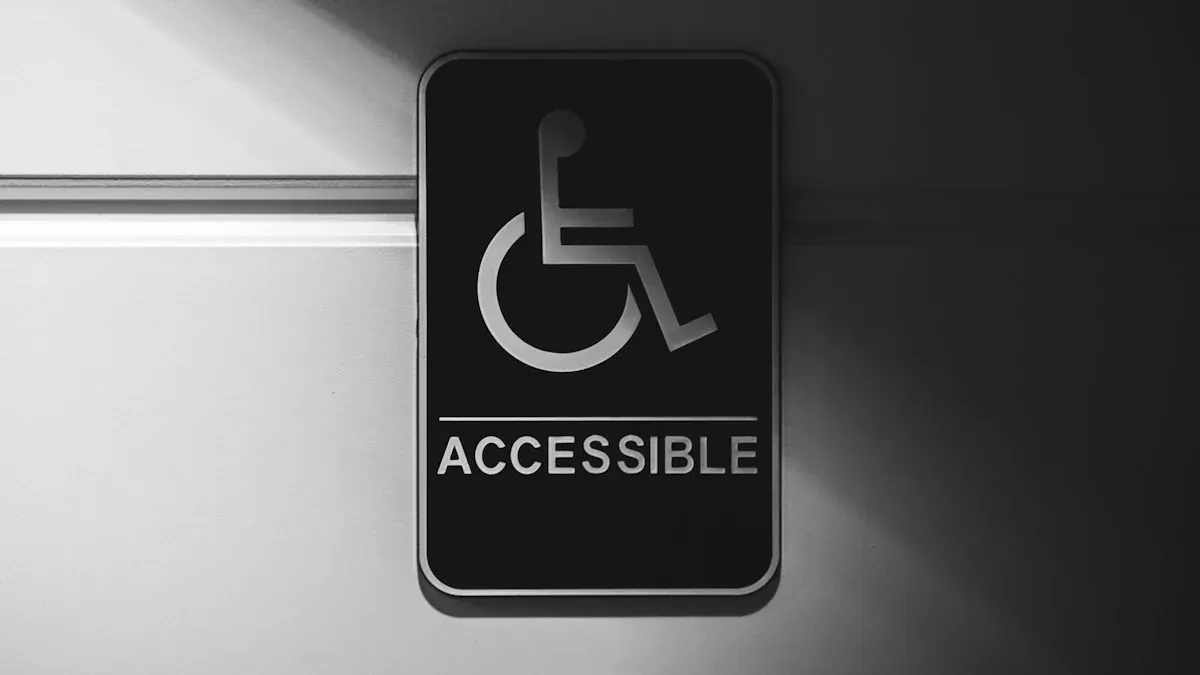
Automatic door operators are indispensable for healthcare facilities to meet stringent ADA accessibility standards. These systems ensure doors remain open long enough for individuals with mobility issues to pass through safely. They also require minimal effort to open. Automatic doors must have a maximum opening force of 5 pounds. The clear opening width must be at least 32 inches when open. Push buttons for activation need to be within easy reach. Installed safety sensors prevent doors from closing on users. Doors feature accessible locks and latches. Low-force door closures are necessary. Safety devices include emergency stop buttons. Sensors and activation devices, such as motion and pressure mat sensors or push-buttons, are crucial for safe passage. ADA requires specific signage indicating activation points, usage instructions, emergency information, an ‘Automatic Caution Door’ sign, and the International Symbol of Accessibility. Revisions to automatic door opener requirements appear in the 2021 and 2024 International Building Codes (IBC) and the 2017 ICC A117.1 Standard for Accessible and Usable Buildings and Facilities.
Ensuring Universal Access in Public and Commercial Spaces
Automatic door operators provide a practical and effective solution for meeting ADA requirements in public and commercial spaces. They address door width, opening force, and maneuvering clearance. These systems enhance accessibility for individuals with diverse mobility challenges. This includes people using wheelchairs, walkers, crutches, or strollers. They also assist individuals with limited hand dexterity or strength. Automatic door operators ensure universal access by electrically powering the door open. This significantly reduces the opening force required. This is particularly beneficial for exterior doors, often harder to open due to weatherstripping.
ADA-compliant door operators come in two main types. Low-energy door operators require a ‘knowing act,’ such as pressing a button or motion sensor activation. They open doors at a slower, controlled speed. This makes them safe for moderate traffic areas and ideal for retrofitting. Full-energy door operators, also known as fully automatic doors, activate via motion sensors without a ‘knowing act.’ They are designed for high-traffic environments. These doors come equipped with robust safety sensors to prevent closing on pedestrians. Proper mounting of door operators and sensors, correct placement and height of actuators, and installation of safety features like guide rails ensure compliance.
Automatic door operators are more than a convenience. They are a fundamental necessity in modern public spaces. These systems create universally accessible environments. They make spaces inherently safer and significantly more hygienic. Operators also boost operational efficiency. Ningbo Beifan Automatic Door Factory provides these crucial solutions. Their automatic door motors and operators are indispensable. They ensure the well-being and smooth functioning of hospitals, airports, and commercial buildings.
FAQ
How do automatic door operators enhance accessibility?
Automatic door operators provide hands-free entry, which significantly benefits individuals with disabilities, the elderly, and those carrying items. They eliminate physical barriers, ensuring smooth passage for wheelchairs, strollers, and medical equipment. This creates welcoming and inclusive environments for all visitors.
What role do automatic doors play in public health and hygiene?
Automatic doors promote hygiene by eliminating the need for physical contact with door handles. This hands-free operation reduces germ transfer and mitigates the spread of bacteria and viruses in high-traffic areas. They are crucial in hospitals and other public spaces for infection control.
Do automatic door operators contribute to energy efficiency?
Yes, automatic door operators contribute to energy efficiency. They minimize heat loss or gain by closing promptly after passage, which helps maintain stable indoor temperatures. This reduces the load on HVAC systems, leading to lower energy consumption and utility costs for buildings.
Are automatic door operators necessary for ADA compliance?
Automatic door operators are essential for meeting ADA compliance in public and commercial spaces. They ensure doors open with minimal force and provide adequate clear opening widths. This guarantees universal access for individuals with diverse mobility challenges, fulfilling accessibility standards.