
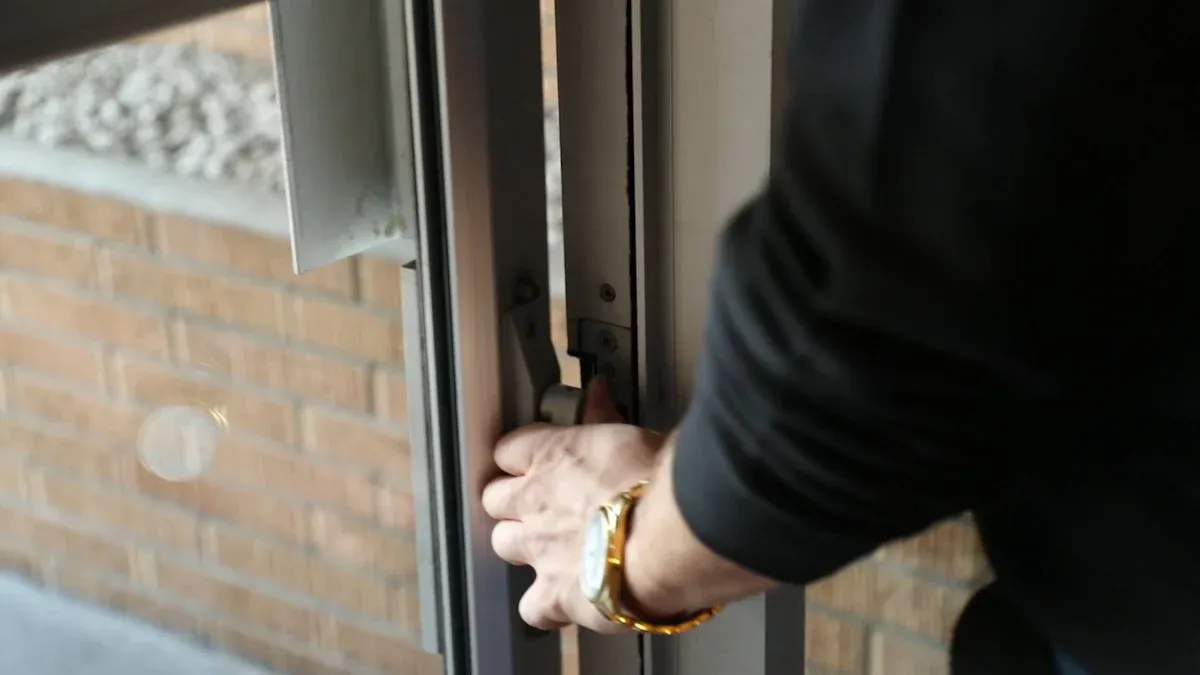
Automatic sliding door operators ensure smooth and safe door movement through a sophisticated integration of advanced sensors, precise motor control, and intelligent processing systems. The sliding door operators market, valued at approximately USD 4.2 billion in 2023, demonstrates significant growth. Experts project this market will reach USD 6.9 billion by 2032, showing a 5.8% compound annual growth rate. This robust expansion highlights the increasing demand for solutions like a Commercial Automatic Door Operator and an Energy Saving Automatic Door Operator. The market for automatic sliding doors, including systems such as a Double Sliding Door Operator, is also projected to reach $3.17 billion by 2029. The need for precise planning, often guided by an Automatic Sliding Door Operator Selection Guide for Architects and Contractors, drives the demand for quality Automatic Door Accessories.
Key Takeaways
- Automatic sliding doors use sensors to detect people. This makes the door open and close at the right time.
- These doors have many safety features. They stop the door from closing on people or objects.
- Special motors and computer brains help the doors move smoothly. They also control the door’s speed.
- Automatic doors save energy. They open only when needed and close fast to keep air inside.
- These doors can connect to building security systems. This helps control who enters and keeps the building safe.
Core Mechanisms for Smooth and Safe Door Operation
Automatic sliding door operators rely on sophisticated core mechanisms to ensure smooth and safe movement. These systems integrate advanced sensing, precise motor control, and intelligent processing.
The Role of Motion and Presence Detection
Motion and presence detection systems initiate door operation and prevent accidents. Motion sensors detect an approaching person or object, triggering the door to open. Common types include infrared sensors and microwave sensors. Infrared sensors detect heat, while microwave sensors emit and receive radio waves to sense movement.
Once open, presence detection systems ensure the door remains clear before closing. These systems prevent the door from closing on obstructions. Safety edge sensors, installed along door edges, detect contact and trigger immediate door reversal. Infrared safety beams create a light path; if an object interrupts this path, the sensor prevents the door from closing. Light curtains use multiple vertical light beams. They stop door movement instantly when an object crosses any beam, offering broad detection and quick response. Presence sensors continuously monitor the area around the door. They pause operation if they detect an individual or object, whether moving or stationary, preventing accidents.
Precision Motor and Drive Systems
Precision motor and drive systems power the door’s movement. Automatic sliding door operators commonly employ brushless DC motors. This technology offers a longer service life and enhanced reliability. Brushless DC motors in operators use "Hall Effect" magnetic sensing. This identifies precise rotational positions, providing detailed feedback on door travel. This positional feedback enables intelligent ramp-up and ramp-down of door speed. It minimizes stress on mechanical components and ensures synchronized opening/closing speeds. The motor within an automatic sliding door system controls the acceleration and deceleration of the door leaf. This ensures smooth operation during opening and closing cycles. Implementing reasonable acceleration and deceleration profiles prevents abrupt speed changes. This avoids discomfort or safety risks for users.
Intelligent Control Unit Functions
Intelligent control units serve as the brain of the automatic door system. They manage door speed and force. A microcomputer control system works in conjunction with a vector control algorithm. This provides precise monitoring of door operations. The vector control algorithm enables safety features like anti-pinch and obstacle detection. The door rebounds and then passes the conflict at low speed. A full digital computer control system provides stable operation, low noise, and good anti-interference performance. An automatic calibration algorithm conducts precise position detection and automatic speed regulation calculations. This ensures stable and reliable performance for both heavy and light doors.
Key Components and Automatic Door Accessories
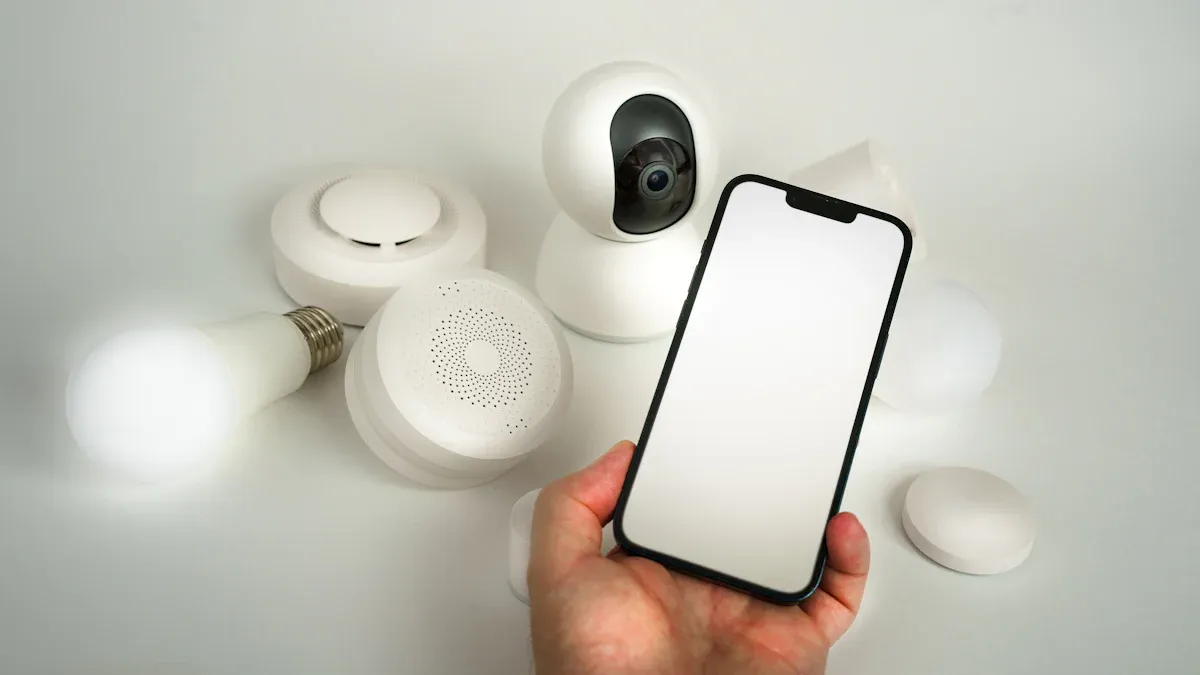
Automatic sliding door operators rely on a sophisticated array of components and specialized Automatic Door Accessories to achieve their smooth and safe operation. Each part plays a vital role in the system’s overall functionality and reliability.
Advanced Motion Sensors
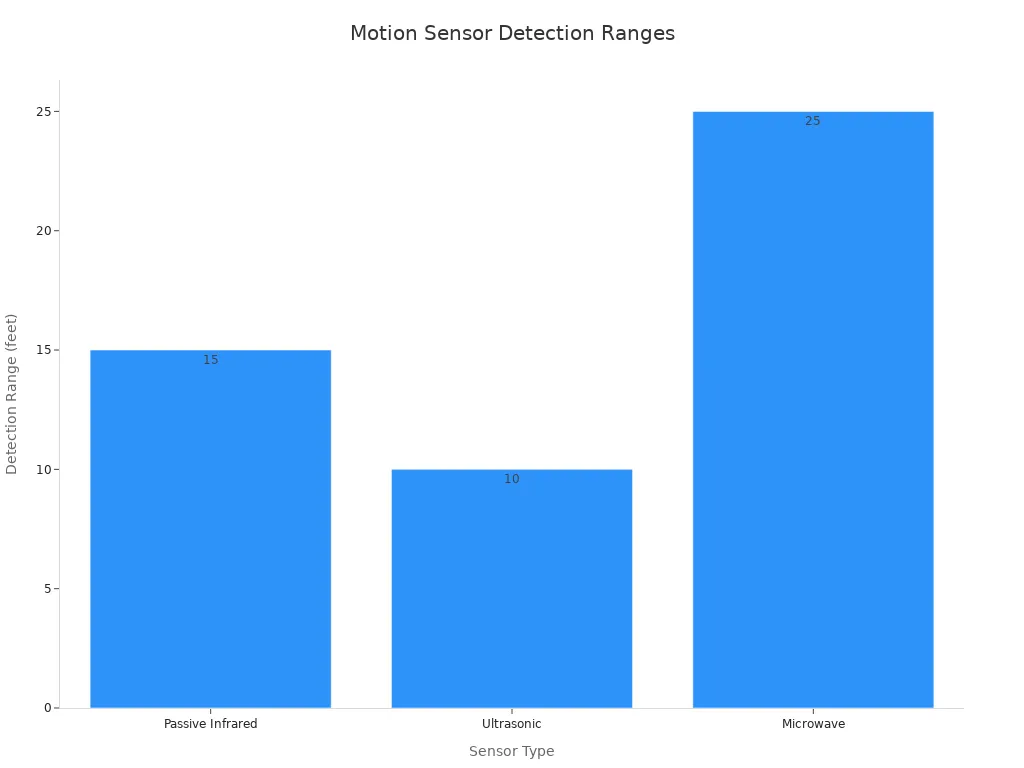
Advanced motion sensors initiate the door’s opening sequence. They detect the presence of individuals or objects approaching the door. These sensors utilize various technologies to ensure timely and accurate activation. Passive Infrared (PIR) sensors detect changes in infrared radiation, which human bodies emit. Ultrasonic sensors emit high-frequency sound waves and detect movement by analyzing the reflected waves. Microwave sensors use radio waves to detect movement, offering a broader detection area.
The choice of sensor technology often depends on the specific application and environmental conditions. For instance, microwave sensors provide a wider detection range, making them suitable for high-traffic areas.
| Sensor Type | Technology | Detection Range |
|---|---|---|
| Passive Infrared (PIR) | Detects changes in infrared radiation emitted by the human body | Up to 15 feet |
| Ultrasonic | Emits high-frequency sound waves to detect movement | Up to 10 feet |
| Microwave | Uses radio waves to detect movement | Up to 25 feet |
These advanced motion sensors are critical Automatic Door Accessories, ensuring the door opens promptly as someone approaches, enhancing convenience and traffic flow.
Essential Safety Sensors
Safety sensors are paramount for preventing accidents and ensuring user protection. They continuously monitor the door’s path and surrounding area for obstructions. These sensors work in conjunction with motion sensors to provide a comprehensive safety net.
- Presence Sensors: These sensors detect stationary objects or individuals within the door’s path, preventing the door from closing on them.
- Safety Beams: Infrared safety beams create an invisible light barrier across the door opening. If an object breaks this beam, the door immediately stops or reverses.
- Safety Edges: These pressure-sensitive strips mount directly onto the door’s leading edges. They detect contact with an obstruction and trigger an immediate reversal of the door’s movement.
International safety standards outline specific performance requirements for these essential safety sensors. For example, sensors for one-way traffic doors must hold the door open or return it to the open position when approached from the unintended side. Activating zones for these doors must extend a minimum of 24 inches (610 mm) from the door face. They must remain effective to within 5 inches (125 mm) from the door face at the center of the opening. The width of the activating zone must also be effective to within 5 inches (125 mm) of each side of the clear door opening. Sensors for one-way traffic doors deactivate when the door is within 6 inches (150 mm) of the fully closed position. They must detect objects as defined in section 8.0 of the standard. For entrapment protection, measurements must occur under neutral air pressure conditions. Swing, sliding, and folding doors using sensors or control mats must remain open for a minimum of 1.5 seconds after losing detection. A stopped sliding or folding door should not require more than 30 lbf (133 N) to prevent it from closing at any point in the closing cycle. The closing speed for sliding doors weighing up to 160 lbs (71 kg) per leaf must adjust to a maximum of one foot per second. These stringent requirements highlight the importance of reliable Automatic Door Accessories in ensuring public safety.
The Motor and Gearbox Assembly
The motor and gearbox assembly provides the power for the door’s movement. This core component drives the door leaves along their tracks. Automatic sliding door operators commonly use brushless DC motors. These motors offer several advantages, including silent operation, high torque, long service life, and high efficiency.
For example, many automatic sliding door motors are 24V 100W brushless DC motors. These motors provide the necessary power while maintaining quiet operation. The gearbox works in conjunction with the motor. It reduces the motor’s high rotational speed and increases its torque. This allows the motor to move heavy door panels smoothly and efficiently.
Consider the typical specifications for motors:
| Rated Power | Rated Torque Without Gearbox | Stall Torque Without Gearbox |
|---|---|---|
| 60W | 0.45Nm | 0.65Nm |
Other motors might have a nominal input electrical power of 96 Watts or specifications like 36W, 6 Amps, 24V, and 34 RPM. A calculated output torque at a 50% duty cycle can be around 20 Nm. Some wiper motors, adapted for door systems, feature 24V DC, 64 RPM, and a nominal torque of 4Nm. The robust design of the motor and gearbox assembly ensures consistent performance and durability, making them essential Automatic Door Accessories for any automatic sliding door system.
The Control Panel and Microprocessor
The control panel and its integrated microprocessor function as the central nervous system of an automatic sliding door operator. This sophisticated unit processes all incoming data from sensors and user inputs. It then translates this information into precise commands for the motor and other components. The microprocessor ensures the door operates smoothly, safely, and efficiently.
Many automatic door systems feature advanced microprocessors. For instance, Caesar Door ES200 controllers utilize an LED-displayed microprocessor controller. This system also includes a self-learning microprocessor control. This allows the door to adapt to its environment and optimize its performance over time. Olide autodoor models, such as the CSD 190 and SD150B, incorporate intelligent 32-bit microprocessors within their electric boards. These powerful processors handle complex calculations for speed, force, and safety protocols. Record Doors 5100 Series also employs microprocessor-driven gear reduction belt drive operations. This demonstrates the widespread reliance on microprocessors for precise control.
The microprocessor continuously monitors the door’s position, speed, and any potential obstructions. It executes algorithms that manage acceleration and deceleration curves. This prevents abrupt movements and ensures a comfortable experience for users. It also oversees safety functions, such as obstacle detection and emergency reversal. The control panel often includes settings for adjusting door speed, hold-open time, and sensitivity of sensors. This allows customization for various traffic conditions and building requirements. These intelligent control units are vital Automatic Door Accessories, ensuring reliable and adaptable door operation.
Door Tracks, Rollers, and Belts
Door tracks, rollers, and belts form the mechanical backbone of an automatic sliding door system. They facilitate the physical movement of the door panels. The tracks provide a stable guide for the door, while rollers allow it to glide effortlessly along these tracks. Belts connect the motor to the door panels, transmitting the power needed for movement.
High-performance rollers are engineered to minimize friction between the door and its track. This design leads to smoother movement. Precision-engineered rollers are crucial for reducing friction and ensuring a smooth rolling motion. The material and design of these rollers significantly impact the longevity and smoothness of the door’s operation.
| Material-based Classification | Properties |
|---|---|
| Nylon | Quiet operation, durability |
| Brass | Strength, longevity |
| Stainless Steel | Strength, longevity |
Nylon rollers offer quiet operation and good durability, making them suitable for many applications. Brass and stainless steel rollers provide superior strength and longevity, often used in heavier-duty systems.
Rollers also come in different designs:
| Design-specific Classification | Description |
|---|---|
| Top-hung rollers | The door is supported from above, hanging from the track. |
| Bottom-running rollers | The door’s weight rests on rollers located below the door panel. |
Top-hung rollers are common in automatic sliding doors. They allow the door to glide smoothly without dragging on the floor. Bottom-running rollers are sometimes used for very heavy doors or specific aesthetic requirements.
The benefits of high-quality sliding rollers are clear:
| Benefits of Sliding Rollers | Impact |
|---|---|
| Smooth Operation | Reduces friction for effortless movement |
| Durability | High-quality rollers extend lifespan, reduce maintenance |
The belt, typically made of reinforced rubber or a similar durable material, connects the motor’s drive pulley to the door panels. It translates the rotational motion of the motor into linear motion for the door. The tension and condition of the belt are critical for consistent and reliable door movement. Regular inspection of these Automatic Door Accessories ensures optimal performance and safety.
Step-by-Step Smooth and Safe Door Movement

Automatic sliding door operators execute a precise sequence of actions to ensure both smooth and safe passage for users. This process involves several interconnected stages, from initial detection to maintaining safety during the door’s open state.
Initial Detection and Activation Sequence
The journey of an automatic sliding door begins with detection. A sensor, either a motion or presence type, identifies an individual or object approaching the door. This initial detection is crucial for timely activation. The sensor then transmits a signal to the door’s control unit. This signal acts as the command to initiate the opening process. Upon receiving the signal, the control unit instructs the motor to open the door. The door moves along its track, typically utilizing a belt or gear system for smooth translation. Once fully open, the door remains in this position for a set period. This "open hold time" often ranges from 3 to 10 seconds. The door also stays open until the system detects no further motion within its sensing zone. This sequence ensures the door opens proactively as someone approaches, providing convenient access.
Controlled Opening with Speed Management
After activation, the door begins its controlled opening. Automatic sliding door operators manage door speed profiles carefully to prevent sudden movements. Integrated servo motors ensure door panels move swiftly yet gently. This prevents abrupt slams and ensures a comfortable user experience. A sophisticated feedback system continuously adjusts movement based on the door’s weight and its usage patterns. This adaptive control optimizes performance for various door sizes and traffic levels. Built-in torque and speed control allows the motor to detect obstructions instantly. It then adjusts its operation to prevent collisions or damage. Closed-loop feedback provides precise control over both the door’s position and its speed throughout the entire opening cycle. Furthermore, operators offer adjustable speed profiles. These profiles allow for smooth start and stop motions, eliminating jerky movements. This meticulous speed management ensures the door opens efficiently and safely every time.
Maintaining Safety During Open State
Maintaining safety is paramount even when the door is fully open. The system continuously monitors the doorway area. Presence sensors play a vital role here. They detect any stationary objects or individuals within the door’s path. This prevents the door from attempting to close if an obstruction is present. Safety beams also remain active. These infrared beams create an invisible barrier across the opening. If anything breaks this barrier, the door’s closing sequence will not initiate. This ensures the door stays open as long as the path is not clear. The control unit processes information from these sensors in real-time. It ensures the door remains in the open position until the area is completely clear. This continuous monitoring provides a critical layer of protection, preventing accidental closures and enhancing user safety.
Controlled Closing with Obstacle Detection
The automatic sliding door initiates its closing sequence after the hold-open time expires and the path clears. The control unit carefully manages this closing process. It ensures a smooth deceleration as the door approaches its closed position. This prevents abrupt stops or slams. A critical aspect of the closing cycle involves robust obstacle detection. Various sensor technologies work together to identify any obstructions in the door’s path.
- Infrared (IR) Sensors: These sensors emit beams. They detect obstacles in the door’s path. Upon detection, they quickly stop or reverse the door.
- Microwave Sensors: These sensors use reflected signals. They identify nearby objects.
- Ultrasonic Sensors: These sensors employ sound waves for detection. They are effective even in low-light conditions. They often work with infrared sensors for redundancy.
- Contact Sensors: These sensors recognize pressure from obstacles. They stop the door’s movement upon contact.
- Vision Sensors and Cameras: These advanced systems analyze surroundings. They use computer vision for enhanced detection capabilities.
- Motion Sensors: These sensors detect movement near the door. They ensure timely responses during the closing phase.
- Safety Edges: These respond to physical contact with the door. They prevent injuries by reversing the door.
Safety edge sensors are installed along the door’s edges. They detect obstructions. This triggers an immediate reversal of the door’s movement. Artificial intelligence can enhance these sensors. AI helps them distinguish between humans, objects, and animals. Infrared safety beams create a light path. If an object interrupts this path, the door does not close. These beams are crucial for detecting individuals in the door’s threshold. Light curtains comprise multiple vertical light beams. They stop the door’s movement when any beam is crossed. Light curtains offer a broad detection area. They also provide a quick response time, typically between 20 and 50 milliseconds, sometimes as low as 5 milliseconds. This multi-layered approach to obstacle detection ensures maximum safety during the closing cycle.
Emergency Stop and Reversal Protocols
Automatic sliding door operators incorporate stringent emergency stop and reversal protocols. These protocols activate when the system detects an obstruction or a potential hazard. Industry standards govern these safety features. UL 325 is the primary safety standard for automatic sliding doors. It focuses on minimizing entrapment risks.
Key requirements under UL 325 include:
- Two Independent Entrapment Protection Devices: The system must have at least two separate devices. Examples include photo eyes, safety edges, or force sensors.
- Automatic Reversal: The door must automatically reverse its motion within 2 seconds of detecting an obstruction. This prevents injury or damage.
- Manual Disconnect: Operators must include a manual disconnect. This allows for emergency operation if the automatic system fails.
- Signage: Clear signage stating, “Pedestrians must use separate entrance,” is often required.
Gate operators, which share similar safety principles, must also adhere to specific guidelines. Operators must monitor external entrapment protection devices. These include photo eyes or safety edges. If protection fails, the gate stops working until resolution. Gates automatically stop and reverse motion upon encountering obstructions during opening or closing. This prevents injury or damage. Control stations must feature easily accessible emergency stop buttons and manual overrides. These enable users to control the system during emergencies or maintenance. These comprehensive protocols ensure the door responds immediately and safely to unexpected events. They prioritize user protection above all else.
Advanced Features Enhancing Control and Safety
Automatic sliding door operators include advanced features. These features significantly enhance both control and safety. They also improve overall performance and user experience.
Adjustable Speed and Sensitivity Settings
Operators offer adjustable speed and sensitivity settings. These settings allow customization for various environments and traffic volumes. For example, the YF150 Automatic Sliding Door Operator features adjustable opening and closing speeds. This allows configuration to meet diverse demands. Operators can set the opening speed between 150 and 500 mm/s. They can set the closing speed between 100 and 450 mm/s. This flexibility ensures optimal performance in different settings. A busy retail store might require faster speeds. A quiet office building might prefer slower, more deliberate movements.
| Feature | Range (mm/s) |
|---|---|
| Opening speed | 150 – 500 |
| Closing speed | 100 – 450 |
Self-Monitoring and Diagnostic Capabilities
Modern automatic door operators possess self-monitoring and diagnostic capabilities. These features streamline maintenance and troubleshooting. Intelligent monitoring systems continuously track the operational status of automatic doors in real-time. They promptly identify and alert users to failures. This allows for proactive maintenance. Remote adjustments enable performance fine-tuning from a distant location. Integrated diagnostic tools facilitate efficient troubleshooting without requiring full system shutdowns. Sensors communicate with a microprocessor in the motor control unit. This manages door commands. Sophisticated electronic control boards ensure safe operation. They can also disable malfunctioning doors. This indicates inherent diagnostic capabilities. Predictive maintenance becomes possible through remote monitoring and data analysis. This forecasts potential failures. It reduces downtime.
Energy-Saving Operation Modes
Energy-saving operation modes contribute to sustainability and cost reduction. Intelligent control systems optimize performance. They ensure doors open only when necessary. This minimizes energy loss. It also reduces heating and cooling costs. Automatic doors open only when needed. They close rapidly. This minimizes air exchange. It maintains stable indoor temperatures. Double-glazed, thermally broken frames and integrated airlocks help maintain internal temperatures. They reduce unnecessary heat loss in winter. They also reduce cool air loss in summer. Smart sensors optimize opening times. This further reduces energy waste. Low-power motors, such as brushless DC motors, consume less electricity. This leads to significant reductions in utility bills. It also lowers operational costs.
| Door Type | Energy Efficiency Description | Impact on Energy Costs |
|---|---|---|
| Automatic Doors | Designed to open only when needed and close quickly, minimizing energy loss. | Reduces heating and cooling costs over time. |
| Manual Doors | Efficiency depends on user behavior; can lead to energy loss if left open. | Potentially higher energy costs if misused. |
Integration with Building Security Systems
Automatic sliding door operators significantly enhance overall building security. They seamlessly integrate with various security systems. This integration transforms entryways into dynamic security checkpoints. It also contributes to a secure and accident-free environment.
Access control systems frequently integrate with automatic door operators. An individual presents an access credential, such as a card or smartphone, to a door reader. This reader connects to an Access Control Unit (ACU). The ACU validates this credential against its database. Upon successful validation, the ACU sends a signal to the automatic door opener. This signal unlocks the door’s locking mechanism. This mechanism could be an electric strike or an electromagnetic lock. After the lock disengages, the automatic door opener proceeds to open the door. It then closes the door after a set duration, typically 5-10 seconds. The access controller sends a ‘grant’ signal to the door operator. This initiates the door’s opening within defined safety limits. Safety sensors, like presence sensors and safety beams, ensure the door operates only when the path is clear. The system records door statuses. This includes held-open alarms or forced-open events. This allows for quick responses. Request-to-exit devices, such as motion sensors or push-to-exit buttons, communicate with the controller for safe exits.
Beyond simply allowing access, automatic doors integrate with fire alarms. This forms part of a building’s comprehensive security strategy. This integration offers a critical safety benefit. It triggers the doors to remain open during fire emergencies. This ensures unimpeded evacuation. This feature is essential for safe egress during critical situations.
Automatic sliding door operators achieve smooth and safe movement. They seamlessly coordinate sensing, motor control, and intelligent processing. These systems continuously innovate. This innovation prioritizes user safety, operational efficiency, and reliable performance. Advanced features enhance control and safety. The market for these operators continues to grow. This reflects their increasing importance in modern architecture. They provide convenient and secure access for many environments.
FAQ
How do automatic sliding doors detect people?
Automatic sliding doors use advanced motion sensors. These include passive infrared (PIR), ultrasonic, and microwave sensors. They detect movement or heat signatures. This triggers the door to open.
What safety features do automatic sliding doors include?
Safety features include presence sensors, safety beams, and safety edges. These prevent the door from closing on obstructions. They also trigger immediate reversal if contact occurs.
How do automatic sliding doors contribute to energy saving?
They open only when necessary and close quickly. This minimizes air exchange. Low-power motors also consume less electricity. This helps maintain indoor temperatures and reduces utility costs.
Can automatic sliding doors connect with building security systems?
Yes, they integrate seamlessly with access control and fire alarm systems. This allows controlled entry and ensures safe evacuation during emergencies.