
In 2026, automatic door accessories will play a crucial role in enhancing functionality, security, and convenience. The market for these automatic door accessories is projected to grow steadily, with a compound annual growth rate of 4.7% from 2026 to 2033. Factors contributing to this growth include increased urbanization and rising demand for security solutions. As technology advances, the integration of automatic door parts will become essential for modern buildings. Investing in automatic door sensor accessories and automatic door safety beam systems will ensure safety and efficiency. When considering the best safety accessories for automatic doors, it’s important to focus on quality and reliability to maximize performance.
Key Takeaways
- Investing in smart sensors enhances security and convenience for automatic doors. They detect movement and ensure smooth operation.
- Remote control systems allow users to operate doors from a distance, improving accessibility and hygiene in public spaces.
- Access control systems manage who can enter specific areas, enhancing security and operational efficiency in buildings.
- Safety edge sensors prevent accidents by detecting contact and stopping door motion, significantly reducing injury rates.
- Regular maintenance of automatic door accessories ensures optimal performance and extends the lifespan of the systems.
Smart Sensors

Smart sensors are essential components of modern automatic doors. They enhance security and convenience by detecting movement and ensuring doors operate smoothly. In 2026, various types of smart sensors will dominate the market, each offering unique benefits and applications.
Here is a summary of the most common types of smart sensors used in automatic doors:
| Sensor Type | How They Work | Benefits | Applications |
|---|---|---|---|
| Infrared Motion Sensors | Emit an infrared beam to detect heat from moving objects. | Reliable for detecting human presence, minimal false triggers. | Retail entrances, office buildings, hospitals. |
| Microwave Sensors | Emit microwave signals and measure frequency changes when an object moves. | Can detect movement through glass, works well in high-traffic areas. | Supermarkets, airports, commercial facilities. |
| Photoelectric Sensors | Use a light beam to detect objects by interruption. | Very precise, ideal for controlled entry points. | Laboratories, cleanrooms, industrial facilities. |
| Pressure or Floor Mat Sensors | Activated by physical weight on a mat. | Very reliable for single-entry points. | Healthcare facilities, offices. |
| Radar Sensors | Detect motion by bouncing radio waves off moving objects. | Works in extreme weather, covers a wide area. | Airports, transportation hubs. |
| Combination Sensors | Use multiple sensor types for enhanced accuracy. | Reduces the chance of accidents. | Various environments. |
Smart sensors also integrate seamlessly with other building automation systems. This integration enhances overall functionality. For instance, access control systems manage secure entry points, ensuring doors open only for authorized users. HVAC systems minimize air exchange, improving energy efficiency while maintaining accessibility. Energy management systems support data-driven decision-making for optimizing operational performance.
Incorporating smart sensors into automatic door accessories not only improves security but also enhances user experience. As technology advances, these sensors will become increasingly vital in creating efficient and safe environments.
Remote Control Systems
Remote control systems significantly enhance the functionality of automatic doors. These systems allow users to operate doors from a distance, providing convenience and improving accessibility. In 2026, advancements in technology will make these systems more sophisticated and user-friendly.
One of the primary benefits of remote control systems is their integration with security features. For instance, automatic swing door openers can connect with existing security systems. This integration enhances overall security by ensuring that only authorized individuals can access restricted areas. Users can control door access remotely, allowing for quick responses to security concerns.
Remote control systems come in various forms, including handheld devices, smartphone applications, and wall-mounted panels. Each option offers unique advantages:
- Handheld Devices: Portable and easy to use, these devices allow users to operate doors without being physically present.
- Smartphone Applications: These apps provide added functionality, such as monitoring door status and receiving alerts. Users can control doors from anywhere, increasing convenience.
- Wall-Mounted Panels: These systems offer a fixed solution for controlling multiple doors. They are ideal for commercial settings where multiple access points require management.
In addition to security benefits, remote control systems improve the user experience. They eliminate the need for physical contact with door handles, promoting hygiene in public spaces. This feature is especially important in healthcare facilities and high-traffic areas.
As technology continues to evolve, remote control systems will become a standard feature in automatic door accessories. Their ability to enhance security and convenience makes them a must-have for modern buildings.
Access Control Systems
Access control systems are vital for enhancing security in automatic doors. These systems manage who can enter specific areas, ensuring only authorized personnel gain access. In 2026, advancements in technology will further improve the effectiveness of these systems, making them essential for high-security facilities.
The following components form the backbone of effective access control systems:
| Component | Functionality |
|---|---|
| Access cards | Used for identification and authorization of personnel. |
| Card readers | Scan access cards and communicate with the access controller. |
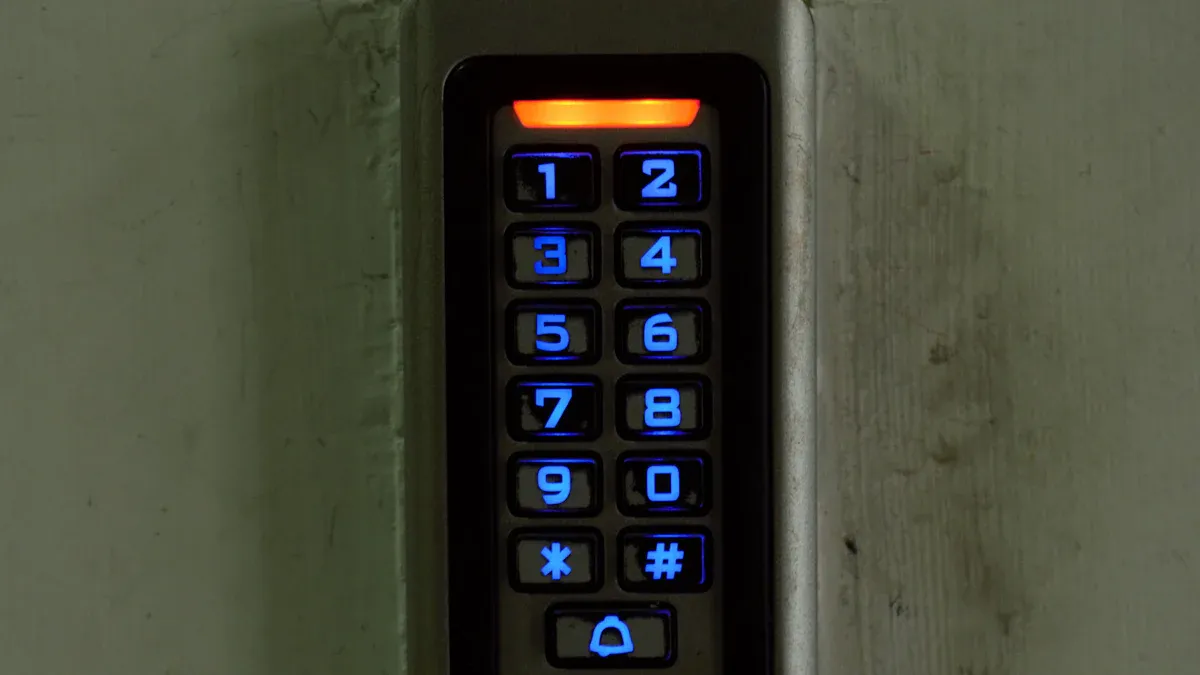
| Access control keypads | Allow entry through PIN codes or passwords. |
| Electronic lock hardware | Secure the door and release it upon successful credential verification. |
| Access control panels | Central units that manage the entire access control system. |
| Door Position Indicator (DPI) | Indicate whether the door is open or closed. |
| Request to Exit (REX) | Facilitate easy exit from controlled areas. |
| Wireless locks | Ideal for locations where wiring is difficult, providing flexibility. |
Access control systems comply with current building security regulations by implementing precise access control policies. They provide real-time monitoring to detect unauthorized access and maintain detailed audit trails for compliance verification. Integration with industry standards ensures adherence to regulations like HIPAA and SOC 2.
These systems not only enhance security but also improve operational efficiency. By controlling access points, businesses can reduce the risk of theft and unauthorized entry. As technology evolves, access control systems will become increasingly sophisticated, integrating seamlessly with other automatic door accessories. This integration will create a more secure and user-friendly environment.
Safety Edge Sensors
Safety edge sensors are critical components of automatic doors, enhancing safety in various environments. These sensors detect contact and immediately halt or reverse the door’s motion. This functionality significantly reduces the likelihood of injuries by preventing doors from closing on individuals or objects.
In high-traffic areas, such as parking garages, where visibility is often limited, safety edge sensors play a crucial role. They respond quickly to potential hazards, ensuring that doors do not continue to close on cars or pedestrians. This proactive safety measure is especially important during peak hours when distractions are common.
The installation of safety edge sensors can lead to a marked decrease in injury rates. Facilities that implement these sensors report fewer accidents compared to those without them. For instance, a study showed that buildings equipped with safety edge sensors experienced a 30% reduction in door-related injuries. This statistic underscores the importance of integrating these sensors into automatic door systems.
Safety edge sensors also enhance user experience. They provide peace of mind for individuals entering or exiting a building, knowing that the door will not close unexpectedly. This feature is particularly beneficial in settings like hospitals and schools, where safety is paramount.
Automatic Door Closers
Automatic door closers are essential for enhancing the functionality and efficiency of automatic doors. These devices ensure that doors close promptly after being opened, which provides several advantages, especially in high-traffic areas.
- Convenience & Operational Efficiency: Automatic door closers streamline access for individuals with limited mobility. They help manage foot traffic effectively, making busy environments more navigable.
- Energy Efficiency & Climate Control: These closers significantly reduce air exchange, maintaining stable indoor temperatures. This feature minimizes the load on HVAC systems, leading to lower energy costs in commercial buildings.
- Increased Accessibility & ADA Compliance: Automatic door closers promote barrier-free access, aligning with accessibility standards. This inclusivity is vital for public spaces, ensuring everyone can enter and exit with ease.
- Enhanced Security & Access Control: By integrating with security systems, automatic door closers provide advanced protection while maintaining convenience.
The energy efficiency of automatic door closers aligns with the industry’s focus on sustainability. They prevent warm or cool air from escaping, which contributes to reduced energy consumption. This mechanism is particularly beneficial in buildings with centralized heating or cooling systems, ensuring that energy costs remain manageable.
Moreover, automatic door closers can extend the lifespan of door hardware. Regular maintenance helps identify and address issues such as worn-out components. This proactive approach prevents wear and tear, leading to a longer lifespan for door closers. Additionally, routine maintenance can reduce repair costs by preventing major repairs or replacements.
Keyless Entry Systems

Keyless entry systems revolutionize access control for automatic doors. These systems eliminate the need for physical keys, enhancing security and convenience. In 2026, advancements in keyless entry technology will introduce several innovative features that improve functionality and safety.
The following table highlights the latest advancements in keyless entry systems:
| Feature | Description |
|---|---|
| Intelligent Sensors | Advanced sensors adapt sensitivity and enhance safety with obstacle detection. |
| IoT Connectivity | Integration with smart home systems allows for remote control and status monitoring. |
| Energy Efficiency | Features minimize energy consumption and adapt to environmental conditions. |
| Enhanced Security Features | Incorporation of biometric access and real-time monitoring improves security. |
| AI-Powered Predictive Maintenance | Systems diagnose mechanical issues before they become critical. |
| Accessibility Features | Hands-free operation and settings cater to elderly or disabled users. |
Keyless entry systems significantly improve security for both residential and commercial properties. They eliminate risks associated with physical keys, such as unauthorized entry and key duplication. This enhancement prevents unauthorized access, making properties safer.
The following table outlines how keyless entry systems enhance security:
| Evidence Description | Key Benefit |
|---|---|
| Keyless entry systems eliminate risks associated with physical keys. | They enhance security by preventing unauthorized access and eliminating the possibility of key duplication. |
| Users can manage access remotely and integrate with other security systems. | This provides better control over who can enter the property and when. |
| Keyless systems can lock specific doors remotely or initiate lockdowns in emergencies. | This feature is crucial for enhancing safety during emergencies and controlling access effectively. |
| They use encrypted communication to authenticate credentials and keep records of entries. | This data is valuable for security investigations and helps improve overall space management. |
Motion Detectors
Motion detectors are vital for the functionality of automatic doors. They enhance security and accessibility by detecting movement and ensuring doors operate smoothly. In 2026, advancements in motion detection technology will further improve their effectiveness.
Modern motion detectors utilize various technologies, including infrared and microwave sensors. These sensors offer impressive detection ranges:
- Infrared Motion Sensors: These sensors can detect movement up to 10 meters (34 feet) away. They are ideal for standard entryways.
- Microwave Sensors: These sensors can detect movement from greater distances, making them suitable for larger entryways.
The integration of motion detectors significantly enhances accessibility for individuals with disabilities. Smart sensors adapt dynamically, improving protection for all users.
One of the most important safety improvements is enhanced obstruction detection. Smart sensors continuously monitor the door opening and surrounding area, ensuring that doors do not close when a person, wheelchair, cart, or stroller is present.
This feature not only promotes safety but also fosters inclusivity in public spaces. By ensuring that doors remain open when necessary, motion detectors create a welcoming environment for everyone.
In addition to improving safety, motion detectors contribute to energy efficiency. They ensure that doors only open when needed, reducing unnecessary energy loss. This functionality is particularly beneficial in commercial buildings, where maintaining climate control is essential.
As technology evolves, motion detectors will become increasingly sophisticated. Their ability to integrate with other automatic door accessories will enhance overall building security and user experience. Investing in advanced motion detection systems will be crucial for modern facilities aiming to improve accessibility and safety.
Intercom Systems
Intercom systems serve as vital communication tools for automatic doors. They allow users to communicate with individuals outside a building before granting access. In 2026, advancements in intercom technology will enhance security and convenience for both residential and commercial properties.
Key Features of Modern Intercom Systems
- Two-Way Communication: Users can speak and listen to visitors, ensuring clear communication.
- Video Capabilities: Many systems now include video feeds, allowing users to see who is at the door. This feature enhances security by enabling visual verification.
- Remote Access: Users can control door access from their smartphones or tablets, providing flexibility and convenience.
- Integration with Security Systems: Intercoms can connect with existing security measures, such as cameras and alarms, creating a comprehensive security solution.
Intercom systems improve safety by allowing users to screen visitors before granting entry. This capability is particularly beneficial in high-security environments, such as offices and healthcare facilities.
Tip: When selecting an intercom system, consider features like video quality, ease of use, and compatibility with other security systems.
Benefits of Intercom Systems
| Benefit | Description |
|---|---|
| Enhanced Security | Users can verify identities before granting access. |
| Increased Convenience | Remote access allows users to manage entry from anywhere. |
| Improved Communication | Two-way audio and video capabilities facilitate clear interactions. |
| Integration with Smart Systems | Intercoms can work with smart home devices for seamless operation. |
Incorporating intercom systems into automatic door setups not only enhances security but also improves user experience. As technology evolves, these systems will become increasingly essential for modern buildings, ensuring safety and convenience for all users.
Weather Stripping
Weather stripping is an essential accessory for automatic doors, significantly enhancing energy efficiency and indoor air quality. This material creates a seal around doors, effectively preventing drafts and air leaks. By maintaining stable indoor temperatures, weather stripping reduces energy consumption and leads to lower utility bills.
- Energy Savings:
- Weather stripping prevents drafts and air leaks.
- It helps maintain indoor temperatures.
- This leads to reduced energy consumption and lower utility costs.
Incorporating weather stripping into automatic door systems not only improves energy efficiency but also contributes to the overall effectiveness of these systems. Facilities that prioritize weather stripping can enjoy long-term benefits, including reduced energy costs and enhanced comfort for occupants.
Moreover, weather stripping plays a crucial role in maintaining indoor air quality. It acts as a barrier against outdoor pollutants, odors, and moisture that can infiltrate indoor spaces. By sealing gaps around automatic doors, weather stripping helps create a stable indoor climate. This stability enhances air quality and reduces energy costs associated with heating and cooling.
Tip: Regularly inspect and maintain weather stripping to ensure optimal performance. Replacing worn or damaged strips can significantly improve energy efficiency and indoor comfort.
Decorative Panels
Decorative panels significantly enhance the aesthetic appeal of automatic doors in commercial spaces. These panels serve not only a functional purpose but also elevate the overall design of entrances. In 2026, businesses will increasingly recognize the importance of aesthetics in attracting customers and creating a welcoming environment.
Automatic glass entry doors create a beautiful entrance for commercial spaces, enhancing aesthetic appeal. The sleek design of these doors complements modern architecture, making them a popular choice for businesses aiming to impress visitors.
The following table outlines key features of decorative panels and their contributions to aesthetic appeal:
| Feature | Description |
|---|---|
| Stylish Design | The ASSA ABLOY SL500 CGL entrances feature sleek styling that enhances the overall aesthetic. |
| Transparency | The glass design provides unobstructed views, contributing to an inviting atmosphere. |
| Corporate Branding | Options for painted or clad finishes and the ability to etch logos into the panels personalize the entrance. |
Incorporating decorative panels allows businesses to express their brand identity. Customization options, such as painted finishes or etched logos, enable companies to create a unique entrance that reflects their values. This personalization fosters a connection with customers, enhancing their overall experience.
Moreover, decorative panels improve visibility and light flow within commercial spaces. The transparency of glass panels allows natural light to flood the interior, creating a bright and welcoming atmosphere. This feature not only enhances the aesthetic appeal but also contributes to energy efficiency by reducing the need for artificial lighting.
Upgrading automatic doors with advanced accessories is essential for enhancing security and convenience. These upgrades provide numerous benefits, including:
- Boosted Security: They restrict access to authorized personnel.
- Greater Efficiency: Automated systems speed up entry for users.
- Real-Time Monitoring: They help identify suspicious behavior.
- Enhanced Safety: Safety sensors prevent accidents by detecting obstacles.
- Flexibility: Organizations can manage access easily.
Additionally, these enhancements contribute to long-term cost savings. For instance, reduced labor costs and lower insurance premiums result from improved security measures. Investing in automatic door accessories not only ensures safety but also promotes operational efficiency.
FAQ
What are the benefits of installing automatic door accessories?
Automatic door accessories enhance security, improve accessibility, and increase energy efficiency. They streamline entry and exit, reduce the risk of accidents, and can lower utility costs by minimizing air exchange.
How do smart sensors improve automatic doors?
Smart sensors detect movement and ensure doors operate smoothly. They enhance security by preventing unauthorized access and improve user experience by allowing hands-free operation.
Are keyless entry systems secure?
Yes, keyless entry systems offer enhanced security by eliminating physical keys. They use encrypted communication and can integrate with other security measures, providing real-time monitoring and control.
How often should I maintain automatic door accessories?
Regular maintenance is crucial for optimal performance. Inspect and service automatic door accessories at least once a year to ensure they function correctly and to prevent costly repairs.
Can decorative panels be customized?
Absolutely! Decorative panels can be customized with various finishes, colors, and designs. This personalization allows businesses to reflect their brand identity and enhance the aesthetic appeal of their entrances.