
.jpg)
Discover the leading automatic door operator brands setting the standard for accessibility in 2025. These operators feature innovative functionalities essential for creating inclusive environments. The automatic door market is experiencing significant growth, with projections reaching USD 8558.2 million by 2029, underscoring the demand for advanced solutions. This guide helps individuals select the ideal Automatic Door Operator to meet diverse accessibility needs, considering various door types such as the Sliding Automatic Door. Understanding How to Choose the Right Automatic Door Operator? ensures optimal performance and user experience. This knowledge also informs discussions on Case Studies of Automatic Door Technology in Smart Buildings and offers solutions for Common Automatic Door Issues and Troubleshooting Tips.
Key Takeaways
- Automatic door operators make buildings easier to use for everyone. They help people with disabilities move freely and safely.
- These operators meet important safety rules like ADA compliance. This avoids legal problems for businesses and ensures equal access.
- Top brands like STANLEY, ENTREMATIC, and Autoslide offer many choices. They fit different door types and needs, from new installations to upgrading old doors.
- Choosing the right operator means looking at door type, how many people use it, and special needs. Always check for safety features, budget, and warranty.
- Professional installation and regular check-ups keep automatic doors working well. This prevents accidents and makes sure the doors last a long time.
The Role of Automatic Door Operator Technology in Accessibility
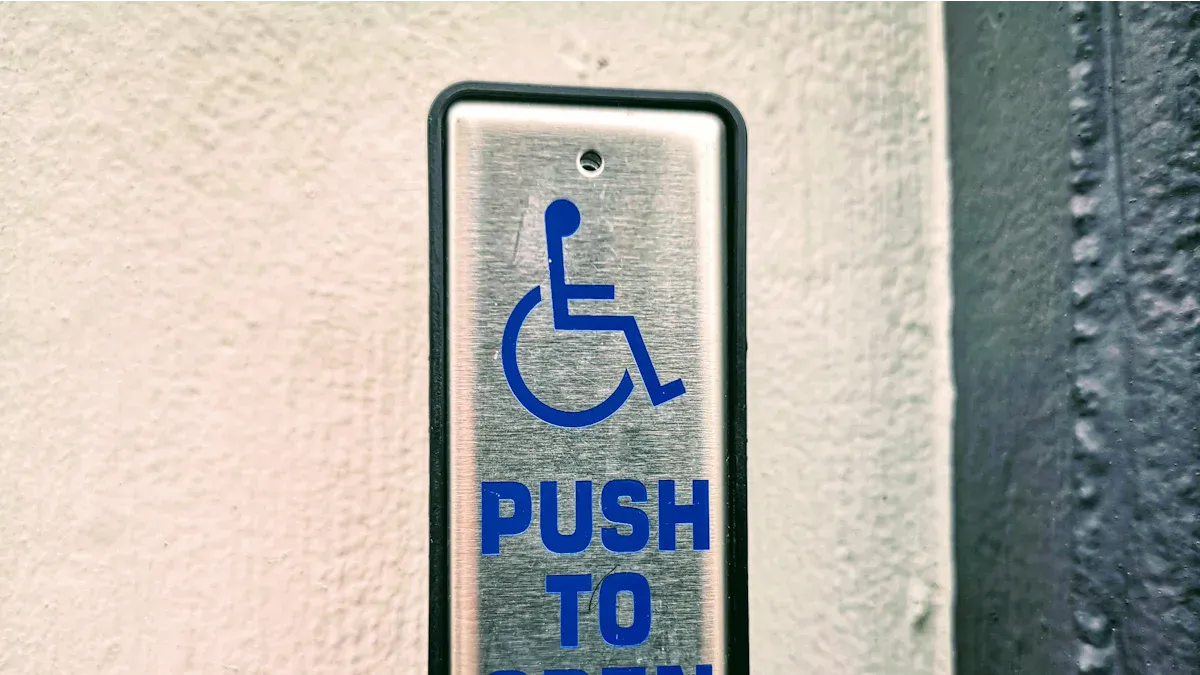
Enhancing Independence and Safety with Automatic Door Operator Systems
Automatic Door Operator systems significantly enhance independence and safety. They allow elderly and disabled individuals to enter or exit rooms effortlessly, improving their quality of life. This enables them to regain control over daily routines, reducing feelings of isolation. Psychologically, it boosts self-confidence and empowerment, alleviating stress and fear of falls. As one accessibility provider noted, with an automatic opener, “there is no longer the need to wait for someone else to hold the door… you can live more independently, coming and going as you please”. These systems eliminate physical effort. Individuals using wheelchairs or walkers open doors with minimal effort, allowing free movement. Hands-free operation is possible through touchless sensors, voice activation, or specialty switches. Voice-controlled doors, for example, open via commands. Customization allows tailoring systems with various controls. Safety features are crucial. Advanced sensors constantly scan for movement, ensuring the door opens and prevents closing if someone is in the doorway. Anti-pinch protection detects obstructions, immediately stopping or reversing door movement. Emergency battery backups allow continued operation during power failures. Soft-closing mechanisms prevent sudden slams. Manual override features ensure safety during malfunctions.
Meeting ADA Compliance with Advanced Automatic Door Operator Solutions
Meeting ADA compliance is a primary function of advanced automatic door operator solutions. Accessible doors must provide a minimum of 32 inches of clear width when open. These operators help meet requirements for door opening force, crucial for accessibility. They also address necessary maneuvering space around doors. Door hardware must be operable with one hand, without tight grasping, pinching, or twisting. Doors with closers must take at least 5 seconds to move from 90 to 12 degrees from the latch, ensuring sufficient time for safe passage. Standards like ANSI/BHMA A156.10 cover most requirements for automatic doors, including clearances and timing. Failure to meet ADA standards carries significant legal implications. Businesses face fines and legal repercussions. Federal fines can reach up to $75,000 for a first violation, and $150,000 for subsequent violations. Non-compliant businesses are susceptible to lawsuits, hindering equal access for people with disabilities.
Benefits of Automatic Door Operator Integration for Public and Private Spaces
Integrating automatic door operators offers numerous benefits for public and private spaces. They improve traffic flow, allowing multiple customers to pass through simultaneously. This eliminates manual opening and closing, crucial for busy stores. They also enhance public perception. Modern automatic doors improve accessibility, leading to positive customer preference and a perception of the business as a state-of-the-art leader. These systems offer greater safety and security. Properly installed and maintained, an Automatic Door Operator provides safe operation during business hours and acts as a secure barrier when closed. Improved hygiene is another benefit. Reducing touchpoints on door handles contributes to a healthier environment, potentially leading to fewer sick days. In hospitals, contactless operation is critical for sanitation, significantly reducing cross-contamination. Space saving is possible with sliding automatic doors, conserving floor space. Energy efficiency is also a key advantage. Automatic doors open only when necessary and close quickly, helping maintain consistent indoor temperatures and reducing energy costs.
Top 5 Automatic Door Operator Brands for Accessibility in 2025
STANLEY Access Technologies: A Legacy of Automatic Door Operator Innovation
STANLEY Access Technologies maintains a strong legacy in the automatic door industry, consistently delivering innovative solutions for accessibility. Their automatic door systems comply with the Americans with Disabilities Act (ADA), ensuring equal access for individuals with disabilities. The company prioritizes safety, incorporating enhanced features such as motion sensors, obstruction detection, and emergency egress options into its designs. STANLEY products are highly customizable, meeting specific architectural and design requirements for various installations.
STANLEY Access Technologies offers versatile solutions for diverse door types. Their door operators are compatible with wood, metal, and glass doors, allowing for easy installation on existing swing doors without requiring new door replacements. This retrofitting capability provides a cost-effective upgrade for many facilities. Furthermore, these operators support doors weighing up to 700 pounds. They are available for both low-energy applications, which activate through a “knowing act,” and full-energy applications, which respond to motion.
ENTREMATIC: Comprehensive Automatic Door Operator Solutions
ENTREMATIC provides comprehensive automatic door operator solutions, focusing on both performance and accessibility. Their swing door openers comply with Accessibility and Disability Code Standards, including ADA. Low-energy (knowing-act activation) systems adhere to ANSI/BHMA A156.19, while full-energy (fully automated) systems meet ANSI/BHMA A156.10. This commitment to standards ensures reliable and safe operation for all users.
ENTREMATIC features two notable operators: M-Force and Magic Access. The M-Force operator is a versatile unit available in full or low-energy configurations. It offers robust construction, eliminates motor resistance for effortless opening, and handles high traffic volumes effectively. M-Force is also ADA-compliant. For lighter-duty applications, the Magic Access opener provides a cost-effective and ADA-compliant solution with a strong focus on safety. Both operators enhance convenience and offer touchless accessibility. Magic Access openers operate swing door panels up to 125 lbs through a touchless device, while M-Force openers manage swing door panels up to 700 lbs using similar touchless technology.
Dor-O-Matic: Versatile Automatic Door Operator Options for Accessibility
Dor-O-Matic stands out for its versatile automatic door operator options, catering to a wide range of accessibility needs. The brand has established a reputation for producing durable and reliable door systems suitable for various commercial and institutional environments. Dor-O-Matic operators integrate seamlessly into different architectural styles, providing both functionality and aesthetic appeal. Their product lines often feature robust construction, ensuring long-term performance even in high-traffic areas. This focus on durability makes them a preferred choice for facilities requiring consistent and dependable accessibility solutions. Dor-O-Matic continually develops its technology to meet evolving accessibility standards, offering solutions that enhance user independence and safety.
Autoslide: Retrofitting Existing Doors with Automatic Door Operator Convenience
Autoslide offers an innovative solution for enhancing accessibility by retrofitting existing doors with automatic functionality. This system provides an ideal way to automate various door types, including patio, pocket, and barn-style doors, specifically benefiting individuals with limited mobility. Autoslide’s standout retrofit capabilities allow homeowners and businesses to upgrade their current doors to automatic ones, eliminating the need for extensive renovations. This approach makes accessibility upgrades more attainable and less disruptive.
The Autoslide system functions as a universal, easy-to-install product that retrofits to existing sliding doors. It employs a patented rack and pinion design. Toothed tracks attach to the active door panel. The Autoslide unit then uses a cog that meshes into these tracks to push and pull the door, making it automatic. This clever mechanism transforms a standard sliding door into an accessible automatic door operator system.
When considering an Autoslide installation, several requirements and limitations apply:
- Door Weight and Drag Force: Autoslide handles sliding panels up to 200 lbs, provided they are friction-free and free-running. The Standard Autoslide supports up to 12 lbs of drag force, while the Elite version manages up to 55 lbs. Users can measure drag force with a fish or luggage scale, noting that weather seals and brushes impact this force.
- Power Supply: The system uses a low voltage 24V DC power adapter/transformer (included) with a 59-inch cord. It is compatible with 110-240V AC mains power outlets globally. The Elite model includes a 14ft power cable. Extension cords are available separately.
- Installation Location: Autoslide fits either inside or outside, depending on the sliding door’s configuration (i.e., whether the sliding panel covers or slides behind the fixed panel when viewed from inside). Installers can also fit it with either top or bottom fixings.
- Maximum Opening Width: Standard racks provide a maximum opening width of 37.79 inches (960 mm). Wider openings require additional extension racks, which are sold separately.
- Residential Use Only: Autoslide designs its products exclusively for residential/home use. It does not meet commercial public liability standards. Commercial application voids the warranty.
- Power Failure Handling: In the event of a main power failure, the door reverts to manual operation. Users can then open and close it easily by hand.
- Safety Features: The system includes a built-in safety reverse feature. This automatically reverses the door if it encounters an obstruction or person.
- Locking Mechanism: Users can purchase the system with an electric dynamic locking motor. When in Stacker, Secure, or Pet Mode, the door remains locked when closed. It automatically disengages the lock upon activation and re-engages when closed.
- Compatibility with Electronic Locks: Autoslide works with any 24-volt electronic fail-safe and fail-secure electronic locks. Autoslide supplies the 2-core cable for wiring but not the locks themselves. The company advises consulting a licensed locksmith or home automation expert for external locking systems.
TOPENS: Smart Automatic Door Operator Features for Modern Accessibility
TOPENS distinguishes itself by integrating smart features into its automatic door operators, catering to the demands of modern accessibility. This brand focuses on delivering convenience and enhanced control through advanced technology. TOPENS operators often incorporate features that allow for remote management and seamless integration into smart home ecosystems.
Users can typically control TOPENS systems via smartphone applications, providing the ability to open, close, or monitor door status from anywhere. Many models also offer compatibility with voice assistants, allowing for hands-free operation through simple voice commands. This feature significantly benefits individuals with limited dexterity or mobility. Advanced sensor technology, such as infrared beams and obstacle detection, ensures safe operation by preventing doors from closing on people or objects. Furthermore, TOPENS often designs its operators with energy efficiency in mind, contributing to lower power consumption. These smart functionalities elevate the user experience, making daily interactions with doors more intuitive, secure, and accessible for everyone.
Key Considerations for Choosing an Automatic Door Operator
Matching Automatic Door Operator to Door Type and Installation
Selecting the correct automatic door operator begins with evaluating the existing door type and installation requirements. Different operators suit various door configurations. For instance, swing door operators work with traditional hinged doors, while sliding door operators are necessary for doors that move horizontally. The door’s weight and material also play a crucial role. Heavy wooden or metal doors require more powerful operators than lighter glass doors. Installers must consider the available space around the doorway. Some operators need more clearance for mounting. Proper matching ensures efficient operation and longevity of the system.
Assessing Traffic Volume for Automatic Door Operator Performance
Traffic volume significantly impacts the selection and performance of an automatic door operator. Facilities must consider how often the door will open and close daily. Will the door operate hundreds or thousands of times each day, or just a few? For high-traffic areas like retail storefronts, airport entrances, or healthcare corridors, sliding automatic doors are highly efficient. They accommodate simultaneous two-way traffic flow effectively. Heavy-duty electromechanical swing door operators, such as the ASSA ABLOY SW300 Slim or SW300, excel in applications requiring strength and high traffic flow. These operators compensate for stack pressure and wind load, ensuring reliable performance even under environmental stresses. Conversely, low-energy swing door operators are ideal for light traffic applications, primarily for ADA compliance, and are not recommended for high-traffic scenarios. Full-energy swing operators suit high-traffic needs but typically limit to one-way traffic due to safety concerns.
Specific Accessibility Needs and Automatic Door Operator Features
Specific accessibility needs dictate the features an Automatic Door Operator should possess. Automatic doors greatly improve building access for individuals using wheelchairs, scooters, or walking aids. Touchless wave buttons allow users to activate the door by simply waving a hand near a sensor. This feature is particularly helpful for individuals with limited mobility who may struggle with pressing traditional push pads. Enhanced safety sensors prevent doors from closing prematurely, ensuring the entryway is completely clear. This is crucial for individuals using mobility aids, as they may require more time to navigate safely. ADA low-energy operators, designed for swinging and sliding doors, assist users who find it difficult to open doors manually. These operators activate only after a “knowing act,” such as pushing a button, enhancing both safety and convenience.
Essential Safety Features in Automatic Door Operator Systems
Automatic door systems prioritize user safety through various integrated features. Modern standards, such as the 2017 A156.10, mandate the monitoring of safety devices. This ensures sensors and control mats function correctly and communicate with the door’s control system. If the system detects a fault, the operator cannot function until correction occurs. Monitoring happens at least once before each closing cycle, and sometimes before each opening cycle, to prevent injuries or entrapment from faulty sensors.
Guide rails also play a crucial role in managing traffic flow and minimizing injury risk. Most doors requiring safety sensors under the A156.10 standard also need these rails. Walls or other separations can substitute for guide rails if they meet A156.10 requirements. An exception exists for automatic swinging doors in hallways if the distance between the wall and the door at a 90-degree open position is within 10 inches.
Several types of sensors contribute to safety. Motion sensors, often called approach sensors, activate the door based on movement. They use radar-like technology, such as infrared or microwave, to detect approaching individuals. These sensors ensure a pedestrian can pass through an open doorway before reaching the threshold. Presence detection sensors are critical. They provide full, overlapping zones of protection from the activation point, through the threshold, and beyond. Once activated, these sensors hold the door open, even if a pedestrian remains motionless in the threshold for an extended period, ensuring continuous protection. Other safety features include photoelectric beam sensors, active and passive infrared sensors, and microwave sensors, all designed to detect individuals or objects in the door’s path.
Budget, Warranty, and Maintenance of Automatic Door Operator Units
When selecting an automatic door system, facilities must consider budget, warranty, and maintenance. The initial cost of an automatic door operator varies significantly based on its type, features, and installation complexity. However, the long-term benefits often outweigh the upfront investment.
Manufacturers typically offer warranties for their automatic door systems. These warranties usually last for a specified period, often ranging from one to five years. For example, some major components, like motors and actuator assemblies, might carry a 10-year limited warranty. Other parts, such as electronics and mechanical components, often have a 1-year warranty. Warranty periods can also differ based on whether an authorized reseller or the purchaser installs the unit. Residential garage door operators, for instance, might have a lifetime motor warranty when installed by an authorized reseller, but only a 1-year warranty if the purchaser installs it.
Regular maintenance is essential for extending the lifespan and ensuring the reliable operation of these systems. Automatic doors generally have a lifespan of 10 to 15 years. This duration depends on factors such as usage frequency, the quality of the unit, and the level of maintenance it receives. Consistent servicing helps prevent unexpected breakdowns, ensures safety features remain functional, and optimizes energy efficiency.
Installation and Maintenance Best Practices for Automatic Door Operator Accessibility
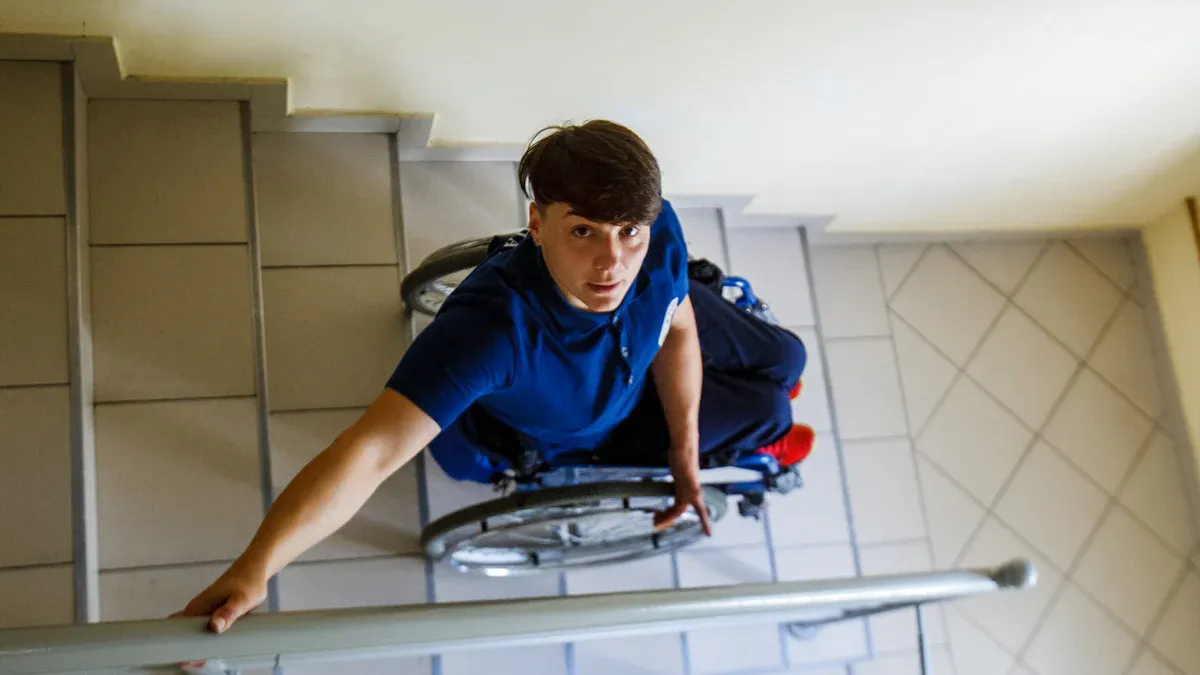
The Importance of Professional Automatic Door Operator Installation
Professional installation is essential for automatic door operators. It ensures smooth operation and long-term durability for commercial or industrial doors. The installation process includes precise measuring, sensor setup, and thorough testing for optimal functionality. Meticulous attention to detail during installation guarantees a flawless outcome. Improper installation carries significant risks. For example, a woman was hit by an outward swinging automatic door when a malfunctioning exterior sensor failed to prevent the door from opening. Another incident involved a woman struck by an automatic swinging door due to improper sensor adjustment and excessive speed. Two children and their father sustained injuries when an automatic sliding door closed on them because disabled cross-threshold sensors failed to detect them. These incidents highlight the dangers of poor door alignment, incorrect sensor placement, inadequate power supply, and insufficient testing post-installation. Facilities must avoid attempting self-repair if an automatic door system malfunctions. Instead, contact a professional technician or the installation company to prevent further damage or safety risks.
Regular Maintenance for Optimal Automatic Door Operator Functionality
Regular maintenance ensures optimal automatic door functionality. For commercial establishments with high foot traffic, doors should be serviced every six months. Residential automatic doors typically require an annual inspection, provided they do not experience harsh weather or heavy usage. Doors in extreme temperatures, high humidity, or dusty environments may need more frequent attention. The American Association of Automatic Door Manufacturers (AAADM) recommends annual inspections by certified professionals for safety and code compliance.
| Door Type | Recommended Maintenance Frequency | Notes |
|---|---|---|
| Most Commercial | At least twice a year | Biannual schedule for wear-and-tear, safety, and adjustments. |
| High-Traffic Areas | Quarterly or even monthly | Prevents unexpected failures and extends equipment life. |
| Low-Traffic Areas | Annually | |
| Single Sliding Doors | Every six to 12 months | Depending on traffic; efficient but can wear with frequent use. |
| Dual Sliding Doors | Every three to six months | In high-traffic areas, ensures synchronization and responsiveness. |
| Folding Doors | Every six months | Due to complex mechanisms and moving joints. |
| Revolving Doors | Quarterly | For smooth operation and to prevent airflow/security issues. |
| Swinging Doors | Every six to 12 months | Depending on traffic volume; for ADA-compliant areas. |
| Surface-Mounted Doors | Every six months | Checks for wear on external components and secure mounting. |
Lubricating hinges, rollers, and tracks is crucial to minimize wear and tear. It keeps components moving smoothly, as friction reduces efficiency and lifespan. Moving parts such as hinges, rollers, and tracks should be lubricated regularly to ensure smooth operation.
Troubleshooting Common Automatic Door Operator Issues
Automatic door operators can experience several common issues. These include failure to open or close, unexpected opening and closing, slow-moving doors, unusual noises, and misaligned doors. The remote may also not respond, or the movement sensor could malfunction.
When troubleshooting, begin by checking the power source. Verify the door connects to power, the switch is on, and check for tripped circuit breakers or blown fuses. Inspect battery backup systems if present. Next, inspect the door sensors. Ensure sensors are free from obstructions like dirt or dust and are properly aligned. Test the control system. Use manual override if available, and check control panel settings for correct configuration. Inspect the door tracks and rollers. Look for debris in tracks and assess the condition of rollers. Look for mechanical issues. Check for loose hardware like hinges or brackets and listen for unusual motor noises. Check for software or programming errors. See if software updates are needed or if reprogramming is required. If issues persist, call a professional technician for expert diagnosis and repair. Ensure safety measures. Secure the area if doors are stuck and ensure alternative emergency exits are available.
Choosing the correct Automatic Door Operator is crucial for building truly accessible spaces. Making informed decisions, by evaluating top brands and essential factors, empowers individuals with greater independence and enhances safety. Facilities should invest in the future of accessibility by selecting the ideal door solution. This commitment improves daily life for everyone.
FAQ
What is an automatic door operator?
An automatic door operator automates door opening and closing. It uses a motor and a control system. This system allows hands-free access. It significantly improves convenience and accessibility for users in various settings.
How do automatic door operators enhance accessibility?
Operators provide effortless entry and exit. They assist individuals with mobility challenges. This includes wheelchair users or those with limited strength. They meet ADA compliance standards. This ensures inclusive environments for everyone.
Are automatic door operators safe?
Yes, modern operators include essential safety features. These features include motion sensors, obstruction detection, and emergency stops. They prevent doors from closing on people or objects. Professional installation and regular maintenance ensure optimal safety.
Can an automatic door operator be installed on an existing door?
Many automatic door operators can retrofit existing doors. Brands like Autoslide specialize in this. They convert standard sliding doors into automatic ones. This offers a cost-effective accessibility upgrade without major renovations.