
The optimal Automatic Door Motors for a commercial building depend entirely on specific operational needs. Businesses must consider their unique traffic volume and door type. Making an informed choice ensures optimal performance, safety, and longevity for a commercial automatic door operator. Understanding how automatic door operator works assists in this critical decision. This careful consideration also impacts future door operator maintenance. Organizations should thoughtfully choose automatic door operator models, including specific considerations like swing door operator selection for particular entrances.
Key Takeaways
- Choose an automatic door motor based on your building’s specific needs, like how much traffic the door gets and the door’s type.
- Match the motor’s power to the door’s weight and consider how often the door will open and close each day.
- Think about the weather conditions where the door is located, as extreme heat, cold, or rain can affect the motor.
- Always get professional help for installing and maintaining your automatic door motor to keep it working well and safely.
- Look at the total cost over time, including energy use and maintenance, not just the initial price of the motor.
Key Factors for Choosing Automatic Door Motors
Assessing Duty Cycle and Traffic Volume
The duty cycle of an automatic door motor is a critical factor. It defines how long the motor can operate within a specific period before needing rest. This is typically expressed as a percentage over a 10-minute cycle. For example, a 30% duty cycle means the motor can run for 3 minutes out of every 10-minute period. It then requires a 7-minute rest to prevent overheating.
High-traffic commercial environments demand motors with higher duty cycles. Industrial applications with frequent use, such as busy warehouses, often require motors with duty cycles up to 80%. This is necessary if a door opens and closes more than 100 times a day. In contrast, light-industrial use might only need motors with 30% duty cycles. Several factors influence the required duty cycle. Doors opened and closed frequently necessitate higher duty cycles, like 60% or 80%. Larger and heavier doors demand more power, requiring motors with higher duty cycles to handle continuous stress. Hot or humid conditions can also cause motors to overheat more easily. This suggests a higher duty cycle to compensate for the added stress.
Traffic volume also significantly impacts maintenance frequency. High-traffic doors, such as those in shopping centers, hospitals, or airports, require service every three months. Medium-traffic doors, found in office buildings or schools, should be serviced every six months. Low-traffic doors, like those in warehouses or smaller retail shops, typically need annual service. Swinging doors specifically require service every six to twelve months, depending on their traffic volume. Usage frequency directly impacts wear and tear. Doors in high-traffic settings deteriorate faster. High traffic means more than 10,000 daily users. Moderate traffic ranges from 1,000 to 10,000 daily users. Low traffic involves fewer than 1,000 daily users.
Matching Door Type and Weight
The type and weight of the door are fundamental considerations. Different door types, such as sliding, swinging, or overhead, require specific motor designs. The motor must have sufficient power to move the door smoothly and safely. Heavy commercial doors demand robust motors. For instance, some heavy-duty automatic sliding door operators use motors like the YF200. This 24V 100W brushless DC motor offers strong driving capability. It adapts well to large doors.
Manufacturers often specify a maximum door leaf weight for their motors. A recommended maximum door leaf weight can be 700 lbs. For weights exceeding 700 lbs, up to 800 lbs might be possible. However, consultation with the manufacturer is advisable for such cases. This is due to variables like application and frequency of use. Selecting a motor that matches the door’s weight prevents premature wear and ensures reliable operation.
Understanding Power Requirements and Voltage
Understanding the power requirements and voltage is essential for compatibility and efficiency. Commercial automatic door motors have specific electrical needs. Residential garage door openers typically draw between 3 and 5 amps. However, larger or insulated commercial doors, especially with higher horsepower motors, demand more power. The amp draw can fluctuate based on door weight, motor efficiency, and even ambient temperatures. During startup, the system might briefly spike to around 10 amps.
For a typical 120V system, an opener drawing 5 amps uses about 600 watts. This can spike to 1,000–1,200 watts during startup. A light-duty commercial door operator, such as model LJ8900W, requires 120V AC, 60Hz voltage. It has a current rating of 1.5A. Businesses must ensure their building’s electrical infrastructure can support the motor’s power demands. Incorrect voltage or insufficient amperage can lead to motor malfunction or damage.
Considering Environmental Conditions
Environmental conditions significantly impact an automatic door motor‘s performance and longevity. Extreme temperatures, humidity, and precipitation directly affect the motor’s components and overall operation. Businesses must select motors designed to withstand the specific climate of their location.
Extreme temperatures cause components to expand and contract. This leads to potential malfunctions and increased wear and tear. For example, high heat can warp plastic parts within the motor system. Conversely, severe cold can make metal parts brittle, increasing the risk of breakage. High humidity levels contribute to moisture buildup. This moisture causes corrosion and rust, particularly on metal components like springs and tracks. Moisture weakens parts, slows down operation, and can even cause electrical short circuits and malfunctions.
Cold temperatures also thicken lubricants. This causes mechanisms to freeze and hinders the operation of automatic door openers. In extreme cold, batteries drain faster or freeze due to slowed chemical reactions. Lubricated components such as chains, gears, rollers, and hinges stiffen as oil-based lubricants thicken. Mechanical parts can freeze, preventing proper gate movement. Sensors can also become obstructed by snow, ice, or frost, impairing their functionality and safety features.
Extreme heat presents its own challenges. Motors can overheat, especially with frequent use, leading to thermal shut-offs or a reduced lifespan. Lubricants dry out quicker in high heat, increasing friction and causing premature wear of moving parts. Battery performance also suffers, reducing efficiency and lifespan.
Rain and humidity pose significant threats. Water infiltration can cause short circuits or damage to electronics within control boxes and motors. Long-term moisture exposure leads to rust and corrosion of metal parts, including hinges, chains, and other moving components. Sliding gate tracks can also become slippery, affecting movement and traction. Therefore, choosing a motor with appropriate weatherproofing and a robust design is crucial for reliable operation in challenging environments.
Types of Automatic Door Motors for Commercial Use

Commercial buildings utilize various automatic door motor types, each designed for specific operational demands and door configurations. Understanding these distinctions helps businesses select the most appropriate system for their facilities.
Overhead Trolley Automatic Door Motors
Overhead trolley automatic door motors represent a traditional and widely used solution for commercial garage doors. These systems typically mount on the ceiling, pulling the door along a track using a chain, belt, or screw mechanism.
Overhead trolley systems offer several advantages for commercial applications. They are generally more affordable to install and maintain. Modern belt-drive models, especially those with DC motors, operate with significantly reduced noise levels. These motors also possess strong lifting capacities, reliably handling heavy garage doors with high weight limits. Many models include advanced features such as rolling door codes, MyQ connectivity for smart control, battery backup, and auto-close timers. Enhanced security features, including rolling code technology, vacation mode, and automatic closure, help protect against intruders. Some even incorporate climate monitoring with temperature sensors.
However, overhead trolley motors also present certain disadvantages. The mechanism occupies overhead space, which can limit storage or clearance for tall vehicles. The emergency release cord could pose a security vulnerability if accessible from outside. While modern versions are quieter, they may still produce more noise than wall-mount alternatives, which could be a concern if the garage is located near noise-sensitive areas.
Specific types of overhead trolley motors include belt-drive and screw-drive openers. Belt-drive openers offer smooth and quiet operation due to their rubber or polyurethane belts, which dampen noise and reduce wear on components, extending their lifespan. However, they tend to be more expensive than chain-drive openers, and the belt may require periodic replacement. Screw-drive openers feature simplicity with fewer moving parts, offering strength and durability for heavy-duty doors and faster operation. Conversely, they can produce a loud, rattling sound and require regular lubrication of the threaded rod and other components for smooth operation.
Jackshaft Automatic Door Motors
Jackshaft automatic door motors offer a distinct alternative to overhead systems, particularly beneficial in commercial settings where overhead space is at a premium. These motors mount on the side of the garage door’s torsion bar, directly driving the shaft that lifts the door. This design eliminates the need for overhead tracks and motors, freeing up ceiling space.
Businesses often choose jackshaft motors for commercial applications requiring high-lift doors or where the ceiling space is needed for storage, lighting, or other equipment. Their side-mount design makes them ideal for facilities with low headroom or unique architectural requirements. Jackshaft motors typically operate quietly and efficiently, providing reliable performance for various commercial and industrial doors. They also offer a cleaner aesthetic, as the motor is less conspicuous than an overhead unit.
Sliding Door Automatic Door Motors
Sliding door automatic door motors are specifically engineered for doors that move horizontally, making them a common choice for commercial entrances such as retail stores, hospitals, and office buildings. These motors provide smooth, controlled movement for single or bi-parting sliding doors.
These systems offer significant benefits for space-constrained commercial entrances. Their slim and square designs allow for full door opening, effectively addressing limited entrance space in various commercial settings. The compact structure of these motors simplifies installation and integration with diverse door operator systems. For particularly narrow spaces, telescopic sliding doors, powered by these specialized Automatic Door Motors, maximize the opening width, making them highly suitable for small commercial buildings. This design efficiency ensures optimal pedestrian flow and accessibility without compromising valuable interior space.
Swing Door Automatic Door Motors
Swing door automatic door motors provide automated access for hinged doors. These systems are prevalent in many commercial environments. They offer convenience and accessibility. Businesses install them in hospitals, offices, retail stores, and public buildings. These motors enhance the user experience.
Swing door operators offer several key advantages. They provide hands-free entry and exit. This is crucial for individuals with disabilities, those pushing carts, or carrying heavy items. The automated operation also improves hygiene by reducing touchpoints on door handles. Furthermore, these motors integrate seamlessly with access control systems. This enhances building security.
However, businesses must consider certain factors. Swing doors require adequate clear space for their arc of movement. Safety is paramount. These systems must incorporate advanced sensors. These sensors detect obstructions and prevent collisions. This protects pedestrians and property. Two main types exist: low-energy and full-energy operators. Low-energy operators move doors at a slower speed. They exert less force. Users often activate them via a push-button. Full-energy operators move doors faster. They use more force. Motion sensors typically activate them. The choice depends on traffic volume and safety requirements. Selecting the correct Automatic Door Motors ensures efficient and safe operation for swing doors.
Essential Features for Commercial Automatic Door Motors
Prioritizing Safety and Compliance Features
Commercial buildings must prioritize safety and compliance when selecting automatic door systems. These systems must meet strict industry standards and regulations. For instance, ANSI/BHMA A156.10 sets the primary standard for power-operated pedestrian doors. It provides specifications for safe installation, dimensions, forces, and layouts. Another related standard, ANSI/BHMA A156.19, specifically addresses low-energy operator systems. Businesses also consider local building and fire codes, NFPA 101 (Life Safety Code), and the Americans with Disabilities Act (ADA).
Safety features include specific operational requirements. Swing doors, for example, must open to 80 degrees in no less than 1.5 seconds. The force to prevent a stopped swing door from opening further in its last 10 degrees should not exceed 30 lbf (133 N) measured 1 inch from the lock edge. Signage is also crucial. Low energy doors must display an ‘AUTOMATIC CAUTION DOOR’ sign, visible from both sides. This sign should be at least 6 inches (152 mm) in diameter with black lettering on a yellow background. Specific signage requirements detail font size, color, and placement for signs like ‘Automatic Door’ and ’emergency stop’.
Enhancing Security and Access Control
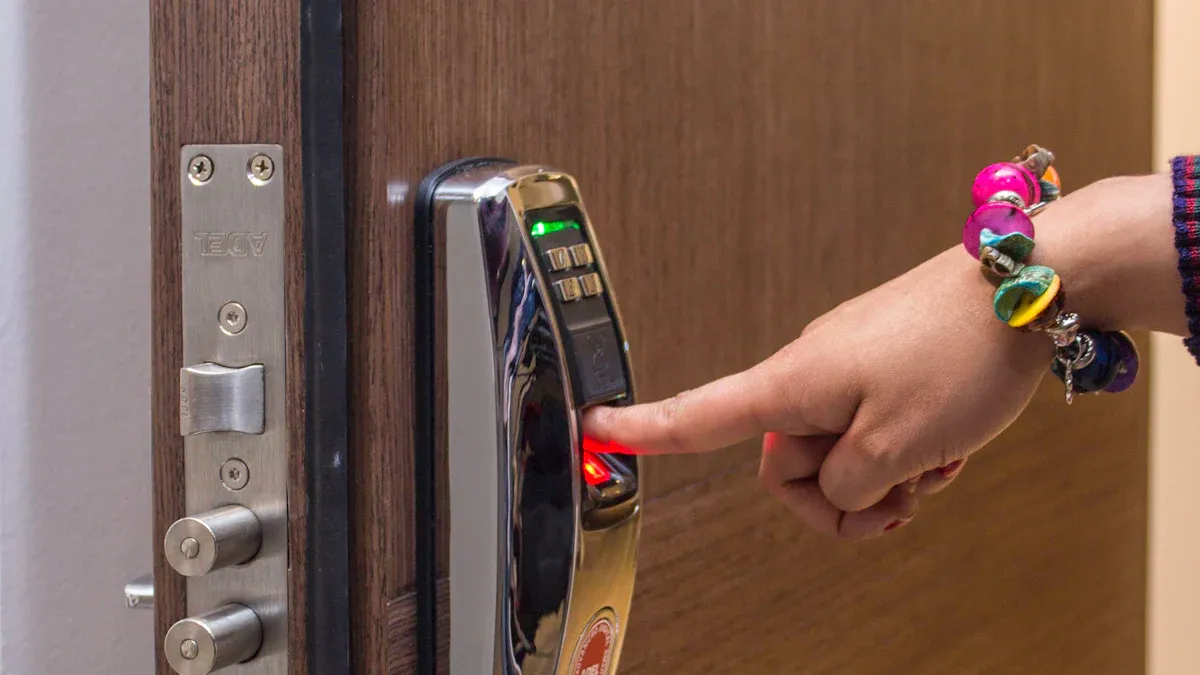
Modern Automatic Door Motors significantly enhance building security. They integrate with access control systems, allowing businesses to regulate entry and keep unauthorized individuals out. These systems can also lock after hours or during emergencies, similar to other access control hardware. This integration provides robust security measures.
Businesses can connect these motors with various access control technologies. They support keycard readers for restricted access. Biometric scanners offer secure identification. Furthermore, these systems can connect with remote monitoring systems for enhanced security oversight. This comprehensive approach ensures only authorized personnel enter specific areas.
Exploring Control Options and Integration
Automatic door systems offer diverse control options. Users can activate doors through motion sensors, push buttons, or remote controls. Advanced systems integrate with building management systems (BMS). This allows centralized control and monitoring of all door operations. Integration with fire alarm systems ensures doors open or close automatically during emergencies. This provides safe egress or contains fire. These flexible control options improve operational efficiency and safety.
Evaluating Energy Efficiency and Noise Levels
Commercial buildings prioritize energy efficiency and low noise levels when selecting automatic door motors. These factors directly impact operational costs, environmental footprint, and the overall user experience. Energy-efficient motors reduce electricity consumption, leading to significant long-term savings for businesses. They also contribute to a building’s sustainability goals. Modern motor designs often incorporate features like variable speed drives and low-power standby modes. These technologies optimize energy use by adjusting motor output based on demand and minimizing power draw during idle periods. Brushless DC motors, for instance, offer superior efficiency compared to traditional AC motors due to their design, which reduces friction and heat generation.
Noise levels represent another crucial consideration, especially in environments like hospitals, offices, or retail spaces where quiet operation is essential. Excessive motor noise can disrupt occupants, detract from the customer experience, and create an uncomfortable atmosphere. Manufacturers design many automatic door motors for quiet operation. Belt-drive systems, for example, typically produce less noise than chain-drive mechanisms. Direct-drive motors also offer inherently quieter performance by eliminating gears and belts. Businesses should look for decibel ratings provided by manufacturers to compare noise output. Proper installation and routine maintenance also play vital roles in minimizing operational noise. Regular lubrication and inspection of moving parts prevent friction and wear, which can contribute to increased sound levels. Selecting a motor with inherently low noise characteristics ensures a more pleasant and productive environment for everyone.
Installation, Maintenance, and Longevity of Automatic Door Motors
The Importance of Professional Installation
Professional installation ensures optimal functionality and longevity for automatic door systems. Many manufacturers require professional installation to maintain warranty validity, protecting a business’s investment. Experts possess the necessary tools and equipment, completing the job quickly and efficiently. They handle the complexity of modern automatic door openers, ensuring correct function and seamless integration. Professionals also ensure safety features, such as auto-reverse mechanisms and motion detectors, are correctly installed and calibrated. This reduces accident risks and adheres to safety standards. Accurate installation prevents issues like misalignment and improper balance. This guarantees improved system performance, minimizing malfunctions and extending the lifespan of the equipment. Professional installers also prevent common errors like incorrect spring tension or improperly installed sensors, which compromise both performance and security. Their expertise ensures proper wiring and connection of automatic opening/closing mechanisms, preventing vulnerabilities to intruders.
Routine Maintenance for Optimal Performance
Routine maintenance is crucial for the optimal performance of Automatic Door Motors. Regular inspections and servicing prevent unexpected breakdowns and extend the operational life of the system. Technicians perform tasks such as lubricating moving parts, checking electrical connections, and adjusting tension. This proactive approach identifies potential issues before they escalate into major problems. Consistent maintenance ensures smooth, quiet operation and maintains safety compliance. It also helps avoid costly emergency repairs, contributing to the system’s overall reliability and efficiency.
Understanding Warranty and Support
Understanding the warranty and available support is vital when investing in automatic door systems. Manufacturers typically offer warranties covering defects in materials and workmanship for a specified period. Businesses should carefully review these terms, as professional installation often constitutes a prerequisite for warranty validity. Reliable manufacturers also provide comprehensive technical support and service agreements. These agreements offer peace of mind, ensuring prompt assistance for troubleshooting or repairs. Choosing a system with strong warranty backing and accessible support minimizes downtime and protects the long-term investment.
Calculating Long-Term Cost of Ownership
Businesses must look beyond the initial purchase price when investing in automatic door motors. Focusing on long-term value is crucial for commercial door installation. The true value comes from balancing the upfront investment with long-term performance and lower operating costs. For instance, a cheaper, non-insulated door might save money initially. However, it will likely lead to higher energy bills over time. Weighing the higher upfront cost of an insulated door against its future energy savings almost always proves beneficial for businesses.
Several factors contribute to the long-term cost of ownership for commercial automatic door motors. These include:
- Installation costs
- Maintenance expenses
- Energy consumption
- Considering the total cost of ownership beyond the initial price
- Benefits of energy-efficient motors in reducing operational costs
Initial installation costs vary based on motor type and complexity. However, these costs represent only one part of the overall financial picture. Regular maintenance, as previously discussed, prevents costly breakdowns and extends the system’s life. Businesses should factor these routine service expenses into their budget.
Energy consumption significantly impacts operational costs over time. Energy-efficient motors reduce electricity usage. This leads to substantial savings for businesses. Modern motors often feature variable speed drives and low-power standby modes. These technologies optimize energy use. They adjust motor output based on demand. They also minimize power draw during idle periods. Choosing a motor with superior energy efficiency can offset a higher initial investment. This provides a better return on investment over the system’s lifespan. Therefore, a comprehensive financial assessment considers all these elements. This ensures a wise investment for the commercial building.
Selecting the right Automatic Door Motors represents a critical investment for a commercial building’s efficiency, safety, and operational flow. Businesses must evaluate their specific needs against the motor types and features discussed. This allows them to make an informed decision. Prioritize professional consultation and installation. This ensures optimal performance and longevity of the automatic door systems.
FAQ
What is the difference between a high-duty cycle and a low-duty cycle motor?
High-duty cycle motors operate frequently without overheating, suitable for busy commercial areas. Low-duty cycle motors require more rest time between operations. Businesses select the appropriate motor based on their door’s traffic volume and usage frequency.
Can businesses use any automatic door motor for a heavy commercial door?
No, businesses must match the motor to the door’s weight and type. Heavy commercial doors require robust motors with sufficient power. Manufacturers specify maximum door leaf weights for their motors. Selecting an appropriate motor prevents premature wear and ensures safe operation.
How do environmental conditions affect automatic door motor performance?
Extreme temperatures, humidity, and precipitation impact motor longevity and function. Heat causes overheating, while cold thickens lubricants and makes parts brittle. Moisture leads to corrosion and electrical issues. Businesses need weather-resistant motors for challenging environments. 🌧️🌡️
Why is professional installation important for automatic door motors?
Professional installation ensures optimal functionality, safety, and warranty validity. Experts correctly calibrate safety features and prevent common errors. This guarantees improved system performance, minimizes malfunctions, and extends equipment lifespan. It also ensures compliance with safety standards.