
Every time you walk through a supermarket entrance or a hospital corridor and the glass doors glide open seamlessly before you, an intricate system of automatic door sensors and controllers is working behind the scenes in milliseconds. At its core, an automatic door system operates on a simple input-output principle: sensors detect human presence or movement (input), the controller processes that signal and makes a decision (processing), and the motor actuates the door (output).
However, the technology that powers this seemingly effortless interaction is far more sophisticated than it appears. Understanding how these components communicate with each other is essential for facility managers, architects, contractors, and anyone responsible for specifying or maintaining automated entrance systems. This guide breaks down the working principles of each sensor type, explains the controller’s role as the system’s “brain,” and illustrates how they function together as an integrated unit.
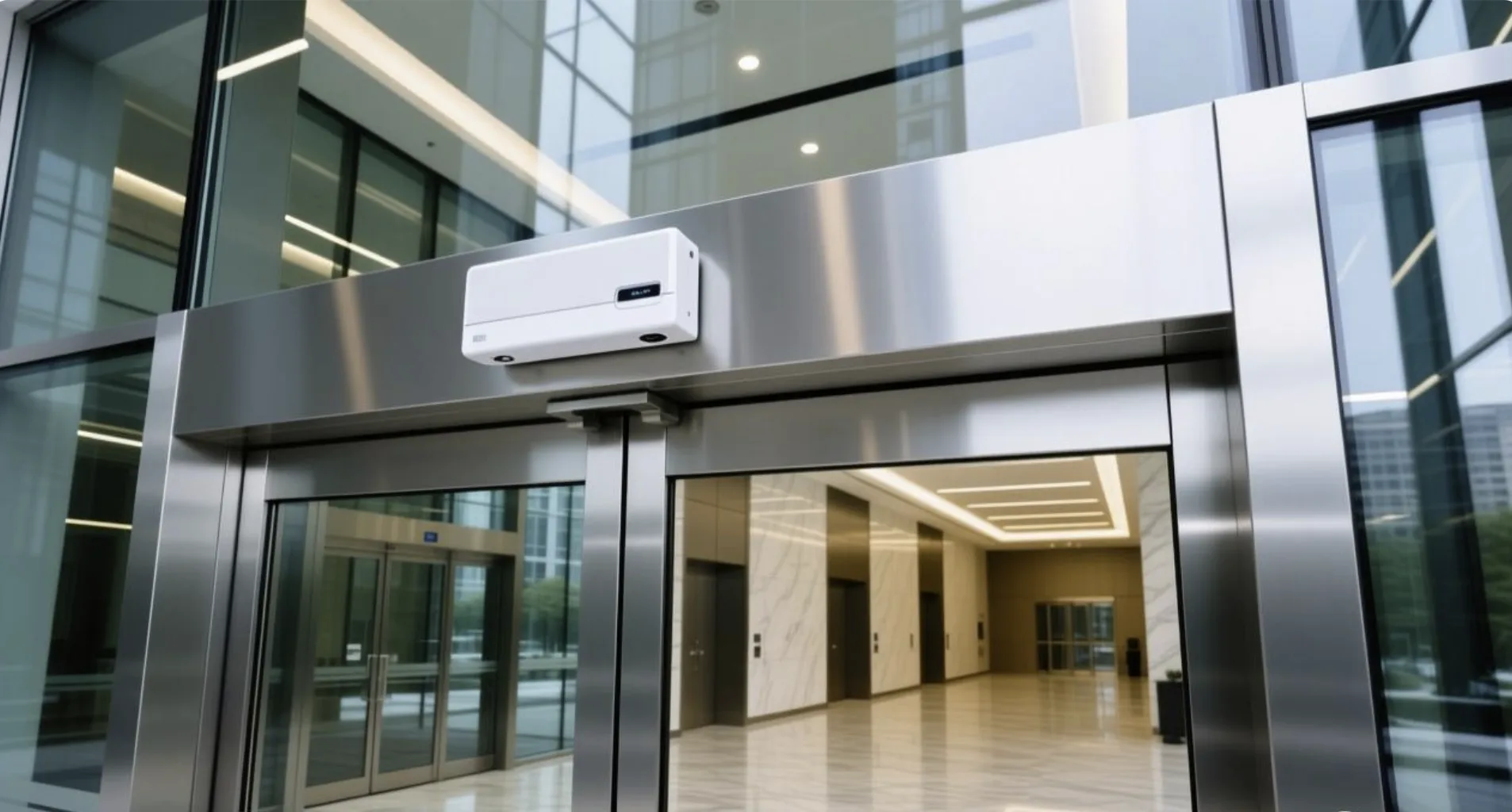
The Three Main Sensor Types and How They Detect
Automatic door sensors can be categorized into three primary technologies, each designed for a specific detection purpose:
Microwave Motion Sensors — The “Approach Detector”
Microwave motion sensors, such as the M-204G, emit continuous low-power microwave signals at a frequency typically around 24 GHz. When these signals bounce off a moving object (a person walking toward the door) and return to the sensor, the Doppler effect causes a measurable frequency shift. The sensor’s internal circuitry analyzes this shift to determine the speed and direction of movement. When a valid approach is confirmed, the sensor sends an electrical signal to the controller to trigger door opening. Key specifications include:
| Parameter | Typical Value |
|---|---|
| Detection Range | Up to 10 meters (34 feet) |
| Detection Width | 1.5–5 meters (adjustable) |
| Power Supply | AC/DC 12V–38V |
| Technology | Doppler Radar (24 GHz) |
| Mounting Position | Above door header, 2.5–3m height |
Microwave sensors excel in high-traffic environments because they detect moving objects only, ignoring stationary backgrounds like walls or furniture. This makes them ideal as the primary activation sensor in shopping malls, airports, and office lobbies.
Active Infrared Presence Sensors — The “Threshold Guardian”
Unlike microwave sensors that only detect movement, active infrared (AIR) presence sensors project multiple invisible infrared beams across the door threshold area. These beams continuously scan for both moving and stationary objects. If any single beam is interrupted—whether by a person standing still, a wheelchair, or a delivery cart—the sensor immediately signals the controller to keep the door open or reverse the closing cycle. This technology is critical for safety compliance under standards like EN 16005 and ANSI/BHMA A156.10.
Advanced models like the M-254 Infrared Motion & Presence Safety Sensor feature adjustable detection lines for both inner and outer zones, allowing installers to fine-tune the detection depth and width to match specific door dimensions. This dual-function capability (motion + presence) makes them particularly valuable in healthcare settings, where patients may pause or move very slowly through doorways.
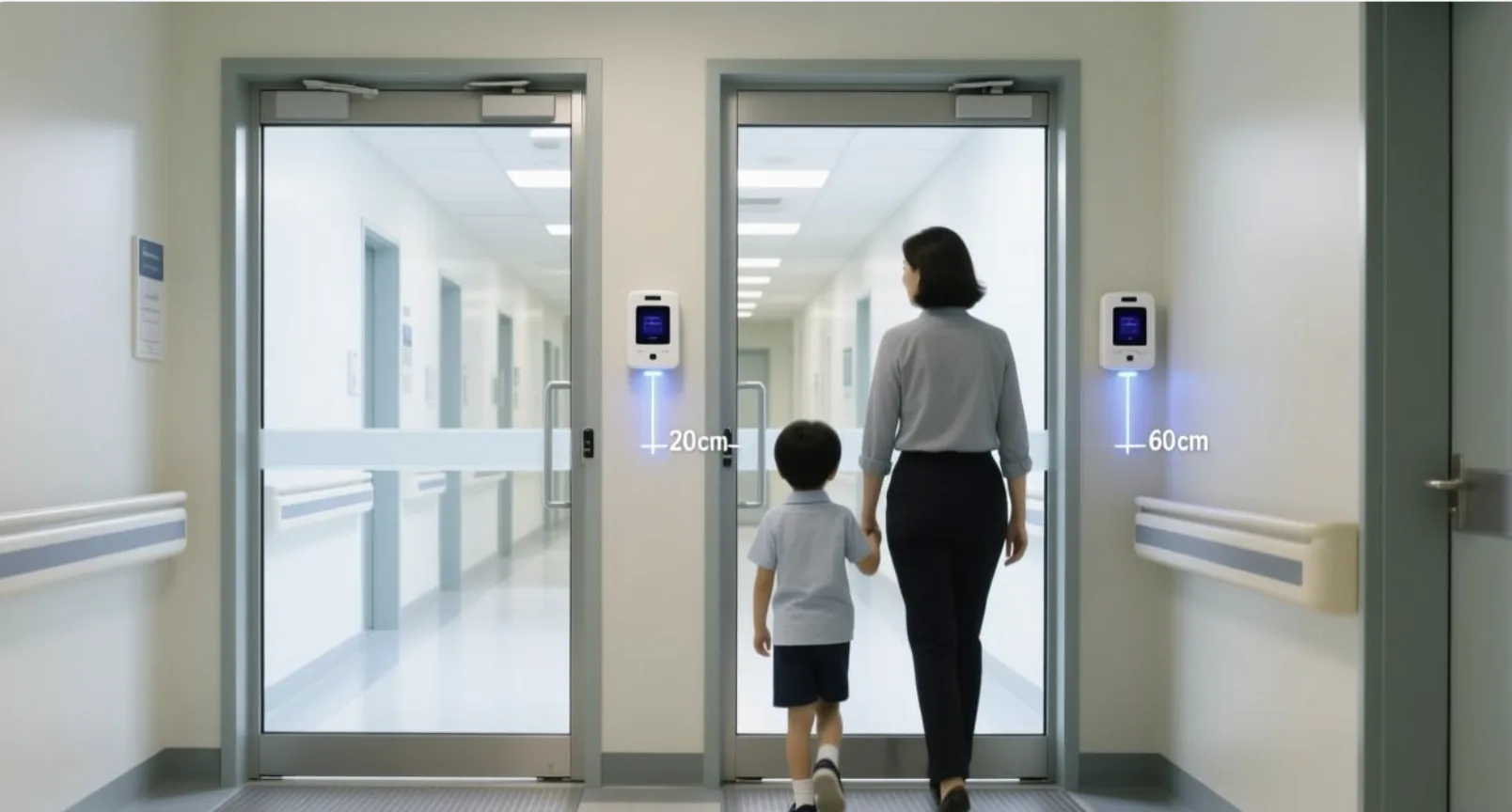
Safety Beam Sensors— The “Final Safety Net”
Safety beam sensors, represented by models like the M-218D, create a focused point-to-point infrared barrier across the door opening. A transmitter on one side emits an infrared beam, and a receiver on the opposite side continuously monitors for that beam. If the beam is broken during a closing cycle—by a person, a shopping cart, or even a pet—the sensor instantly sends a stop/reverse signal to the controller. Installers typically place two pairs at heights of 20 cm and 60 cm from the floor to cover both child-height and adult-height detection zones. While presence sensors offer broader coverage, safety beams provide a redundant, fail-safe layer that is often required by building codes for powered door systems.
The Door Controller: The “Brain” of the System
If sensors are the “eyes” of an automatic door system, the door controller is the “brain.” This compact electronic unit—typically housed in a metal or plastic enclosure near the door header—receives input signals from all connected sensors, processes them according to pre-programmed logic, and outputs commands to the door motor. The controller manages several critical functions simultaneously:
- Signal Prioritization: When multiple sensors send signals at once (e.g., a motion sensor detects approach while a safety beam detects an obstruction), the controller prioritizes safety over activation—it will always halt or reverse closing before initiating a new open cycle.
- Timing Control: The controller determines how long the door stays open after the last detection (adjustable hold-open time, typically 0–30 seconds), how fast the door accelerates and decelerates, and whether a slowing zone is activated before full close.
- Mode Management: Through a connected function selector (such as a five-key LCD panel), the controller switches between operating modes—Automatic, Half Open, Full Lock, Unidirectional, and Manual—allowing facility managers to adapt door behavior for different times of day or special events.
- Self-Diagnostics: Modern controllers incorporate fault detection that can identify sensor failures, motor overload, or wiring issues, and may display error codes for rapid troubleshooting.
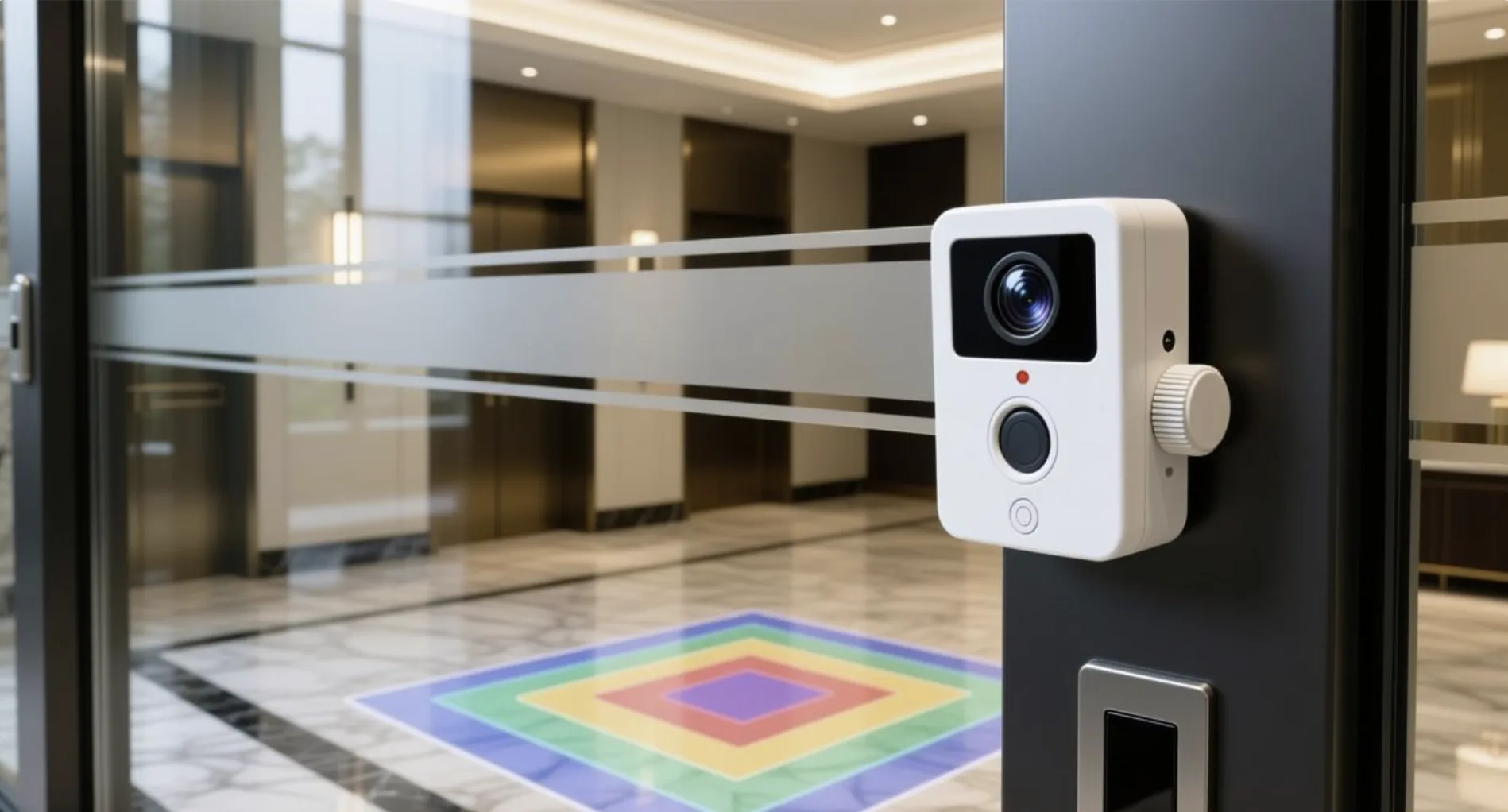
Most controllers support wide-voltage input (AC/DC 12V–38V) and offer relay-based or direct-wire output connections, making them compatible with
a broad range of motor types and sensor brands. The key to a reliable system is ensuring that the controller, sensors, and motor are all matched in
voltage, signal type, and response timing.
How the Full System Works Together
To understand the complete workflow, imagine a typical scenario at a hospital entrance:
| Step | What Happens | Component Involved |
|---|---|---|
| 1 | A visitor approaches from 6 meters away | Microwave motion sensor (M-204G) detects Doppler shift |
| 2 | Sensor sends activation signal to controller | Controller receives low-voltage trigger pulse |
| 3 | Controller commands motor to open | Motor drives belt/chain to slide door panels apart |
| 4 | Visitor enters the threshold area | Infrared presence sensor (M-254) detects stationary person |
| 5 | Controller holds door open | Hold-open timer pauses while presence is confirmed |
| 6 | Visitor clears the threshold | All sensors confirm clear path |
| 7 | Hold-open timer expires, controller signals close | Motor reverses direction, door panels slide together |
| 8 | A wheelchair user enters during closing | Safety beam (M-218D) breaks, controller immediately reverses |
| 9 | Wheelchair passes through safely | Door re-closes after second clear-path confirmation |
This layered detection architecture ensures that no single point of failure can compromise pedestrian safety. The microwave sensor handles initial
activation, the presence sensor manages threshold monitoring, and the safety beam provides the final obstacle detection—all coordinated by the
controller in real time.
About Ningbo Beifan Automatic Door Factory
Ningbo Beifan Automatic Door Factory, founded in 2007, is a professional manufacturer specializing in automatic door motors, automatic door operators, and a comprehensive range of automatic door accessories including sensors, remote controllers, and function selectors.
FAQ
What Are Automatic Door Accessories?
Automatic door accessories are the supplementary components—including sensors, remote controllers, function selectors, and safety beams—that enable, control, and safeguard automated door operation.
Key Components of Automatic Door Accessory Systems?
The core components include microwave motion sensors for activation, infrared presence sensors for threshold monitoring, safety beam sensors for obstruction detection, remote controllers for wireless operation, function selectors for mode switching, and the door controller that coordinates all inputs.
Automatic Door Sensor Not Working? Causes and Fixes?
Common causes include power supply failure, sensor misalignment, environmental interference (dust or sunlight), loose wiring connections, and incorrect sensitivity settings—start by checking power, cleaning the lens, and verifying alignment.
Why Is My Automatic Door Remote Control Not Responding?
Typically caused by depleted batteries, lost signal pairing, exceeded code memory limit, RF interference from nearby electronics, or a faulty receiver unit—try replacing batteries and re-pairing first.